The last Saturday of September, and the kitchen window is fogged up from the steam of a boiling kettle. Outside, the first real chill of autumn has settled into the backyard, turning the maple leaves a tired yellow. I’d been craving something warm and spiced all week, but honestly? I was too tired to deep-fry anything. That’s when I started thinking about apple cider donuts—but baked. Not the greasy, carnival-fair kind, but the kind you can make on a quiet morning without a vat of oil. The kind that fills your house with the smell of cinnamon and nutmeg before the sun is even fully up.
I pulled a carton of fresh apple cider from the fridge, the good stuff from the orchard stand down the road. I reduced it on the stove until it was syrupy and concentrated, almost like apple molasses. That little step—letting the cider simmer down to a thick, tangy-sweet syrup—is what makes these donuts taste like you spent hours at the stove, even though the whole process is surprisingly simple. I’ve made versions with pumpkin purée before (like my perfect pumpkin cream cheese muffins), but this one felt different. More rustic. More like a Saturday morning that doesn’t need to rush anywhere.
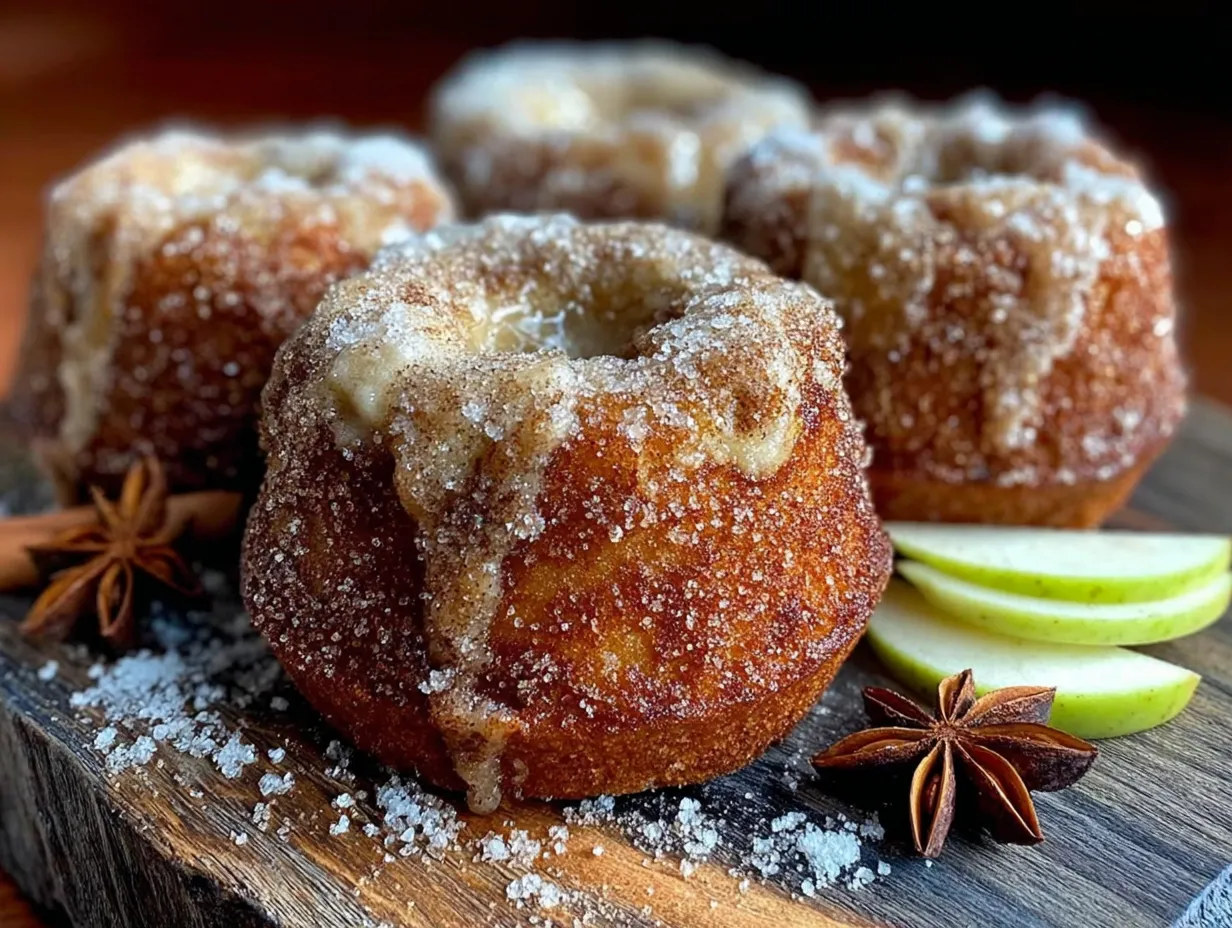
They came out of the oven golden, domed, and tender. I brushed them with melted butter while they were still warm—almost too warm to handle—then rolled them in a cinnamon-sugar mix that stuck to the butter like tiny crystals of joy. The first bite had that soft, cakey crumb, and the cider flavor hit right after, bright and unmistakable. No deep fryer required. No mess. Just a dozen perfect little rings of fall, sitting on my counter and waiting to be devoured.
These baked apple cider donuts have become my quiet Sunday ritual. They’re not flashy or complicated. They’re just honest, and honest food always tastes better, you know?
Why You’ll Love This Recipe
I’ve tested this recipe at least five times to get the texture exactly right. The first batch was too dense, the second was too dry, and the third—well, the third was just right. That’s the thing about baking: it’s a science, but it’s also a little bit of heart. This version nails the balance between a fluffy, tender crumb and that concentrated apple cider punch.
- No deep frying needed. These donuts are baked, which means less mess, less oil, and way less guilt. You get the same soft, cakey texture without standing over a pot of hot oil.
- Real apple cider flavor. Reducing the cider on the stove concentrates the apple taste into something deep and almost caramel-like. It’s not subtle—it’s the star of the show.
- Simple pantry ingredients. You probably already have flour, sugar, butter, eggs, and spices in your kitchen. The only special item is fresh apple cider, and that’s easy to find in the fall.
- Perfect for fall mornings. Whether you’re hosting a brunch, packing a lunchbox treat, or just want something cozy with your coffee, these donuts fit right in. They’re also great for sharing at a potluck or a casual get-together.
- Family-approved. My kids love these even more than the fried ones from the orchard. They said—and I quote—“These are better because they’re not greasy.” High praise from a seven-year-old.
What sets this recipe apart is the reduced cider. Most baked donut recipes just add cider straight from the carton, and the flavor ends up watery. By simmering it down, you concentrate the apple essence into something that actually tastes like a crisp fall day. Plus, the cinnamon sugar coating adds that satisfying crunch on the outside while the inside stays soft and tender. It’s comfort food, but made a little smarter.
What Ingredients You Will Need
This recipe uses simple, everyday ingredients that come together to create something truly special. The key is using fresh apple cider and reducing it to concentrate the flavor. Here’s what you’ll need:
- 1 cup fresh apple cider – Look for unfiltered, refrigerated cider from a local orchard or farmers market if you can. The flavor is brighter and more authentic. Avoid apple juice, which is too sweet and lacks that tangy depth.
- 1 ¾ cups all-purpose flour – Spoon and level your flour for the best results. Scooping directly from the bag can pack in too much flour and make the donuts dense.
- ½ cup granulated sugar – Adds sweetness and helps create that tender crumb. You can reduce this slightly if you prefer a less sweet donut, but don’t cut it by more than a tablespoon.
- ¼ cup packed light brown sugar – Brown sugar adds moisture and a hint of molasses flavor that pairs beautifully with the cider and spices.
- 1 ½ teaspoons baking powder – This is the main leavening agent. Make sure it’s fresh—check the expiration date if you’re unsure.
- ½ teaspoon baking soda – Helps neutralize the acidity of the reduced cider and adds a little extra lift.
- 1 teaspoon ground cinnamon – A warm, classic spice that complements the apple cider perfectly. I prefer Ceylon cinnamon for its milder, sweeter flavor.
- ½ teaspoon ground nutmeg – Freshly grated nutmeg is ideal, but pre-ground works fine. It adds that unmistakable fall aroma.
- ¼ teaspoon ground cloves – Just a pinch—cloves are potent and can easily overpower the other flavors.
- ½ teaspoon salt – Balances the sweetness and enhances the overall flavor.
- 1 large egg, room temperature – A room-temperature egg blends more evenly into the batter and helps create a smoother texture.
- ¼ cup unsalted butter, melted and slightly cooled – Melted butter gives these donuts a rich, tender crumb. I use salted butter in a pinch, but I reduce the added salt to ¼ teaspoon.
- ¼ cup buttermilk, room temperature – Buttermilk adds tanginess and activates the baking soda for a better rise. If you don’t have buttermilk, you can make a quick substitute by adding 1 tablespoon of lemon juice or white vinegar to ¼ cup of milk and letting it sit for 5 minutes.
- 1 teaspoon vanilla extract – Pure vanilla extract adds depth. Avoid imitation vanilla if possible—the flavor difference is noticeable.
For the Cinnamon Sugar Coating:
- ½ cup granulated sugar – Fine sugar sticks best to the butter-coated donuts.
- 1 tablespoon ground cinnamon – Adjust this to your taste. I like a generous coating, but you can dial it back to 2 teaspoons if you prefer a milder cinnamon flavor.
- ¼ cup unsalted butter, melted – For brushing onto the warm donuts before rolling them in the cinnamon sugar mix.
Equipment Needed
You don’t need a lot of fancy tools to make these donuts, but a few specific items will make the process much smoother.
- Donut pan (standard size, 6-cavity) – This is essential for baked donuts. I recommend a non-stick pan for easy release. If you only have one pan, you’ll need to bake in batches. Wilton and Nordic Ware both make reliable options.
- Small saucepan – For reducing the apple cider. A 1- or 2-quart saucepan works perfectly.
- Mixing bowls (medium and large) – One for dry ingredients, one for wet ingredients. Stainless steel or glass works fine.
- Whisk – For combining the dry ingredients and the wet ingredients. A balloon whisk is ideal for aerating the flour mixture.
- Spatula or wooden spoon – For folding the batter together. Don’t overmix, so a gentle hand is key.
- Piping bag or zip-top bag – For piping the batter into the donut pan. A piping bag with a large round tip is easiest, but a zip-top bag with the corner snipped off works just as well.
- Pastry brush – For brushing the baked donuts with melted butter. A silicone brush is easy to clean and doesn’t shed bristles.
- Cooling rack – Allows air to circulate around the donuts so they cool evenly and don’t get soggy on the bottom.
- Shallow bowl or plate – For the cinnamon sugar coating. A wide, shallow bowl makes it easy to roll the donuts.
If you don’t have a donut pan, you can bake the batter in a greased mini muffin tin to make donut holes. Just reduce the baking time to 8-10 minutes. I’ve done this in a pinch, and honestly, the mini donut holes are even more fun to eat.
Preparation Method
Let’s walk through this step by step. I’ll include time estimates and sensory cues so you know exactly what to look for at each stage.
- Reduce the apple cider. Pour 1 cup of fresh apple cider into a small saucepan. Bring it to a boil over medium-high heat, then reduce the heat to medium-low and let it simmer gently. Stir occasionally. You want it to reduce down to about ¼ cup, which takes roughly 15-20 minutes. It should look syrupy and smell intensely of apples. When it’s ready, remove it from the heat and let it cool completely. This step is non-negotiable—it’s where the flavor magic happens.
- Preheat your oven to 350°F (175°C). Grease your donut pan thoroughly with non-stick spray or butter. I like to use a pastry brush to make sure every nook and cranny is coated. Trust me, nothing is sadder than a donut that sticks to the pan.
- Mix the dry ingredients. In a large bowl, whisk together 1 ¾ cups all-purpose flour, ½ cup granulated sugar, ¼ cup packed light brown sugar, 1 ½ teaspoons baking powder, ½ teaspoon baking soda, 1 teaspoon ground cinnamon, ½ teaspoon ground nutmeg, ¼ teaspoon ground cloves, and ½ teaspoon salt. Whisk until everything is evenly distributed. You’ll see the spices swirl through the flour—that’s a good sign.
- Mix the wet ingredients. In a separate medium bowl, whisk together 1 large egg (room temperature), ¼ cup melted unsalted butter (slightly cooled), ¼ cup buttermilk (room temperature), 1 teaspoon vanilla extract, and the cooled reduced cider. Whisk until smooth and well combined. The mixture will look pale and slightly thick.
- Combine wet and dry ingredients. Pour the wet mixture into the dry ingredients. Use a spatula or wooden spoon to fold everything together gently. Stir just until no streaks of flour remain—about 10 to 12 strokes. A few small lumps are totally fine. Overmixing will make the donuts tough, so resist the urge to keep stirring.
- Fill the donut pan. Transfer the batter to a piping bag or a zip-top bag with the corner snipped off. Pipe the batter into the prepared donut pan, filling each cavity about ¾ full. Don’t overfill, or the donuts will lose their hole in the middle. If you’re using a standard 6-cavity pan, you’ll have enough batter for a second batch.
- Bake. Place the pan in the preheated oven and bake for 10-12 minutes. The donuts are done when they spring back lightly when touched and the edges are just starting to turn golden brown. A toothpick inserted into the thickest part should come out clean or with a few moist crumbs. Don’t overbake—these are supposed to be tender.
- Cool in the pan. Let the donuts cool in the pan for 5 minutes. This allows them to set and makes them easier to remove. After 5 minutes, gently transfer them to a cooling rack. If they stick, run a small offset spatula or butter knife around the edges.
- Coat with cinnamon sugar. While the donuts are still warm (but not too hot to handle), brush each one generously with melted butter. Then immediately roll them in the cinnamon sugar mixture until fully coated. The butter helps the sugar stick and adds a rich flavor that balances the spice.
- Repeat with remaining batter. If you have a second batch, let the pan cool slightly, re-grease it, and pipe in the remaining batter. Bake and coat as before.
A quick note: if you’re making these ahead of time, hold off on the cinnamon sugar coating until just before serving. The sugar can get absorbed into the donuts and become less crunchy over time. Freshly coated is always best.
Cooking Tips & Techniques
I’ve made a lot of baked donuts in my day, and I’ve learned a few things the hard way. Here’s what I wish someone had told me the first time.
Don’t skip reducing the cider. I know it’s an extra step, but it’s the difference between a donut that tastes vaguely apple-ish and one that tastes like a concentrated fall orchard. If you’re in a rush, you can use store-bought apple cider concentrate, but nothing beats the real thing.
Room temperature ingredients matter. Cold eggs and cold buttermilk can seize the melted butter and create a lumpy batter. Take them out of the fridge 30 minutes before you start baking. If you forget, place the egg in a bowl of warm water for 5 minutes and microwave the buttermilk for 10-15 seconds.
Don’t overmix the batter. This is the most common mistake I see. Overmixing develops the gluten in the flour, which makes the donuts dense and chewy instead of light and tender. Stir until just combined, and don’t worry about a few small lumps. They’ll bake out.
Use a piping bag for the batter. It’s so much cleaner than trying to spoon the batter into the pan. The batter is thick enough that it won’t run everywhere, but thin enough to pipe smoothly. If you don’t have a piping bag, a zip-top bag with the corner snipped off works perfectly.
Check your oven temperature. Ovens can be off by 25 degrees or more. An oven thermometer is a cheap investment that makes a huge difference in baking. If your donuts are browning too quickly on the outside but still raw inside, your oven might be running hot.
Coat while warm, not hot. If the donuts are too hot, the butter will melt into a puddle and the sugar won’t stick evenly. If they’re too cool, the butter won’t spread smoothly. Aim for that sweet spot—warm enough that the butter melts slightly on contact, but cool enough that you can handle them without burning your fingers.
One more thing: if you’re making a double batch, keep the unbaked batter at room temperature. Don’t refrigerate it, or the butter will solidify and the donuts won’t rise as well. Bake all the donuts first, then coat them all at once.
Variations & Adaptations
One of the best things about this recipe is how flexible it is. Here are some ways to make it your own.
Gluten-free version: Substitute the all-purpose flour with a 1:1 gluten-free baking flour blend that contains xanthan gum. I’ve tested this with Bob’s Red Mill 1:1 Baking Flour, and the texture is surprisingly close to the original. Just be careful not to overmix, as gluten-free batters can become gummy.
Dairy-free adaptation: Use a plant-based butter (like Miyoko’s or Earth Balance) and replace the buttermilk with ¼ cup of unsweetened almond milk mixed with 1 teaspoon of lemon juice. Let it sit for 5 minutes before using. The donuts will be slightly less tender but still delicious.
Spice it up: Add ¼ teaspoon of ground ginger or cardamom to the dry ingredients for a more complex spice profile. I’ve also tried adding a pinch of white pepper, which adds a subtle warmth without being spicy. It’s weird, but it works.
Maple glaze instead of cinnamon sugar: Skip the butter and cinnamon sugar coating, and instead whisk together 1 cup powdered sugar, 2 tablespoons maple syrup, and 1-2 tablespoons milk until smooth. Dip the cooled donuts into the glaze and let them set on a wire rack. The maple flavor pairs beautifully with the apple cider.
Apple cider donut holes: Bake the batter in a greased mini muffin tin for 8-10 minutes. Coat them in cinnamon sugar while warm. They’re perfect for snacking and disappear even faster than the full-sized donuts.
Add-ins: Fold ½ cup of finely diced fresh apple into the batter just before piping. Use a firm apple like Honeycrisp or Granny Smith so it doesn’t turn to mush during baking. The little bits of apple add texture and bursts of fresh flavor.
Serving & Storage Suggestions
These donuts are best enjoyed the day they’re made, preferably within a few hours of baking. That’s when the outside is still slightly crunchy from the cinnamon sugar and the inside is soft and tender. Serve them with a hot cup of coffee, a mug of spiced chai, or a glass of cold milk. They’re also fantastic with a side of cozy brown sugar pumpkin chai latte for the ultimate fall pairing.
If you have leftovers (which honestly, rarely happens in my house), store them in an airtight container at room temperature for up to 2 days. The cinnamon sugar coating will soften over time, but the flavor will still be there. To restore some of the crunch, pop them in a 300°F oven for 3-4 minutes, then re-coat with a fresh dusting of cinnamon sugar.
You can also freeze the uncoated donuts for up to 2 months. Let them cool completely, then wrap each one individually in plastic wrap and place them in a freezer-safe bag. When you’re ready to eat, thaw them at room temperature, warm them in the oven for a few minutes, then brush with butter and coat in cinnamon sugar. They taste almost as fresh as the day they were baked.
Flavor-wise, these donuts actually improve slightly after a day. The spices meld together and the apple cider flavor becomes more pronounced. So if you can resist eating them all on day one, day two is a treat in itself.
Nutritional Information & Benefits
Here’s the approximate nutritional breakdown for one baked donut (based on 12 donuts, including the cinnamon sugar coating):
| Nutrient | Amount per Donut |
|---|---|
| Calories | 185 |
| Total Fat | 8g |
| Saturated Fat | 5g |
| Cholesterol | 35mg |
| Sodium | 190mg |
| Total Carbohydrates | 27g |
| Dietary Fiber | 1g |
| Sugars | 16g |
| Protein | 3g |
These donuts are a treat, but they’re not a total sugar bomb. The reduced apple cider adds natural sweetness, and the brown sugar gives a deeper flavor with less refined sugar than you might expect. Cinnamon has been shown to help regulate blood sugar levels, and nutmeg contains compounds that may support digestion. Plus, using fresh apple cider means you’re getting a small amount of antioxidants from the apples themselves. Are these a health food? No. But they’re a whole lot better than the deep-fried, preservative-laden versions you’d buy at a gas station.
If you’re watching your sugar intake, you can reduce the cinnamon sugar coating to just a light dusting or skip it entirely. The donuts are flavorful enough on their own, especially if you enjoy them plain with a cup of tea.
Conclusion
These baked apple cider donuts are the kind of recipe that makes you want to slow down and savor the season. They’re not complicated or fussy—they’re just honest, homey, and deeply satisfying. The reduced cider gives them a flavor that’s unmistakably fall, and the cinnamon sugar coating adds that little bit of crunch that makes every bite feel special.
I’d love to know how these turn out for you. Did you try the maple glaze version? Did you add fresh apples to the batter? Did your kids eat them before they even cooled down? (Mine did.) Drop a comment below and let me know your favorite variation. And if you’re looking for another fall treat to round out your weekend baking, don’t miss my cozy pumpkin scones with maple glaze—they’re the perfect companion to these donuts, honestly.
Happy baking, friends. And remember: the best donuts are the ones you share, but it’s also okay to keep a few for yourself. I won’t tell.
Frequently Asked Questions
Can I use apple juice instead of apple cider?
Technically yes, but the flavor won’t be nearly as good. Apple juice is sweeter and lacks the tangy, slightly tart notes that make apple cider so special. If you’re in a pinch, use apple juice and add 1 teaspoon of lemon juice to the wet ingredients to mimic that acidity.
Why did my donuts turn out dry?
Dry donuts are usually the result of overmixing the batter or overbaking. Mix just until the flour is incorporated, and start checking for doneness at the 10-minute mark. Every oven is different, so keep an eye on them. Also, make sure you’re measuring your flour correctly—spoon it into the measuring cup and level it off with a knife.
Can I make these donuts vegan?
Yes, with a few swaps. Replace the egg with a flax egg (1 tablespoon ground flaxseed mixed with 3 tablespoons water, let sit for 5 minutes). Use a plant-based butter and a dairy-free milk mixed with lemon juice for the buttermilk. The texture will be slightly denser, but they’ll still be delicious.
Do I have to reduce the apple cider?
Yes, I really recommend it. Reducing the cider concentrates the apple flavor and removes excess water that would make the donuts soggy. If you skip this step, your donuts will taste diluted and won’t have that intense, almost caramel-like apple flavor that makes this recipe special.
How do I get the cinnamon sugar to stick better?
Make sure the donuts are still warm when you brush them with butter. The warmth helps the butter spread evenly, and the butter acts as glue for the cinnamon sugar. If the donuts have cooled completely, the butter will just slide off. Also, don’t be shy with the butter—a generous brushing makes all the difference.
Pin This Recipe!
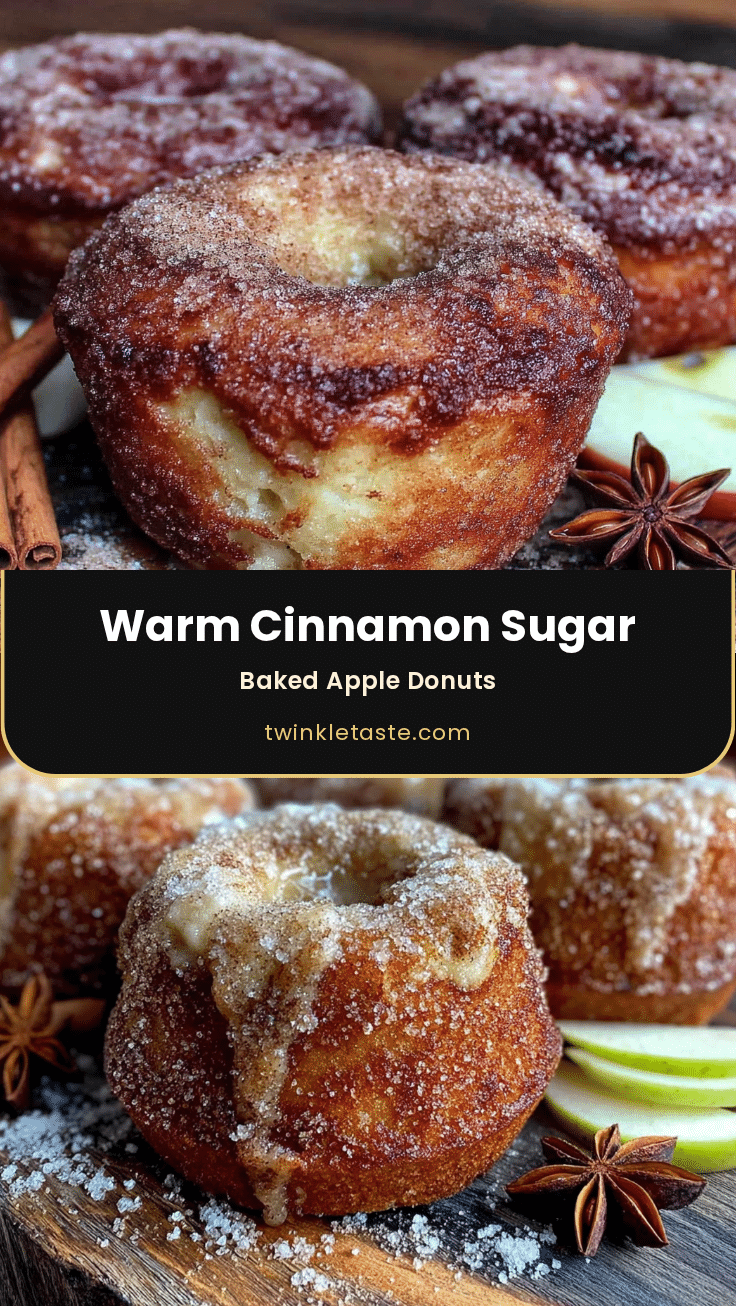
Perfect Baked Apple Cider Donuts with Cinnamon Sugar
These baked apple cider donuts are tender, cakey, and coated in cinnamon sugar. Made with reduced apple cider for intense flavor, they’re a cozy fall treat without the mess of deep frying.
- Prep Time: 15 minutes
- Cook Time: 12 minutes
- Total Time: 45 minutes
- Yield: 12 donuts 1x
- Category: Dessert
- Cuisine: American
Ingredients
- 1 cup fresh apple cider
- 1 ¾ cups all-purpose flour
- ½ cup granulated sugar
- ¼ cup packed light brown sugar
- 1 ½ teaspoons baking powder
- ½ teaspoon baking soda
- 1 teaspoon ground cinnamon
- ½ teaspoon ground nutmeg
- ¼ teaspoon ground cloves
- ½ teaspoon salt
- 1 large egg, room temperature
- ¼ cup unsalted butter, melted and slightly cooled
- ¼ cup buttermilk, room temperature
- 1 teaspoon vanilla extract
- For the Cinnamon Sugar Coating:
- ½ cup granulated sugar
- 1 tablespoon ground cinnamon
- ¼ cup unsalted butter, melted
Instructions
- Reduce the apple cider: Pour 1 cup fresh apple cider into a small saucepan. Bring to a boil over medium-high heat, then reduce heat to medium-low and simmer gently, stirring occasionally, until reduced to about ¼ cup (15-20 minutes). Remove from heat and let cool completely.
- Preheat oven to 350°F (175°C). Grease a standard 6-cavity donut pan thoroughly with non-stick spray or butter.
- Mix dry ingredients: In a large bowl, whisk together flour, granulated sugar, brown sugar, baking powder, baking soda, cinnamon, nutmeg, cloves, and salt until evenly distributed.
- Mix wet ingredients: In a separate medium bowl, whisk together egg, melted butter, buttermilk, vanilla extract, and cooled reduced cider until smooth.
- Combine wet and dry ingredients: Pour wet mixture into dry ingredients. Fold gently with a spatula or wooden spoon just until no streaks of flour remain (10-12 strokes). Do not overmix; a few small lumps are fine.
- Fill donut pan: Transfer batter to a piping bag or zip-top bag with corner snipped off. Pipe batter into prepared pan, filling each cavity about ¾ full.
- Bake: Place pan in preheated oven and bake for 10-12 minutes, until donuts spring back when touched and edges are lightly golden. A toothpick inserted into thickest part should come out clean or with a few moist crumbs.
- Cool in pan: Let donuts cool in pan for 5 minutes, then transfer to a cooling rack.
- Coat with cinnamon sugar: While donuts are still warm, brush each generously with melted butter, then roll in cinnamon sugar mixture until fully coated.
- Repeat with remaining batter: Let pan cool slightly, re-grease, and pipe in remaining batter. Bake and coat as before.
Notes
Don’t skip reducing the cider—it concentrates the apple flavor. Room temperature ingredients matter for proper mixing. Overmixing batter makes donuts dense. Use a piping bag for clean filling. Coat donuts while warm, not hot, for best sugar adhesion. For make-ahead, coat just before serving to maintain crunch. Store uncoated donuts in freezer for up to 2 months.
Nutrition
- Serving Size: 1 donut
- Calories: 185
- Sugar: 16
- Sodium: 190
- Fat: 8
- Saturated Fat: 5
- Carbohydrates: 27
- Fiber: 1
- Protein: 3
Keywords: baked apple cider donuts, apple cider donuts, fall donuts, baked donuts, cinnamon sugar donuts, apple cider recipe, easy donut recipe