The neighborhood cookie exchange was in two hours, and I’d completely forgotten. Everyone else would be bringing elaborate, multi-day projects—chocolate croissants from laminated dough, macarons with perfect feet, those thumbprint cookies that look like stained glass. I had a half-empty pantry, a stick of butter, and a sudden, desperate craving for something that wasn’t sweet. I grabbed a lemon, some forgotten dill from the back of the fridge, and a salmon fillet I’d stashed in the freezer for emergencies. I threw it all in a baking dish, slathered it with butter, and prayed. Honestly, I wasn’t thinking about winning anything. I was thinking about dinner. I brought the salmon to the party anyway—it felt wrong not to share—and you know that moment when someone takes a bite and just… stops talking? Yeah. That happened. The elaborate cookies sat untouched while people hovered around the baking dish, asking for the recipe. I stood there, slightly embarrassed, holding a spatula I’d forgotten to wash. And I’ve been making it ever since.
Why You’ll Love This Recipe
This isn’t just another salmon recipe. After testing this dish for a group of picky eaters (my cousin’s kids, who usually only eat chicken nuggets), I can tell you it’s a crowd-pleaser that works every single time. The lemon and dill combo is classic, but the butter makes it feel indulgent without any fuss.
- Quick & Easy: Comes together in under 25 minutes, perfect for busy weeknights or last-minute dinner parties.
- Simple Ingredients: No fancy grocery trips needed; you likely already have butter, lemon, and dill in your kitchen.
- Perfect for Cozy Evenings: Great for cold weather, rainy days, or when you need a comforting meal that feels special.
- Crowd-Pleaser: Always gets rave reviews from kids and adults alike—even from salmon skeptics.
- Unbelievably Delicious: The butter creates a silky sauce that coats every bite, while the lemon cuts through the richness perfectly.
What makes this recipe different from the rest? It’s the technique of baking the salmon on a bed of lemon slices, which infuses the fish with citrus flavor without making it acidic. The butter melts slowly, creating a self-basting sauce that keeps the salmon incredibly moist. This isn’t just another version—it’s your best version.
This recipe isnt just good—it is the kind that makes you close your eyes after the first bite. It’s comfort food reimagined—healthier, faster, but with the same soul-soothing satisfaction. Perfect for impressing guests without stress, or turning a simple meal into something memorable.
What Ingredients You Will Need
This recipe uses simple, wholesome ingredients to deliver bold flavor and satisfying texture without the fuss. Most of these are pantry staples, so you can whip this up anytime.
- For the Salmon:
- 4 salmon fillets (6 oz each), skin on or off (I prefer skin on for extra moisture)
- 1 lemon, thinly sliced (adds brightness and keeps the fish from sticking)
- 4 tablespoons unsalted butter, softened (I recommend Kerrygold for best flavor)
- 2 tablespoons fresh dill, chopped (or 1 tablespoon dried dill in a pinch)
- 2 cloves garlic, minced (adds depth without overpowering)
- Salt and black pepper to taste
- For the Sauce (Optional but Recommended):
- 2 tablespoons capers, drained (adds a briny pop—trust me on this)
- 1/4 cup chicken or vegetable broth (helps create extra sauce)
- Fresh dill sprigs for garnish
When picking salmon, look for fillets that are bright orange-pink with no fishy smell. Wild-caught salmon is leaner and cooks faster, while farmed salmon is richer and more forgiving. Both work beautifully here. For the lemon, go for a firm, heavy one—it means more juice. If you only have dried dill, use half the amount since it is more concentrated.
Substitution guidance: Use dairy-free butter if needed, or swap the butter with olive oil for a lighter version. No fresh dill? Try parsley or chives for a different flavor profile. This recipe is flexible, so feel free to experiment.
Equipment Needed
You don’t need a fancy kitchen for this recipe. Here is what you will need:
- Baking dish: A 9×13 inch dish works perfectly. Glass or ceramic is ideal because it distributes heat evenly.
- Sharp knife: For slicing the lemon and chopping the dill. A dull knife will crush the herbs.
- Cutting board: Any sturdy board will do—I use a wooden one for lemons and a plastic one for fish.
- Measuring spoons: For the butter and seasonings. Eyeballing is fine, but measuring ensures consistency.
- Aluminum foil or parchment paper: For easy cleanup. Trust me, you want this.
- Instant-read thermometer: Optional but recommended for perfectly cooked salmon. It takes the guesswork out.
If you don’t have a baking dish, a cast-iron skillet works beautifully. It holds heat well and creates a nice crust on the bottom. Just make sure it is oven-safe. For budget-friendly options, a disposable aluminum pan from the grocery store works in a pinch.
Preparation Method
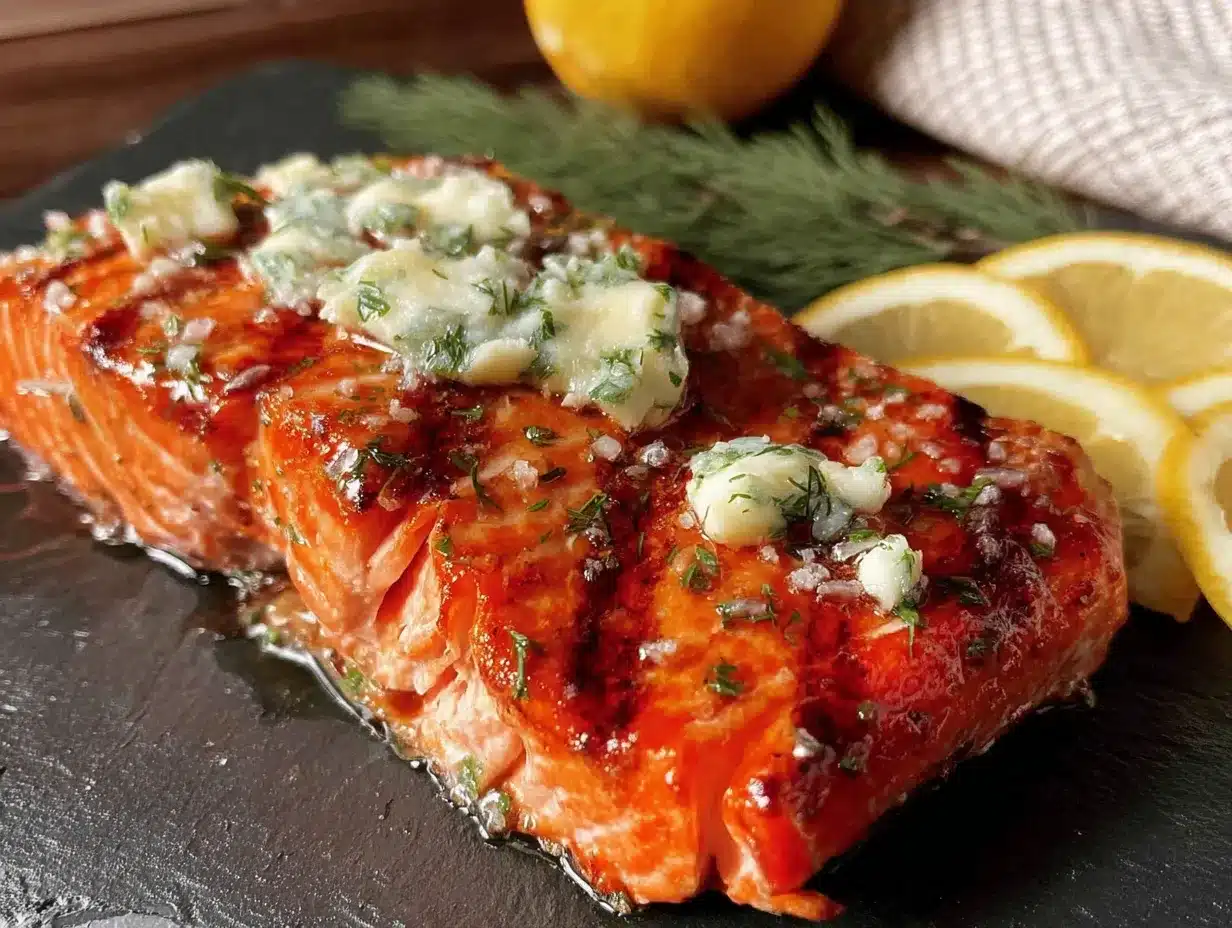
Let’s get cooking. This recipe moves fast, so have everything ready before you start.
- Preheat your oven to 400°F (200°C). While it heats, line your baking dish with parchment paper or foil for easy cleanup. I always forget this step and end up scrubbing—learn from my mistakes.
- Prepare the lemon slices. Slice one lemon into thin rounds, about 1/4 inch thick. Lay them in a single layer on the bottom of the baking dish. This creates a flavorful bed that prevents the salmon from sticking.
- Season the salmon. Pat the fillets dry with paper towels—this helps the seasoning stick. Place them skin-side down on top of the lemon slices. Season generously with salt and black pepper. Don’t be shy here; salmon can handle it.
- Make the butter mixture. In a small bowl, combine the softened butter, chopped dill, and minced garlic. Mix until well combined. If your butter is too cold, microwave it for 10 seconds—just don’t melt it completely.
- Spread the butter. Divide the butter mixture evenly among the fillets, spreading it on top. Don’t worry about being precise; it will melt and spread as it bakes. If you are using capers, sprinkle them over the top now.
- Add the broth (optional). Pour the broth around the salmon, not directly on top. This creates steam in the oven, keeping the fish moist and creating a light sauce. Skip this if you want a drier finish.
- Bake for 12-15 minutes. The cooking time depends on the thickness of your fillets. For 1-inch thick fillets, start checking at 12 minutes. The salmon is done when it flakes easily with a fork and the internal temperature reaches 145°F (63°C). The butter should be bubbly and fragrant.
- Rest and serve. Let the salmon rest in the dish for 2-3 minutes. This allows the juices to redistribute. Garnish with fresh dill sprigs and serve immediately.
Troubleshooting tip: If your salmon is cooking unevenly, check the thickest part with a thermometer. You can also cover the thinner ends with small pieces of foil to prevent overcooking.
Cooking Tips & Techniques
I have made this recipe more times than I can count, and I have learned a few things along the way. Here are my best tips for perfect results every time.
- Don’t overcook the salmon. This is the most common mistake. Salmon continues to cook after you take it out of the oven, so pull it when it is just barely flaky. A little translucency in the center is okay—it will finish cooking as it rests.
- Use room-temperature butter. Cold butter won’t spread evenly, and melted butter will run off the fish. Let it sit on the counter for 15 minutes before mixing. I once used cold butter and ended up with a clumpy mess—not pretty.
- Slice lemons evenly. Thin, even slices cook at the same rate and create a stable bed. Thick slices won’t release enough juice, and thin slices might burn. Aim for 1/4 inch.
- Pat the salmon dry. Wet salmon steams instead of bakes, and you lose that buttery texture. Use paper towels and be thorough. This small step makes a big difference.
- Multitask wisely. While the oven preheats, prep the lemon and butter. While the salmon bakes, make a quick side dish like roasted asparagus or rice. The total active time is under 10 minutes.
I once forgot to pat the salmon dry, and it came out watery and bland. The butter slid right off, and I was left with sad, pale fish. Don’t be like me. Take the extra 30 seconds.
Variations & Adaptations
This recipe is incredibly versatile. Here are some ways to make it your own.
- Herb Swap: Replace dill with thyme, rosemary, or tarragon. Each herb gives a completely different flavor. Thyme is earthy, rosemary is piney, and tarragon is slightly licorice-like. I tried tarragon once and loved it—it pairs beautifully with lemon.
- Citrus Twist: Use orange or lime slices instead of lemon. Orange adds sweetness, while lime gives a tangy kick. For a tropical vibe, try a mix of lemon and orange.
- Spicy Kick: Add a pinch of red pepper flakes or a thin slice of jalapeño under the butter. The heat cuts through the richness and adds warmth. My husband loves this version.
- Dairy-Free: Substitute the butter with olive oil or vegan butter. The texture will be slightly different, but the flavor is still amazing. I use olive oil when I am out of butter, and it works great.
- One-Pan Meal: Add vegetables like asparagus, green beans, or cherry tomatoes to the baking dish. Toss them with olive oil and salt, and arrange them around the salmon. They cook in the same time and soak up the lemony butter sauce.
For dietary needs, this recipe is naturally gluten-free and low-carb. To make it keto-friendly, skip the broth and use extra butter. For a lighter option, reduce the butter to 2 tablespoons and add more lemon juice.
Serving & Storage Suggestions
This salmon is best served warm, right out of the oven. The butter sauce should be glossy and aromatic, with the lemon slices softened and caramelized.
- Serving Temperature: Serve immediately after resting. The salmon should be warm, not piping hot. Room temperature is also fine for picnics or buffets.
- Presentation: Transfer the salmon to a platter, spoon the pan sauce over the top, and garnish with fresh dill. Lemon slices from the pan add a beautiful pop of color.
- Complementary Dishes: Pair with steamed rice, roasted potatoes, or a simple green salad. I love serving it with lemon garlic asparagus for a complete meal. For a cozy night, try it with creamy mashed potatoes to soak up the butter sauce.
- Storage: Store leftovers in an airtight container in the refrigerator for up to 3 days. The salmon will lose some moisture, but the flavor deepens overnight.
- Reheating: Reheat gently in a 300°F (150°C) oven for 5-7 minutes, or in a skillet over low heat with a splash of broth. Avoid the microwave—it will dry out the fish and make it rubbery.
The flavors actually develop over time, so leftovers are great for lunch the next day. I like to flake the cold salmon over a salad or mix it into pasta for a quick meal.
Nutritional Information & Benefits
This recipe is as nutritious as it is delicious. Here is an approximate breakdown per serving (1 fillet with sauce):
- Calories: 380-420
- Protein: 34-38g
- Fat: 24-28g (mostly healthy fats from salmon and butter)
- Carbohydrates: 2-4g
- Fiber: 0g
- Sugar: 1g
Salmon is packed with omega-3 fatty acids, which support heart health and reduce inflammation. It is also an excellent source of vitamin D and B vitamins. Dill adds antioxidants and aids digestion, while lemon provides a boost of vitamin C. This meal is naturally low in carbs and gluten-free, making it suitable for a variety of diets.
If you are watching your sodium, reduce the salt or skip the capers. For a lower-fat option, use half the butter or substitute with olive oil. Personally, I think the butter is worth it—it makes the meal feel indulgent while still being healthy.
Conclusion
This cozy lemon dill butter baked salmon is proof that you don’t need complicated techniques or fancy ingredients to create something memorable. It’s the recipe I turn to when I need a guaranteed win—whether it’s a quiet dinner for one or a gathering where I want everyone to feel special. The butter sauce is silky, the lemon is bright, and the dill ties it all together in a way that feels both comforting and elegant.
I encourage you to make this recipe your own. Swap the herbs, try a different citrus, or add your favorite vegetables. Cooking is about experimenting and finding what makes you happy. And honestly, this dish is hard to mess up—even when you forget to pat the salmon dry, it still tastes amazing.
I would love to hear how it turns out for you. Leave a comment below with your favorite variation, or tag me in your photos. And if you are craving more cozy meals, try my creamy tuscan chicken or one pan garlic shrimp for another quick, comforting dinner. Happy cooking!
Frequently Asked Questions
Can I use frozen salmon for this recipe?
Yes, but thaw it completely in the refrigerator overnight first. Pat it very dry before seasoning, as frozen salmon releases more water. You may need to add 2-3 minutes to the baking time.
What if I don’t have fresh dill?
Dried dill works, but use half the amount since it is more concentrated. You can also substitute with parsley, chives, or thyme. Each herb gives a different flavor, so feel free to experiment.
How do I know when the salmon is done?
The salmon is done when it flakes easily with a fork and the internal temperature reaches 145°F (63°C). The center should be opaque, not translucent. If you don’t have a thermometer, check the thickest part with a fork.
Can I make this recipe ahead of time?
This salmon is best fresh, but you can prep the butter mixture and slice the lemon up to a day ahead. Assemble and bake just before serving. Leftovers keep for 3 days in the refrigerator.
What sides go well with this salmon?
Steamed rice, roasted potatoes, or a green salad are classic choices. For a low-carb option, try roasted vegetables like asparagus, broccoli, or zucchini. The butter sauce is also delicious over pasta or quinoa.
Pin This Recipe!
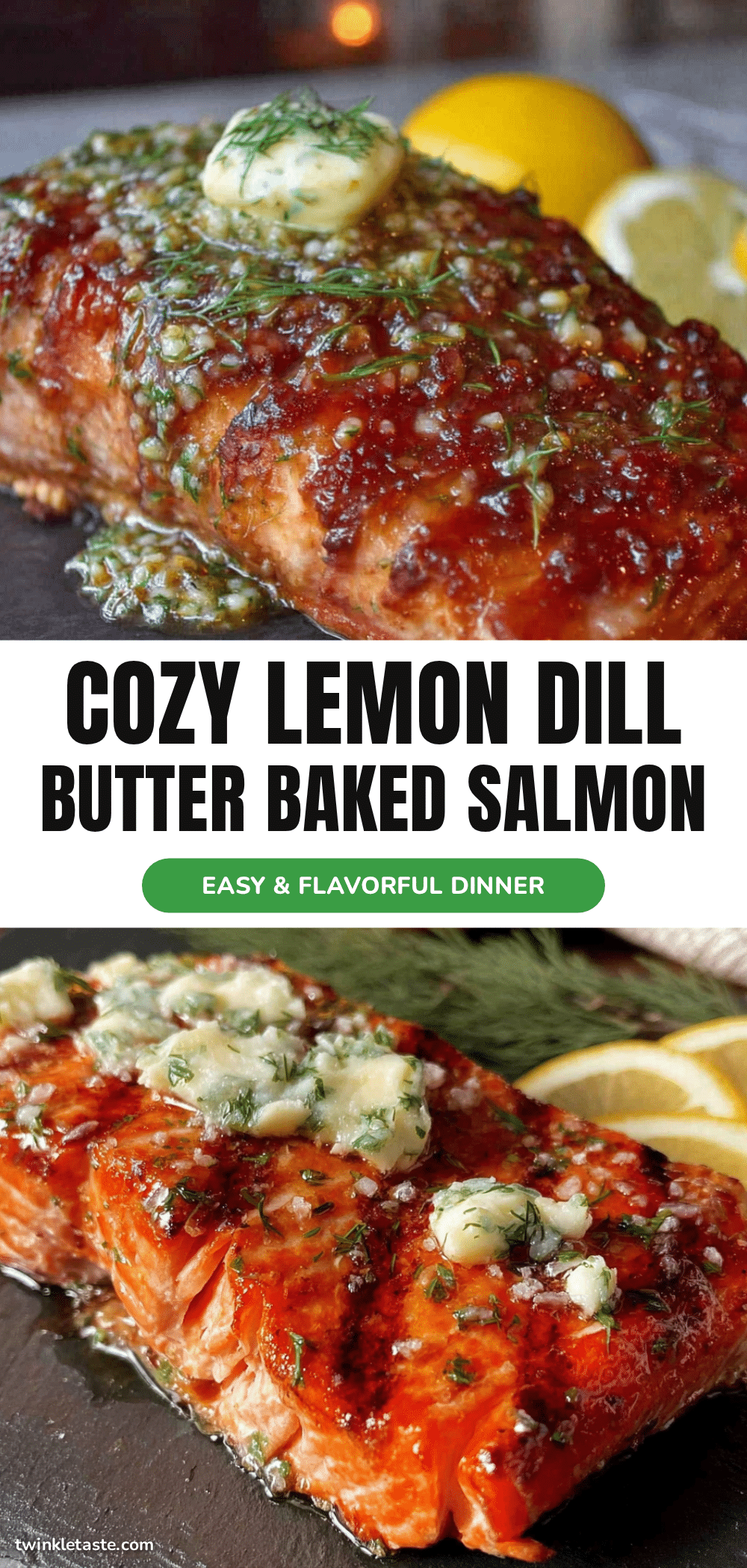
Cozy Lemon Dill Butter Baked Salmon: Easy 25-Minute Recipe

This lemon dill butter baked salmon is a quick and easy 25-minute recipe that’s perfect for busy weeknights or last-minute dinner parties. The butter creates a silky sauce while the lemon infuses the fish with bright citrus flavor, making it a crowd-pleaser every time.
- Prep Time: 10 minutes
- Cook Time: 15 minutes
- Total Time: 25 minutes
- Yield: 4 servings 1x
- Category: Main Course
- Cuisine: American
Ingredients
- 4 salmon fillets (6 oz each), skin on or off
- 1 lemon, thinly sliced
- 4 tablespoons unsalted butter, softened
- 2 tablespoons fresh dill, chopped (or 1 tablespoon dried dill)
- 2 cloves garlic, minced
- Salt and black pepper to taste
- 2 tablespoons capers, drained (optional)
- 1/4 cup chicken or vegetable broth (optional)
- Fresh dill sprigs for garnish
Instructions
- Preheat your oven to 400°F (200°C). Line your baking dish with parchment paper or foil for easy cleanup.
- Slice one lemon into thin rounds, about 1/4 inch thick. Lay them in a single layer on the bottom of the baking dish.
- Pat the salmon fillets dry with paper towels. Place them skin-side down on top of the lemon slices. Season generously with salt and black pepper.
- In a small bowl, combine the softened butter, chopped dill, and minced garlic. Mix until well combined.
- Divide the butter mixture evenly among the fillets, spreading it on top. If using capers, sprinkle them over the top now.
- If using broth, pour it around the salmon, not directly on top.
- Bake for 12-15 minutes, until the salmon flakes easily with a fork and the internal temperature reaches 145°F (63°C).
- Let the salmon rest in the dish for 2-3 minutes. Garnish with fresh dill sprigs and serve immediately.
Notes
Don’t overcook the salmon; it continues to cook after removal from the oven. Use room-temperature butter for even spreading. Pat the salmon dry to ensure a buttery texture. For a dairy-free version, substitute butter with olive oil or vegan butter. Leftovers can be stored in the refrigerator for up to 3 days and reheated gently in a 300°F oven or skillet.
Nutrition
- Serving Size: 1 fillet with sauce
- Calories: 400
- Sugar: 1
- Sodium: 350
- Fat: 26
- Saturated Fat: 12
- Carbohydrates: 3
- Protein: 36
Keywords: salmon, lemon, dill, butter, baked, quick, easy, 25-minute, weeknight dinner, healthy, gluten-free, low-carb