The woman at the community garden plot next to mine watched me struggle with a too-wet batch of pumpkin puree for a solid minute before she said anything. I was trying to scoop it into a measuring cup, but it kept splashing onto my sneakers. She just shook her head, laughed, and handed me a clean dish towel from her basket. “You’re fighting it,” she said. “Pumpkin wants to be treated gentle, not muscled around.” Her name was Gloria, and she’d been tending that same plot for thirty-seven years.
Gloria didn’t give me a recipe that day. She told me a story about her grandmother’s kitchen in Vermont, where the smell of cinnamon and nutmeg meant company was coming. She mentioned streusel almost as an afterthought—”the good part,” she called it, the crumbly topping her grandmother would press onto the loaf with her thumbprints still visible. I went home and tried to recreate what she described, and honestly, the first attempt was a disaster. Too dry, not enough spice, the streusel sank right into the batter like it was trying to hide.
But I kept at it. I called Gloria the next week and asked her to walk me through it again. She talked me through the texture of the streusel—”it should feel like wet sand, but lighter”—and told me to stop overmixing the batter. “You want it just combined,” she said. “A few lumps are friendly.” I’ve made this Wholesome Cinnamon Streusel Pumpkin Bread probably twenty times since then, and each time I think of Gloria standing in her garden, wiping dirt off her hands, sharing something that mattered to her. Maybe you’ve had that feeling—when a recipe arrives through a person, not a screen. That’s this bread.
Why You’ll Love This Recipe
This isn’t just another pumpkin bread recipe floating around the internet. I tested seven versions before landing on this one, and here’s what makes it different: it actually tastes indulgent while using ingredients that make you feel good about breakfast. Or snack time. Or, let’s be honest, 10 PM with a cup of tea.
- Quick & Easy: From start to oven in about 15 minutes. No stand mixer required, no complicated steps. Just a bowl, a whisk, and a spatula.
- Simple Ingredients: You probably have most of this in your pantry right now. Canned pumpkin, flour, sugar, eggs, oil, and the usual baking suspects. No weird specialty items.
- Perfect for Fall Mornings: This bread fills your kitchen with that cozy cinnamon-nutmeg smell that makes everyone wander in asking what’s baking. It’s equally at home on a Thanksgiving brunch table or a random Tuesday.
- Crowd-Pleaser: I brought a loaf to my book club last month, and three people asked for the recipe before I’d even poured my wine. It’s that kind of bread.
- Unbelievably Delicious: The streusel topping gets this perfect crunchy-crumbly texture that contrasts with the tender, moist pumpkin bread underneath. Every bite has that cinnamon-sugar hit that just makes you close your eyes for a second.
What really sets this apart is the balance. It’s sweet enough to feel like a treat, but not cloying. The pumpkin keeps it incredibly moist without making it dense. And that streusel? It stays on top instead of sinking, thanks to a trick I learned from Gloria about letting the batter rest for five minutes before adding the topping. Small things, big difference.
What Ingredients You Will Need
This recipe uses simple, wholesome ingredients to deliver that classic pumpkin bread flavor with a gorgeous streusel crown. Most are pantry staples, and I’ve included notes on substitutions where they actually work.
For the Pumpkin Bread
- Canned pumpkin puree, 1 cup (240g) — not pumpkin pie filling. Libby’s is my go-to for consistent texture. Make sure it’s 100% pure pumpkin.
- All-purpose flour, 1 ¾ cups (220g) — spoon and level it into your measuring cup. Scooping directly can add too much flour and make the bread dry.
- Granulated sugar, ¾ cup (150g) — for sweetness and structure. You can reduce to ½ cup if you prefer less sweet, but the texture may be slightly less tender.
- Brown sugar, ½ cup (100g), packed — adds moisture and a deeper, almost caramel-like flavor. Light or dark both work; dark gives more richness.
- Vegetable oil, ½ cup (120ml) — keeps the bread incredibly moist. Canola or melted coconut oil work too. I’ve used olive oil in a pinch, and it was fine, but the flavor is noticeable.
- Large eggs, 2, at room temperature — room temperature eggs incorporate more evenly. If you’re in a hurry, place them in warm water for 5 minutes.
- Vanilla extract, 1 teaspoon — pure vanilla makes a difference here. Imitation works, but the flavor is less rounded.
- Baking soda, 1 teaspoon — helps the bread rise and gives it a nice domed top.
- Baking powder, ½ teaspoon — for extra lift.
- Salt, ½ teaspoon — don’t skip it. Salt balances sweetness and enhances the pumpkin flavor.
- Ground cinnamon, 2 teaspoons — the star spice. I use McCormick, but any brand works as long as it’s fresh (replace yours if it’s more than a year old).
- Ground nutmeg, ½ teaspoon — freshly grated is amazing, but pre-ground is perfectly fine.
- Ground ginger, ¼ teaspoon — adds a subtle warmth you won’t pinpoint but will miss if it’s gone.
- Ground cloves, ⅛ teaspoon — just a whisper. Too much can overwhelm the bread.
For the Cinnamon Streusel Topping
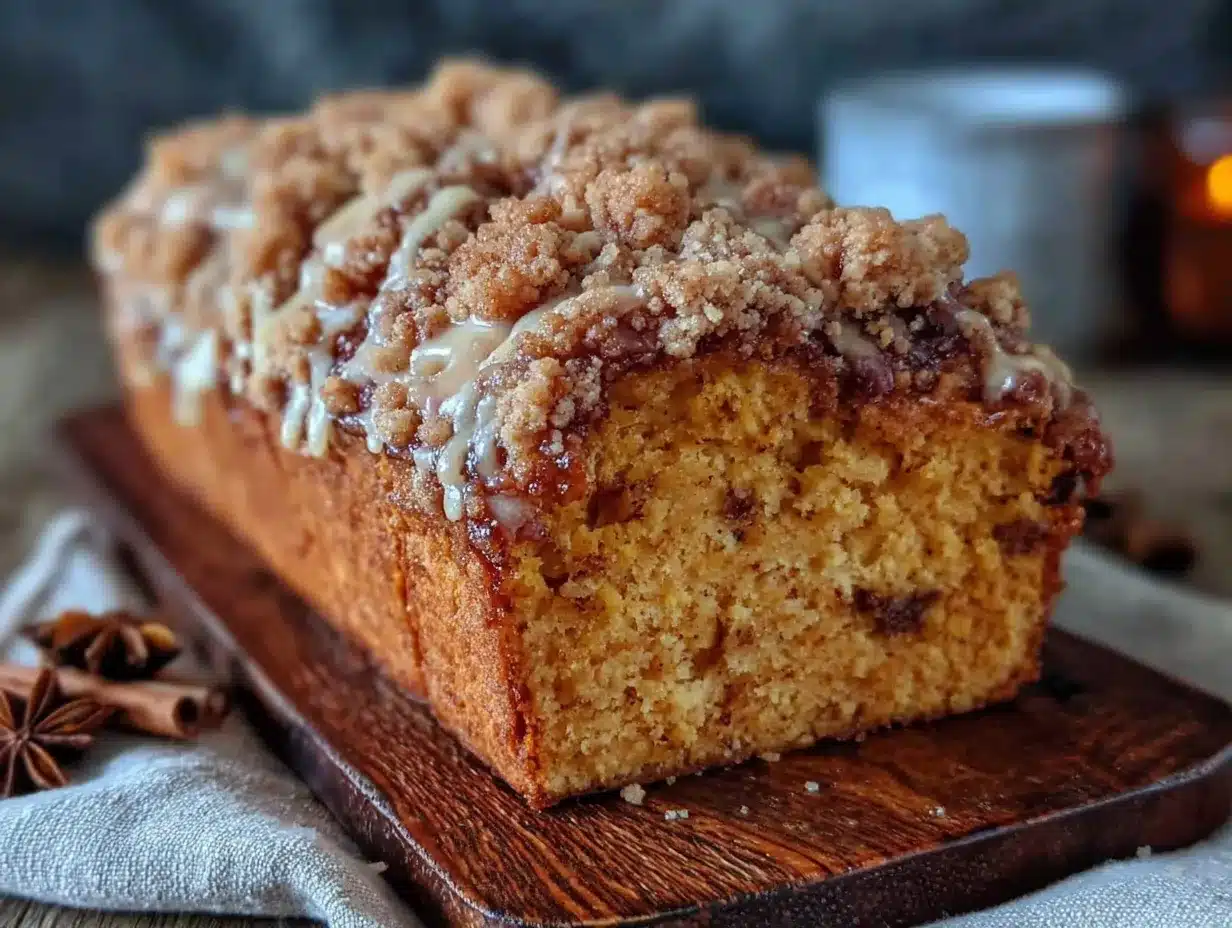
- All-purpose flour, ½ cup (60g)
- Brown sugar, ¼ cup (50g), packed
- Granulated sugar, 2 tablespoons (25g)
- Ground cinnamon, 1 tablespoon — yes, a full tablespoon. This is the cinnamon streusel part, so go bold.
- Salt, a pinch
- Unsalted butter, 3 tablespoons (42g), cold and cut into small cubes — cold butter is key for crumbly streusel. If it’s too soft, you’ll get a paste instead of crumbs.
Equipment Needed
You don’t need a fancy kitchen for this bread. Here’s what you’ll actually use:
- 9×5-inch loaf pan — standard size. If you use an 8×4, the bread will take longer to bake and may dome higher. Glass or metal both work; metal gives a nicer crust.
- Parchment paper — I line my pan with a sling of parchment paper that hangs over the long sides. Makes lifting the bread out so much easier, and cleanup is basically nothing.
- Two mixing bowls — one medium for dry ingredients, one large for wet. I use glass bowls because they don’t retain odors.
- Whisk — for combining dry ingredients and smoothing the wet mixture.
- Rubber spatula — for folding everything together without overmixing. A wooden spoon works too, but a spatula lets you scrape the sides better.
- Pastry cutter or fork — for cutting butter into the streusel flour mixture. Two knives work in a pinch, but a pastry cutter is faster and more consistent.
- Cooling rack — essential for even cooling. If you leave the bread in the pan too long, the bottom can get soggy.
- Measuring cups and spoons — dry and liquid measures are ideal, but I’ve used the same set for years and it’s fine.
I bought my first loaf pan at a thrift store for two dollars, and it worked perfectly. Don’t stress about having the “right” equipment. The bread doesn’t care.
Preparation Method
Preheat your oven to 350°F (175°C). Position the rack in the center. While it’s heating, line your loaf pan with parchment paper, letting about two inches hang over the long sides. Lightly spray any exposed sides with cooking spray.
Step 1: Make the streusel first. In a small bowl, combine the flour, brown sugar, granulated sugar, cinnamon, and salt. Add the cold butter cubes. Use a pastry cutter or your fingertips to work the butter into the dry ingredients until the mixture looks like coarse sand with some pea-sized butter pieces remaining. Don’t overwork it—you want those little butter chunks to create crumbly pockets. Set the bowl in the refrigerator while you make the batter. Cold streusel stays on top of the bread instead of sinking.
Step 2: Mix the dry ingredients. In a medium bowl, whisk together the flour, baking soda, baking powder, salt, cinnamon, nutmeg, ginger, and cloves. Whisk for about 20 seconds to aerate and distribute the spices evenly. Set aside.
Step 3: Combine the wet ingredients. In a large bowl, whisk together the pumpkin puree, granulated sugar, brown sugar, vegetable oil, eggs, and vanilla extract. Whisk until smooth and well combined. The mixture will be thick and glossy. Make sure there are no streaks of egg white.
Step 4: Fold in the dry ingredients. Add the dry ingredients to the wet mixture. Use a rubber spatula to fold gently, scraping from the bottom and turning the bowl as you go. Stop as soon as you no longer see streaks of flour. A few lumps are fine—actually, they’re desirable. Overmixing develops gluten and makes the bread tough. You want tender, not tough.
Step 5: Rest the batter. Here’s the trick Gloria taught me: let the batter sit in the bowl for 5 minutes before pouring it into the pan. This allows the flour to fully hydrate and the baking soda to start activating. It also slightly thickens the batter, which helps the streusel stay on top. I know it feels like wasted time, but it makes a real difference.
Step 6: Assemble the loaf. Scrape the batter into the prepared loaf pan and spread it evenly. Sprinkle the cold streusel over the top, breaking up any large clumps with your fingers. Press the streusel down very gently—just enough so it sticks, not so much that it sinks.
Step 7: Bake. Place the pan in the preheated oven and bake for 55 to 65 minutes. At the 45-minute mark, check the top. If the streusel is browning too quickly, tent the pan loosely with aluminum foil. The bread is done when a toothpick inserted into the center comes out clean or with a few moist crumbs (not wet batter). The internal temperature should read around 200°F (93°C) if you have an instant-read thermometer.
Step 8: Cool properly. Let the bread cool in the pan on a wire rack for 15 minutes. Then use the parchment sling to lift it out and transfer it directly to the rack to cool completely. Resist the urge to slice it warm—it will be too tender and might crumble. I know it smells incredible. Wait at least an hour. Trust me.
Cooking Tips & Techniques
I’ve made this bread enough times to learn what works and what doesn’t. Here are the things I wish someone had told me earlier:
Don’t overmix the batter. This is the number one mistake people make with quick breads. Mix until the flour disappears, then stop. Those last few streaks of flour? Fold them in gently. Vigorous mixing creates tunnels and a rubbery texture. You want a tender crumb, not a hockey puck.
Check your pumpkin puree. Some brands are more watery than others. If your puree looks thin or has liquid pooling on top, spoon it onto a paper towel-lined plate and let it sit for a few minutes to absorb excess moisture. Too much liquid will make the bread dense and gummy in the center.
Cold streusel is non-negotiable. I learned this the hard way after three loaves where the streusel disappeared into the batter like it was playing hide and seek. Keep the streusel in the fridge until the moment you’re ready to sprinkle it on. The cold butter stays solid longer in the oven, creating those lovely crumbly pockets instead of melting into the batter.
Use a kitchen scale if you have one. Measuring flour by volume can be inconsistent. One cup can range from 120g to 150g depending on how you scoop. A scale gives you consistent results every time. If you don’t have one, fluff your flour with a spoon, then spoon it into your measuring cup and level it off with a knife.
Let it rest overnight. I know, I know. But if you can wait until the next day to slice this bread, the flavors meld together beautifully. The pumpkin and spices become more pronounced, and the texture evens out. Wrap the cooled loaf tightly in plastic wrap and leave it on the counter. Tomorrow’s breakfast will thank you.
Variations & Adaptations
This recipe is forgiving and adaptable. Here are some ways to make it your own:
Gluten-Free Version: Substitute the all-purpose flour with a 1:1 gluten-free baking flour blend that contains xanthan gum. I’ve used King Arthur Measure for Measure with great results. The texture is slightly more delicate, so let it cool completely before slicing.
Dairy-Free Adaptation: Use melted coconut oil or a neutral vegetable oil instead of butter in the streusel. The texture will be slightly different—more sandy than crumbly—but still delicious. The bread itself is already dairy-free.
Add Mix-Ins: Fold in ½ cup of chocolate chips, chopped pecans, or dried cranberries after combining the wet and dry ingredients. I made a version with dark chocolate chips and orange zest last fall, and it was honestly dangerous. The chocolate melts into little pockets of richness.
Spice It Up: Add ¼ teaspoon of cardamom or allspice for a different flavor profile. Cardamom pairs beautifully with pumpkin and gives the bread a slightly floral, exotic note. My sister-in-law prefers it this way and makes it every Thanksgiving.
Maple Glaze Option: For an extra-special version, whisk together ½ cup powdered sugar, 2 tablespoons maple syrup, and 1 tablespoon milk until smooth. Drizzle over the completely cooled bread. It adds a beautiful finish and another layer of fall flavor.
Mini Loaves or Muffins: Divide the batter among 3 mini loaf pans or 12 muffin cups. Bake mini loaves for 30-35 minutes and muffins for 18-22 minutes. Adjust the streusel amount accordingly—you’ll have plenty for all.
Serving & Storage Suggestions
This bread is wonderful at room temperature, but I actually prefer it slightly warm. If you’ve waited overnight (impressive), pop a slice in the microwave for 10 seconds or in a 300°F oven for 5 minutes. The streusel gets a little crunchy again, and the pumpkin flavor really opens up.
For serving, I like to keep it simple. A pat of salted butter melting into a warm slice is perfection. For a more decadent breakfast, toast the slices in a buttered skillet until golden on both sides. It also pairs beautifully with a hot cup of coffee, a chai latte, or a glass of cold milk.
Storage: Wrap the cooled loaf tightly in plastic wrap and store at room temperature for up to 4 days. The streusel will soften slightly over time, but the bread stays incredibly moist. If your kitchen is warm or humid, store it in an airtight container instead to prevent mold.
Freezing: This bread freezes beautifully. Wrap the completely cooled loaf (or individual slices) in plastic wrap, then a layer of aluminum foil. Freeze for up to 3 months. To thaw, leave it on the counter for a few hours or microwave a slice for 30 seconds. The streusel won’t be as crunchy after freezing, but the flavor is still fantastic.
Flavor Development: Honestly, this bread tastes better on day two. The spices settle, the moisture distributes evenly, and the sweetness becomes more balanced. If you can plan ahead, make it a day before you need it. Your future self will be grateful.
Nutritional Information & Benefits
Per slice (1/12 of loaf): approximately 280 calories, 12g fat, 38g carbohydrates, 4g protein, 2g fiber, 18g sugar. Values are estimates and will vary based on specific ingredients and substitutions.
Pumpkin is the real star here nutritionally. It’s packed with vitamin A (beta-carotene), which supports eye health and immune function. It’s also a good source of fiber and potassium. Using oil instead of butter keeps the saturated fat lower than traditional pumpkin bread recipes.
This bread works well for most dietary preferences. It’s naturally dairy-free (if you use a dairy-free streusel), and the gluten-free version is reliable. It’s not low-carb or keto-friendly due to the sugar and flour, but it’s a reasonable treat within a balanced diet. I personally love that I can serve it for breakfast without feeling like I’m starting the day with dessert—though it’s sweet enough to feel like one.
Potential allergens: wheat/gluten, eggs, dairy (in streusel butter). The bread itself contains no nuts, but check your ingredient labels if cross-contamination is a concern.
Conclusion
This Wholesome Cinnamon Streusel Pumpkin Bread is the kind of recipe that becomes a fall tradition. It’s simple enough for a weekday morning, special enough for a holiday table, and forgiving enough for beginner bakers. The streusel topping adds that bakery-style touch, the pumpkin keeps everything moist and tender, and the cinnamon-warm spice blend makes your whole kitchen smell like October.
I hope you make this bread and make it your own. Add chocolate chips if that’s your thing. Swap the spices to suit your mood. Share it with someone who needs a warm moment in their day. That’s what Gloria did for me, and I’m still grateful for that conversation in the garden.
If you try this recipe, I’d love to hear how it turned out. Leave a comment below or tag me in your photos—there’s nothing better than seeing pumpkin bread in someone else’s kitchen. Happy baking, friends.
Frequently Asked Questions
Can I use fresh pumpkin instead of canned?
Yes, but you’ll need to roast and puree it first, then strain it to remove excess moisture. Fresh pumpkin puree is often more watery than canned, so spread it on a paper towel-lined plate for 10 minutes before using. Canned pumpkin is more consistent and convenient, which is why I recommend it.
Why did my streusel sink into the batter?
This usually happens for one of two reasons: the streusel was too warm (keep it refrigerated until the last minute), or the batter was too thin (try the 5-minute rest I mention in the method). Pressing the streusel down gently helps too.
Can I make this recipe into muffins?
Absolutely. Divide the batter among 12 muffin cups lined with paper liners. Sprinkle streusel on top and bake at 350°F for 18-22 minutes, until a toothpick comes out clean. Check at 18 minutes—muffins bake faster than loaves, and you don’t want dry edges.
How do I know when the bread is fully baked?
A toothpick inserted into the center should come out clean or with a few moist crumbs, not wet batter. The internal temperature should be around 200°F (93°C). The top should spring back when lightly pressed. If the streusel is browning too fast, tent with foil at the 45-minute mark.
Can I reduce the sugar in this recipe?
You can reduce the granulated sugar to ½ cup (from ¾ cup) without significantly affecting the texture. Reducing further may make the bread less tender and moist. The streusel needs its sugar for the crumbly texture, so I wouldn’t reduce that. The bread is sweet but not cloying—it’s balanced by the pumpkin and spices.
Pin This Recipe!
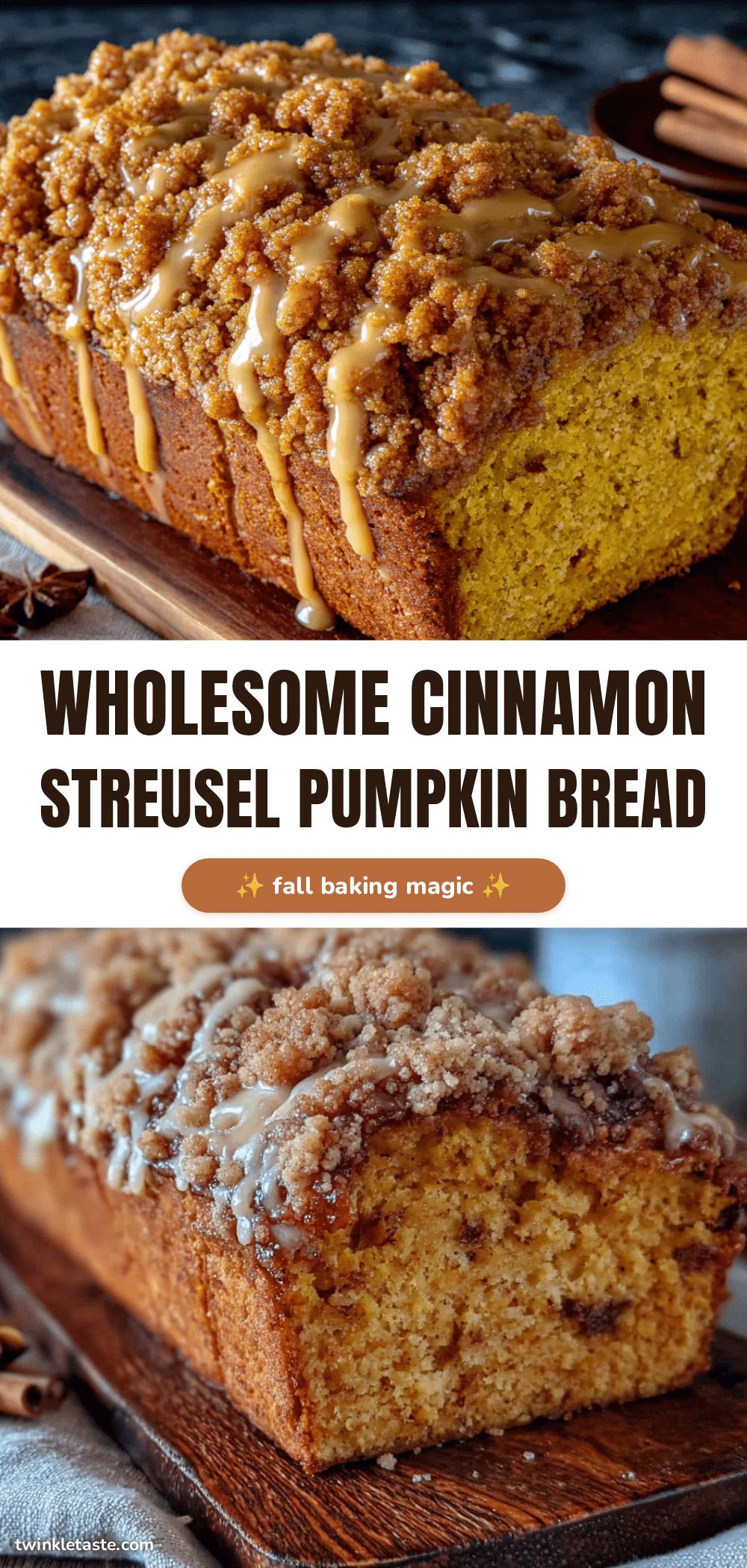
Wholesome Cinnamon Streusel Pumpkin Bread

This easy fall pumpkin bread features a tender, moist crumb and a crunchy cinnamon streusel topping. It’s a simple, crowd-pleasing recipe that fills your kitchen with cozy autumn aromas.
- Prep Time: 15 minutes
- Cook Time: 55-65 minutes
- Total Time: 1 hour 10 minutes to 1 hour 20 minutes
- Yield: 12 servings 1x
- Category: Bread / Breakfast
- Cuisine: American
Ingredients
- 1 cup (240g) canned pumpkin puree (not pumpkin pie filling)
- 1 ¾ cups (220g) all-purpose flour
- ¾ cup (150g) granulated sugar
- ½ cup (100g) packed brown sugar
- ½ cup (120ml) vegetable oil
- 2 large eggs, at room temperature
- 1 teaspoon vanilla extract
- 1 teaspoon baking soda
- ½ teaspoon baking powder
- ½ teaspoon salt
- 2 teaspoons ground cinnamon
- ½ teaspoon ground nutmeg
- ¼ teaspoon ground ginger
- ⅛ teaspoon ground cloves
- For the streusel:
- ½ cup (60g) all-purpose flour
- ¼ cup (50g) packed brown sugar
- 2 tablespoons (25g) granulated sugar
- 1 tablespoon ground cinnamon
- Pinch of salt
- 3 tablespoons (42g) unsalted butter, cold and cut into small cubes
Instructions
- Preheat oven to 350°F (175°C). Line a 9×5-inch loaf pan with parchment paper, letting about 2 inches hang over the long sides. Lightly spray any exposed sides with cooking spray.
- Make the streusel: In a small bowl, combine flour, brown sugar, granulated sugar, cinnamon, and salt. Add cold butter cubes. Use a pastry cutter or fingertips to work butter into dry ingredients until mixture resembles coarse sand with some pea-sized butter pieces. Refrigerate while making batter.
- Mix dry ingredients: In a medium bowl, whisk together flour, baking soda, baking powder, salt, cinnamon, nutmeg, ginger, and cloves for about 20 seconds. Set aside.
- Combine wet ingredients: In a large bowl, whisk together pumpkin puree, granulated sugar, brown sugar, vegetable oil, eggs, and vanilla extract until smooth and well combined.
- Fold in dry ingredients: Add dry ingredients to wet mixture. Use a rubber spatula to fold gently until just combined (a few lumps are fine). Do not overmix.
- Rest the batter: Let batter sit in bowl for 5 minutes to hydrate flour and activate baking soda.
- Assemble loaf: Scrape batter into prepared pan and spread evenly. Sprinkle cold streusel over top, breaking up large clumps. Press streusel down very gently.
- Bake for 55-65 minutes. At 45 minutes, check top; if browning too quickly, tent loosely with foil. Bread is done when a toothpick inserted in center comes out clean or with a few moist crumbs (internal temperature ~200°F / 93°C).
- Cool in pan on wire rack for 15 minutes. Use parchment sling to lift bread out and transfer to rack to cool completely (at least 1 hour) before slicing.
Notes
For best results, keep streusel cold until ready to use to prevent sinking. Let batter rest 5 minutes before adding streusel. Bread tastes even better on day two. To freeze, wrap cooled loaf tightly in plastic wrap and foil; freeze up to 3 months.
Nutrition
- Serving Size: 1 slice (1/12 of loa
- Calories: 280
- Sugar: 18
- Sodium: 280
- Fat: 12
- Saturated Fat: 3
- Carbohydrates: 38
- Fiber: 2
- Protein: 4
Keywords: pumpkin bread, cinnamon streusel, fall recipe, easy pumpkin bread, quick bread, autumn baking