The sourdough starter had been staring at me from the back of the fridge for four days. You know that look—the one that says “feed me or use me, but stop ignoring me.” I had a half-can of pumpkin puree leftover from a batch of pumpkin banana bread I’d made earlier that week, and honestly, I was tired of pancakes. The kitchen smelled like cinnamon and desperation, and I needed something that felt like a win, not another science experiment gone wrong.
I pulled out my favorite loaf pan (the one with the little chip on the corner that I refuse to throw away) and started throwing things together. Butter, brown sugar, eggs—the usual suspects. Then I grabbed that jar of discard, still bubbling ever so slightly, and thought, why not? I mean, what’s the worst that could happen? A dense brick of a loaf? Been there. Eaten that. It wouldn’t be the first time.
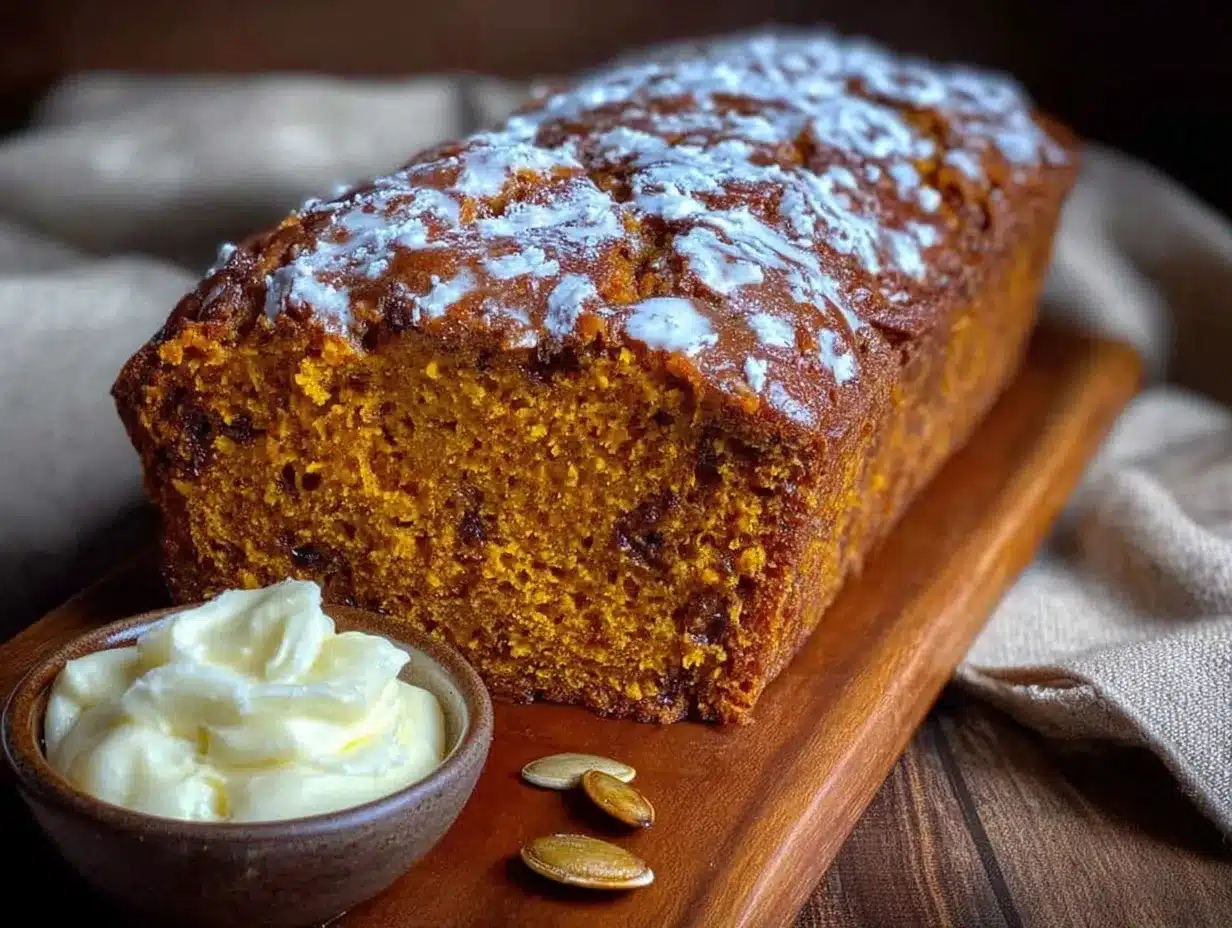
But something clicked when I folded the pumpkin into the sourdough mixture. The batter turned this gorgeous sunset orange, and the tang from the starter met the warm spices in a way that felt intentional, not accidental. Thirty minutes later, my whole apartment smelled like a bakery in October—if that bakery also had a slightly chaotic baker who didn’t measure her vanilla extract. I pulled the loaf out of the oven, let it cool just long enough to not burn my tongue, and took a bite. The texture was unreal. Moist, tender, with that subtle sourdough tang playing hide-and-seek with the pumpkin and cinnamon. I knew right then this recipe was staying in rotation. It’s the kind of bread that doesn’t need butter—but you’ll add it anyway, because you deserve it.
Why You’ll Love This Recipe
Let me tell you why this tender sourdough discard pumpkin bread is about to become your new favorite fall baking project. I’ve tested this recipe six times—yes, six—to get the moisture level exactly right. Too much discard and it gets gummy. Too little and you lose that signature tang. This version hits the sweet spot, and I’m genuinely proud of it.
- Uses Up Your Sourdough Discard: No more guilt about tossing that unfed starter. This recipe turns your discard into something beautiful.
- Incredibly Moist Texture: The combination of pumpkin puree and sourdough discard creates a tender crumb that stays soft for days. I’m talking leftovers-that-taste-better-than-the-first-day moist.
- Perfectly Balanced Flavor: The tangy sourdough notes cut through the sweetness of the pumpkin and brown sugar, creating a complex flavor profile that’s anything but one-note.
- Simple Ingredients: You probably have most of these in your pantry right now. No fancy extracts or hard-to-find flours.
- Freezer-Friendly: Make two loaves. Freeze one for later. Future you will be so grateful when unexpected guests show up or you just need a slice of something cozy.
- Crowd-Pleaser: I brought this to a friend’s fall gathering and three people asked for the recipe before I even left. It’s that kind of bread—the one people remember.
What makes this recipe different from every other pumpkin bread out there? It’s the sourdough discard, honestly. That little bit of fermentation adds a depth you can’t get from vanilla extract alone. It’s subtle, but once you notice it, you’ll never want plain pumpkin bread again. This isn’t just another version—it’s the version that makes you close your eyes after the first bite.
What Ingredients You Will Need
This recipe uses simple, wholesome ingredients to deliver that signature tender crumb and balanced flavor. Most of these are pantry staples, which makes this perfect for those “I need to bake something but I don’t want to go to the store” moments.
For the Bread
- All-purpose flour (2 cups / 240g) – Regular all-purpose flour works beautifully here. I’ve tested it with bread flour too, and it comes out slightly denser but still delicious. Stick with AP for the most tender result.
- Baking soda (1 teaspoon) – This helps the bread rise and gives it that nice domed top. Make sure it’s fresh—test it by dropping a little in vinegar; if it fizzes, you’re good.
- Baking powder (½ teaspoon) – Adds extra lift since sourdough discard doesn’t have the same leavening power as an active starter.
- Ground cinnamon (2 teaspoons) – The backbone of the spice blend. I use Saigon cinnamon when I can find it—it’s stronger and more aromatic.
- Ground nutmeg (½ teaspoon) – Freshly grated if you have it, but pre-ground works fine.
- Ground ginger (½ teaspoon) – Adds warmth without being overpowering.
- Ground cloves (¼ teaspoon) – A little goes a long way. Don’t skip it—it rounds out the spices.
- Salt (½ teaspoon) – Balances the sweetness and enhances all the flavors.
- Unsalted butter (½ cup / 113g, melted) – Melted butter gives the bread a richer flavor than oil, but you can substitute with coconut oil or vegetable oil if needed.
- Brown sugar (1 cup / 200g, packed) – Light or dark brown sugar both work. Dark brown sugar will give you a deeper, more molasses-like flavor. I prefer dark brown here.
- Granulated sugar (¼ cup / 50g) – Just enough to balance the molasses notes from the brown sugar.
- Large eggs (2, room temperature) – Room temperature eggs incorporate more evenly into the batter. If you forgot to take them out early, place them in a bowl of warm water for 5 minutes.
- Pumpkin puree (1 cup / 245g) – Make sure you’re using pure pumpkin puree, not pumpkin pie filling. I prefer Libby’s for consistent results, but store brands work too.
- Sourdough discard (1 cup / 240g, unfed, room temperature) – This can be straight from the fridge or fed yesterday. The discard doesn’t need to be active—that’s the beauty of this recipe. It just needs to be at room temperature so it mixes in smoothly.
- Vanilla extract (2 teaspoons) – Pure vanilla extract makes a difference here. Save the imitation stuff for cookies.
Optional Add-Ins
- Chocolate chips (½ cup / 90g) – Semi-sweet or dark chocolate chips add little pockets of melty goodness. I’ve made this with both and can’t decide which version I like more.
- Pepitas (¼ cup) – Sprinkle on top before baking for a nice crunch and a beautiful presentation.
- Turbinado sugar (1 tablespoon) – Sprinkle over the batter before baking for a sparkly, crunchy top crust.
Equipment Needed
You don’t need a professional bakery setup for this recipe. Here’s what you’ll need:
- 9×5-inch loaf pan – This is the standard size for a loaf of bread. If you only have an 8×4-inch pan, the baking time will be slightly longer, and the loaf will be taller. Just keep an eye on it.
- Mixing bowls – One large bowl for the wet ingredients and one medium bowl for the dry ingredients.
- Whisk – For combining the dry ingredients and smoothing out the wet mixture.
- Rubber spatula – For folding everything together without overmixing. I have a favorite green one with a wooden handle that’s seen better days, but it still does the job.
- Parchment paper – Lining the loaf pan makes removal a breeze. You can also grease the pan with butter and flour, but parchment is foolproof.
- Cooling rack – Letting the bread cool completely on a rack prevents the bottom from getting soggy. If you don’t have one, you can use the oven rack (just make sure it’s clean).
- Measuring cups and spoons – For accurate measurements. I know some bakers swear by a kitchen scale, and I’m one of them—it’s more precise and means fewer dishes.
If you don’t have a loaf pan, you can bake this in an 8×8-inch square pan for about 25-30 minutes. It won’t be as tall, but it’ll still taste amazing. Also, a cheap loaf pan from the dollar store works just as well as an expensive one—I’ve used both and the bread doesn’t know the difference.
Preparation Method
- Preheat your oven to 350°F (175°C). Position the rack in the center of the oven. Line your 9×5-inch loaf pan with parchment paper, leaving some overhang on the long sides—this creates handles for lifting the bread out later. Lightly grease the parchment with butter or cooking spray.
- Whisk together the dry ingredients. In a medium bowl, combine 2 cups all-purpose flour, 1 teaspoon baking soda, ½ teaspoon baking powder, 2 teaspoons cinnamon, ½ teaspoon nutmeg, ½ teaspoon ginger, ¼ teaspoon cloves, and ½ teaspoon salt. Whisk until everything is evenly distributed. Set aside.
- Mix the wet ingredients. In a large bowl, whisk together ½ cup melted unsalted butter and 1 cup packed brown sugar plus ¼ cup granulated sugar until smooth. The mixture should look like wet sand—grainy but cohesive. Add 2 room-temperature eggs, one at a time, whisking well after each addition. The batter will get lighter and a bit fluffy.
- Add the pumpkin and sourdough discard. Pour in 1 cup pumpkin puree, 1 cup sourdough discard, and 2 teaspoons vanilla extract. Whisk until everything is fully combined. The mixture will look a bit curdled at this point—don’t panic. That’s normal when you combine cold ingredients with warm ones. Just keep whisking until it smooths out.
- Fold in the dry ingredients. Add the dry ingredients to the wet mixture in two additions. Use a rubber spatula to fold gently—just until you don’t see any more flour streaks. Overmixing will make the bread tough, so stop as soon as it comes together. If you’re adding chocolate chips, fold them in now.
- Pour the batter into the prepared pan. Use your spatula to spread it evenly. The batter will be thick and slightly shaggy—that’s okay. Smooth the top gently. If you’re using pepitas or turbinado sugar, sprinkle them on top now.
- Bake for 50-60 minutes. Start checking at 50 minutes. The bread is done when a toothpick inserted into the center comes out clean or with just a few moist crumbs. If the top is browning too quickly (around 35-40 minutes), tent the pan loosely with aluminum foil. Every oven is different, so trust your toothpick more than the timer.
- Cool in the pan for 10 minutes. This allows the bread to set and makes it easier to remove. After 10 minutes, lift the bread out using the parchment paper handles and transfer it to a cooling rack. Let it cool completely before slicing—I know it’s tempting, but slicing while it’s warm will give you a crumbly mess. Trust me, I’ve made that mistake more times than I’d like to admit.
Cooking Tips & Techniques
Here’s the thing about baking with sourdough discard—it’s not as predictable as baking with an active starter. But that’s also what makes it forgiving. I’ve learned a few things the hard way so you don’t have to.
Room temperature ingredients matter more than you think. Cold eggs and cold discard will seize up your melted butter, creating lumps that are impossible to smooth out. Take everything out of the fridge 30 minutes before you start. If you forget (which I do, constantly), place the eggs in warm water for 5 minutes and microwave the discard in 10-second bursts until it’s no longer cold to the touch.
Don’t overmix the batter. This is the number one mistake I see in pumpkin bread recipes. Mix until the flour just disappears. A few streaks are fine. Overmixing develops gluten, which gives you a tough, rubbery loaf instead of that tender crumb we’re after. I learned this lesson after baking a loaf that could have doubled as a doorstop.
Check your baking soda freshness. Sourdough discard is acidic, and baking soda needs acid to activate. If your baking soda is old, your bread won’t rise properly. Test it by dropping a pinch into vinegar—if it fizzes vigorously, you’re good. If it barely bubbles, buy a new box.
Use the parchment paper trick. Line your loaf pan with parchment paper, leaving overhang on the long sides. This makes removing the bread so much easier—no flipping, no sticking, no broken loaves. It’s one of those small things that makes a big difference.
Let it cool completely. I know it smells incredible and you want a slice right now. But cutting into warm bread releases steam too quickly, and the crumb will collapse. You’ll end up with a gummy texture and a sad baker. Give it at least an hour on the cooling rack. Use that time to make a cup of tea or clean up your kitchen.
Variations & Adaptations
This recipe is surprisingly flexible. Here are some ways to make it your own:
Gluten-Free Version: Substitute the all-purpose flour with a 1:1 gluten-free baking blend that contains xanthan gum. I’ve tested this with Bob’s Red Mill 1:1 and it worked beautifully. The texture is slightly more crumbly, but the flavor is spot on. Add an extra tablespoon of sourdough discard to help with moisture.
Dairy-Free Adaptation: Use melted coconut oil or a neutral vegetable oil instead of butter. The flavor will be slightly different—less rich, but still delicious. I’ve also used vegan butter sticks with good results. Just make sure they’re unsalted.
Chocolate Chip Version: Fold in ½ cup of semi-sweet or dark chocolate chips after the flour is incorporated. The chocolate melts into little pockets of richness that pair beautifully with the pumpkin and sourdough tang. I made this version for my neighbor and she said it was the best pumpkin bread she’d ever had—and she’s not the type to exaggerate.
Spiced-Up Version: Add ¼ teaspoon of cardamom or allspice to the spice blend for a more complex flavor profile. Cardamom and pumpkin are an underrated combination—it adds a floral note that feels elegant without being fussy.
Nutty Version: Fold in ½ cup of toasted pecans or walnuts along with the flour. Toast them first in a dry pan over medium heat for 3-4 minutes until fragrant. This brings out their natural oils and adds a wonderful crunch.
Lower Sugar Option: Reduce the brown sugar to ¾ cup and the granulated sugar to 2 tablespoons. The bread will be less sweet, but the pumpkin and spices will still shine. This version is perfect for breakfast or with a smear of cream cheese.
Serving & Storage Suggestions
This tender sourdough discard pumpkin bread is best served at room temperature, but it’s also delicious slightly warm. If you want that fresh-from-the-oven experience, pop a slice in the microwave for 10-15 seconds or toast it lightly in a skillet with a pat of butter. The butter melts into the warm crumb and it’s honestly one of the best things you’ll eat all fall.
For a truly indulgent treat, spread a slice with cream cheese frosting or a dollop of whipped cream. I’ve also been known to eat it with a generous smear of salted butter and a drizzle of honey—don’t judge until you try it.
Storage: Wrap the cooled loaf tightly in plastic wrap or aluminum foil and store at room temperature for up to 4 days. The bread actually gets better on day two—the flavors meld and the texture becomes even more tender. If you live in a humid environment (hello, southern kitchens), store it in an airtight container instead to prevent mold.
Freezing: This bread freezes beautifully. Wrap the cooled loaf in plastic wrap, then a layer of aluminum foil, and freeze for up to 3 months. To thaw, leave it on the counter overnight or pop individual slices in the microwave for 20-30 seconds. I always make two loaves and freeze one for those days when I need a little fall comfort in January.
Make-Ahead Tip: You can prepare the dry ingredient mix and store it in a zip-top bag for up to a month. When you’re ready to bake, just add the wet ingredients. This makes it perfect for spontaneous baking sessions—just grab your discard and go.
Nutritional Information & Benefits
Here’s the approximate nutritional breakdown per slice (based on 10 slices):
- Calories: 295
- Fat: 11g
- Carbohydrates: 45g
- Fiber: 2g
- Sugar: 24g
- Protein: 5g
This bread offers some surprising nutritional benefits thanks to its key ingredients. Pumpkin puree is packed with vitamin A (from beta-carotene), which supports eye health and immune function. It’s also a good source of fiber and potassium. The sourdough fermentation process breaks down some of the phytic acid in the flour, making the nutrients more bioavailable—so your body can actually use them. Plus, sourdough has a lower glycemic index compared to bread made with commercial yeast, which means it won’t spike your blood sugar as dramatically.
If you’re watching your sugar intake, you can reduce the sugar as mentioned in the variations section. The bread will still be delicious, just less sweet. This recipe is also vegetarian and can be made dairy-free and gluten-free with the substitutions listed above.
Frequently Asked Questions
Can I use active sourdough starter instead of discard?
Yes, you can. The bread will be slightly less tangy and may rise a bit more since active starter has more leavening power. Just make sure your starter is at room temperature before mixing. The texture will still be tender and delicious.
Why did my pumpkin bread sink in the middle?
This usually happens when the bread is underbaked or when the oven temperature is too low. Make sure your oven is fully preheated to 350°F before baking. Also, avoid opening the oven door during the first 30 minutes of baking—the cold air can cause the bread to collapse.
Can I make this recipe into muffins instead of a loaf?
Absolutely. Grease a 12-cup muffin tin or line it with paper liners. Fill each cup about ¾ full and bake at 350°F for 18-22 minutes, or until a toothpick comes out clean. You’ll get about 14-16 muffins. They’re perfect for breakfast on the go!
How do I know when my sourdough discard is ready to use?
Your discard can be used straight from the fridge—no need to feed it or let it come to room temperature first (though room temperature mixes more easily). If your discard has a layer of dark liquid (hooch) on top, just stir it back in. That liquid is full of flavor and won’t hurt the bread.
Can I leave out the pumpkin puree and make this as plain sourdough bread?
You can, but you’ll need to adjust the liquid ratio. Replace the pumpkin puree with an equal amount of buttermilk or plain yogurt to maintain the moisture level. The spices can be reduced or omitted based on your preference. The result will be a tender, tangy sourdough quick bread that’s perfect for toast.
Conclusion
This tender sourdough discard pumpkin bread is one of those recipes that makes you feel like a genius in the kitchen—even when you’re just using up leftovers from your fridge. It’s forgiving enough for beginners, interesting enough for experienced bakers, and delicious enough to earn a permanent spot in your fall baking rotation. The combination of tangy sourdough and sweet, spiced pumpkin is something special, and I’m so glad I stumbled into it that chaotic afternoon.
I’d love to hear how yours turns out. Did you add chocolate chips? Did you try the gluten-free version? Did you eat half the loaf before it even cooled down? (No judgment here—I’ve been there.) Leave a comment below and let me know what variations you tried. And if you’re looking for more cozy fall recipes, don’t miss my brown butter pumpkin cream cheese muffins or this one-bowl pumpkin banana bread—they’re both perfect companions to this loaf.
Happy baking, friends. May your kitchen smell like cinnamon and your heart feel full.
Pin This Recipe!
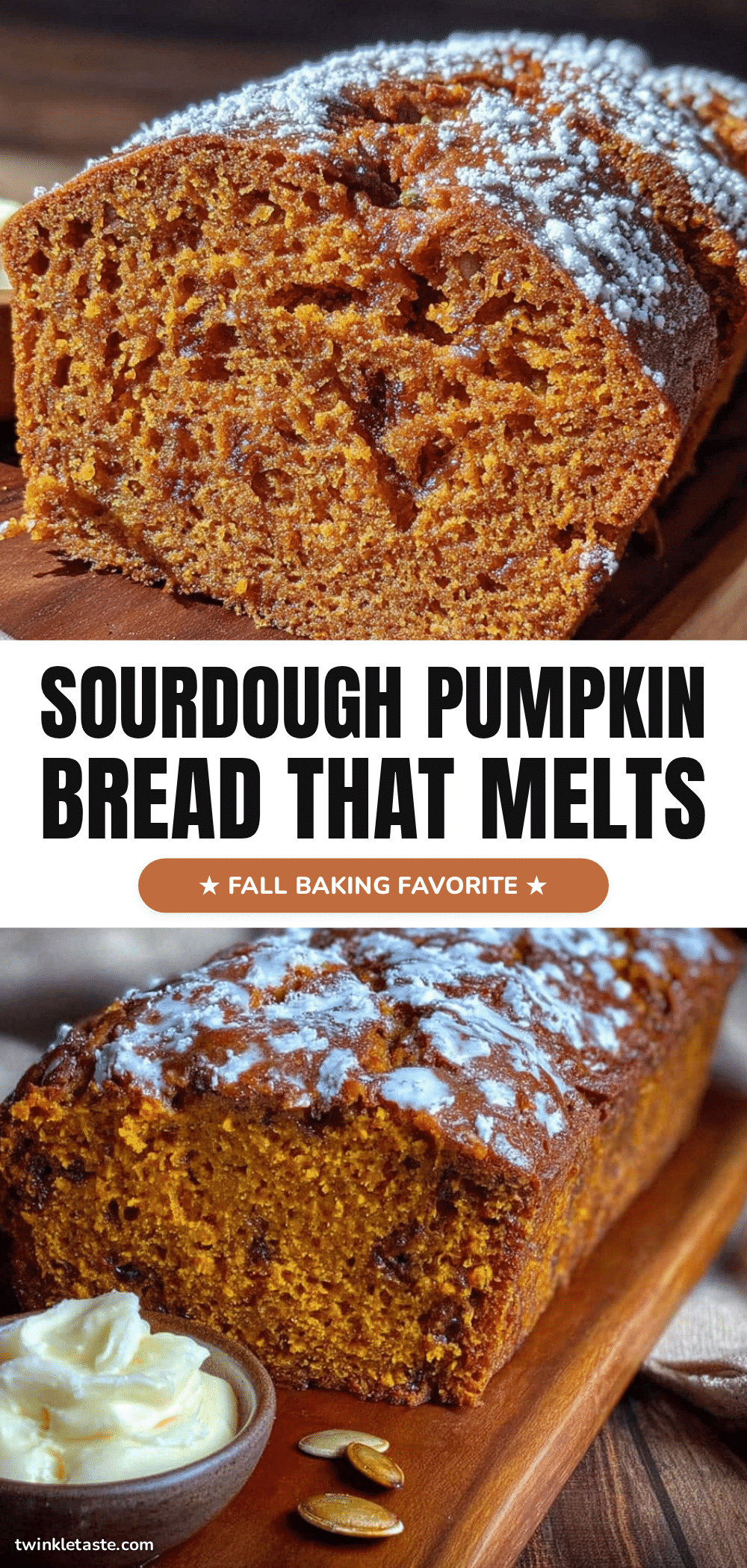
Tender Sourdough Discard Pumpkin Bread
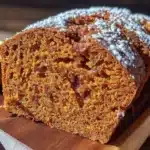
This tender sourdough discard pumpkin bread uses up your unfed starter for a moist, tangy loaf with warm spices. It’s the perfect fall baking project that turns leftover discard into something beautiful.
- Prep Time: 15 minutes
- Cook Time: 55 minutes
- Total Time: 1 hour 10 minutes
- Yield: 10 servings 1x
- Category: Bread
- Cuisine: American
Ingredients
- 2 cups (240g) all-purpose flour
- 1 teaspoon baking soda
- ½ teaspoon baking powder
- 2 teaspoons ground cinnamon
- ½ teaspoon ground nutmeg
- ½ teaspoon ground ginger
- ¼ teaspoon ground cloves
- ½ teaspoon salt
- ½ cup (113g) unsalted butter, melted
- 1 cup (200g) packed brown sugar
- ¼ cup (50g) granulated sugar
- 2 large eggs, room temperature
- 1 cup (245g) pumpkin puree
- 1 cup (240g) sourdough discard, room temperature
- 2 teaspoons vanilla extract
- ½ cup (90g) chocolate chips (optional)
- ¼ cup pepitas (optional)
- 1 tablespoon turbinado sugar (optional)
Instructions
- Preheat your oven to 350°F (175°C). Position the rack in the center of the oven. Line your 9×5-inch loaf pan with parchment paper, leaving some overhang on the long sides. Lightly grease the parchment with butter or cooking spray.
- In a medium bowl, whisk together 2 cups all-purpose flour, 1 teaspoon baking soda, ½ teaspoon baking powder, 2 teaspoons cinnamon, ½ teaspoon nutmeg, ½ teaspoon ginger, ¼ teaspoon cloves, and ½ teaspoon salt. Set aside.
- In a large bowl, whisk together ½ cup melted unsalted butter and 1 cup packed brown sugar plus ¼ cup granulated sugar until smooth. Add 2 room-temperature eggs, one at a time, whisking well after each addition.
- Pour in 1 cup pumpkin puree, 1 cup sourdough discard, and 2 teaspoons vanilla extract. Whisk until fully combined.
- Add the dry ingredients to the wet mixture in two additions. Use a rubber spatula to fold gently until just combined. If adding chocolate chips, fold them in now.
- Pour the batter into the prepared pan and spread evenly. If using pepitas or turbinado sugar, sprinkle on top.
- Bake for 50-60 minutes, until a toothpick inserted into the center comes out clean or with a few moist crumbs. If the top browns too quickly, tent with foil after 35-40 minutes.
- Cool in the pan for 10 minutes, then lift out using parchment handles and transfer to a cooling rack. Cool completely before slicing.
Notes
Room temperature ingredients are important for a smooth batter. Don’t overmix to avoid a tough loaf. Let the bread cool completely before slicing to prevent a gummy texture. The bread keeps at room temperature for up to 4 days and freezes well for up to 3 months.
Nutrition
- Serving Size: 1 slice
- Calories: 295
- Sugar: 24
- Sodium: 280
- Fat: 11
- Saturated Fat: 6
- Carbohydrates: 45
- Fiber: 2
- Protein: 5
Keywords: sourdough discard, pumpkin bread, fall baking, easy pumpkin bread, sourdough pumpkin bread, tender pumpkin bread