I was standing in the grocery store aisle last November, staring at a pile of butternut squash like it held the answers to the universe. The fluorescent lights were humming that annoying hum they always do, and someone’s cart had a squeaky wheel that just would not quit. But then I caught it — that faint, sweet, almost nutty smell from the display. And just like that, I was twenty-two again, standing in my neighbor Marta’s tiny kitchen, watching her peel squash with a knife that was way too dull for the job.
Marta was the kind of cook who never measured anything. She’d toss a handful of this, a pinch of that, and somehow it always came out perfect. She made this butternut squash mac and cheese for our very first Friendsgiving, back when we were all broke and living in a drafty apartment building. I remember the power went out halfway through baking, and we ate it by candlelight, huddled around her rickety table. That night, something about that creamy, slightly sweet pasta just felt like a hug you could eat.
She moved away three years ago, and I haven’t had her version since. Honestly, I’ve been chasing that exact taste ever since. This recipe is my attempt to get it back — that warmth, that comfort, that feeling of being exactly where you’re supposed to be. It’s rich without being heavy, sweet without being dessert, and it has this way of making a regular Tuesday feel like a celebration. Maybe you’ve been there — chasing a flavor from a memory that feels just out of reach. Well, I think I finally caught it.
Why You’ll Love This Recipe
Let me tell you, this isn’t your average mac and cheese. This is the kind of dish that makes people close their eyes after the first bite — I’ve seen it happen at three different dinners now. It’s comfort food with a twist, and here’s why it works so well:
- Quick & Easy : Comes together in about 45 minutes, which is perfect for a weeknight or when you’re hosting and don’t want to be stuck in the kitchen all day.
- Simple Ingredients : Nothing fancy here. You probably already have most of these pantry staples, and the squash does the heavy lifting for flavor.
- Perfect for Friendsgiving : It’s a showstopper on any holiday table, but it’s also cozy enough for a random Tuesday when you just need something good.
- Crowd-Pleaser : I’ve served this to kids, picky eaters, and serious foodies — everyone goes back for seconds. It’s got that magical quality where even people who “don’t like squash” end up loving it.
- Unbelievably Delicious : The texture is next-level. The squash makes the sauce incredibly creamy without needing tons of heavy cream, and the browned butter adds this nutty depth that you just can’t get any other way.
What sets this apart from other mac and cheese recipes is the technique. Instead of just throwing squash into a cheese sauce, I roast it first to concentrate the sweetness, then blend it until it’s silky smooth. It’s not just another version — it’s the best version I’ve tested. I’ve made this at least a dozen times, tweaking the ratios, testing different cheeses, and this is the one that finally made me stop tweaking.
This is the recipe you make when you want to impress your friends without stressing yourself out. It’s comfort food reimagined — a little healthier, a lot faster, but with the same soul-soothing satisfaction that makes you want to curl up on the couch and not move for hours.
What Ingredients You Will Need
This recipe uses simple, wholesome ingredients to deliver bold flavor and satisfying texture without the fuss. Most of these are pantry staples, and the ones that aren’t are easy to find at any grocery store.
For the Roasted Butternut Squash
- 1 medium butternut squash, peeled, seeded, and cut into 1-inch cubes (about 4 cups) — look for one that feels heavy for its size, that means it’s fresh
- 2 tablespoons olive oil — I prefer extra virgin here, but regular works fine
- ½ teaspoon salt — kosher salt is best for even seasoning
- ¼ teaspoon black pepper — freshly ground if you have it
For the Pasta
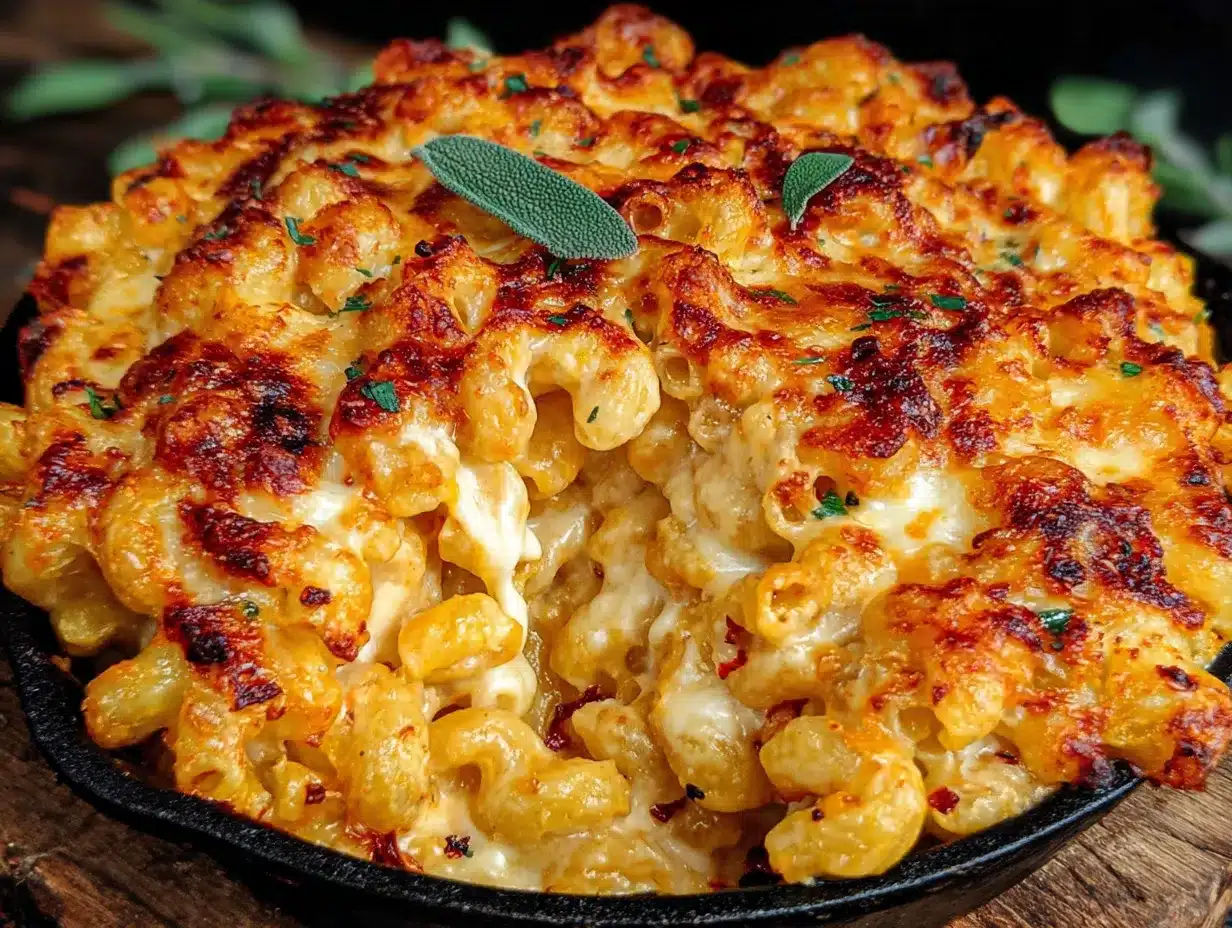
- 1 pound (16 ounces) pasta — I recommend cavatappi or shells because the sauce clings to the curves, but elbow macaroni works in a pinch
- 1 tablespoon salt — for the pasta water; don’t skip this, it’s how you season the pasta from the inside out
For the Brown Butter Sauce
- 4 tablespoons (½ stick) unsalted butter — I use Kerrygold for the richness, but any good unsalted butter works
- 3 cloves garlic, minced — fresh is non-negotiable here, the jarred stuff just won’t taste the same
- 2 tablespoons all-purpose flour — this helps thicken the sauce
- 2 cups whole milk — you can use 2% in a pinch, but whole milk makes it creamier
- 1 cup heavy cream — for that luxurious texture
For the Cheese
- 2 cups (8 ounces) sharp cheddar cheese, freshly shredded — please shred it yourself, the pre-shredded stuff has anti-caking agents that mess with the texture
- 1 cup (4 ounces) Gruyère cheese, freshly shredded — it adds a nuttiness that pairs beautifully with the squash
- ½ cup (2 ounces) Parmesan cheese, freshly grated — for that salty, umami finish
For the Topping (Optional but Recommended)
- ½ cup panko breadcrumbs — regular breadcrumbs work, but panko gives you that extra crunch
- 2 tablespoons melted butter — to mix with the breadcrumbs
- 2 tablespoons fresh sage, chopped — this takes it over the top, I promise
Equipment Needed
You don’t need a fancy kitchen to make this recipe, but having the right tools makes the process smoother. Here’s what you’ll need:
- Baking sheet — for roasting the squash. A rimmed baking sheet works best to catch any juices.
- Large pot — for boiling the pasta. Go with a 6-quart pot so there’s plenty of room.
- Large skillet or Dutch oven — for making the sauce. A Dutch oven is ideal because you can brown the butter, make the sauce, and mix everything in one pot.
- Blender or food processor — to puree the roasted squash until smooth. A high-speed blender works best, but an immersion blender in a deep bowl also does the trick.
- 9×13-inch baking dish — for baking the assembled mac and cheese. A 3-quart dish is the perfect size.
- Cheese grater — please, for the love of good food, shred your own cheese. I learned this the hard way after a stringy, clumpy disaster.
- Wooden spoon or silicone spatula — for stirring the sauce without scratching your pans.
If you don’t have a Dutch oven, a large, deep skillet works fine. And if you’re short on time, you can skip the baking step and serve it stovetop style — it’s still amazing.
Preparation Method
Alright, let’s get cooking. I’ve broken this down into clear steps with all the little details I wish someone had told me the first time I made this.
Step 1: Roast the Squash
Preheat your oven to 400°F (200°C). Toss the cubed butternut squash with 2 tablespoons olive oil, ½ teaspoon salt, and ¼ teaspoon pepper on your baking sheet. Spread it in a single layer — if it’s crowded, it’ll steam instead of roast, and you want those caramelized edges. Roast for 25-30 minutes, flipping halfway through, until the squash is fork-tender and starting to brown at the edges. The smell at this point is incredible — sweet and nutty. Let it cool for 5 minutes, then transfer to your blender. Puree until completely smooth, adding a splash of milk if needed to get it going. Set aside.
Step 2: Cook the Pasta
While the squash roasts, bring a large pot of water to a boil. Add 1 tablespoon of salt — yes, a full tablespoon. The water should taste like the sea. Add your pasta and cook until al dente, about 1-2 minutes less than the package directions. You want it slightly undercooked because it’ll finish cooking in the oven. Drain the pasta, but here’s a tip: reserve about 1 cup of that starchy pasta water before you drain it. That stuff is liquid gold for adjusting the sauce later.
Step 3: Brown the Butter
In your large skillet or Dutch oven, melt 4 tablespoons of butter over medium heat. Swirl the pan occasionally as it melts. The butter will start to foam, then the foam will subside, and you’ll see little brown specks forming at the bottom. This takes about 3-4 minutes. Watch it carefully — it can go from brown to burnt in seconds. When it smells nutty and looks like warm honey, add the minced garlic and stir for about 30 seconds until fragrant. This is where the magic starts.
Step 4: Make the Roux
Sprinkle the 2 tablespoons of flour over the browned butter and garlic. Whisk constantly for about 1 minute — you’re cooking out the raw flour taste. The mixture should be smooth and bubbly. If it looks lumpy, don’t panic, just keep whisking. I’ve had it seize up on me before, and a vigorous whisk always saves it.
Step 5: Build the Sauce
Slowly pour in the 2 cups of milk and 1 cup of heavy cream, whisking continuously. Keep whisking until the mixture thickens, about 3-4 minutes. It should coat the back of a spoon — you know, that thing where you run your finger through it and the line holds. Now add the pureed squash and whisk until fully incorporated. The sauce will turn this gorgeous golden-orange color that just looks like fall in a pan.
Step 6: Add the Cheese
Reduce the heat to low. Add the shredded cheddar, Gruyère, and Parmesan in handfuls, stirring each addition until melted before adding the next. This prevents the sauce from breaking or getting grainy. Once all the cheese is in, taste it. Add salt and pepper if needed — I usually add about ½ teaspoon more salt, but it depends on your cheese. If the sauce seems too thick, stir in a splash of that reserved pasta water.
Step 7: Combine and Bake
Add the cooked pasta to the sauce and stir until every piece is coated. Pour the whole thing into your greased 9×13-inch baking dish. If you’re using the topping, mix the panko breadcrumbs with 2 tablespoons melted butter and the chopped sage, then sprinkle evenly over the top. Bake at 375°F (190°C) for 20-25 minutes, until bubbly and golden on top. Let it rest for 5 minutes before serving — I know it’s hard to wait, but it sets up better that way.
Cooking Tips & Techniques
After making this recipe about a dozen times (and messing it up at least three of those times), I’ve picked up some tricks that make a real difference.
Don’t skip the roasting step. I know it’s tempting to buy pre-cut squash or even frozen puree, but roasting transforms the flavor. The caramelization adds a sweetness you just can’t get any other way. One time I was in a hurry and used steamed squash — the sauce was watery and bland. Never again.
Shred your own cheese. I cannot stress this enough. Pre-shredded cheese is coated with cellulose and starches that prevent clumping in the bag, but they also prevent smooth melting in your sauce. I learned this the hard way when my sauce turned out grainy and weird. Freshly shredded cheese melts like a dream.
Watch that butter like a hawk. Brown butter is amazing, but it goes from perfect to burnt in about 15 seconds. The first time I tried it, I got distracted by my phone and ended up with black butter that smelled like burnt popcorn. Keep your eyes on the pan and trust your nose — when it smells nutty and toasty, it’s ready.
Multitask strategically. While the squash roasts, cook your pasta and shred your cheese. While the sauce simmers, make your breadcrumb topping. This recipe comes together in about 45 minutes if you overlap the steps. I usually start the squash first, then get everything else ready while it’s in the oven.
Use the pasta water. That starchy water is a secret weapon. If your sauce seems too thick or starts to separate, a splash of pasta water brings it back together. It’s like magic — the starch helps emulsify everything.
Variations & Adaptations
This recipe is pretty forgiving, so feel free to make it your own. Here are some variations I’ve tried and loved:
Make it gluten-free: Use gluten-free pasta and swap the all-purpose flour for a 1:1 gluten-free flour blend. I’ve tested this with a few different brands, and it works great. Just be careful not to overcook the gluten-free pasta — it gets mushy fast.
Add some protein: Toss in 2 cups of shredded rotisserie chicken or crispy bacon bits before baking. I did this for a Friendsgiving potluck once, and it was the first dish to disappear. The smoky bacon pairs beautifully with the sweet squash.
Go vegetarian (it already is, but make it heartier): Add 2 cups of sautéed mushrooms or caramelized onions to the mix. The earthiness of mushrooms is a natural match for the nutty Gruyère and sweet squash.
Try different cheeses: If you can’t find Gruyère, use fontina or even extra cheddar. I’ve also made this with smoked gouda, and it was incredible — that smoky flavor adds another layer of cozy.
Seasonal swap: In the summer, substitute roasted sweet potato for the butternut squash. It’s slightly sweeter but works just as well. I discovered this when I couldn’t find squash at the store one July, and honestly, it might be my new favorite version.
Spice it up: Add ½ teaspoon of smoked paprika or a pinch of cayenne pepper to the sauce for a little warmth. I like to do this when I’m serving it to a crowd — it adds a subtle kick without being overwhelming.
Serving & Storage Suggestions
This mac and cheese is best served hot, straight from the oven, when the cheese is still gooey and the top is crispy. Let it rest for 5 minutes after baking — this helps it set so it doesn’t turn into a soupy mess on the plate.
What to serve with it: A simple green salad with a tangy vinaigrette cuts through the richness perfectly. I also love it alongside roasted Brussels sprouts or a crisp apple slaw. If you’re doing a full Friendsgiving spread, it pairs beautifully with roasted turkey, honey-glazed carrots, and crusty bread to soak up any extra sauce.
Storage: Leftovers keep well in an airtight container in the fridge for up to 4 days. The flavor actually gets better after a day or two as everything melds together. To reheat, add a splash of milk and warm it in the oven at 350°F for 10-15 minutes, or microwave individual portions for 1-2 minutes. The stovetop method works too — just reheat slowly over low heat, stirring occasionally.
Freezing: This freezes beautifully. Assemble the mac and cheese in a freezer-safe dish, but don’t bake it. Cover tightly with foil and freeze for up to 3 months. When you’re ready to eat, bake from frozen at 375°F for about 45 minutes, or until bubbly and hot. I’ve done this for last-minute dinners, and it’s a lifesaver.
Flavor development: Here’s something I discovered by accident — this mac and cheese tastes even better the next day. The flavors have time to meld, and the texture firms up nicely. So if you’re planning ahead, make it a day early and just reheat it. Your future self will thank you.
Nutritional Information & Benefits
Let’s be real — this is still mac and cheese, so it’s not exactly health food. But the butternut squash does bring some serious nutritional benefits to the table. Here’s the breakdown per serving (about 1 cup):
- Calories: Approximately 520
- Protein: 22g
- Fat: 28g
- Carbohydrates: 48g
- Fiber: 4g
- Sugar: 8g
- Sodium: 680mg
Butternut squash is packed with vitamin A — one serving gives you over 100% of your daily needs. It’s also a good source of vitamin C, potassium, and fiber. The cheese adds calcium and protein, while the whole milk and cream provide healthy fats that help your body absorb the fat-soluble vitamins from the squash.
If you’re watching your intake, you can lighten this up by using 2% milk instead of whole milk and cutting the cream to ½ cup. I’ve tested it, and it’s still delicious — just a little less decadent. For a lower-carb option, try chickpea pasta or lentil pasta, which adds extra protein and fiber.
Potential allergens: This recipe contains dairy (milk, cream, cheese, butter) and gluten (pasta, flour). For a dairy-free version, use plant-based butter, unsweetened oat milk, and dairy-free cheese shreds. I’ve tried it with cashew milk, and it works surprisingly well.
Conclusion
This Cozy Friendsgiving Butternut Squash Mac and Cheese is more than just a recipe — it’s a warm hug on a cold day, a taste of nostalgia, and a way to bring people together. It’s the dish I make when I want to feel connected to those candlelit dinners in Marta’s apartment, when I need something that feels like home even when home is far away.
I hope you’ll make it your own. Add your favorite cheese, throw in some bacon, or keep it simple and classic. The beauty of this recipe is that it’s forgiving — it wants to be customized. So go ahead, experiment, and let me know how it turns out.
Have you made this? Did you try a fun variation? Drop a comment below and tell me about it — I genuinely love hearing how people make recipes their own. And if you share it on social media, tag me so I can see your beautiful creation. Now go preheat that oven, and let’s make some memories.
Frequently Asked Questions
Can I use frozen butternut squash instead of fresh?
Yes, you can! Thaw it first and pat it dry with paper towels to remove excess moisture. Roast it a little longer — about 35-40 minutes — to get those caramelized edges. The flavor won’t be quite as intense as fresh, but it still works beautifully in a pinch.
Why did my sauce turn out grainy?
This usually happens for one of two reasons: you used pre-shredded cheese (those anti-caking agents are the enemy of smooth sauce) or you overheated the sauce. Always shred your own cheese and keep the heat on low when you’re melting it in. If it does get grainy, try whisking in a splash of cold milk — sometimes that brings it back.
Can I make this ahead of time?
Absolutely. Assemble the mac and cheese completely, but don’t bake it. Cover and refrigerate for up to 24 hours. When you’re ready to serve, add about 10 minutes to the baking time since you’re starting from cold. I actually think the flavors meld together better when it sits overnight.
What’s the best pasta shape for this recipe?
Cavatappi is my top choice because those corkscrew shapes catch all the creamy sauce. Shells are a close second. Elbow macaroni works, but honestly, the curves and ridges of other shapes just hold the sauce better. Avoid long pasta like spaghetti — it doesn’t mix well with the chunky sauce.
Can I skip the baking step and serve it stovetop?
Yes, and I do this all the time when I’m short on time or energy. Make the sauce, mix in the cooked pasta, and serve it straight from the pot. You’ll miss out on that crispy topping, but the creamy, cheesy goodness is still there. If you want a quick crunch, toast some panko in a skillet with butter and sprinkle it on top right before serving.
Pin This Recipe!
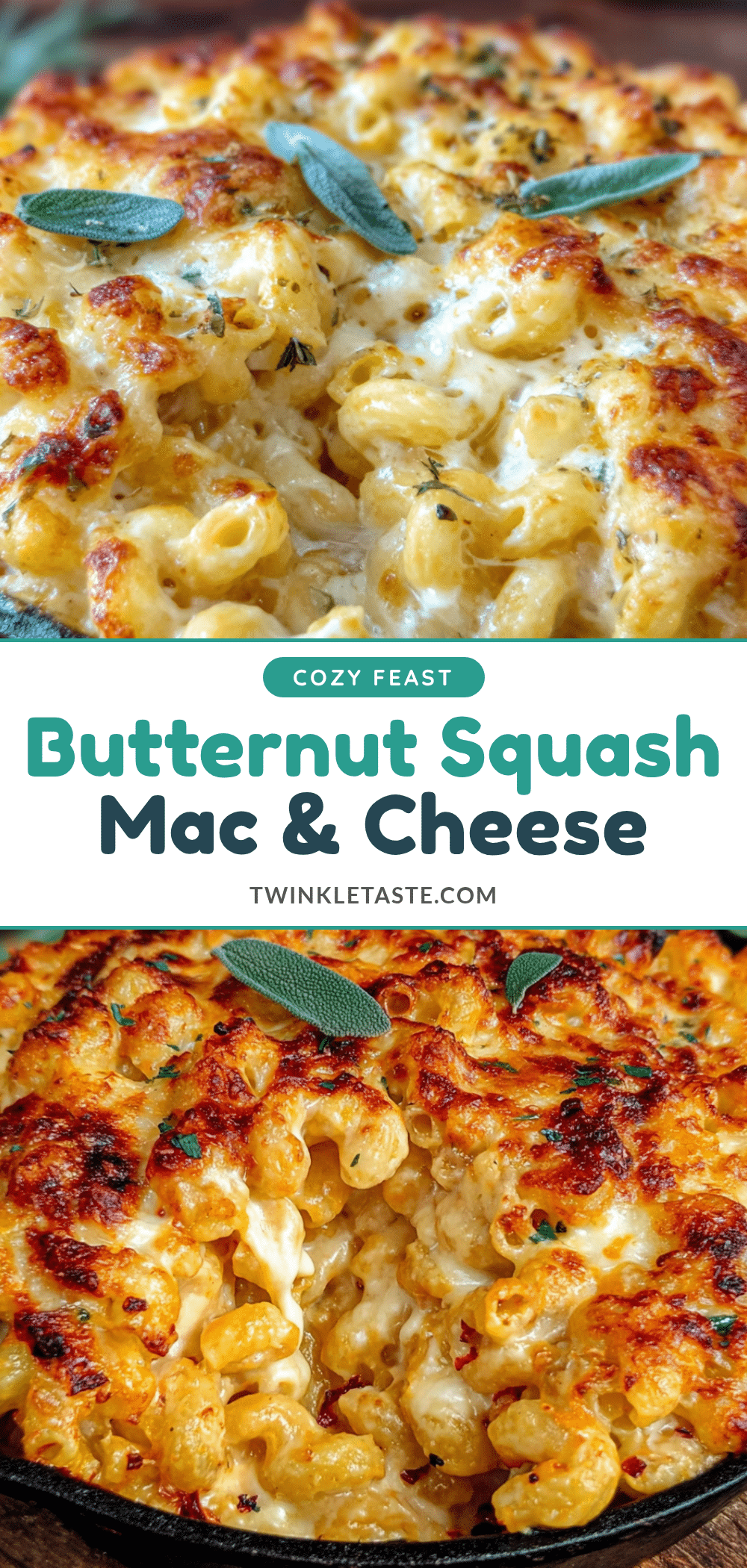
Cozy Friendsgiving Butternut Squash Mac and Cheese

A creamy, comforting mac and cheese with roasted butternut squash, browned butter, and a blend of sharp cheddar, Gruyère, and Parmesan. Perfect for Friendsgiving or a cozy weeknight dinner.
- Prep Time: 15 minutes
- Cook Time: 30 minutes
- Total Time: 45 minutes
- Yield: 8 servings 1x
- Category: Main Course
- Cuisine: American
Ingredients
- 1 medium butternut squash, peeled, seeded, and cut into 1-inch cubes (about 4 cups)
- 2 tablespoons olive oil
- ½ teaspoon salt
- ¼ teaspoon black pepper
- 1 pound (16 ounces) pasta (cavatappi or shells recommended)
- 1 tablespoon salt (for pasta water)
- 4 tablespoons (½ stick) unsalted butter
- 3 cloves garlic, minced
- 2 tablespoons all-purpose flour
- 2 cups whole milk
- 1 cup heavy cream
- 2 cups (8 ounces) sharp cheddar cheese, freshly shredded
- 1 cup (4 ounces) Gruyère cheese, freshly shredded
- ½ cup (2 ounces) Parmesan cheese, freshly grated
- ½ cup panko breadcrumbs (optional topping)
- 2 tablespoons melted butter (for topping)
- 2 tablespoons fresh sage, chopped (optional topping)
Instructions
- Preheat oven to 400°F (200°C). Toss cubed butternut squash with olive oil, salt, and pepper on a baking sheet. Roast for 25-30 minutes, flipping halfway, until fork-tender and lightly browned. Let cool 5 minutes, then puree in a blender until smooth. Set aside.
- Bring a large pot of water to a boil. Add 1 tablespoon salt. Cook pasta until al dente, about 1-2 minutes less than package directions. Reserve 1 cup pasta water, then drain pasta.
- In a large skillet or Dutch oven, melt butter over medium heat. Swirl occasionally until butter foams, then subsides, and brown specks form (about 3-4 minutes). Add minced garlic and stir for 30 seconds until fragrant.
- Sprinkle flour over browned butter and garlic. Whisk constantly for 1 minute until smooth and bubbly.
- Slowly pour in milk and heavy cream, whisking continuously. Cook until thickened, about 3-4 minutes. Add pureed squash and whisk until fully incorporated.
- Reduce heat to low. Add shredded cheddar, Gruyère, and Parmesan in handfuls, stirring each until melted before adding the next. Season with salt and pepper to taste. If sauce is too thick, stir in a splash of reserved pasta water.
- Add cooked pasta to sauce and stir until coated. Pour into a greased 9×13-inch baking dish. If using topping, mix panko with melted butter and sage, then sprinkle over top.
- Bake at 375°F (190°C) for 20-25 minutes until bubbly and golden. Let rest 5 minutes before serving.
Notes
For best results, shred your own cheese and don’t skip roasting the squash. The sauce can be made ahead and refrigerated for up to 24 hours before baking. Add 10 minutes to baking time if starting from cold.
Nutrition
- Serving Size: 1 cup
- Calories: 520
- Sugar: 8
- Sodium: 680
- Fat: 28
- Saturated Fat: 16
- Carbohydrates: 48
- Fiber: 4
- Protein: 22
Keywords: butternut squash mac and cheese, Friendsgiving, comfort food, baked mac and cheese, fall recipe