The butternut squash had been sitting on my counter for over a week. Every time I walked past it, I felt this weird mix of guilt and ambition—like I was going to make something incredible with it, just not today. Then a cold front rolled in, the kind that makes you want to eat something that hugs you from the inside, and I remembered a box of cavatappi hiding in the back of the pantry. That’s when this creamy baked butternut squash mac and cheese with sage breadcrumbs happened. It wasn’t planned, it wasn’t fancy, and honestly, it started as a “let’s see what happens” kind of experiment.
The squash got roasted until it was soft enough to mash with a fork, then blended into a velvety puree that I stirred into a simple béchamel. The cheese melted in, the pasta soaked up all that goodness, and then I topped it with crispy panko mixed with browned butter and fresh sage. The first bite made me stop mid-chew and just stare at the pan. It was that good. I’ve made a lot of mac and cheese in my life—boxed, from scratch, with truffle oil, with bacon—but this one felt different. It had a sweetness that balanced the sharp cheddar, a creaminess that didn’t come from heavy cream, and a topping that shattered like glass under your fork.
This creamy baked butternut squash mac and cheese with sage breadcrumbs has become my fall comfort food secret weapon. It’s the kind of dish that feels indulgent but secretly has a vegetable doing all the heavy lifting. I make it for weeknight dinners when I need something cozy, and I’ve brought it to potlucks where people asked for the recipe before they even finished their first serving. It’s one of those recipes that sticks with you—not because it’s complicated, but because it tastes like someone put real thought into it.
Why You’ll Love This Recipe
I’ve tested this recipe at least six times to get the balance just right. The first batch was too runny. The second was too sweet. The third—well, let’s just say I learned that not all cheeses melt the same way. But each failure taught me something, and what I landed on is a version that works every single time. Here’s why I think you’ll love it as much as I do:
- Quick & Easy : From start to table in about 45 minutes, and most of that is hands-off roasting time. Perfect for a busy Tuesday when you need something that feels special but doesn’t require a culinary degree.
- Simple Ingredients : No exotic grocery store runs. Butternut squash, pasta, cheese, butter, sage, and pantry staples. You probably have most of it already.
- Perfect for Fall Gatherings : This dish shines at Thanksgiving, Friendsgiving, or any cozy dinner where you want to impress without stress. It’s also a fantastic side dish for a holiday table.
- Crowd-Pleaser : Kids love the cheesy pasta texture, and adults appreciate the subtle sophistication of sage and roasted squash. It disappears fast at every gathering I bring it to.
- Unbelievably Delicious : The texture is next-level—creamy without being heavy, with a crispy, buttery topping that adds the perfect crunch. The flavor combo of sweet squash, sharp cheddar, and earthy sage is pure comfort food magic.
What makes this recipe different from the dozens of other butternut squash mac recipes out there? It’s the technique. Instead of just mashing the squash into the cheese sauce, I roast it first to concentrate the natural sugars, then blend it until completely smooth. This gives you a silky, almost velvety sauce that doesn’t taste like “healthy” mac and cheese. It just tastes like really, really good mac and cheese that happens to have a vegetable in it. The sage breadcrumbs are non-negotiable too—they add a nutty, herbal crunch that takes the whole dish from good to unforgettable.
This is the kind of dish that makes you close your eyes after the first bite. It’s comfort food reimagined—healthier, faster, but with the same soul-soothing satisfaction. Perfect for impressing guests without stress, or turning a simple Wednesday dinner into something memorable.
What Ingredients You Will Need
This recipe uses simple, wholesome ingredients to deliver bold flavor and satisfying texture without the fuss. Most of these are pantry staples or easy to find at any grocery store, especially during fall when squash is in season.
For the Butternut Squash Puree
- 1 medium butternut squash (about 2-3 pounds) — peeled, seeded, and cubed into 1-inch pieces. Look for a squash that feels heavy for its size with a firm, unblemished skin. I prefer using whole squash over pre-cut cubes because the flavor is more concentrated, but pre-cut works in a pinch.
- 2 tablespoons olive oil — for roasting. Use a good quality extra virgin olive oil for best flavor.
- ½ teaspoon salt — enhances the natural sweetness of the squash.
- ¼ teaspoon black pepper — just a touch for balance.
For the Pasta
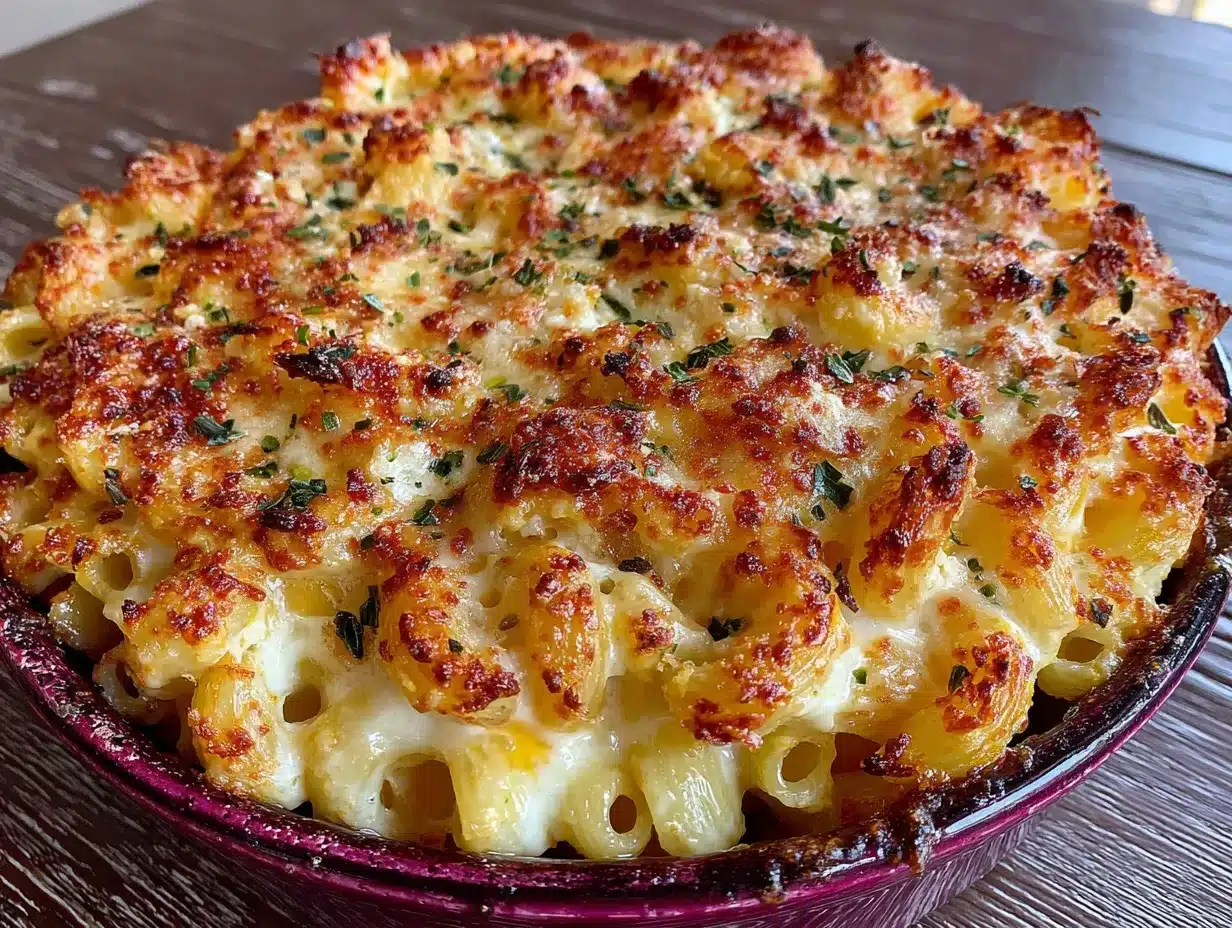
- 1 pound (16 oz) short pasta — cavatappi, elbow macaroni, shells, or fusilli all work great. I love cavatappi because the ridges hold onto the sauce beautifully. Cook according to package directions until al dente, about 1 minute less than the recommended time since it will bake further.
- 1 tablespoon salt — for the pasta water. Don’t skip this! It’s your only chance to season the pasta from the inside out.
For the Cheese Sauce
- 4 tablespoons (½ stick) unsalted butter — for the roux. I recommend using a good European-style butter like Kerrygold for richer flavor.
- ¼ cup all-purpose flour — this thickens the sauce. Use a gluten-free flour blend if needed.
- 2 cups whole milk — warmed slightly. Whole milk gives the creamiest result, but 2% works too. Avoid skim milk as it can make the sauce thin.
- 1 cup heavy cream — adds richness and helps the sauce stay smooth during baking.
- 2 cups sharp cheddar cheese — freshly grated. Please, please grate your own cheese! Pre-shredded cheese has anti-caking agents that prevent smooth melting. I recommend a good aged cheddar like Tillamook or Cabot.
- 1 cup Gruyère cheese — freshly grated. This adds a nutty, slightly sweet flavor that pairs perfectly with the squash. If you can’t find Gruyère, use Swiss or Emmental.
- ½ cup Parmesan cheese — freshly grated. Adds a salty, umami kick.
- 1 teaspoon Dijon mustard — trust me on this. It doesn’t make the sauce taste like mustard; it just brightens all the other flavors.
- ¼ teaspoon nutmeg — freshly grated if possible. It’s a classic pairing with both squash and cheese.
- ½ teaspoon salt — adjust to taste.
- ¼ teaspoon black pepper — freshly ground.
For the Sage Breadcrumb Topping
- 3 tablespoons unsalted butter — for browning.
- 10-12 fresh sage leaves — thinly sliced. Don’t use dried sage here; fresh is essential for that aromatic, earthy flavor.
- 1 cup panko breadcrumbs — they stay crispier than regular breadcrumbs. I use plain panko, but you can use whole wheat panko for extra fiber.
- ¼ cup Parmesan cheese — freshly grated, for extra flavor and browning.
- ¼ teaspoon salt — just a pinch.
Substitution Guidance
For a gluten-free version, use gluten-free pasta and a 1:1 gluten-free flour blend in the roux. The panko can be replaced with crushed pork rinds mixed with Parmesan for a low-carb option. If you’re dairy-free, use a good quality plant-based butter and unsweetened oat milk (it’s the creamiest non-dairy milk for sauces), along with vegan cheddar shreds. The texture won’t be exactly the same, but it’ll still be delicious.
Equipment Needed
You don’t need a professional kitchen to make this dish, but a few key tools will make your life easier. Here’s what I use:
- Large baking sheet — for roasting the squash. A rimmed sheet pan prevents juices from spilling. I use my favorite Nordic Ware half-sheet pan for this.
- Large pot — for boiling pasta. At least 6 quarts capacity so the pasta has room to move.
- Medium saucepan — for making the cheese sauce. A heavy-bottomed pan like a Dutch oven or stainless steel saucepan prevents scorching.
- Blender or food processor — to puree the roasted squash until silky smooth. I prefer a high-speed blender like a Vitamix, but a food processor works too. An immersion blender can work in a pinch, but the texture won’t be as smooth.
- 9×13-inch baking dish — for assembling and baking the mac and cheese. A 3-quart dish is ideal. Glass or ceramic works best for even baking.
- Cheese grater — a microplane for the Parmesan and a box grater for the cheddar and Gruyère. Grate your own cheese—I promise it makes a difference.
- Wooden spoon or silicone spatula — for stirring the sauce and folding the pasta.
- Small skillet — for browning the butter and sage for the breadcrumb topping.
- Whisk — for making the roux without lumps. A flat whisk works especially well for sauces.
If you don’t have a blender, you can mash the roasted squash with a potato masher or fork, but the sauce won’t be as smooth. It’ll still taste great—just a bit more rustic. And if you don’t have a 9×13 dish, you can use a 10-inch cast iron skillet or even individual ramekins for single servings. Just adjust the baking time accordingly.
Preparation Method
Let’s get cooking! This recipe comes together in stages, but I promise it’s straightforward. Here’s exactly how I make it:
Step 1: Roast the Butternut Squash
Preheat your oven to 400°F (200°C). Line a large baking sheet with parchment paper for easy cleanup. Toss the cubed butternut squash with 2 tablespoons olive oil, ½ teaspoon salt, and ¼ teaspoon pepper. Spread it in a single layer on the baking sheet—don’t overcrowd, or it’ll steam instead of roast. Roast for 25-30 minutes, flipping halfway through, until the squash is tender and lightly caramelized on the edges. You should be able to pierce a piece easily with a fork. Let it cool for 5 minutes, then transfer to a blender. Add ¼ cup of water or milk and blend until completely smooth. Set aside. You should have about 2 cups of puree.
Step 2: Cook the Pasta
While the squash roasts, bring a large pot of salted water to a boil. Add the pasta and cook according to package directions until al dente—usually 7-9 minutes. I always cook it 1 minute less than the recommended time because it’ll continue cooking in the oven. Drain the pasta but don’t rinse it! The starch on the surface helps the sauce cling. Toss with a drizzle of olive oil to prevent sticking, and set aside.
Step 3: Make the Cheese Sauce
In a medium saucepan over medium heat, melt 4 tablespoons of butter. Once it’s bubbling, whisk in the flour and cook for 1-2 minutes, stirring constantly. This is your roux, and it should smell nutty and look like pale gold. Slowly pour in the warm milk and cream while whisking continuously to prevent lumps. Keep whisking until the sauce thickens—about 3-4 minutes. It should coat the back of a spoon. Reduce the heat to low and add the butternut squash puree, Dijon mustard, nutmeg, salt, and pepper. Whisk until smooth. Now, add the grated cheddar, Gruyère, and Parmesan a handful at a time, stirring until each addition is fully melted before adding the next. The sauce will be thick, creamy, and a beautiful golden-orange color. Taste it and adjust seasoning if needed. (Pro tip: if the sauce seems too thick, add a splash of warm milk to thin it out.)
Step 4: Combine and Assemble
Preheat your oven to 375°F (190°C). In a large bowl, combine the cooked pasta with the cheese sauce. Fold gently until every piece of pasta is coated. Pour the mixture into your greased 9×13-inch baking dish and spread it evenly. Don’t press it down—just let it settle naturally. At this point, you can cover and refrigerate the dish for up to 24 hours if you’re making it ahead.
Step 5: Make the Sage Breadcrumb Topping
In a small skillet over medium heat, melt 3 tablespoons of butter. Add the sliced sage leaves and cook for 1-2 minutes until the butter starts to brown and smell nutty and the sage is crispy. Remove from heat and stir in the panko breadcrumbs and ¼ cup Parmesan. The mixture should look golden and smell incredible. Sprinkle this evenly over the assembled mac and cheese.
Step 6: Bake to Perfection
Bake the mac and cheese uncovered for 20-25 minutes, until the edges are bubbly and the top is golden brown and crispy. If you want extra browning, switch to the broiler for the last 2 minutes—but watch it closely, because breadcrumbs burn fast. Let it rest for 5-10 minutes before serving. This allows the sauce to set slightly so it doesn’t run all over your plate. The first bite will be hot, creamy, crunchy, and absolutely worth every step.
Cooking Tips & Techniques
I’ve made this recipe enough times to know where things can go wrong. Here are the lessons I learned the hard way, so you don’t have to:
Don’t skip roasting the squash. I tried boiling it once to save time, and the puree was watery and bland. Roasting concentrates the natural sugars and gives you that deep, caramelized flavor that makes the sauce taste complex. It’s worth the extra 25 minutes.
Grate your own cheese. I know, I know—every recipe says this. But pre-shredded cheese is coated with cellulose and potato starch to prevent clumping, which means it doesn’t melt smoothly. Your sauce will be grainy instead of silky. Take the 5 minutes to grate it yourself. Your future self will thank you.
Temper your eggs (if using). This recipe doesn’t call for eggs, but if you decide to add one for extra richness, whisk it with a little warm sauce before adding it to the pot. Otherwise, you’ll end up with scrambled eggs in your mac and cheese. Not ideal.
Undercook the pasta. This is my number one tip for any baked pasta dish. If you cook it to al dente according to the package, it’ll be overcooked after baking. Cook it 1-2 minutes less than the recommended time. It should still have a tiny white core when you bite into it. Trust the process.
Let it rest before serving. I know you’ll be tempted to dig in immediately, but letting the dish sit for 5-10 minutes allows the sauce to thicken and set. If you serve it right away, it’ll be runny. Patience pays off here.
Make extra breadcrumb topping. Seriously. I always double the topping because people fight over the crispy bits. If you have leftovers, store them separately and sprinkle on salads or roasted vegetables for an instant upgrade.
Variations & Adaptations
One of the best things about this recipe is how flexible it is. Here are some ways I’ve adapted it over the years:
Add Protein
Fold in 2 cups of shredded rotisserie chicken, cooked bacon bits, or crispy pancetta before baking. The salty, smoky flavors pair beautifully with the sweet squash and nutty Gruyère. I’ve also added leftover Korean ground beef for a fusion twist that was surprisingly amazing.
Make It Lighter
Swap the heavy cream for evaporated milk and reduce the cheese by half a cup. Use whole wheat pasta for extra fiber. The sauce will still be creamy, just a bit less indulgent. For a vegan version, use plant-based butter and milk, plus your favorite vegan cheese shreds. The texture won’t be identical, but it’s still satisfying.
Change the Cheese
Try smoked Gouda instead of Gruyère for a deeper, smokier flavor. Or use fontina for extra creaminess. A mix of white cheddar and Monterey Jack works beautifully too. Just avoid pre-shredded blends—they never melt as smoothly.
Seasonal Swaps
In the summer, swap butternut squash for roasted zucchini or yellow squash puree. In the winter, try roasted sweet potato or pumpkin puree. Each variation brings its own unique sweetness and color. I’ve even made this with roasted carrot puree, and it was gorgeous—bright orange and slightly sweet.
Gluten-Free Version
Use gluten-free pasta (I like Barilla’s gluten-free elbows) and a 1:1 gluten-free flour blend for the roux. For the breadcrumbs, use gluten-free panko or crushed pork rinds mixed with Parmesan. The sauce might be slightly thinner, but it still works.
Serving & Storage Suggestions
This mac and cheese is best served hot, straight from the oven, with the breadcrumbs still crispy. I like to scoop it into shallow bowls so the topping stays crunchy. A simple side salad with a bright vinaigrette cuts through the richness perfectly—try my fresh house balsamic vinaigrette chopped salad for a refreshing contrast. For a heartier meal, serve it alongside roasted chicken or a simple green vegetable like steamed broccoli or green beans.
Storing Leftovers: Transfer cooled mac and cheese to an airtight container and refrigerate for up to 4 days. The breadcrumbs will lose their crunch, but the flavor will still be amazing. To reheat, add a splash of milk and microwave in 30-second bursts, stirring between each, or reheat in a 350°F oven covered with foil for 15 minutes, then uncovered for 5 minutes to crisp the top.
Freezing Instructions: This dish freezes beautifully. Assemble everything except the breadcrumb topping, cover tightly with foil, and freeze for up to 3 months. When ready to bake, thaw overnight in the refrigerator, add the breadcrumb topping, and bake as directed. You may need to add 10-15 minutes to the baking time since it’s starting from cold. I love making a double batch and freezing one for busy weeks.
Make-Ahead Tip: You can prepare the entire dish (minus the breadcrumbs) up to 24 hours in advance. Cover and refrigerate. When ready to bake, add the breadcrumbs and add 5-10 minutes to the baking time since the dish is cold. This is a lifesaver for Thanksgiving or dinner parties.
Nutritional Information & Benefits
While I wouldn’t call this a health food, it’s definitely a more nutrient-packed version of classic mac and cheese. Here’s the approximate nutritional breakdown per serving (based on 8 servings):
| Nutrient | Amount per Serving |
|---|---|
| Calories | 480 |
| Total Fat | 28g |
| Saturated Fat | 16g |
| Cholesterol | 75mg |
| Sodium | 680mg |
| Total Carbohydrates | 42g |
| Dietary Fiber | 4g |
| Sugars | 6g |
| Protein | 18g |
| Vitamin A | 180% DV |
| Vitamin C | 25% DV |
| Calcium | 35% DV |
| Iron | 10% DV |
Butternut squash is packed with vitamin A (great for eye health and immunity), vitamin C, fiber, and potassium. The cheese provides calcium and protein, while the sage adds antioxidants. This dish is a great way to sneak extra vegetables into a meal without anyone complaining. It’s also vegetarian-friendly and can be made gluten-free with simple swaps. If you’re watching your sodium, use low-sodium cheese and reduce the added salt.
Conclusion
This creamy baked butternut squash mac and cheese with sage breadcrumbs is one of those recipes that feels like a warm hug on a cold day. It’s rich without being heavy, indulgent without being unhealthy, and impressive without being complicated. The sweetness of the roasted squash, the sharpness of the cheddar, the nuttiness of the Gruyère, and the earthy crunch of sage breadcrumbs all come together in perfect harmony.
I love how versatile this dish is—it works as a weeknight dinner, a holiday side, or a potluck showstopper. And honestly, I love that it makes me feel like I’m eating something virtuous while actually enjoying every single bite. That’s the kind of cooking I live for.
If you make this recipe, I’d love to hear about it! Leave a comment below and let me know how it turned out. Did you add any fun variations? Did your kids eat it without complaint? Share your photos on Pinterest and tag me—I love seeing your creations. And if you’re looking for more cozy fall recipes, don’t miss my brown sugar pumpkin coffee cake or this creamy one-pot lemon ricotta pasta for another quick comfort meal.
Happy cooking, friend. Go make something delicious.
Frequently Asked Questions
Can I use frozen butternut squash instead of fresh?
Absolutely! Frozen butternut squash works great in this recipe. Just thaw it, pat it dry with paper towels to remove excess moisture, and roast it as directed. You may need to add 5-10 minutes to the roasting time since frozen squash releases more water. The flavor won’t be quite as concentrated as fresh, but it’s a convenient shortcut that still delivers delicious results.
Why is my cheese sauce grainy?
Grainy cheese sauce usually happens for one of three reasons: you used pre-shredded cheese (which contains anti-caking agents), you overheated the sauce (cheese should melt on low heat, not high), or you added the cheese too quickly. Always grate your own cheese, keep the heat low, and add the cheese a handful at a time, stirring until each addition is fully melted before adding more. If your sauce still turns grainy, try whisking in a tablespoon of cold butter or a splash of lemon juice to help smooth it out.
Can I make this recipe dairy-free?
Yes! Use a good quality plant-based butter (I like Miyoko’s or Earth Balance), unsweetened oat milk or cashew milk for the sauce, and your favorite vegan cheddar shreds. For the topping, use vegan butter and nutritional yeast instead of Parmesan. The texture will be slightly different—a bit less creamy—but it’s still delicious. Just be sure to use a vegan cheese that melts well, as some brands are better than others.
How do I prevent the breadcrumbs from burning?
Breadcrumbs can burn quickly, especially under the broiler. To prevent this, keep an eye on the dish during the last 5 minutes of baking. If the breadcrumbs are browning too fast, tent the dish loosely with foil. If you’re using the broiler, watch it constantly—it can go from golden to burnt in under 30 seconds. I usually bake at 375°F without the broiler and only use the broiler for the last 1-2 minutes if I want extra color.
Can I freeze this mac and cheese?
Yes, and it freezes beautifully! Assemble the dish completely (including the breadcrumb topping) but don’t bake it. Cover tightly with foil and freeze for up to 3 months. When you’re ready to bake, thaw overnight in the refrigerator, then bake as directed, adding 10-15 minutes to the baking time since it’s starting from cold. Alternatively, you can bake it first, let it cool completely, then freeze individual portions for quick lunches. Just reheat in the microwave or oven.
Pin This Recipe!
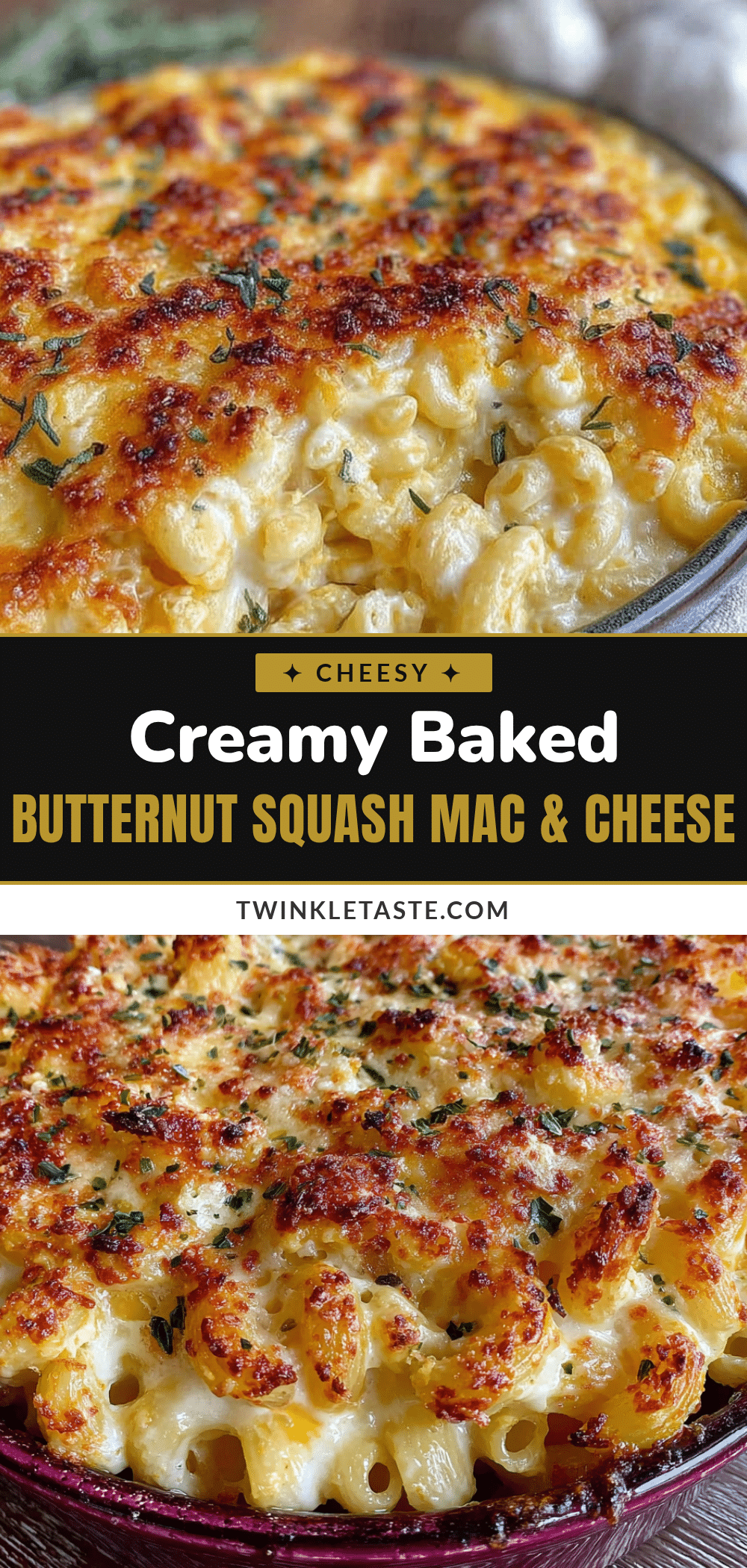
Creamy Baked Butternut Squash Mac and Cheese

A creamy, comforting mac and cheese made with roasted butternut squash puree, sharp cheddar, Gruyère, and a crispy sage breadcrumb topping. This easy recipe is perfect for fall gatherings and weeknight dinners.
- Prep Time: 15 minutes
- Cook Time: 45 minutes
- Total Time: 1 hour
- Yield: 8 servings 1x
- Category: Main Course
- Cuisine: American
Ingredients
- 1 medium butternut squash (about 2–3 pounds), peeled, seeded, and cubed into 1-inch pieces
- 2 tablespoons olive oil
- ½ teaspoon salt
- ¼ teaspoon black pepper
- 1 pound (16 oz) short pasta (cavatappi, elbow macaroni, shells, or fusilli)
- 1 tablespoon salt (for pasta water)
- 4 tablespoons (½ stick) unsalted butter
- ¼ cup all-purpose flour
- 2 cups whole milk, warmed
- 1 cup heavy cream
- 2 cups sharp cheddar cheese, freshly grated
- 1 cup Gruyère cheese, freshly grated
- ½ cup Parmesan cheese, freshly grated
- 1 teaspoon Dijon mustard
- ¼ teaspoon nutmeg, freshly grated
- ½ teaspoon salt
- ¼ teaspoon black pepper
- 3 tablespoons unsalted butter (for topping)
- 10–12 fresh sage leaves, thinly sliced
- 1 cup panko breadcrumbs
- ¼ cup Parmesan cheese (for topping), freshly grated
- ¼ teaspoon salt (for topping)
Instructions
- Preheat oven to 400°F (200°C). Line a large baking sheet with parchment paper. Toss cubed butternut squash with 2 tablespoons olive oil, ½ teaspoon salt, and ¼ teaspoon pepper. Spread in a single layer on the baking sheet. Roast for 25-30 minutes, flipping halfway, until tender and lightly caramelized. Let cool for 5 minutes, then transfer to a blender. Add ¼ cup water or milk and blend until completely smooth. Set aside.
- While squash roasts, bring a large pot of salted water to a boil. Cook pasta according to package directions until al dente, about 1 minute less than recommended. Drain (do not rinse) and toss with a drizzle of olive oil to prevent sticking. Set aside.
- In a medium saucepan over medium heat, melt 4 tablespoons butter. Whisk in flour and cook for 1-2 minutes, stirring constantly, until the roux is pale gold and smells nutty. Slowly pour in warm milk and cream while whisking continuously. Cook until sauce thickens, about 3-4 minutes. Reduce heat to low. Add butternut squash puree, Dijon mustard, nutmeg, salt, and pepper. Whisk until smooth. Gradually add grated cheddar, Gruyère, and ½ cup Parmesan, stirring until each addition is fully melted. Ad…
- Preheat oven to 375°F (190°C). In a large bowl, combine cooked pasta with cheese sauce. Fold gently until every piece is coated. Pour into a greased 9×13-inch baking dish and spread evenly.
- In a small skillet over medium heat, melt 3 tablespoons butter. Add sliced sage leaves and cook for 1-2 minutes until butter browns and sage is crispy. Remove from heat and stir in panko breadcrumbs, ¼ cup Parmesan, and ¼ teaspoon salt. Sprinkle evenly over the mac and cheese.
- Bake uncovered for 20-25 minutes, until edges are bubbly and top is golden brown. For extra browning, broil for the last 1-2 minutes, watching closely. Let rest for 5-10 minutes before serving.
Notes
For best results, grate your own cheese and undercook the pasta slightly. The dish can be assembled up to 24 hours in advance (without breadcrumbs) and refrigerated. Add 5-10 minutes to baking time if starting from cold. Leftovers keep in the refrigerator for up to 4 days.
Nutrition
- Serving Size: 1 serving
- Calories: 480
- Sugar: 6
- Sodium: 680
- Fat: 28
- Saturated Fat: 16
- Carbohydrates: 42
- Fiber: 4
- Protein: 18
Keywords: butternut squash mac and cheese, baked mac and cheese, fall comfort food, vegetarian mac and cheese, easy mac and cheese recipe