Someone asked me last week why I always have a bag of frozen peas in my freezer. It’s not for quick side dishes, and it’s not for emergency dinners. It’s because I learned the hard way—standing in my kitchen at 6:47 PM on a Tuesday, staring at a perfectly cooked crockpot beef stew that was missing one thing. The peas. I forgot the peas. And let me tell you, that stew was still delicious, but it wasn’t complete.
This cozy crockpot beef stew with root vegetables started as a happy accident. I had a chuck roast that needed using up, a bag of carrots that were starting to look sad, and a vague memory of my grandmother’s stew from when I was a kid. Hers always had that deep, almost sweet flavor that I could never quite replicate. I figured it was some secret ingredient she took to her grave.
Turns out, it was just patience. And a little bit of tomato paste that she’d caramelize before adding anything else. I discovered this after burning three batches of stew in a row—not the stew itself, just the tomato paste. The smoke alarm went off. The dog hid under the bed. My husband asked if we could order pizza. But that fourth batch? That one was magic.
So here I am, sharing the version that finally worked. The one where the beef gets so tender it falls apart with a spoon, the carrots and parsnips soak up all that savory broth, and the whole house smells like someone’s been cooking all day—even though you really just tossed everything in a pot and walked away. Maybe you’ve been there, standing in your own kitchen, wondering why your stew doesn’t taste like the one you remember. I promise, this one gets close. Maybe even better.
Why You’ll Love This Recipe
This isn’t just another stew recipe you’ll bookmark and forget about. This is the one you’ll come back to when the weather turns cold, when you need something reliable, or when you want to impress someone without actually trying very hard. I’ve tested this version about seven times now, tweaking the herb amounts and the cooking times until it felt right. My neighbor, who claims she “doesn’t really like beef,” ate two bowls. I didn’t even say anything. I just watched.
- Incredibly Easy: You chop some vegetables, sear the meat (optional but worth it), and let the crockpot do the rest. That’s it. No babysitting, no stirring every fifteen minutes.
- Simple Ingredients: Everything in this recipe is something you can find at any grocery store. No specialty items, no expensive cuts of meat. Chuck roast is your friend here.
- Perfect for Cold Weather: This is the definition of comfort food. It’s warm, hearty, and fills your kitchen with that cozy aroma that makes everything feel okay.
- Crowd-Pleaser: I’ve served this to picky eaters, vegetable skeptics, and people who “don’t really do stew.” It always gets cleaned out.
- Gets Better the Next Day: Honestly, this stew is even better on day two. The flavors meld together overnight, and the texture gets somehow even more perfect.
What makes this version different from the dozens of other beef stew recipes out there? It’s the little things. The way you caramelize the tomato paste before adding it. The parsnips—so many people skip them, but they add this subtle sweetness that balances the savory beef perfectly. And the cooking time: long enough to break down the collagen in the meat, but not so long that the vegetables turn to mush. It’s a delicate balance, and I’ve nailed it after more than a few mushy failures.
This recipe is comfort food reimagined—simpler, more forgiving, but with the same soul-soothing satisfaction that makes you close your eyes after the first bite. It’s the kind of meal that turns a regular Tuesday into something worth looking forward to.
What Ingredients You Will Need
This recipe uses simple, wholesome ingredients that work together to create something greater than the sum of their parts. Most of these are pantry staples or easy-to-find produce, which makes this perfect for those days when you want something hearty without a special trip to the store.
For the Beef and Base
- 2 pounds beef chuck roast, cut into 1.5-inch cubes (trim excess fat but leave some for flavor)
- 2 tablespoons olive oil, divided (for searing and for the vegetables)
- 3 tablespoons tomato paste (this is the secret—caramelize it first for depth)
- 4 cups beef broth, low-sodium (I prefer Pacific Foods or Swanson for consistent flavor)
- 1 cup dry red wine, like Merlot or Cabernet Sauvignon (optional but highly recommended—skip it and add extra broth if needed)
- 2 tablespoons Worcestershire sauce (adds umami and depth)
- 2 bay leaves
- 4 sprigs fresh thyme (or 1 teaspoon dried)
- Salt and black pepper, to taste
For the Root Vegetables
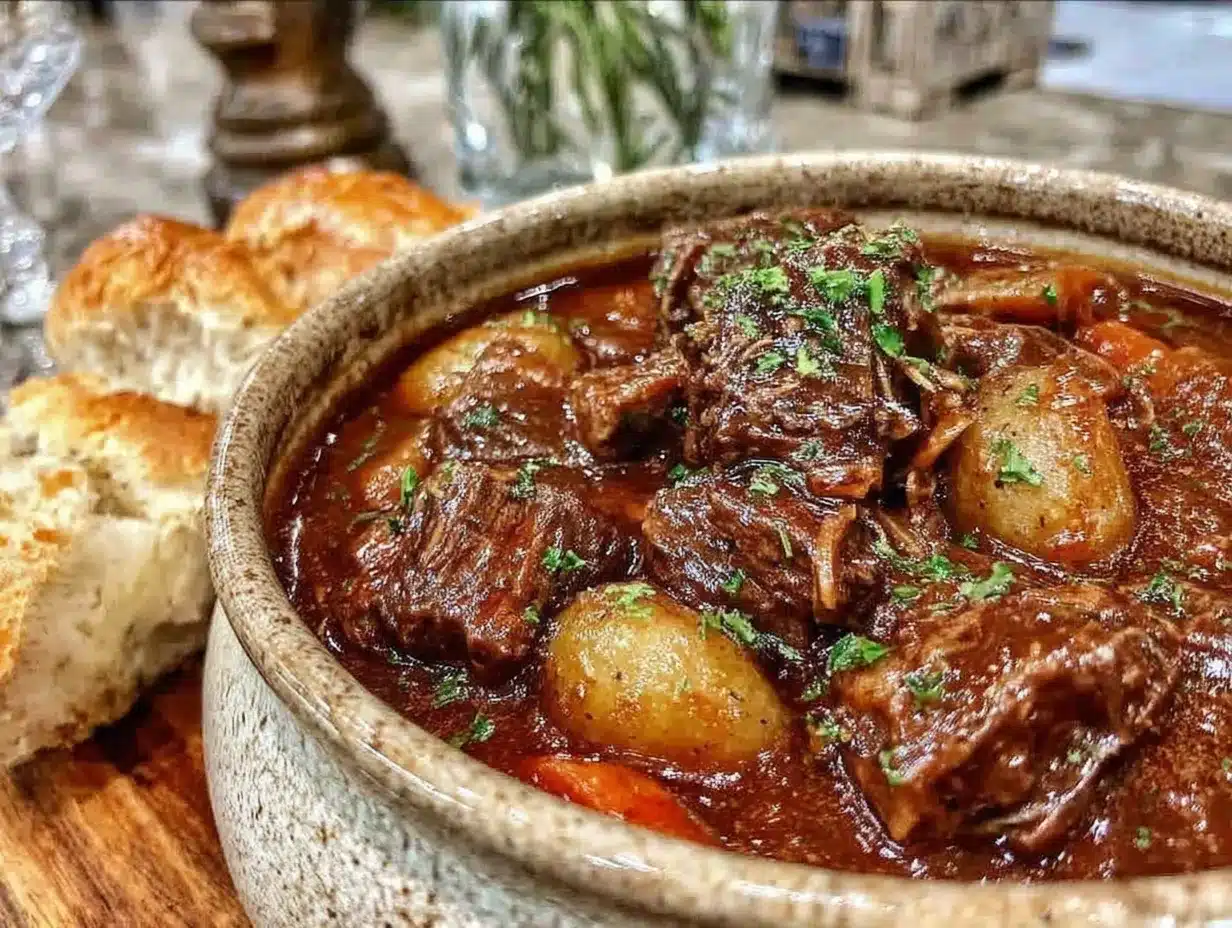
- 4 large carrots, peeled and cut into 1-inch chunks
- 3 medium parsnips, peeled and cut into 1-inch chunks (don’t skip these—they add sweetness)
- 3 celery stalks, sliced into 1/2-inch pieces
- 1 large yellow onion, diced
- 4 cloves garlic, minced
- 1.5 pounds Yukon Gold potatoes, cut into 1.5-inch cubes (they hold their shape better than russets)
- 1 cup frozen peas, added at the end (remember my story—don’t forget these)
For the Thickening
- 2 tablespoons cornstarch, mixed with 2 tablespoons cold water to make a slurry
- Or substitute with 2 tablespoons all-purpose flour mixed with 2 tablespoons softened butter (beurre manié)
When selecting your beef, look for chuck roast with good marbling—those white streaks of fat running through the meat. That fat renders down during the long cooking time and keeps the meat moist and tender. I’ve tried using stew meat from the package, and it works in a pinch, but the texture isn’t quite as good. If you can, buy a whole chuck roast and cut it yourself. It takes an extra five minutes, and the difference is noticeable.
For the potatoes, Yukon Golds are my preference because they have that buttery flavor and hold their shape without getting grainy. Russets will work, but they tend to fall apart more, which can make your stew cloudy. If that doesn’t bother you, go for it.
If you’re avoiding alcohol, just skip the wine and use an extra cup of beef broth. Add a splash of balsamic vinegar at the end to mimic some of that acidity and depth. It’s not exactly the same, but it’s still delicious.
Equipment Needed
You don’t need a ton of fancy equipment for this recipe, which is part of why I love it. Here’s what you’ll need:
- A 6-quart or larger slow cooker: This is non-negotiable. A 4-quart will be too small for all the vegetables. I use a Cuisinart 6-quart model that I’ve had for years, and it’s never let me down.
- A large skillet or Dutch oven: For searing the beef and caramelizing the tomato paste. A cast-iron skillet works beautifully here.
- A sharp chef’s knife: You’ll be chopping a lot of vegetables, so a good knife makes the difference between a pleasant prep session and a frustrating one.
- Cutting board: Preferably a large one so you have room to work.
- Measuring cups and spoons: For accuracy, especially with the broth and wine.
- Tongs: For flipping the beef while searing. Much easier than a spatula.
- A wooden spoon or spatula: For scraping up the browned bits from the pan—that’s where the flavor lives.
- Small bowl: For mixing the cornstarch slurry.
If you don’t have a slow cooker, you can make this in a Dutch oven in the oven at 325°F for about 3 hours, or on the stovetop over very low heat for about 2.5 hours. Just keep an eye on the liquid level and stir occasionally. The slow cooker is easier, but the oven version gives you a slightly richer flavor because of the even heat distribution.
Preparation Method
- Prep your ingredients first. Chop all your vegetables, cut the beef into cubes, measure out your spices and liquids. This makes the whole process smoother and less stressful. Trust me on this—nothing ruins the flow like realizing you need to chop an onion while your beef is burning in the pan.
- Season the beef generously. Pat the beef cubes dry with paper towels—this is crucial for getting a good sear. Season them all over with salt and pepper. Don’t be shy with the salt here; it’s the only chance you have to season the meat directly.
- Sear the beef in batches. Heat 1 tablespoon of olive oil in your large skillet over medium-high heat until it shimmers. Add the beef cubes in a single layer—don’t overcrowd the pan. Work in batches if needed. Let them brown undisturbed for 3-4 minutes per side. You want a deep, dark crust, not just a pale tan. Transfer the seared beef to your slow cooker.
- Cook the aromatics. Reduce the heat to medium and add the remaining 1 tablespoon of olive oil. Add the diced onion and cook for 4-5 minutes until softened and translucent. Add the minced garlic and cook for another 30 seconds until fragrant. Don’t let the garlic burn—it turns bitter.
- Caramelize the tomato paste. Push the onions and garlic to the side of the pan and add the tomato paste directly to the hot surface. Let it cook undisturbed for 1-2 minutes until it darkens slightly and smells rich and concentrated. Stir it into the onions and cook for another minute. This step is worth the extra effort—it adds a depth of flavor that you just can’t get from adding tomato paste straight to the pot.
- Deglaze the pan. Pour in about 1/2 cup of the beef broth (or the red wine if using) and scrape up all those browned bits from the bottom of the pan. Those bits are pure flavor. Let it simmer for a minute, then pour the entire mixture into the slow cooker over the beef.
- Add the liquids and herbs. Pour in the remaining beef broth, the rest of the wine (if using), and the Worcestershire sauce. Add the bay leaves and thyme sprigs. Give everything a gentle stir to combine.
- Add the vegetables (except the peas). Add the carrots, parsnips, celery, and potatoes to the slow cooker. Push them down into the liquid as much as possible, but don’t worry if they’re not completely submerged—they’ll cook down.
- Cook low and slow. Cover the slow cooker and cook on LOW for 7-8 hours or on HIGH for 4-5 hours. The beef should be fork-tender and the vegetables should be soft but not falling apart. I prefer LOW for the best texture—the longer cooking time allows the collagen in the beef to break down completely.
- Add the peas and thicken. About 20 minutes before serving, stir in the frozen peas. In a small bowl, whisk together the cornstarch and cold water until smooth. Stir this slurry into the stew. Let it cook uncovered for 15-20 minutes, stirring occasionally, until the broth has thickened to your liking. If you want it thicker, mix another tablespoon of cornstarch with water and add it.
- Finish and serve. Remove the bay leaves and thyme stems. Taste and adjust seasoning with salt and pepper. Ladle into bowls and enjoy the look on your family’s faces when they taste it.
A note on timing: This stew is forgiving. If you need to let it cook an extra hour, it’ll be fine. If you’re running late and it’s done early, switch it to WARM and it’ll hold beautifully. That’s the beauty of the slow cooker—it works around your schedule, not the other way around.
Cooking Tips & Techniques
I’ve made this stew probably twenty times now, and I’ve learned a few things along the way. Here are the tips that made the biggest difference:
Don’t skip the searing step. I know it’s tempting to just throw everything in the crockpot and walk away. I’ve done it. And the stew was fine—just fine. But that extra 10 minutes of browning the beef and caramelizing the tomato paste transforms this from “okay” to “oh wow.” The Maillard reaction creates complex flavors that you simply can’t get from slow cooking alone. It’s the difference between a good stew and a memorable one.
Cut your vegetables into uniform sizes. This seems obvious, but I’ve been guilty of throwing in some huge potato chunks next to tiny carrot pieces. The small pieces disintegrate, and the big pieces stay hard. Aim for 1-inch chunks across the board, and everything will cook at the same rate.
Watch your salt levels. Beef broth, Worcestershire sauce, and the natural reduction of the liquid all add salt. I recommend using low-sodium broth and seasoning at the end. You can always add more salt, but you can’t take it out.
Don’t lift the lid too often. Every time you open the slow cooker, you release heat and add about 20 minutes to the cooking time. I know it’s tempting to peek, but resist. Trust the process.
My biggest failure with this recipe happened when I tried to rush it on HIGH. The beef was tough, the potatoes were mushy on the outside and hard in the center, and the broth was thin. I learned that LOW and slow is the only way to go for this cut of meat. The collagen needs time to break down, and that only happens with gentle, prolonged heat.
For thicker stew, you can also mash a few of the potato chunks against the side of the slow cooker before adding the slurry. This releases their starch and naturally thickens the broth. It’s an old trick my grandmother used, and it works beautifully.
Variations & Adaptations
One of the best things about this stew is how adaptable it is. Here are some variations I’ve tried and loved:
Gluten-Free Version: This recipe is naturally gluten-free if you use cornstarch for thickening instead of flour. Just make sure your Worcestershire sauce is gluten-free—some brands contain malt vinegar. Lea & Perrins is typically safe, but check the label.
Low-Carb / Keto Adaptation: Swap the potatoes for cauliflower florets or turnips. Add them in the last 2 hours of cooking so they don’t get too soft. You’ll lose some of the heartiness, but the flavor is still fantastic. I’ve also added chopped mushrooms for extra umami and texture.
Herb Variations: Try adding a sprig of rosemary along with the thyme for a more aromatic flavor. Or swap the thyme for 1 teaspoon of dried oregano for a slightly different Mediterranean twist. I once made this with a cinnamon stick and a star anise—sounds weird, but it added this warm, unexpected depth that was incredible. Just remember to remove them before serving.
Vegetable Swaps: Use sweet potatoes instead of Yukon Golds for a sweeter flavor. Add rutabaga or celery root for more earthy notes. In the summer, I’ve added zucchini in the last 30 minutes—it adds freshness and color.
Make It Spicy: Add 1-2 teaspoons of smoked paprika and a pinch of cayenne pepper along with the herbs. Or stir in a diced chipotle pepper in adobo sauce for a smoky heat that pairs beautifully with the beef.
Dairy-Free Option: This recipe is already dairy-free as written. If you want a creamier texture without dairy, stir in 1/2 cup of full-fat coconut milk at the end. It sounds unusual, but it adds richness without a strong coconut flavor.
Serving & Storage Suggestions
This stew is best served hot, straight from the slow cooker into deep bowls. I like to garnish with a sprinkle of fresh parsley for color, but it’s not necessary. A side of crusty bread is practically mandatory—something with a good crust for dipping into that rich broth. A simple green salad with a vinaigrette cuts through the richness nicely.
For drinks, a full-bodied red wine like a Zinfandel or Malbec pairs beautifully. If you’re not drinking wine, a dark beer or even a good apple cider works well. For a non-alcoholic option, try a sparkling water with a splash of cranberry juice.
Storage: Let the stew cool completely before transferring to airtight containers. It will keep in the refrigerator for up to 4 days. The flavors actually improve after a day or two as they meld together.
Freezing: This stew freezes beautifully. Portion it into freezer-safe bags or containers, leaving some room for expansion. It will keep for up to 3 months. Thaw overnight in the refrigerator before reheating.
Reheating: Reheat gently on the stovetop over medium-low heat, stirring occasionally. Add a splash of beef broth or water if it’s too thick. You can also microwave individual portions, but the stovetop gives better results. The potatoes may break down a bit more upon reheating, but that’s not a bad thing—it makes the broth even richer.
One thing I’ve noticed: this stew is always better the next day. Something about the flavors settling overnight transforms it into something even more delicious. So if you can, make it a day ahead. Your future self will thank you.
Nutritional Information & Benefits
Here’s the approximate nutritional breakdown for one serving (about 1.5 cups, based on 8 servings):
| Nutrient | Amount |
|---|---|
| Calories | 385 |
| Protein | 32g |
| Fat | 14g |
| Saturated Fat | 5g |
| Carbohydrates | 32g |
| Fiber | 6g |
| Sugar | 8g |
| Sodium | 720mg |
This stew is packed with nutritional benefits. The beef provides high-quality protein and iron, which is essential for energy and oxygen transport in the blood. The carrots and parsnips are rich in beta-carotene and fiber, supporting eye health and digestion. Potatoes offer potassium and vitamin C, while the garlic and onions provide compounds that support immune function.
This is a balanced meal in a bowl—protein, complex carbohydrates, and vegetables all in one dish. It’s satisfying without being heavy, and the fiber content helps keep you full for hours. If you’re watching your sodium, use low-sodium broth and go easy on the added salt at the end.
As with any comfort food, moderation is key. But honestly, this stew is one of those meals that nourishes both body and soul. It’s worth every bite.
Conclusion
This cozy crockpot beef stew with root vegetables is more than just a recipe—it’s a solution for those days when you need something warm, reliable, and deeply satisfying. It’s the meal you make when you want the house to smell like home, when you want to feed the people you love without stress, when you want to feel like you’ve got everything under control even when life feels chaotic.
I’ve made this stew on snowy Sundays, on rainy weeknights, and on days when I just needed a win. It’s never let me down. The beef gets tender, the vegetables soak up all that savory goodness, and the broth wraps around everything like a warm blanket. It’s comfort in its purest form.
I’d love to hear how this turns out for you. Did you make any substitutions? Did your family love it as much as mine does? Drop a comment below and let me know—your feedback helps other readers, and honestly, it just makes my day to hear about your kitchen successes. And if you loved it, share this recipe with someone who needs a little comfort in their life. We could all use a bit more of that.
Happy cooking, friends. Stay warm out there.
Frequently Asked Questions
Can I make this stew in an Instant Pot?
Absolutely. Use the sauté function for searing the beef and cooking the aromatics. Then pressure cook on HIGH for 35 minutes with a natural release. Add the peas and cornstarch slurry after releasing the pressure, and use the sauté function to thicken. The texture will be slightly different—the vegetables won’t be as soft—but it’s still delicious and much faster.
Can I use frozen vegetables instead of fresh?
You can, but I recommend fresh for the best texture. Frozen carrots and parsnips tend to get mushy during the long cooking time. If you’re in a pinch, add frozen vegetables in the last hour of cooking so they don’t overcook. Frozen peas are fine—that’s actually what I use—just add them at the end.
Why is my stew broth thin?
This usually happens for two reasons: either you didn’t add enough thickener, or there’s too much liquid in the pot. Next time, try reducing the broth by 1/2 cup, or let the stew cook uncovered for the last 30 minutes to allow some liquid to evaporate. You can also mash a few potatoes against the side of the pot to release their starch.
Can I make this in advance for a party?
Yes, and I actually recommend it. Make the stew a day ahead, let it cool, and refrigerate it overnight. Reheat gently on the stovetop or in the slow cooker on LOW. The flavors will be even better, and you’ll have one less thing to worry about on the day of your gathering. Just add a splash of broth if it’s too thick after reheating.
How do I prevent the potatoes from turning mushy?
Cut your potatoes into larger chunks—about 1.5 inches—and add them halfway through the cooking time if you’re using a slow cooker. For the LOW setting, add them after about 3-4 hours. This ensures they cook through without disintegrating. Yukon Gold potatoes also hold their shape better than russets.
Pin This Recipe!
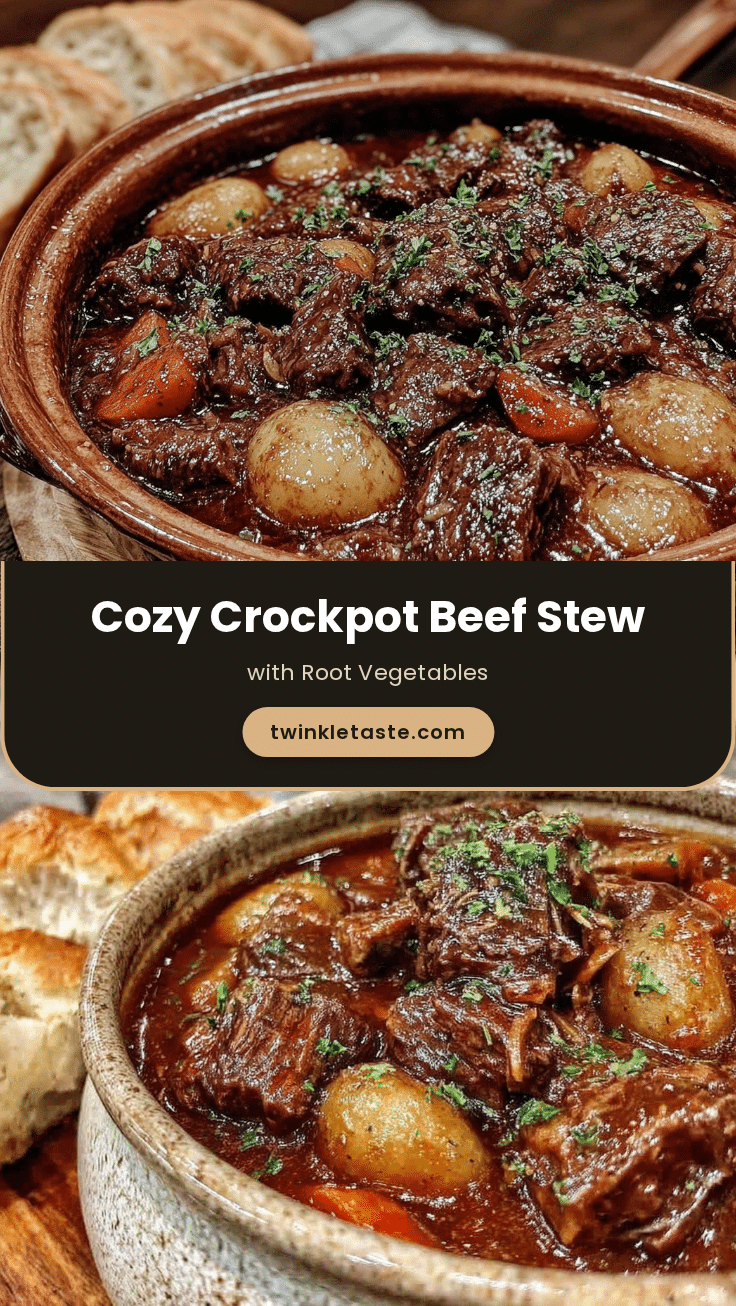
Cozy Crockpot Beef Stew: Easy Root Vegetable Dinner
This cozy crockpot beef stew with root vegetables is a comforting, easy-to-make meal featuring tender beef, carrots, parsnips, and potatoes in a rich, savory broth. Perfect for cold weather, it’s a crowd-pleaser that gets even better the next day.
- Prep Time: 20 minutes
- Cook Time: 7 hours 30 minutes
- Total Time: 7 hours 50 minutes
- Yield: 8 servings 1x
- Category: Main Course
- Cuisine: American
Ingredients
- 2 pounds beef chuck roast, cut into 1.5-inch cubes
- 2 tablespoons olive oil, divided
- 3 tablespoons tomato paste
- 4 cups low-sodium beef broth
- 1 cup dry red wine (like Merlot or Cabernet Sauvignon), optional
- 2 tablespoons Worcestershire sauce
- 2 bay leaves
- 4 sprigs fresh thyme (or 1 teaspoon dried)
- Salt and black pepper, to taste
- 4 large carrots, peeled and cut into 1-inch chunks
- 3 medium parsnips, peeled and cut into 1-inch chunks
- 3 celery stalks, sliced into 1/2-inch pieces
- 1 large yellow onion, diced
- 4 cloves garlic, minced
- 1.5 pounds Yukon Gold potatoes, cut into 1.5-inch cubes
- 1 cup frozen peas
- 2 tablespoons cornstarch, mixed with 2 tablespoons cold water (or 2 tablespoons all-purpose flour mixed with 2 tablespoons softened butter)
Instructions
- Prep your ingredients first: chop all vegetables, cut beef into cubes, measure spices and liquids.
- Season the beef generously: pat beef cubes dry with paper towels, season all over with salt and pepper.
- Sear the beef in batches: heat 1 tablespoon olive oil in a large skillet over medium-high heat. Add beef in a single layer, brown undisturbed for 3-4 minutes per side. Transfer to slow cooker.
- Cook the aromatics: reduce heat to medium, add remaining 1 tablespoon olive oil. Add diced onion and cook 4-5 minutes until softened. Add minced garlic and cook 30 seconds until fragrant.
- Caramelize the tomato paste: push onions and garlic to side, add tomato paste to hot surface. Cook undisturbed 1-2 minutes until darkened. Stir into onions and cook 1 more minute.
- Deglaze the pan: pour in 1/2 cup beef broth (or red wine), scrape up browned bits. Simmer 1 minute, then pour into slow cooker over beef.
- Add liquids and herbs: pour in remaining beef broth, rest of wine (if using), Worcestershire sauce, bay leaves, and thyme. Stir gently.
- Add vegetables (except peas): add carrots, parsnips, celery, and potatoes to slow cooker. Push down into liquid.
- Cook low and slow: cover and cook on LOW for 7-8 hours or HIGH for 4-5 hours until beef is fork-tender and vegetables are soft.
- Add peas and thicken: about 20 minutes before serving, stir in frozen peas. Whisk cornstarch with cold water, stir into stew. Cook uncovered 15-20 minutes until thickened.
- Finish and serve: remove bay leaves and thyme stems. Taste and adjust seasoning with salt and pepper. Ladle into bowls.
Notes
For best results, sear the beef and caramelize the tomato paste—this adds deep flavor. Cut vegetables into uniform 1-inch chunks for even cooking. Use low-sodium broth and season at the end to control salt. Avoid lifting the lid too often. For thicker stew, mash a few potato chunks against the side of the slow cooker before adding the slurry. The stew is even better the next day.
Nutrition
- Serving Size: 1.5 cups
- Calories: 385
- Sugar: 8
- Sodium: 720
- Fat: 14
- Saturated Fat: 5
- Carbohydrates: 32
- Fiber: 6
- Protein: 32
Keywords: crockpot beef stew, root vegetable stew, slow cooker beef stew, comfort food, winter dinner, easy stew recipe