This was supposed to be churros. I had the piping bag ready, the oil was heating, and I was feeling pretty confident about my plan for a quick weeknight dessert. Then I realized I had grabbed the wrong flour—all-purpose instead of the bread flour I usually use for churro dough. The dough came together too loose, too sticky, and honestly, it was a mess. I stood there staring at this sad, shapeless blob, thinking about the twenty minutes I had already spent and how the kids were asking every thirty seconds when dessert would be ready.
So I did what any tired cook does when things go wrong: I panicked, then I improvised. I rolled the dough out thin—thinner than I thought possible—and cut it into rough circles. Into the oil they went, more out of stubbornness than hope. And you know what happened? They puffed up, bubbled, and turned this beautiful golden brown that made me stop mid-sigh. The first bite had this shattering crunch that I still can’t quite believe came from my kitchen disaster. I drizzled some piloncillo syrup I had simmering on the back burner, and suddenly my failed churro night became the best accident I’ve ever made.
Maybe you’ve been there—staring at a half-ruined recipe, ready to order pizza instead. That’s exactly where these quick crispy Mexican buñuelos come from. They’re what happens when you let go of the plan and trust your hands. Now I make them on purpose, every time, and they’ve become our go-to weeknight treat when we need something fast, crunchy, and sweet without the fuss. Let me tell you, there’s something deeply satisfying about a recipe that started as a mistake and turned into a tradition.
Why You’ll Love This Recipe
These quick crispy Mexican buñuelos with piloncillo syrup are the kind of recipe that makes you wonder why you ever stressed about dessert. I’ve tested this more times than I can count—through burnt batches, too-thick syrup, and one memorable incident where the oil was too hot and I ended up with what my husband called “abstract buñuelos.” Every failure taught me something, and this version is the one that finally works every single time.
- Quick & Easy: From start to table in under 30 minutes. No resting dough, no complicated shaping—just mix, roll, fry, and eat. Perfect for those nights when you need dessert to happen fast.
- Simple Ingredients: You likely have everything in your pantry right now. Flour, sugar, oil, cinnamon, and piloncillo (or brown sugar). No special trips to the store required.
- Perfect for Weeknights: This isn’t a weekend-project dessert. It’s a Tuesday-night-we-survived-the-day kind of treat that comes together while the kids finish homework.
- Crowd-Pleaser: I’ve served these at family dinners, potlucks, and even a book club meeting. They disappear faster than anything else on the table. Kids love the crunch, adults love the syrup.
- Unbelievably Delicious: That first bite—the crackle, the warmth, the way the syrup soaks in just enough—it’s next-level comfort food that feels way more impressive than it actually is.
What makes these different from every other buñuelo recipe you’ll find? It’s the technique. Most recipes call for resting the dough or rolling it paper-thin with a tortilla press. I found that a simple rolled-out dough that’s slightly thicker than tortilla thickness gives you that perfect balance of crispy outside and soft, airy inside. Plus, the piloncillo syrup—made from unrefined cane sugar—adds this deep, molasses-like richness that regular sugar syrup just can’t match. It’s not just another version; it’s the version I keep coming back to.
This recipe is comfort food reimagined for real life. It’s faster, simpler, and somehow still has that soul-soothing satisfaction that makes you close your eyes after the first bite. Perfect for impressing guests without breaking a sweat, or turning a regular weeknight into something memorable.
What Ingredients You Will Need
This recipe uses simple, mostly pantry-staple ingredients to create something that tastes like it came from a Mexican bakery. The magic is in the combination of texture from the dough and that rich, dark syrup.
For the Buñuelos
- All-purpose flour, 2 cups (250g) – Regular all-purpose flour works perfectly here. No need for specialty flours. I’ve tested this with bread flour too, and it makes them slightly chewier, which is nice but not necessary.
- Baking powder, 1 teaspoon – This gives the buñuelos their slight puff and airy interior. Don’t skip it—I tried once and got flat, dense discs that were more cracker than buñuelo.
- Salt, 1/2 teaspoon – Just enough to balance the sweetness. I use fine sea salt.
- Granulated sugar, 2 tablespoons – A little sweetness in the dough itself. You can adjust this up or down depending on your preference.
- Unsalted butter, 2 tablespoons (28g), melted – Butter adds richness and helps the dough stay tender. You can use vegetable oil if that’s what you have, but butter gives better flavor.
- Egg, 1 large, room temperature – The egg binds everything together and adds structure. Take it out of the fridge about 15 minutes before you start.
- Warm water, about 1/3 cup (80ml) – You might need a little more or less depending on your flour. The dough should be soft but not sticky.
- Vegetable oil, for frying (about 2-3 cups) – Use a neutral oil with a high smoke point. Canola, vegetable, or peanut oil all work well. Avoid olive oil—it’ll burn.
For the Piloncillo Syrup
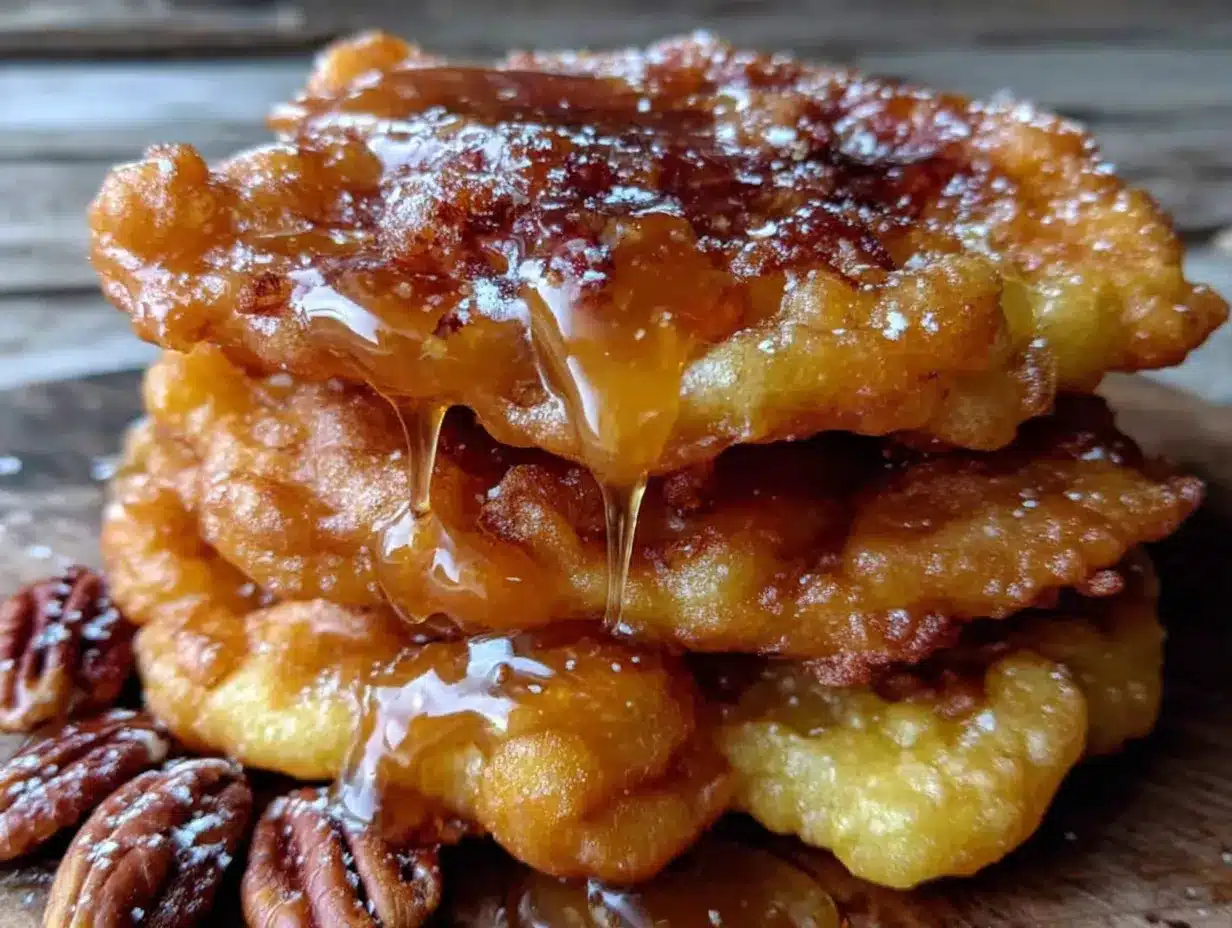
- Piloncillo, 1 cone (about 8 oz or 225g), chopped – Piloncillo is unrefined cane sugar with a deep, complex flavor. You can find it in Latin grocery stores or online. If you can’t find it, substitute with 1 cup packed dark brown sugar—it won’t be exactly the same, but it’ll still be delicious.
- Water, 1 cup (240ml) – Just regular tap water.
- Cinnamon stick, 1 – This infuses the syrup with warm spice. I prefer Mexican cinnamon (canela) if you can find it, but regular cinnamon works fine.
- Vanilla extract, 1 teaspoon – Added at the end for brightness.
For Topping
- Ground cinnamon, 1 tablespoon, mixed with 2 tablespoons sugar – The classic cinnamon-sugar coating that makes these irresistible.
I recommend using Goya piloncillo if you can find it—it’s consistent and dissolves well. For the cinnamon, I’ve been using Penzeys Vietnamese cinnamon lately, and it’s incredibly fragrant. But honestly, whatever you have in your spice cabinet will work. This recipe is forgiving, which is exactly what you want on a busy weeknight.
Equipment Needed
You don’t need much for these quick crispy Mexican buñuelos. Here’s what you’ll want to have ready:
- Large mixing bowl – For mixing the dough. Any bowl works, but a wide one makes it easier to knead.
- Rolling pin – A standard rolling pin is fine. If you don’t have one, a wine bottle works in a pinch—I’ve done it more times than I care to admit.
- Deep skillet or heavy-bottomed pot – For frying. I use a cast-iron skillet because it holds heat well. A Dutch oven or any deep pot works too. The key is having enough depth for the oil (about 1.5 inches) so the buñuelos can float and cook evenly.
- Small saucepan – For the piloncillo syrup. A 1-quart saucepan is perfect.
- Slotted spoon or spider strainer – For removing the buñuelos from the oil. A slotted spoon works fine, but a spider strainer makes it easier to drain excess oil.
- Paper towels – For draining the fried buñuelos. I usually layer a few sheets on a plate.
- Pastry brush – Optional, but helpful for brushing on the syrup evenly. You can also just drizzle it with a spoon.
- Kitchen thermometer – Not strictly necessary, but it helps maintain the right oil temperature. I’ve fried without one plenty of times—you just need to be more attentive.
I got my cast-iron skillet at a garage sale for five dollars, and it’s been my go-to for frying ever since. If you’re just starting out, a basic non-stick pan works fine. The most important thing is that the pan is deep enough to prevent splattering.
Preparation Method
- Make the piloncillo syrup first. In a small saucepan, combine the chopped piloncillo, water, and cinnamon stick. Bring to a boil over medium-high heat, then reduce to a simmer. Let it cook for about 10-12 minutes, stirring occasionally, until the piloncillo has completely dissolved and the syrup has thickened slightly. It should coat the back of a spoon. Remove from heat, stir in the vanilla extract, and set aside. The syrup will continue to thicken as it cools.
- While the syrup simmers, make the dough. In a large mixing bowl, whisk together the flour, baking powder, salt, and granulated sugar. Make a well in the center and add the melted butter and egg. Use your hands or a wooden spoon to mix everything together, adding the warm water gradually. Start with 1/4 cup and add more as needed. The dough should come together into a soft, slightly tacky ball—not sticky, but not dry either.
- Knead the dough briefly. Turn the dough out onto a lightly floured surface and knead for about 2-3 minutes. You’re not trying to develop gluten like you would for bread—just until the dough is smooth and elastic. If it sticks to your hands, add a tiny sprinkle of flour. If it feels dry, add a teaspoon of water. I’ve learned that dough that’s too dry will crack when you roll it out, so err on the side of slightly softer.
- Divide and rest the dough. Divide the dough into 8 equal pieces. Roll each piece into a ball and place them on a plate. Cover with a clean kitchen towel and let them rest for 5 minutes. This rest period relaxes the gluten, making the dough easier to roll out thin. Don’t skip this—I’ve tried rushing through it, and the dough springs back when you try to roll it.
- Roll out the buñuelos. On a lightly floured surface, take one dough ball and roll it into a thin circle, about 6-7 inches in diameter. It should be almost translucent in places—thin enough that you can see your hand through it. Don’t worry if the edges are irregular; that’s part of the charm. Repeat with the remaining dough balls, stacking them between sheets of parchment paper or wax paper so they don’t stick.
- Heat the oil. Pour about 1.5 inches of vegetable oil into your deep skillet or pot. Heat over medium-high heat until the oil reaches 350°F (175°C). If you don’t have a thermometer, test it by dropping a small piece of dough into the oil: it should sizzle immediately and float to the surface. If it sinks and sits at the bottom, the oil isn’t hot enough. If it browns in less than 30 seconds, the oil is too hot.
- Fry the buñuelos. Carefully place one rolled-out dough circle into the hot oil. It should start puffing and bubbling almost immediately. Fry for about 30-45 seconds per side, until golden brown and crispy. Use your slotted spoon to gently press down on any bubbles that form—this helps the buñuelo cook evenly. Flip once and fry the other side. The whole process takes about 1-2 minutes per buñuelo.
- Drain and coat. Using your slotted spoon, transfer the fried buñuelo to a plate lined with paper towels. Let it drain for about 30 seconds, then brush or drizzle with the piloncillo syrup while it’s still warm. Sprinkle generously with the cinnamon-sugar mixture. Repeat with the remaining dough circles.
- Serve immediately. Buñuelos are best eaten fresh and warm, when they’re at their crispiest. They soften as they sit, so try to serve them within 15-20 minutes of frying. If you need to keep them warm, place them on a baking sheet in a 200°F oven for up to 30 minutes.
Cooking Tips & Techniques
After making these quick crispy Mexican buñuelos more times than I can count, I’ve picked up a few tricks that make the process smoother and the results more consistent. Here’s what I’ve learned the hard way:
Oil temperature is everything. I cannot stress this enough. If the oil is too cool, the buñuelos absorb oil and become greasy and heavy. If it’s too hot, they brown on the outside before the inside cooks through, leaving you with a raw center. I keep my thermometer clipped to the pan and check it between batches. The temperature will drop when you add a buñuelo, so give it a few seconds to come back up before adding the next one.
Roll the dough thin but not fragile. The ideal thickness is about 1/16 inch—thin enough that you can see light through it, but thick enough that it holds together when you lift it. If the dough tears, just pinch it back together. I’ve had plenty that looked more like abstract art than circles, and they tasted just as good.
Don’t overcrowd the pan. Fry one buñuelo at a time, maybe two if your pan is large enough. Overcrowding drops the oil temperature too much and causes uneven cooking. I know it’s tempting to speed things up, but trust me—taking an extra few minutes is worth it for that perfect crunch.
Keep the syrup warm. The piloncillo syrup will thicken as it sits. If it gets too thick to brush, just add a tablespoon of warm water and stir. I keep mine on the lowest heat setting while I fry, so it stays pourable.
My biggest failure? The time I forgot to add the baking powder. The buñuelos came out flat, dense, and about as exciting as cardboard. I sat there eating one, trying to convince myself they were fine. They were not fine. Don’t be like me—double-check your ingredients before you start mixing.
For consistent results: Measure your flour correctly by spooning it into the measuring cup and leveling it off. Scooping directly from the bag can pack the flour and give you too much, which makes the dough dry and hard to roll.
Variations & Adaptations
One of the things I love about this recipe is how flexible it is. Here are some variations I’ve tried and loved:
Gluten-Free Buñuelos: Substitute the all-purpose flour with a 1:1 gluten-free baking flour blend. I use Bob’s Red Mill 1:1 Baking Flour, and it works beautifully. The dough might be a bit more delicate, so handle it gently when rolling. The texture is slightly different—a little more cakey than crispy—but still delicious.
Vegan Version: Replace the egg with a flax egg (1 tablespoon ground flaxseed mixed with 3 tablespoons water, let sit for 5 minutes) and use coconut oil or vegan butter instead of regular butter. The dough will be a bit more fragile, so roll it between two sheets of parchment paper for easier handling.
Spiced Syrup Variation: Add a star anise, a strip of orange peel, and a couple of cloves to the piloncillo syrup while it simmers. Strain them out before using. The extra spices add a warm, aromatic complexity that’s incredible during the holidays.
Chocolate Drizzle: Melt 1/2 cup of dark chocolate chips with 2 tablespoons of coconut oil and drizzle it over the buñuelos after the syrup. It’s over the top in the best possible way. My kids beg for this version every time.
Savory Buñuelos: Skip the sugar in the dough, omit the cinnamon-sugar topping, and serve the buñuelos with a sprinkle of salt and a side of refried beans or guacamole. They’re not traditional, but they’re surprisingly good—kind of like a crispy flatbread.
Air Fryer Option: Brush the rolled-out dough circles with a little oil and cook them in an air fryer at 375°F for 4-5 minutes, flipping halfway through. They won’t be as puffy or bubbly as fried ones, but they’re still crispy and much lower in fat. I do this when I’m trying to be a little healthier, and honestly, they’re pretty satisfying.
Serving & Storage Suggestions
These quick crispy Mexican buñuelos are best served warm, right after frying. That’s when they’re at their peak—crispy, slightly puffed, with the syrup just starting to soak in. I like to arrange them on a large platter, drizzled with extra syrup and a generous sprinkle of cinnamon-sugar. A few fresh berries on the side add a pop of color and a tart contrast to the sweetness.
For drinks, they pair beautifully with a cup of Mexican hot chocolate (the kind with cinnamon and a touch of chili), a strong coffee, or even a cold glass of horchata. If you’re serving them for a party, set up a buñuelo bar with different toppings—whipped cream, fresh fruit, chocolate sauce, and extra cinnamon-sugar—so guests can customize their own.
Storage: Buñuelos are really best eaten fresh, but if you have leftovers (which rarely happens in my house), store them in an airtight container at room temperature for up to 2 days. They will soften significantly, but you can re-crisp them in a 350°F oven for about 5 minutes. Do not refrigerate them—the moisture will make them soggy.
Freezing: You can freeze the unfried dough circles. Stack them between layers of parchment paper, wrap tightly in plastic wrap, and freeze for up to 3 months. Fry them directly from frozen—just add an extra 30 seconds to the cooking time. The syrup can also be made ahead and stored in the refrigerator for up to 2 weeks. Reheat it gently on the stovetop or in the microwave before serving.
One thing I’ve noticed: the flavors actually develop a bit overnight. The syrup soaks into the buñuelos, and while they lose their crunch, they become almost like a soft, syrupy pastry. It’s different, but still really good—especially for breakfast the next morning with a cup of coffee.
Nutritional Information & Benefits
Let’s be honest: these buñuelos are a treat, not a health food. But here’s the approximate nutritional breakdown for one buñuelo with syrup (out of 8 servings):
- Calories: Approximately 280-320
- Fat: 12-15g (mostly from frying oil)
- Carbohydrates: 40-45g
- Protein: 4-5g
- Fiber: 1-2g
- Sugar: 18-22g
On the plus side, piloncillo is less processed than white sugar and retains some of the natural minerals from the sugarcane, including small amounts of calcium, iron, and magnesium. It’s not a health food by any stretch, but it’s a more natural sweetener option. The cinnamon in the syrup and topping also has anti-inflammatory properties and can help with blood sugar regulation.
If you’re watching your intake, you can reduce the sugar in the dough and use less syrup on top. The air fryer version also cuts the fat significantly—down to about 5-6g per serving. But honestly, life is short, and sometimes you just need a fried, sugary, cinnamon-spiced disc of happiness. I say enjoy it in moderation and don’t feel guilty about it.
These buñuelos are not suitable for gluten-free diets unless you use the gluten-free flour substitution mentioned above. They also contain dairy from the butter (use vegan butter to make them dairy-free) and eggs (use a flax egg for an egg-free version).
Conclusion
These quick crispy Mexican buñuelos with piloncillo syrup are proof that the best recipes often come from the biggest mistakes. What started as a failed churro attempt turned into a weeknight tradition that’s faster, easier, and honestly more delicious than what I was originally trying to make. That’s the thing about cooking—sometimes you have to let go of the plan and see where the dough takes you.
I love this recipe because it’s forgiving. It doesn’t require perfect technique or fancy ingredients. It just needs a little patience with the oil temperature and a willingness to get your hands messy. And the payoff? That first shattering bite, the warmth of the cinnamon, the deep sweetness of the piloncillo syrup—it’s pure comfort.
I’d love to hear how these turn out for you. Did you try a variation? Did your kids help roll the dough? Did you discover your own happy accident along the way? Drop a comment below and let me know—I read every single one. And if you loved these, share this recipe with a friend who needs a quick weeknight dessert win. Happy cooking, friends!
Frequently Asked Questions
Can I make the dough ahead of time?
Yes, absolutely. You can prepare the dough up to 24 hours in advance. Wrap it tightly in plastic wrap and refrigerate. When you’re ready to fry, let it sit at room temperature for about 15 minutes to soften slightly before rolling. The dough might be a bit firmer, which actually makes it easier to roll out thin.
What if I can’t find piloncillo?
No problem at all. Substitute with 1 cup of packed dark brown sugar mixed with 2 tablespoons of molasses. The flavor won’t be exactly the same—piloncillo has a more complex, smoky sweetness—but it’s still delicious. You can also use regular brown sugar on its own in a pinch.
Why are my buñuelos greasy?
This usually means the oil wasn’t hot enough. When the oil temperature is too low, the dough absorbs oil instead of quickly cooking and forming a barrier. Make sure your oil is at 350°F (175°C) before you start frying, and let it come back up to temperature between batches. Also, make sure you’re draining them well on paper towels.
Can I bake these instead of frying?
You can, but the texture will be very different. Brush the rolled-out dough circles with oil and bake at 400°F for 8-10 minutes, flipping halfway through. They’ll be more like crackers than buñuelos—crispy but not puffy. They’re still tasty, especially with the syrup, but they won’t have that signature bubbly, airy texture.
How do I prevent the dough from shrinking when I roll it out?
This happens when the gluten hasn’t had time to relax. Make sure you let the dough balls rest for at least 5 minutes after dividing them. If the dough still springs back, let it rest for another 5 minutes. You can also roll the dough, then let it sit for a minute before trying to stretch it further—this gives the gluten time to relax.
Pin This Recipe!
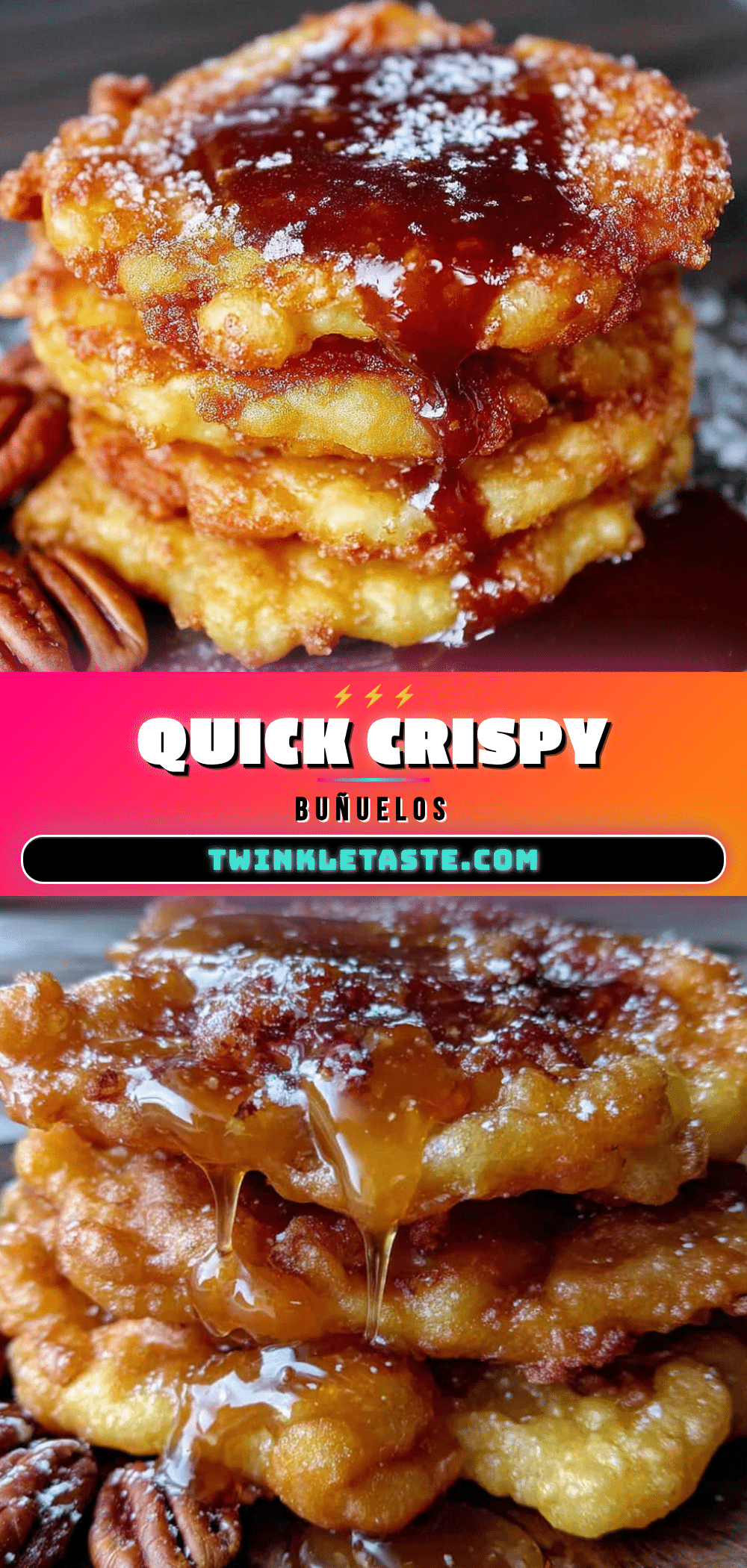
Quick Crispy Mexican Buñuelos with Easy Piloncillo Syrup
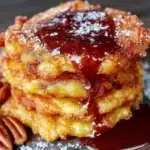
These quick crispy Mexican buñuelos with piloncillo syrup are a weeknight dessert that comes together in under 30 minutes. A happy accident turned tradition, they feature a shatteringly crunchy exterior and a soft, airy interior, drizzled with a rich, molasses-like syrup.
- Prep Time: 15 minutes
- Cook Time: 15 minutes
- Total Time: 30 minutes
- Yield: 8 servings
- Category: Dessert
- Cuisine: Mexican
Ingredients
- All-purpose flour, 2 cups (250g)
- Baking powder, 1 teaspoon
- Salt, 1/2 teaspoon
- Granulated sugar, 2 tablespoons
- Unsalted butter, 2 tablespoons (28g), melted
- Egg, 1 large, room temperature
- Warm water, about 1/3 cup (80ml)
- Vegetable oil, for frying (about 2-3 cups)
- Piloncillo, 1 cone (about 8 oz or 225g), chopped
- Water, 1 cup (240ml)
- Cinnamon stick, 1
- Vanilla extract, 1 teaspoon
- Ground cinnamon, 1 tablespoon, mixed with 2 tablespoons sugar
Instructions
- Make the piloncillo syrup first. In a small saucepan, combine the chopped piloncillo, water, and cinnamon stick. Bring to a boil over medium-high heat, then reduce to a simmer. Let it cook for about 10-12 minutes, stirring occasionally, until the piloncillo has completely dissolved and the syrup has thickened slightly. It should coat the back of a spoon. Remove from heat, stir in the vanilla extract, and set aside.
- While the syrup simmers, make the dough. In a large mixing bowl, whisk together the flour, baking powder, salt, and granulated sugar. Make a well in the center and add the melted butter and egg. Use your hands or a wooden spoon to mix everything together, adding the warm water gradually. Start with 1/4 cup and add more as needed. The dough should come together into a soft, slightly tacky ball—not sticky, but not dry either.
- Knead the dough briefly. Turn the dough out onto a lightly floured surface and knead for about 2-3 minutes. You’re not trying to develop gluten like you would for bread—just until the dough is smooth and elastic. If it sticks to your hands, add a tiny sprinkle of flour. If it feels dry, add a teaspoon of water.
- Divide and rest the dough. Divide the dough into 8 equal pieces. Roll each piece into a ball and place them on a plate. Cover with a clean kitchen towel and let them rest for 5 minutes.
- Roll out the buñuelos. On a lightly floured surface, take one dough ball and roll it into a thin circle, about 6-7 inches in diameter. It should be almost translucent in places—thin enough that you can see your hand through it. Repeat with the remaining dough balls, stacking them between sheets of parchment paper or wax paper so they don’t stick.
- Heat the oil. Pour about 1.5 inches of vegetable oil into your deep skillet or pot. Heat over medium-high heat until the oil reaches 350°F (175°C). If you don’t have a thermometer, test it by dropping a small piece of dough into the oil: it should sizzle immediately and float to the surface.
- Fry the buñuelos. Carefully place one rolled-out dough circle into the hot oil. It should start puffing and bubbling almost immediately. Fry for about 30-45 seconds per side, until golden brown and crispy. Use your slotted spoon to gently press down on any bubbles that form—this helps the buñuelo cook evenly. Flip once and fry the other side. The whole process takes about 1-2 minutes per buñuelo.
- Drain and coat. Using your slotted spoon, transfer the fried buñuelo to a plate lined with paper towels. Let it drain for about 30 seconds, then brush or drizzle with the piloncillo syrup while it’s still warm. Sprinkle generously with the cinnamon-sugar mixture. Repeat with the remaining dough circles.
- Serve immediately. Buñuelos are best eaten fresh and warm, when they’re at their crispiest. They soften as they sit, so try to serve them within 15-20 minutes of frying. If you need to keep them warm, place them on a baking sheet in a 200°F oven for up to 30 minutes.
Notes
Oil temperature is crucial: maintain 350°F (175°C) for best results. Roll dough thin but not fragile; about 1/16 inch thick. Fry one buñuelo at a time to avoid overcrowding. Keep syrup warm on low heat. For gluten-free, use a 1:1 gluten-free flour blend. For vegan, use a flax egg and vegan butter. Leftovers can be stored in an airtight container at room temperature for up to 2 days; re-crisp in a 350°F oven for 5 minutes.
Nutrition
- Serving Size: 1 buñuelo with syrup
- Calories: 300
- Sugar: 20
- Sodium: 200
- Fat: 13.5
- Saturated Fat: 4
- Carbohydrates: 42.5
- Fiber: 1.5
- Protein: 4.5
Keywords: buñuelos, Mexican buñuelos, piloncillo syrup, quick dessert, weeknight dessert, fried dough, cinnamon sugar