My sister asked why I couldn’t just mix everything together in one dish instead of scooping, mashing, and refilling all those potato skins. I started to explain why that wouldn’t work — then stopped. Honestly? I had no good reason. I’d been making twice-baked potatoes for years because that’s just how my mom did it, and her mom before her. But my sister, standing there with a spatula in one hand and a casserole dish in the other, had a point. Why was I making extra work for myself?
So I tried it her way. I dumped all the filling into a baking dish, topped it with cheese and bacon, and slid it into the oven. I was fully prepared to apologize for the texture being off or the potatoes tasting somehow wrong. But when I pulled that dish out, golden and bubbling around the edges? Let me tell you — I ate my words right along with that first forkful. It was everything a twice-baked potato should be, just without the fuss of dealing with a dozen empty shells.
That was three winters ago, and I haven’t scooped a single potato skin since. This cozy make-ahead twice baked potato casserole has become my go-to for potlucks, holiday dinners, and those quiet nights when you just need something warm and cheesy to fix the day. Maybe you’ve been there — staring at a recipe and wondering why you’re doing it the hard way. Trust me, I get it now.
Why You’ll Love This Recipe
This isn’t just another potato casserole. After testing this recipe at least a dozen times — for my family, for a church supper, and even for a picky friend who “doesn’t do casseroles” — I can tell you this version stands out for real reasons, not just because I say so.
- Quick & Easy: From start to table in about an hour, with only 20 minutes of active prep. The oven does the heavy lifting.
- Simple Ingredients: You probably have most of these in your kitchen right now. No hunting down fancy cheeses or obscure spices.
- Perfect for Holidays & Potlucks: This dish travels well, feeds a crowd, and stays warm longer than you’d expect. I’ve brought it to Thanksgiving, Easter, and casual game-day gatherings.
- Crowd-Pleaser: Kids love the cheese and bacon. Adults love the creamy texture. Everyone goes back for seconds.
- Unbelievably Delicious: The secret is in the tangy sour cream, sharp cheddar, and a pinch of smoked paprika that adds depth without being obvious.
What makes this recipe different is the texture. Most twice-baked potato casseroles turn into a gluey mash. Not this one. By leaving some chunks of potato intact and folding in the filling gently, you get those little pockets of fluffy potato and creamy mix that make every bite interesting. It’s comfort food reimagined — faster, easier, but with the same soul-soothing satisfaction that makes you close your eyes after that first bite.
What Ingredients You Will Need
This recipe uses simple, wholesome ingredients to deliver bold flavor and satisfying texture without the fuss. Most of these are pantry staples, though a couple might require a quick trip to the store.
- Russet potatoes (4 pounds, about 6-8 medium) — Russets are ideal for baking because their high starch content creates that light, fluffy interior. I prefer buying organic when they’re on sale.
- Sharp cheddar cheese (2 cups, shredded) — Please shred your own. Pre-shredded cheese has anti-caking agents that prevent smooth melting. I use Tillamook or Cabot for the best flavor.
- Sour cream (1 cup) — Full-fat gives the creamiest results, but reduced-fat works in a pinch. (Adds richness)
- Unsalted butter (4 tablespoons, softened) — Salted butter works too — just reduce the added salt later.
- Whole milk (½ cup) — Warm it slightly before adding to prevent the mixture from seizing. Use dairy-free milk if needed.
- Bacon (8 slices, cooked and crumbled) — Thick-cut bacon holds up better. Save 2 tablespoons for the topping.
- Green onions (4-5, thinly sliced) — Both white and green parts go in the filling. Reserve some green tops for garnish.
- Garlic powder (1 teaspoon) — Not fresh garlic, which can turn bitter during baking. Stick with powder here.
- Smoked paprika (½ teaspoon) — This is my secret ingredient. It adds a subtle smokiness that makes the casserole taste like it cooked all day.
- Salt (1 teaspoon) — I use fine sea salt. Adjust based on your bacon’s saltiness.
- Black pepper (½ teaspoon, freshly ground) — Freshly ground makes a difference here.
For substitutions: use Greek yogurt instead of sour cream for extra protein. Swap cheddar with Colby Jack or Gouda for a different flavor profile. If you’re vegetarian, skip the bacon and add a teaspoon of liquid smoke to the milk mixture — it mimics that smoky depth beautifully.
Equipment Needed
You don’t need a professional kitchen to pull this off. Here’s what you’ll actually use:
- Large baking sheet — For roasting the potatoes. A rimmed sheet prevents drips.
- 9×13-inch baking dish — Glass or ceramic works best. Metal can react with acidic ingredients like sour cream.
- Fork or potato masher — I prefer a fork for more control over the texture. A masher can overwork the potatoes.
- Large mixing bowl — Big enough to hold all the potato filling without spilling.
- Chef’s knife and cutting board — For slicing green onions and bacon.
- Measuring cups and spoons — Accuracy matters for the dairy and seasonings.
- Aluminum foil — For covering the casserole during the initial bake and for make-ahead storage.
If you don’t have a baking sheet, a large oven-safe skillet works for roasting potatoes. No 9×13 dish? Use two 8×8 pans or a large cast-iron skillet — just adjust the bake time slightly.
Preparation Method
- Preheat your oven to 400°F (200°C). Scrub the potatoes clean and pat them dry. Prick each potato 4-5 times with a fork — this lets steam escape and prevents explosions. Place them directly on the oven rack or on a baking sheet.
- Bake the potatoes for 50-60 minutes, until a knife slides through the center with no resistance. Let them cool for 10-15 minutes — just until you can handle them without burning your fingers.
- While the potatoes bake, cook the bacon. In a skillet over medium heat, cook the bacon until crisp, about 6-8 minutes. Transfer to a paper towel-lined plate. Once cool, crumble into small pieces. Reserve 2 tablespoons for the topping.
- Slice the green onions and set aside. In a small bowl, combine the garlic powder, smoked paprika, salt, and pepper.
- When the potatoes are cool enough to handle, cut each one in half lengthwise. Use a spoon to scoop the flesh into a large mixing bowl. Leave about ¼ inch of potato attached to the skin — you want some structure, but don’t be too precious about it. Discard the skins or save them for another use (potato skin chips, anyone?).
- Add the butter to the hot potatoes and mash gently with a fork until mostly smooth. You want some small chunks remaining — this gives the casserole texture. Add the sour cream and warm milk, then fold together until just combined. Overmixing makes the potatoes gummy.
- Fold in 1½ cups of the shredded cheddar, most of the crumbled bacon (reserving 2 tablespoons), and the sliced green onions (reserving some for garnish). Add the seasoning mixture and fold gently until everything is evenly distributed.
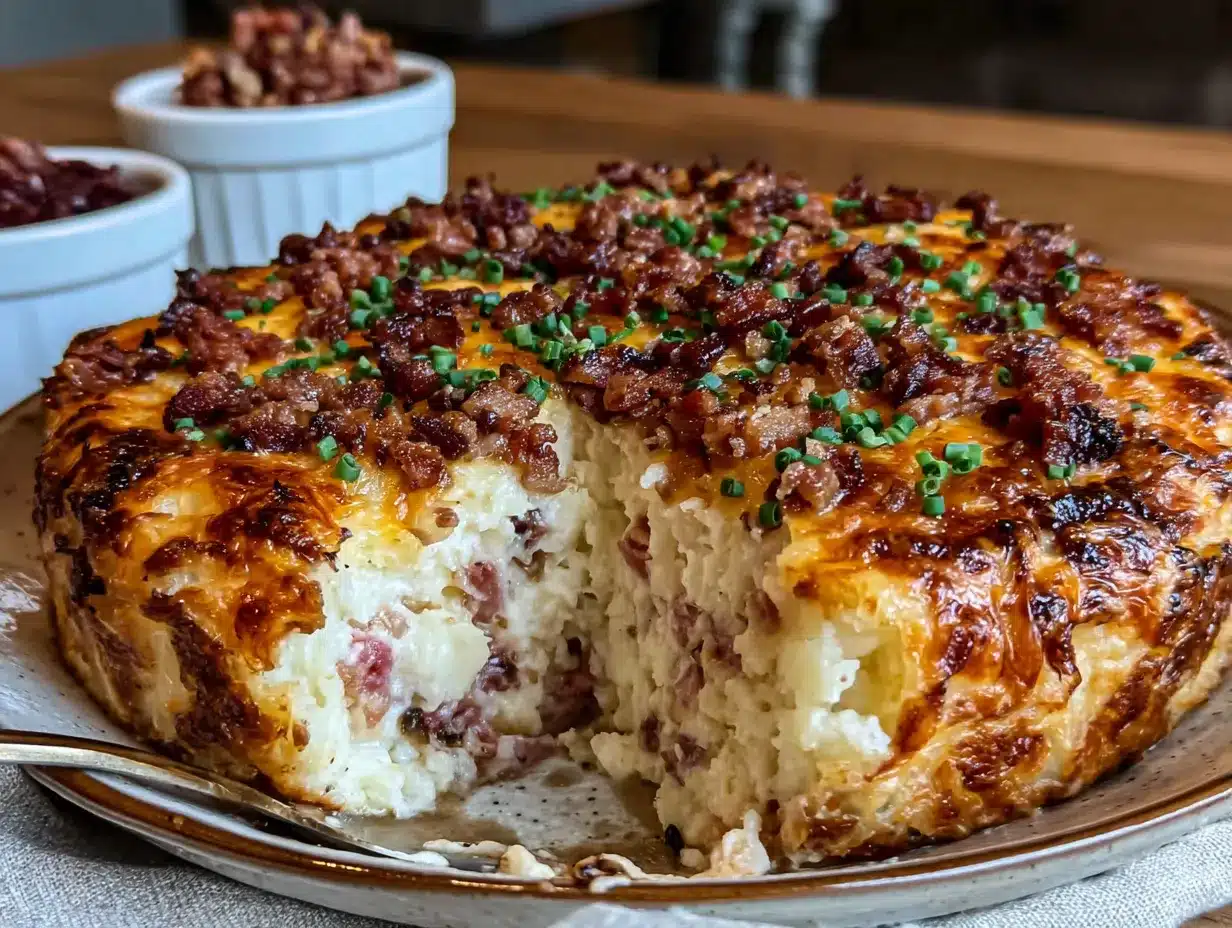
- Transfer the potato mixture to the greased 9×13-inch baking dish and spread it into an even layer. Top with the remaining ½ cup of cheddar and the reserved bacon.
- Bake uncovered at 375°F (190°C) for 25-30 minutes, until the cheese is melted and bubbly and the edges are golden brown. If you want a deeper golden top, switch to broil for the last 2 minutes — but watch it closely so it doesn’t burn.
- Let the casserole rest for 5-10 minutes before serving. This allows the filling to set slightly, making it easier to scoop. Garnish with the reserved green onions.
Sensory cues: At step 6, the mixture should look creamy with visible potato chunks. At step 9, you’ll smell the cheese and bacon combining — that’s when you know it’s ready. The edges should be bubbling and slightly crispy.
Cooking Tips & Techniques
I’ve made this casserole enough times to know where things can go sideways. Here’s what I’ve learned:
Don’t overbake the potatoes. Underbaked potatoes won’t mash properly, and overbaked ones can turn gluey when mixed. Test with a knife — it should slide in like butter.
Warm your dairy. Cold sour cream or milk hitting hot potatoes can make the mixture seize up and turn grainy. Let them sit at room temperature for 15 minutes, or microwave the milk for 20 seconds.
Season in layers. I once forgot to salt the potatoes before adding the cheese. The result? A bland casserole with salty cheese. Season the potato mixture, then taste before adding more salt. Bacon adds salt too.
My biggest failure: I tried using low-fat sour cream and skim milk once to “lighten it up.” The casserole came out watery and sad. Trust me — use full-fat dairy for this one. It’s a comfort dish for a reason.
Timing tip: Bake the potatoes a day ahead and store them in the fridge. The next day, you can scoop and mix in half the time. This is my favorite shortcut for busy holidays.
Variations & Adaptations
This recipe is forgiving. Here are some ways to make it your own:
Loaded Baked Potato Style: Add ½ cup of cooked broccoli florets and swap half the cheddar for Monterey Jack. Top with extra bacon and a dollop of sour cream before serving.
Spicy Southwest Version: Stir in 1 diced jalapeño (seeds removed), ½ cup of corn kernels, and ½ teaspoon of cumin. Use pepper jack cheese instead of cheddar. This variation is fantastic for game day.
Herb & Garlic Twist: Replace the garlic powder with 2 cloves of roasted garlic (mashed into a paste). Add 1 tablespoon of fresh chopped chives and 1 teaspoon of fresh thyme leaves. This version feels more elegant — perfect for a dinner party.
Dairy-Free Adaptation: Use vegan butter, unsweetened oat milk, and a dairy-free cheddar shred that melts well (I like Violife or Miyoko’s). The texture will be slightly less creamy, but still delicious.
Make It a Meal: Add 1 cup of cooked, shredded rotisserie chicken and ½ cup of sautéed mushrooms. Serve with a simple green salad, and you’ve got dinner.
I tried the broccoli version last Thanksgiving, and my niece — who “doesn’t eat casseroles” — asked for the recipe. That’s when you know you’ve hit something good.
Serving & Storage Suggestions
Serve this casserole hot, straight from the oven. The cheese should be molten and the edges slightly crispy. I like to scoop it onto plates with a wide spatula to keep those beautiful layers intact.
What to serve with it: A simple green salad with a tangy vinaigrette cuts through the richness beautifully. For a heartier meal, pair it with roasted chicken, grilled steak, or even a crispy garlic chicken for a complete comfort dinner. It also works as a side for holiday ham or turkey.
Storage: Let the casserole cool completely, then cover tightly with foil or plastic wrap. It keeps in the refrigerator for up to 4 days. The flavors actually meld together overnight, making leftovers even better.
Freezing: Assemble the casserole completely but don’t bake it. Cover tightly with foil and freeze for up to 3 months. To bake, thaw overnight in the fridge, then bake as directed, adding 10-15 minutes to the cook time.
Reheating: The oven is your best bet. Cover with foil and reheat at 350°F (175°C) for 15-20 minutes, or until warmed through. The microwave works in a pinch, but the topping won’t be as crispy.
Make-ahead note: This casserole is designed for make-ahead convenience. Assemble it up to 24 hours in advance, keep it covered in the fridge, and bake just before serving. It’s a lifesaver for holiday hosting.
Nutritional Information & Benefits
Here are approximate values per serving (based on 8 servings):
- Calories: 385
- Fat: 22g
- Carbohydrates: 35g
- Protein: 14g
- Fiber: 3g
- Sodium: 620mg
Potatoes get a bad rap, but they’re actually a solid source of vitamin C, potassium, and vitamin B6. The skin — which we’re not using here, but still — contains most of the fiber. Sour cream and cheese add calcium and protein, while bacon contributes a bit of iron.
This dish isn’t exactly health food, but it’s real food made from real ingredients. If you’re watching sodium, use low-sodium bacon and reduce the added salt. For a lighter version, swap half the sour cream with plain Greek yogurt — you’ll add protein and cut some fat.
Allergen note: This recipe contains dairy and gluten (if your bacon or cheese contains additives). It’s naturally nut-free and egg-free.
Conclusion
This cozy make-ahead twice baked potato casserole has earned a permanent spot in my recipe rotation. It’s the dish I bring when I need to feed a crowd without stress, and it’s the one I make on a quiet Sunday when I just want something warm and familiar. My sister still reminds me that she was the one who “fixed” the recipe — and honestly, she’s not wrong.
I hope you give this a try and make it your own. Maybe you’ll add extra bacon or swap the cheese for something smoky. Maybe you’ll serve it alongside a roast chicken or eat it straight from the dish with a spoon (no judgment here). Whatever you do, I’d love to hear about it. Leave a comment below and tell me how it turned out, or share your own twist on this classic comfort dish.
Thanks for stopping by, and happy cooking!
Frequently Asked Questions
Can I use red potatoes or Yukon Golds instead of Russets?
You can, but the texture will be different. Yukon Golds are waxy and will give you a denser, creamier casserole. Russets are ideal because they’re starchy and create that light, fluffy texture classic twice-baked potatoes are known for.
Can I make this casserole vegan?
Yes! Use vegan butter, unsweetened oat milk, and a dairy-free cheddar-style shred that melts well. Skip the bacon or use coconut bacon for that smoky crunch. The texture won’t be exactly the same, but it’s still delicious.
How far ahead can I assemble this casserole?
You can assemble it up to 24 hours in advance. Keep it covered in the refrigerator, and add about 10 minutes to the bake time since you’re starting from cold. If you need longer, you can freeze it unbaked for up to 3 months.
Why did my casserole turn out watery?
This usually happens if you use low-fat dairy or if the potatoes were underbaked. Low-fat sour cream and milk have more water content, which separates during baking. Stick with full-fat dairy and make sure your potatoes are fully baked before mashing.
Can I add other vegetables to this casserole?
Absolutely. Broccoli florets, sautéed mushrooms, roasted bell peppers, or even spinach all work well. Just make sure to cook any watery vegetables (like mushrooms or spinach) first to remove excess moisture, or your casserole might turn out soggy.
Pin This Recipe!

Cozy Make-Ahead Twice Baked Potato Casserole (Easy!)

This easy twice-baked potato casserole combines all the creamy, cheesy, bacony goodness of classic twice-baked potatoes without the fuss of scooping and refilling individual skins. It’s a make-ahead crowd-pleaser perfect for holidays, potlucks, or cozy nights in.
- Prep Time: 20 minutes
- Cook Time: 1 hour 30 minutes
- Total Time: 1 hour 50 minutes
- Yield: 8 servings 1x
- Category: Side Dish
- Cuisine: American
Ingredients
- 4 pounds Russet potatoes (about 6–8 medium)
- 2 cups sharp cheddar cheese, shredded
- 1 cup sour cream (full-fat recommended)
- 4 tablespoons unsalted butter, softened
- ½ cup whole milk, warmed
- 8 slices bacon, cooked and crumbled (reserve 2 tablespoons for topping)
- 4–5 green onions, thinly sliced (reserve some for garnish)
- 1 teaspoon garlic powder
- ½ teaspoon smoked paprika
- 1 teaspoon fine sea salt
- ½ teaspoon freshly ground black pepper
Instructions
- Preheat oven to 400°F (200°C). Scrub potatoes clean, pat dry, and prick each 4-5 times with a fork. Place directly on oven rack or on a baking sheet.
- Bake potatoes for 50-60 minutes until a knife slides through the center with no resistance. Let cool for 10-15 minutes until handleable.
- While potatoes bake, cook bacon in a skillet over medium heat until crisp, about 6-8 minutes. Transfer to paper towel-lined plate. Once cool, crumble into small pieces. Reserve 2 tablespoons for topping.
- Slice green onions and set aside. In a small bowl, combine garlic powder, smoked paprika, salt, and pepper.
- When potatoes are cool enough to handle, cut each in half lengthwise. Scoop flesh into a large mixing bowl, leaving about ¼ inch of potato attached to the skin. Discard skins or save for another use.
- Add butter to hot potatoes and mash gently with a fork until mostly smooth, leaving some small chunks. Add sour cream and warm milk, then fold together until just combined. Do not overmix.
- Fold in 1½ cups shredded cheddar, most of the crumbled bacon (reserving 2 tablespoons), and most of the sliced green onions (reserving some for garnish). Add seasoning mixture and fold gently until evenly distributed.
- Transfer potato mixture to a greased 9×13-inch baking dish and spread into an even layer. Top with remaining ½ cup cheddar and reserved bacon.
- Bake uncovered at 375°F (190°C) for 25-30 minutes until cheese is melted and bubbly and edges are golden brown. For a deeper golden top, broil for the last 2 minutes, watching closely.
- Let casserole rest for 5-10 minutes before serving. Garnish with reserved green onions.
Notes
For best results, use full-fat dairy. Warm the milk and sour cream slightly before adding to prevent the mixture from seizing. Don’t overmix the potatoes to avoid a gluey texture. The casserole can be assembled up to 24 hours in advance and refrigerated; add about 10 minutes to the bake time. To freeze, assemble unbaked, cover tightly, and freeze for up to 3 months; thaw overnight in the fridge before baking. For a vegetarian version, skip the bacon and add 1 teaspoon of liquid smoke to the milk mixture.
Nutrition
- Serving Size: 1 serving (about 1 c
- Calories: 385
- Sugar: 3
- Sodium: 620
- Fat: 22
- Saturated Fat: 12
- Carbohydrates: 35
- Fiber: 3
- Protein: 14
Keywords: twice baked potato casserole, make ahead potato casserole, cheesy potato casserole, bacon potato casserole, holiday side dish, comfort food, easy potato recipe