My neighbor Carol — the one who grows tomatoes like they’re paying her bills — asked me why I couldn’t just throw a whole turkey breast in the oven with some carrots and call it dinner. I started to explain all the reasons that wouldn’t work. The timing would be off. The vegetables would get mushy. The turkey would dry out before anything had any real flavor. I had a whole list prepared, honestly. Then I stopped mid-sentence, because I realized I had never actually tried it.
That Tuesday evening, with my kitchen smelling like roasted garlic and thyme, I learned something important. Sometimes the simplest idea is the one that works best. Carol’s suggestion — which I had almost dismissed as too basic — turned into the best family dinner we’d had in weeks. My kids, who usually pick around vegetables, actually asked for seconds of the parsnips. Let me tell you, that never happens. I stood there at the counter, fork in hand, eating a piece of turkey that was somehow perfectly juicy, and I had to admit I was wrong. Completely wrong.
This Easy One-Pan Turkey Breast and Root Vegetables recipe has become our go-to Sunday dinner. It costs about half what a full Thanksgiving spread would run you, and it comes together with minimal cleanup. The turkey breast stays tender thanks to a simple butter rub, while the vegetables caramelize in all those lovely pan juices. Maybe you’ve been there — staring at a whole turkey breast in the grocery store, wondering if it’s worth the effort. I promise you, it is. Especially when you only have to wash one pan afterward.
Why You’ll Love This Recipe
Let me share why this dish has earned a permanent spot in our weekly rotation. I’ve tested this recipe at least a dozen times, adjusting temperatures and vegetable sizes, and I can tell you it works every single time. Here’s what makes it special:
- Budget-Friendly: A bone-in turkey breast costs a fraction of what you’d pay for a whole turkey or a beef roast. Plus, root vegetables are among the cheapest produce options at the store.
- One-Pan Wonder: Everything cooks together on a single sheet pan. That means less time washing dishes and more time actually sitting down with your family.
- Picky Eater Approved: The roasting process brings out the natural sweetness in carrots, parsnips, and potatoes. My youngest, who claims to hate vegetables, ate an entire serving of roasted parsnips without complaint.
- Leftovers That Shine: This is one of those rare dishes that tastes even better the next day. The turkey stays moist, and the vegetables soak up all those delicious juices overnight.
- No Special Skills Required: If you can chop vegetables and rub butter on meat, you can make this recipe. It’s genuinely that simple.
What sets this apart from other turkey recipes is the method. Instead of fussing with brines or complicated spice rubs, we rely on a generous coating of herb butter and high heat to create a golden, flavorful crust. The vegetables are cut into uniform pieces so they cook evenly alongside the turkey, absorbing all those savory drippings. It’s comfort food at its most practical — hearty, satisfying, and completely doable on a Tuesday night.
This recipe is the kind that makes you close your eyes after that first bite. Not because it’s fancy or complicated, but because it tastes like home. Like the dinner your grandmother would have made if she was smart enough to use just one pan.
What Ingredients You Will Need
This recipe relies on simple, affordable ingredients that you can find at any grocery store. The beauty of this dish is that it doesn’t require anything fancy — just good, honest food prepared with a little care.
For the Turkey
- 1 bone-in, skin-on turkey breast (5-6 pounds / 2.3-2.7 kg) — Look for one that’s roughly the same thickness throughout for even cooking. I prefer buying from a local butcher when possible, but grocery store brands work just fine.
- 4 tablespoons (56 g) unsalted butter, softened — The butter creates a golden, crispy skin. Make sure it’s at room temperature so it spreads easily.
- 3 cloves garlic, minced — Fresh garlic is best here. The pre-minced stuff in jars has a different flavor that doesn’t roast as nicely.
- 1 tablespoon (2 g) fresh rosemary, chopped — If you only have dried, use 1 teaspoon instead. But honestly, fresh makes a noticeable difference.
- 1 tablespoon (2 g) fresh thyme leaves — Same deal with the dried — use 1 teaspoon if that’s what you have.
- 1 teaspoon salt — I use kosher salt for its clean flavor. Table salt works too, but use slightly less since it’s more concentrated.
- ½ teaspoon black pepper, freshly ground — Pre-ground pepper is fine, but fresh gives you more aroma.
For the Vegetables
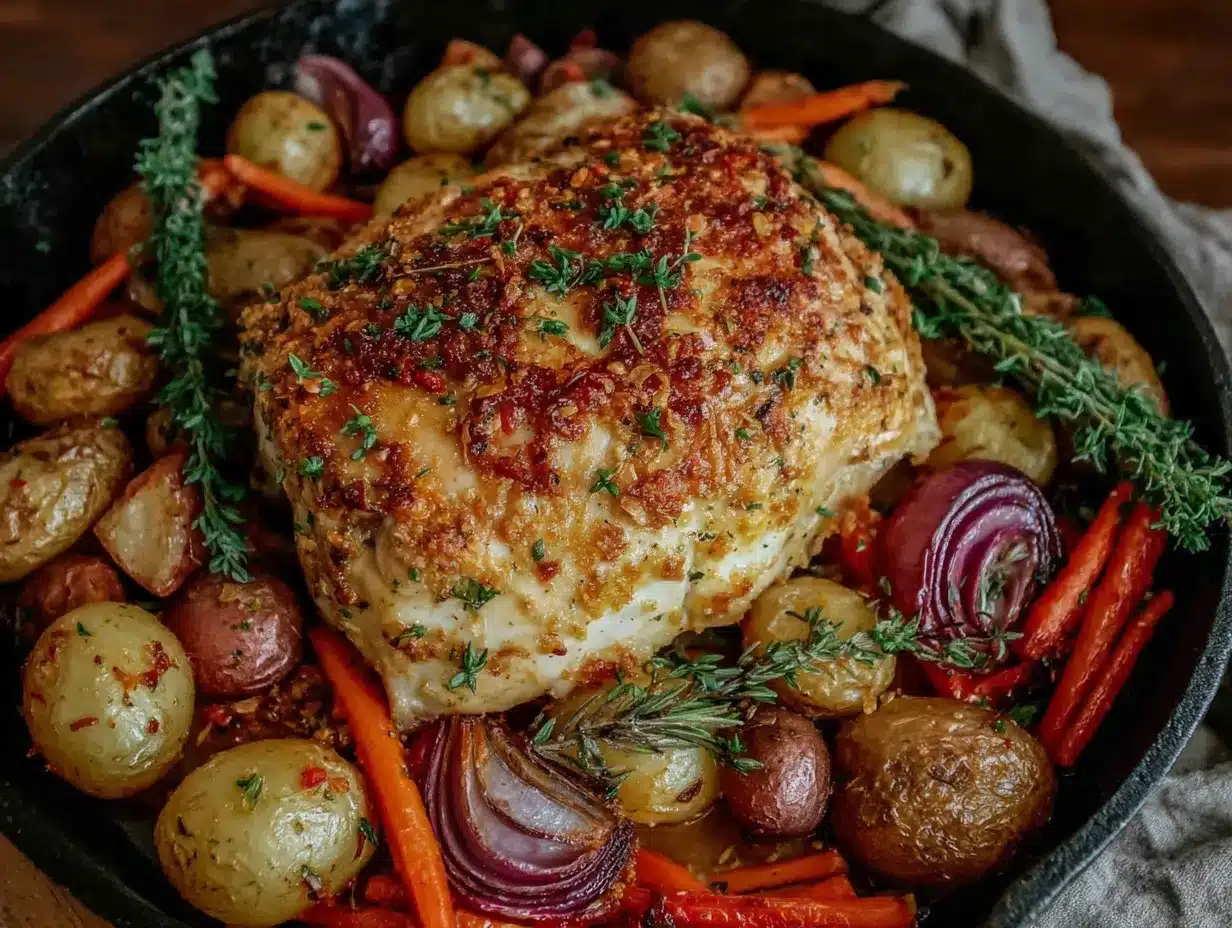
- 4 medium carrots (about 300 g), peeled and cut into 2-inch chunks — Go for thicker carrots that won’t burn before they’re tender.
- 3 parsnips (about 250 g), peeled and cut into 2-inch chunks — Parsnips add a sweet, earthy flavor that pairs beautifully with turkey. Don’t skip them if you can help it.
- 3 Yukon Gold potatoes (about 400 g), cut into 2-inch chunks — These hold their shape well and get wonderfully crispy on the edges. Russets would work too, but they’re a bit starchier.
- 1 large red onion, cut into wedges — The red onion caramelizes into sweet, jammy bits that are honestly my favorite part.
- 2 tablespoons (30 ml) olive oil — Regular olive oil is fine here. Save the fancy extra-virgin stuff for salads.
- ½ teaspoon salt — For seasoning the vegetables.
- ¼ teaspoon black pepper — Just a little to bring out the flavors.
For the Pan Sauce (Optional but Recommended)
- ½ cup (120 ml) chicken broth — Low-sodium is best so you can control the salt level.
- 1 tablespoon (15 ml) lemon juice — This brightens up all those rich, roasted flavors.
A quick note on substitutions: If you can’t find parsnips, swap in an equal amount of celery root or turnips. Sweet potatoes would work too, though they’ll cook a bit faster. For a dairy-free version, use olive oil instead of butter on the turkey — the skin won’t get quite as crispy, but it’ll still be delicious.
Equipment Needed
One of the best things about this recipe is how little equipment it requires. Here’s what you’ll need:
- Large rimmed baking sheet (13×18 inches / 33×46 cm) — The rim is important to catch all those juices. I use a half-sheet pan that cost me about $15 at a restaurant supply store, and it’s held up for years.
- Parchment paper or aluminum foil — For easier cleanup. Not strictly necessary, but trust me on this one.
- Chef’s knife and cutting board — A sharp knife makes vegetable prep so much faster. I learned that lesson the hard way after struggling with a dull blade for years.
- Small bowl for mixing the herb butter — Any small bowl will do.
- Meat thermometer — This is non-negotiable for perfectly cooked turkey. An instant-read thermometer costs about $10 and will save you from dry, overcooked meat every single time.
- Pastry brush (optional) — For brushing the herb butter under the skin. You can use your fingers if you don’t have one.
That’s it. No special roasting pans, no fancy gadgets. Just basic kitchen tools that you probably already own.
Preparation Method
Let me walk you through this step by step. I’ve made this recipe enough times to know where things can go wrong, so I’ll share those little tricks along the way.
- Preheat your oven to 425°F (218°C). Place one rack in the lower third of the oven. This high heat is key for getting crispy skin and caramelized vegetables.
- Make the herb butter. In a small bowl, combine the softened butter, minced garlic, chopped rosemary, thyme leaves, salt, and pepper. Mash it all together with a fork until everything is evenly distributed. The smell at this point is incredible — take a moment to enjoy it.
- Prep the turkey. Pat the turkey breast dry with paper towels. This is important — moisture is the enemy of crispy skin. Using your fingers, gently loosen the skin from the meat, being careful not to tear it. You want to create a pocket between the skin and the breast meat.
- Apply the herb butter. Take about half the herb butter and spread it directly onto the meat under the skin. This is where the flavor really penetrates. Spread the remaining butter all over the outside of the turkey, making sure to get the sides and ends. Don’t forget the underside.
- Prep the vegetables. In a large bowl, toss the carrot chunks, parsnip chunks, potato chunks, and onion wedges with the olive oil, salt, and pepper. Make sure every piece is coated. I use my hands for this — it’s faster and ensures even coverage.
- Arrange everything on the pan. Line your baking sheet with parchment paper or foil. Spread the vegetables in a single layer around the edges of the pan, leaving a space in the center for the turkey. Place the turkey breast in the center, skin side up. The vegetables should surround the turkey but not overlap too much — overcrowding leads to steaming instead of roasting.
- Roast for 30 minutes. Place the pan in the preheated oven. After 30 minutes, remove the pan and give the vegetables a quick stir. This helps them brown evenly. Don’t worry about moving the turkey — just stir the vegetables around it.
- Continue roasting. Return the pan to the oven and roast for another 30-45 minutes. The total cooking time will depend on the size of your turkey breast. A 5-pound breast typically takes about 60-75 minutes total. You’re looking for an internal temperature of 165°F (74°C) when measured at the thickest part of the breast. The vegetables should be tender and golden brown at the edges.
- Rest the turkey. This step is crucial. Remove the pan from the oven and transfer the turkey breast to a cutting board. Let it rest for 15 minutes before slicing. I know it’s tempting to cut into it right away, but resting allows the juices to redistribute throughout the meat. If you skip this step, all those lovely juices will end up on your cutting board instead of in your mouth.
- Make the pan sauce (optional). While the turkey rests, place the baking sheet with the vegetables over two burners on your stovetop set to medium heat. Add the chicken broth and lemon juice, scraping up any browned bits from the bottom of the pan. Let it simmer for 2-3 minutes until slightly reduced. Pour this over the vegetables before serving.
- Slice and serve. Carve the turkey breast against the grain into ½-inch thick slices. Arrange the sliced turkey on a platter surrounded by the roasted vegetables. Spoon any remaining pan juices over the top.
One thing I learned the hard way — check the temperature early. My first time making this, I walked away and came back to a turkey that was 170°F. Still edible, but not as juicy as it could have been. Start checking at the 50-minute mark to be safe.
Cooking Tips & Techniques
After making this recipe more times than I can count, I’ve picked up a few tricks that make a real difference. Let me share them with you.
Pat that turkey dry. I cannot emphasize this enough. The drier the skin, the crispier it gets. I use three or four paper towels and really press them into the skin. It feels excessive, but it works.
Cut vegetables to the same size. This is one of those things that seems fussy but actually matters. If your carrot chunks are twice the size of your potato chunks, you’ll end up with either undercooked carrots or burnt potatoes. Take the extra minute to make them uniform.
Don’t skip the resting time. I once had a friend over who insisted we eat immediately. The turkey was perfectly cooked at 165°F, but when we cut into it, all the juices ran out onto the board. The meat was dry and disappointing. We waited the full 15 minutes the next time, and it was like a completely different dish.
Use a meat thermometer. I know I mentioned this already, but it bears repeating. Guessing doneness by color or time is a recipe for dry turkey. A $10 thermometer takes all the guesswork out. Insert it into the thickest part of the breast, away from the bone, and wait for 165°F.
Let the vegetables get some color. If your vegetables look pale after the first 30 minutes, don’t worry. They’ll continue to brown during the second half of cooking. If they’re browning too quickly, you can cover them loosely with foil for the last 15 minutes.
Make extra for leftovers. This is a strategic tip. The leftovers from this recipe are honestly better than the first meal. The flavors meld together overnight, and the turkey stays moist. I always buy a slightly larger turkey breast than I think I need, just for the leftovers.
Variations & Adaptations
One of the things I love about this recipe is how flexible it is. Here are some ways to make it your own.
Seasonal Vegetable Swap: In the fall, I add cubed butternut squash or sweet potatoes to the mix. In spring, I swap out some of the root vegetables for asparagus spears and baby potatoes. Just keep in mind that softer vegetables like asparagus should be added halfway through cooking so they don’t turn to mush.
Herb Variations: Not a fan of rosemary? Try sage and parsley instead. Or go with a Mediterranean vibe using oregano and lemon zest. The basic method stays the same — just switch up the herbs in your butter rub.
Spice It Up: For a smoky twist, add a teaspoon of smoked paprika and a pinch of cayenne to the herb butter. It gives the turkey a beautiful color and a subtle warmth that my family loves.
Gluten-Free and Dairy-Free: This recipe is naturally gluten-free as written. For dairy-free, swap the butter for olive oil or a plant-based butter alternative. The skin won’t get quite as crispy, but the flavor is still fantastic.
Different Cuts of Turkey: If you’re feeding a smaller crowd, turkey breast cutlets will work, though they’ll cook much faster — about 20-25 minutes total. For a larger gathering, a whole turkey breast with both sides attached will need about 15-20 minutes more cooking time.
I once tried this with a garlic-herb compound butter that had a bit too much salt. It was still delicious, but I learned to taste my butter mixture before slathering it on. A little caution goes a long way.
Serving & Storage Suggestions
This dish is meant to be served family-style, right from the baking sheet or on a large platter. The turkey should be sliced and arranged alongside the vegetables, with any pan juices drizzled over the top.
What to Serve With It: A simple green salad with a lemon vinaigrette cuts through the richness of the roasted meat and vegetables. If you want something more substantial, a side of crusty bread is perfect for soaking up those pan juices. For a truly complete meal, add a bowl of steamed green beans or roasted Brussels sprouts.
Storage: Leftovers will keep in an airtight container in the refrigerator for up to 4 days. Store the turkey and vegetables together — they’ll continue to flavor each other. I actually prefer the leftovers the next day, when the flavors have had time to meld.
Reheating: The best way to reheat this is in a 350°F (177°C) oven for about 10-15 minutes, until warmed through. The microwave works in a pinch, but it can make the turkey a bit rubbery. If you’re in a hurry, slice the turkey thinly and heat it in a skillet with a splash of chicken broth — it comes back to life beautifully.
Freezing: You can freeze the cooked turkey and vegetables for up to 3 months. Let everything cool completely, then transfer to freezer-safe containers. Thaw overnight in the refrigerator before reheating. The vegetables will be softer after freezing, but the flavor is still excellent.
Nutritional Information & Benefits
This recipe is packed with nutrients that make it a smart choice for family dinners. Here’s an approximate nutritional breakdown per serving (based on 6 servings):
- Calories: 425
- Protein: 42 g
- Carbohydrates: 28 g
- Fiber: 5 g
- Fat: 16 g
- Saturated Fat: 6 g
- Sodium: 680 mg
Turkey breast is an excellent source of lean protein, which supports muscle health and keeps you feeling full. The root vegetables provide complex carbohydrates for steady energy, plus fiber for digestive health. Carrots are rich in beta-carotene, which your body converts to vitamin A for healthy vision and immune function. Parsnips offer a good dose of vitamin C and folate.
This meal is naturally gluten-free and can be made dairy-free with a simple substitution. It’s also relatively low in sugar and provides a good balance of macronutrients for a satisfying dinner that won’t leave you feeling sluggish.
Conclusion
This Easy One-Pan Turkey Breast and Root Vegetables has become more than just a recipe in my kitchen — it’s a reminder that sometimes the simplest solutions are the best ones. Carol’s offhand suggestion that Tuesday afternoon turned into one of our family’s most beloved dinners, and I’m so glad I swallowed my pride and gave it a try.
What I love most about this dish is how it brings everyone to the table. The kids get excited about the crispy potatoes, my husband looks forward to the tender turkey, and I get to enjoy a meal that comes together with minimal fuss and even less cleanup. It’s the kind of dinner that makes you feel like you’ve got this whole cooking thing figured out — even on days when you definitely don’t.
I’d love to hear how this recipe works in your kitchen. Did you try any variations? Did your picky eaters surprise you? Drop a comment below and share your experience. And if you found this helpful, consider sharing it with a friend who could use a simple, satisfying dinner idea. Happy cooking, friends — one pan at a time.
Frequently Asked Questions
Can I use a frozen turkey breast for this recipe?
I don’t recommend it. Frozen turkey breast releases a lot of water as it thaws and cooks, which will prevent the skin from getting crispy and can make the vegetables soggy. Thaw your turkey breast completely in the refrigerator for 24-48 hours before cooking.
How do I know when the turkey is done without a thermometer?
While I strongly recommend using a meat thermometer for accuracy, you can check by piercing the thickest part of the breast with a knife. The juices should run clear, not pink. The meat should feel firm but not hard when pressed. But honestly, a thermometer is the only way to guarantee perfectly cooked turkey every time.
Can I add other vegetables to the pan?
Absolutely! Just keep in mind that different vegetables have different cooking times. Add hard root vegetables like carrots and potatoes at the beginning. Add softer vegetables like bell peppers, zucchini, or asparagus halfway through cooking so they don’t overcook.
What if my vegetables are burning but the turkey isn’t done yet?
This can happen if your oven runs hot or your vegetables are cut too small. Simply remove the vegetables from the pan, transfer them to a separate dish, and continue cooking the turkey alone. You can also tent the vegetables with foil to stop further browning while the turkey finishes.
Can I make this recipe in advance for a dinner party?
You can prep the vegetables and herb butter up to 24 hours in advance. Store them separately in the refrigerator. On the day of your dinner, just assemble and roast. The turkey is best served fresh, but you can roast it up to a few hours ahead and reheat gently in a 300°F oven before serving.
Pin This Recipe!
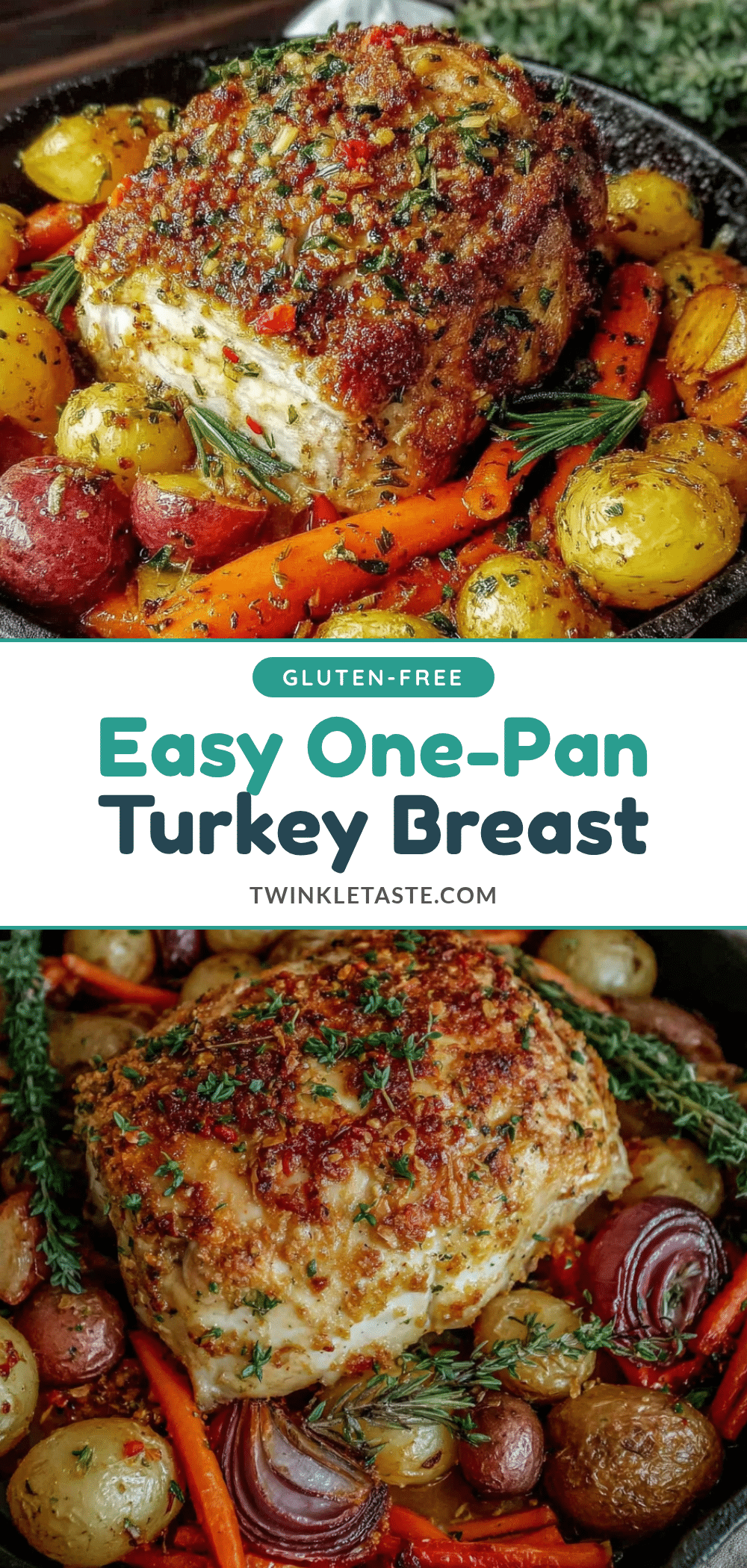
Easy One-Pan Turkey Breast and Root Vegetables for Family Dinner
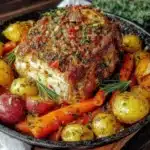
A simple, budget-friendly one-pan meal featuring a juicy bone-in turkey breast roasted with caramelized root vegetables. Perfect for a family dinner with minimal cleanup and maximum flavor.
- Prep Time: 20 minutes
- Cook Time: 60-75 minutes
- Total Time: 1 hour 35 minutes
- Yield: 6 servings 1x
- Category: Main Course
- Cuisine: American
Ingredients
- 1 bone-in, skin-on turkey breast (5–6 pounds / 2.3–2.7 kg)
- 4 tablespoons (56 g) unsalted butter, softened
- 3 cloves garlic, minced
- 1 tablespoon (2 g) fresh rosemary, chopped
- 1 tablespoon (2 g) fresh thyme leaves
- 1 teaspoon salt
- ½ teaspoon black pepper, freshly ground
- 4 medium carrots (about 300 g), peeled and cut into 2-inch chunks
- 3 parsnips (about 250 g), peeled and cut into 2-inch chunks
- 3 Yukon Gold potatoes (about 400 g), cut into 2-inch chunks
- 1 large red onion, cut into wedges
- 2 tablespoons (30 ml) olive oil
- ½ teaspoon salt
- ¼ teaspoon black pepper
- ½ cup (120 ml) chicken broth (optional, for pan sauce)
- 1 tablespoon (15 ml) lemon juice (optional, for pan sauce)
Instructions
- Preheat your oven to 425°F (218°C). Place one rack in the lower third of the oven.
- Make the herb butter: In a small bowl, combine the softened butter, minced garlic, chopped rosemary, thyme leaves, salt, and pepper. Mash together with a fork until evenly distributed.
- Prep the turkey: Pat the turkey breast dry with paper towels. Using your fingers, gently loosen the skin from the meat, being careful not to tear it, to create a pocket between the skin and the breast meat.
- Apply the herb butter: Spread about half the herb butter directly onto the meat under the skin. Spread the remaining butter all over the outside of the turkey, including the sides, ends, and underside.
- Prep the vegetables: In a large bowl, toss the carrot chunks, parsnip chunks, potato chunks, and onion wedges with the olive oil, salt, and pepper until evenly coated.
- Arrange everything on the pan: Line a large rimmed baking sheet with parchment paper or foil. Spread the vegetables in a single layer around the edges of the pan, leaving a space in the center. Place the turkey breast in the center, skin side up.
- Roast for 30 minutes. Remove the pan and give the vegetables a quick stir.
- Return the pan to the oven and roast for another 30-45 minutes, until the internal temperature of the turkey reaches 165°F (74°C) at the thickest part of the breast and the vegetables are tender and golden brown.
- Rest the turkey: Remove the pan from the oven and transfer the turkey breast to a cutting board. Let it rest for 15 minutes before slicing.
- Make the pan sauce (optional): While the turkey rests, place the baking sheet with the vegetables over two burners on your stovetop set to medium heat. Add the chicken broth and lemon juice, scraping up any browned bits. Simmer for 2-3 minutes until slightly reduced.
- Slice and serve: Carve the turkey breast against the grain into ½-inch thick slices. Arrange the sliced turkey on a platter surrounded by the roasted vegetables. Spoon any remaining pan juices over the top.
Notes
Pat the turkey dry thoroughly for crispy skin. Cut vegetables to uniform size for even cooking. Don’t skip the resting time—it allows juices to redistribute. Use a meat thermometer for perfectly cooked turkey. For dairy-free, substitute butter with olive oil. Leftovers keep in the refrigerator for up to 4 days and can be frozen for up to 3 months.
Nutrition
- Serving Size: 1 serving
- Calories: 425
- Sodium: 680
- Fat: 16
- Saturated Fat: 6
- Carbohydrates: 28
- Fiber: 5
- Protein: 42
Keywords: one-pan turkey breast, roasted turkey and vegetables, easy turkey dinner, family dinner, root vegetables, sheet pan dinner