“Are you sure you want to try it this spicy?” my friend teased as I stirred the bubbling pan of bright red sauce, a little uncertain myself. Honestly, I was just aiming for a quick dinner after a long day, nothing fancy. I had grabbed some chicken and rice cakes on a whim, thinking I’d whip up something easy. But that night, my kitchen turned into a mini Korean street food stall with this flavorful dakgalbi spicy stir-fried chicken with rice cakes.
The smell alone was hypnotic — a mix of smoky gochujang, garlic, and a little sweetness that made me pause and actually smile after hours of work chaos. I remember texting my friend later, a little surprised, “Okay, maybe this is my new favorite way to cook chicken.” I made it three times that week, tweaking the spice just a notch for my partner and doubling the rice cakes because, well, who can resist that chewy comfort?
What stuck with me was the balance — fiery heat with just enough tang and a hint of char from the stir-fry. The rice cakes soak up the sauce beautifully, making every bite a chewy, spicy treat. It’s the kind of meal that feels like a little celebration, even on the most ordinary nights. If you’ve ever felt unsure about Korean spicy dishes or thought rice cakes were only for snacks, this recipe will gently change your mind.
It’s not just food. It’s a little moment of joy in the kitchen you didn’t see coming — and I’m betting it’ll make its way into your regular meal rotation for the same reasons it did mine.
Why You’ll Love This Dakgalbi Spicy Stir-Fried Chicken Recipe
Having tested this recipe multiple times — trust me, I’m no stranger to tweaking Asian recipes for the perfect balance — this version of dakgalbi really stands out. It’s not just about the heat, but how the flavors unfold with each bite. Here’s why it’ll quickly become a favorite:
- Quick & Easy: Ready in about 30 minutes, it’s perfect for busy weeknights when you want something tasty without fussing over complicated steps.
- Simple Ingredients: Mostly pantry staples like gochujang, soy sauce, and garlic, plus rice cakes you can find at most Asian markets or frozen sections.
- Perfect for Sharing: Whether you’re hosting friends or family, this dish brings everyone to the table with its bold, crowd-pleasing flavors.
- Unbelievably Delicious: The texture contrast — tender chicken with chewy rice cakes and crisp veggies — gives every mouthful a satisfying punch.
- A Special Twist: Instead of the usual thick sauce, this recipe keeps the stir-fry just saucy enough to coat without drowning ingredients, so nothing feels soggy.
This isn’t just another spicy chicken recipe; it’s a dish that invites you to savor every moment of cooking and eating. Plus, once you get comfortable with this, you might find yourself exploring other dishes like the crispy mandarin orange chicken for a sweeter contrast or even pairing with some buttermilk biscuits to round out your meal creativity.
What Ingredients You Will Need
This recipe uses simple, wholesome ingredients to deliver bold flavor and satisfying texture without the fuss. Most are pantry staples, and rice cakes add that chewy fun that makes dakgalbi truly special. Here’s the breakdown:
- Chicken: 1 pound (450g) boneless, skinless chicken thighs, cut into bite-sized pieces (thighs stay juicy; breasts can be used but tend to dry out)
- Rice Cakes (tteok): 1 cup (150g) Korean cylindrical rice cakes, soaked in warm water for 10 minutes if frozen (this helps soften them)
- Vegetables:
- 1 medium onion, thinly sliced
- 1 cup cabbage, chopped (adds crunch and sweetness)
- 2 green onions, chopped
- 1 carrot, julienned (optional but great for color and texture)
- Marinade & Sauce:
- 3 tablespoons gochujang (Korean chili paste; I prefer Chung Jung One for authentic flavor)
- 1 tablespoon gochugaru (Korean chili flakes) for extra heat, adjust as preferred
- 2 tablespoons soy sauce (use low sodium to control saltiness)
- 1 tablespoon rice syrup or honey (balances spice with a touch of sweetness)
- 1 tablespoon sesame oil (toasty aroma and flavor)
- 3 garlic cloves, minced (fresh is best!)
- 1 teaspoon grated ginger (adds warmth)
- 1/2 teaspoon black pepper
- Optional: 1 tablespoon toasted sesame seeds for garnish, and a handful of shredded mozzarella cheese if you want a cheesy twist (trust me, it’s fantastic!)
If you can’t find rice syrup, honey or brown sugar works just fine. Also, if you want a gluten-free version, swap the soy sauce for tamari. For a dairy-free version, simply skip the cheese garnish — it’s just a fun add-on.
Equipment Needed
- Large non-stick skillet or cast-iron pan: Essential for even cooking and getting that slight char on the chicken and veggies. I’ve found cast iron works best for that smoky flavor, but non-stick helps with easier cleanup.
- Mixing bowls: For marinating the chicken and prepping veggies.
- Measuring spoons and cups: Accurate measurements keep flavor balanced, especially with spicy ingredients.
- Wooden spoon or spatula: To stir-fry without scratching pans.
- Colander or strainer: To soak and drain rice cakes if frozen.
If you don’t have a cast iron skillet, a heavy-bottomed frying pan will do just fine. I’ve also tried this in a wok-style pan, which speeds up cooking thanks to the high heat surface area. Remember to keep your pan well-seasoned or lightly oiled to prevent sticking — it really helps with the caramelization.
Preparation Method
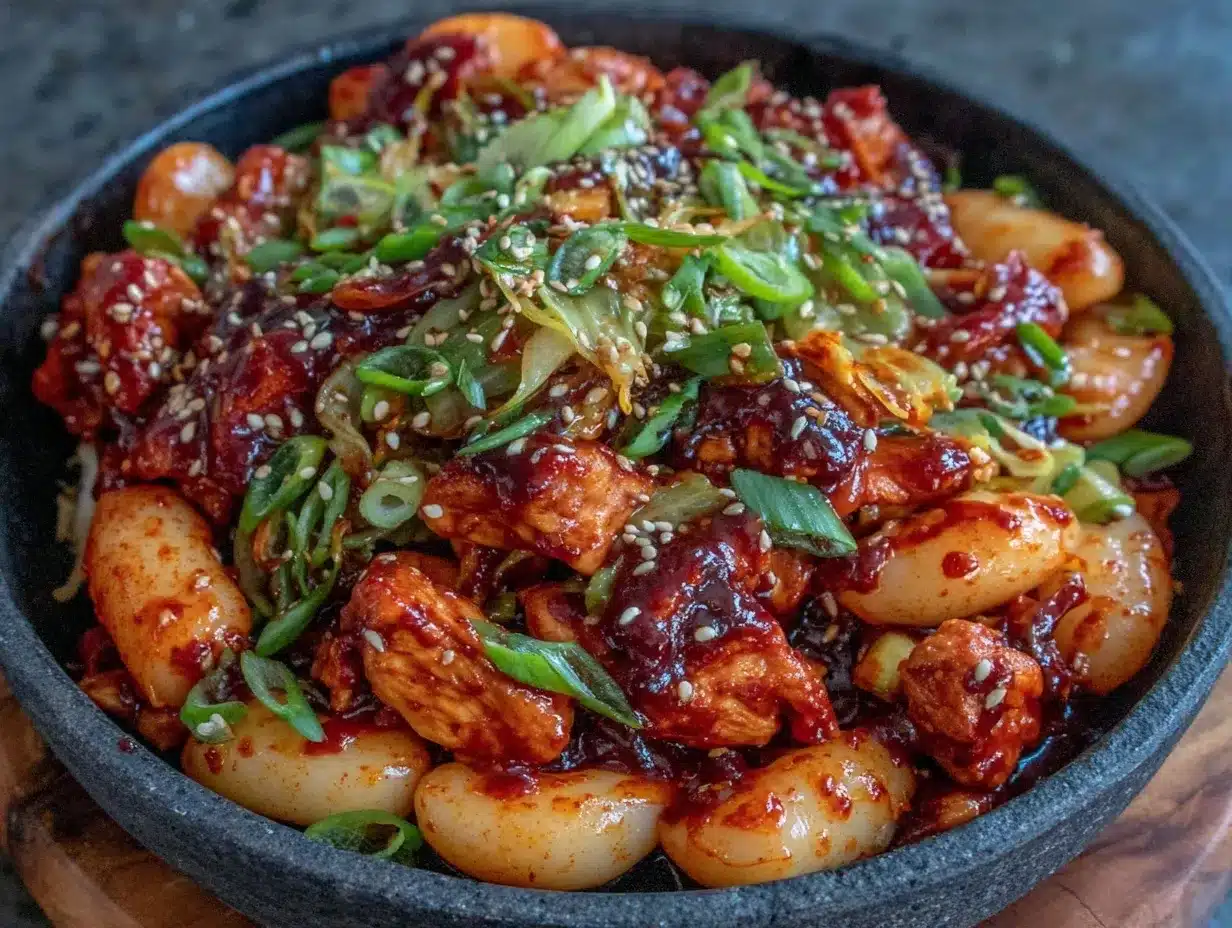
- Marinate the chicken: In a bowl, combine gochujang, gochugaru, soy sauce, rice syrup, sesame oil, minced garlic, grated ginger, and black pepper. Add the bite-sized chicken thighs and toss well to coat evenly. Let it sit for at least 15 minutes — if you have time, an hour in the fridge deepens the flavor.
- Prep the rice cakes: If using frozen rice cakes, soak them in warm water for about 10 minutes to soften. Drain before cooking. Fresh rice cakes can be used directly.
- Heat your skillet: Place over medium-high heat and add a tablespoon of neutral oil (like vegetable or canola). Once shimmering, add the marinated chicken pieces in a single layer. Let them sear undisturbed for about 3 minutes to develop color.
- Add vegetables: Toss in onion slices, cabbage, and carrot strips. Stir-fry together with the chicken, mixing so everything gets coated in the spicy sauce. Cook for about 4-5 minutes until the veggies soften but still hold some crunch.
- Introduce rice cakes: Add the soaked rice cakes to the skillet and stir-fry everything together. The rice cakes should start to absorb the sauce and get a little golden on the edges. Continue cooking for another 5 minutes, stirring frequently to avoid burning.
- Final touches: Sprinkle chopped green onions and toasted sesame seeds on top. If you’re going for the cheesy version, sprinkle shredded mozzarella evenly and cover the pan for a minute until melted and gooey.
- Serve: Dish it out hot, ideally with steamed white rice or some crunchy kimchi on the side for contrast.
Tip: If the sauce thickens too much or starts sticking, splash in a tablespoon of water or chicken broth to loosen it and keep everything saucy without drying out.
Keep an eye on the rice cakes — overcooking can make them gummy rather than pleasantly chewy. The key is gentle heat and patience.
Cooking Tips & Techniques
Cooking dakgalbi can feel intimidating at first because of the spicy sauce and timing, but a few tips will have you confident in no time.
- Marinate thoughtfully: Even a quick 15-minute marinade helps infuse flavor. If rushed, toss chicken in half the sauce, then stir in the rest during cooking for layered taste.
- Control your heat: Medium-high is your friend. High heat gives that nice char but be ready to lower it slightly if things start burning.
- Don’t crowd the pan: Cook chicken in batches if needed to avoid steaming instead of frying. This keeps pieces crispier.
- Timing veggies: Add heartier veggies like onions first, then more delicate ones like cabbage last so they retain texture.
- Rice cake handling: Soak frozen rice cakes properly; otherwise, they’ll stay hard in the center. Fresh ones cook faster and don’t need soaking.
- Multitasking tip: While cooking, prep a quick side like kimchi or steamed rice — it pairs beautifully and completes the meal.
- Personal lesson: I once dumped all the sauce in at the start and ended with an overpowering paste. Now, I add most sauce upfront, but save a tablespoon or two to adjust at the end for perfect balance.
Variations & Adaptations
This dakgalbi recipe is flexible enough to suit different tastes and dietary needs:
- Vegetarian version: Swap chicken for firm tofu or hearty mushrooms like king oyster for a meaty bite. Use mushroom broth instead of chicken broth for the sauce splash.
- Milder spice: Cut back on gochugaru and gochujang, or add a spoonful of sweet soy glaze to balance heat. You can also add a dollop of sour cream or plain yogurt when serving for cooling effect.
- Cheesy dakgalbi: Add shredded mozzarella or processed cheese toward the end and cover the pan to melt. This twist softens the spice and makes it super kid-friendly.
- Seasonal veggies: In spring or summer, swap cabbage for bok choy or add snap peas for freshness. In fall, sweet potatoes diced small add sweetness and bulk.
- Gluten-free: Use tamari or coconut aminos instead of soy sauce and double-check that your gochujang is gluten-free (some brands contain wheat).
I personally love making a batch and then turning leftovers into a spicy stir-fried dakgalbi fried rice the next day — a fantastic way to stretch the flavor and reduce waste.
Serving & Storage Suggestions
Serve your dakgalbi steaming hot, straight from the pan, because the sauce thickens and clings best this way. It pairs wonderfully with simple steamed rice, which balances the boldness, or alongside crunchy kimchi for a classic Korean combo.
If you want something more indulgent, try serving with a side of cheesy pasta bake for a fun fusion twist — I’ve done this for gatherings, and it’s a hit!
Leftovers keep well in an airtight container in the refrigerator for 2-3 days. When reheating, add a splash of water or broth and warm gently on the stove or microwave to refresh the sauce’s texture. Avoid overcooking the rice cakes again to keep that satisfying chewiness.
Flavors actually deepen after a day, so if you can resist, it tastes even better the next day. Just remember to stir well when reheating to redistribute the sauce.
Nutritional Information & Benefits
This dakgalbi dish offers a lovely balance of protein, carbs, and fats with some spice that can boost metabolism. Here’s a rough breakdown per serving (makes about 3-4 servings):
| Nutrient | Approximate Amount |
|---|---|
| Calories | 350-400 kcal |
| Protein | 30g |
| Carbohydrates | 35g |
| Fat | 10-12g |
| Fiber | 3-4g |
The chicken thighs provide rich protein and iron, while the rice cakes (made from glutinous rice) give a unique chewy carb source. Gochujang contains fermented chili paste packed with probiotics and antioxidants, which is a bonus for gut health.
This recipe is naturally gluten-free if you choose gluten-free gochujang and soy sauce alternatives. Be mindful of allergies to soy or wheat in some ingredients, and adjust accordingly.
For a health-conscious, realistic eater like me, this recipe hits the sweet spot: indulgent yet balanced with fresh veggies and protein, without complicated ingredients or long prep times.
Conclusion
Trying this flavorful dakgalbi spicy stir-fried chicken with rice cakes is like discovering a new favorite comfort food that’s both exciting and approachable. Its blend of bold flavors, chewy textures, and quick prep makes it a reliable go-to when you want to impress yourself or loved ones without overthinking dinner.
Feel free to adjust the spice to your liking or experiment with the variations — this recipe invites you to make it your own. Honestly, it’s the kind of meal that’s stuck with me because it’s fun to cook, satisfying to eat, and just different enough to keep things interesting.
If you enjoy dishes with bold flavors and simple steps, you might also appreciate the way I make tender pull-apart baby back ribs or the crispy magic behind crispy fried chicken thighs, both favorites in my kitchen rotation.
Give this one a try, and I’d love to hear how you tweak it to fit your taste!
FAQs About Dakgalbi Spicy Stir-Fried Chicken with Rice Cakes
What are rice cakes, and where do I buy them?
Rice cakes (tteok) are chewy Korean rice flour cakes, often cylindrical or oval-shaped. You can find them at most Asian grocery stores or in the frozen section of some supermarkets. Soaking frozen rice cakes in warm water before cooking softens them perfectly.
Can I use chicken breast instead of thighs?
Yes, but chicken thighs are preferred for their juiciness and flavor. If using breast, be careful not to overcook as it dries out faster.
How spicy is this recipe?
This version packs a medium heat level, but you can easily adjust by reducing or omitting gochugaru and balancing with a little sugar or honey.
What can I serve with dakgalbi?
Steamed rice is classic, along with kimchi or simple pickled veggies. For a heartier meal, try pairing it with some charcuterie board ideas or even some buttery biscuits.
Can I make dakgalbi ahead of time?
Yes! The flavors deepen if made a few hours ahead or the day before. Just store in an airtight container and reheat gently with a splash of water to prevent drying out.
Pin This Recipe!
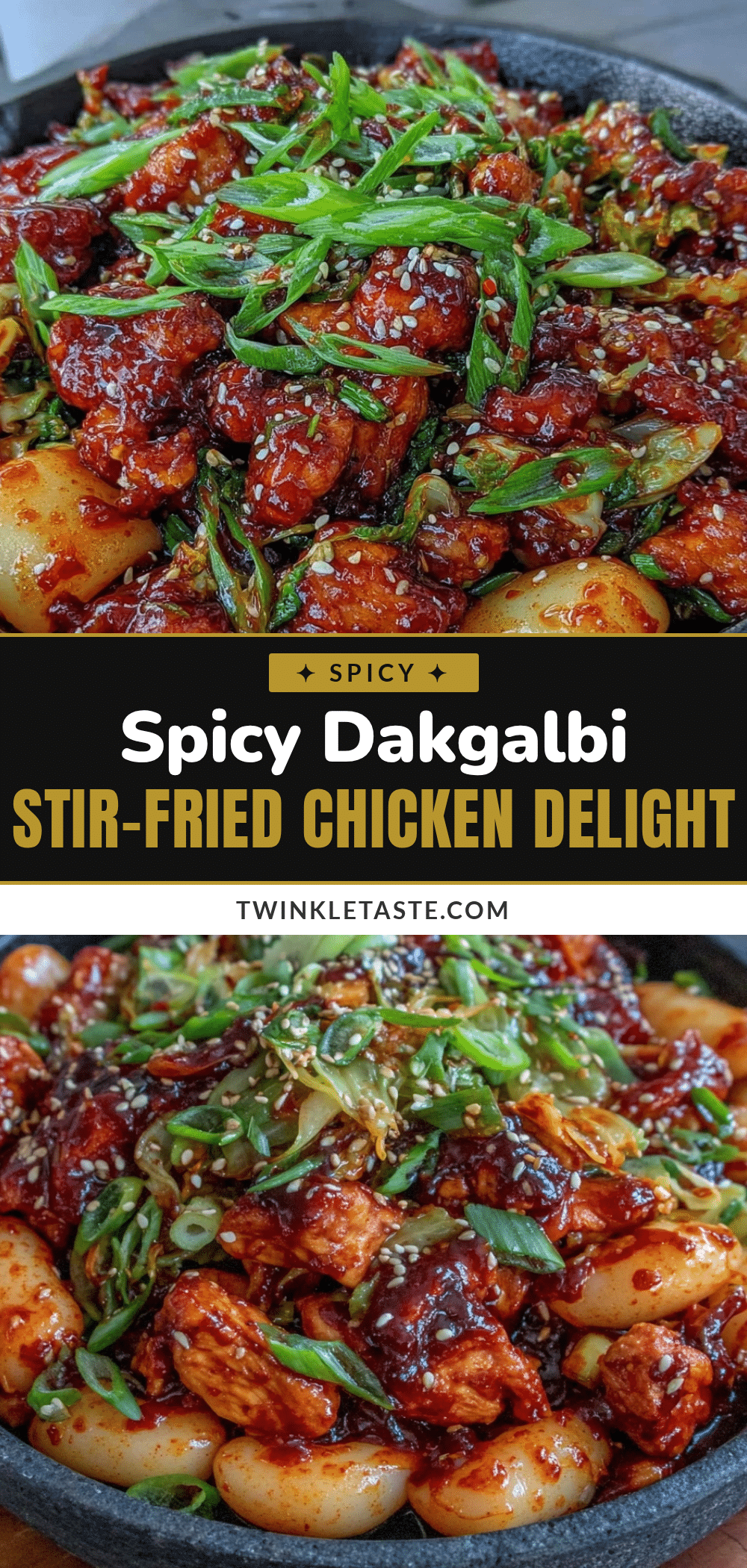
Dakgalbi Spicy Stir-Fried Chicken Recipe Easy Flavorful Korean Meal with Rice Cakes
A quick and flavorful Korean spicy stir-fried chicken with chewy rice cakes, perfect for a comforting and easy weeknight meal.
- Prep Time: 15 minutes
- Cook Time: 15 minutes
- Total Time: 30 minutes
- Yield: 3-4 servings 1x
- Category: Main Course
- Cuisine: Korean
Ingredients
- 1 pound boneless, skinless chicken thighs, cut into bite-sized pieces
- 1 cup Korean cylindrical rice cakes (tteok), soaked in warm water for 10 minutes if frozen
- 1 medium onion, thinly sliced
- 1 cup cabbage, chopped
- 2 green onions, chopped
- 1 carrot, julienned (optional)
- 3 tablespoons gochujang (Korean chili paste)
- 1 tablespoon gochugaru (Korean chili flakes)
- 2 tablespoons soy sauce (low sodium recommended)
- 1 tablespoon rice syrup or honey
- 1 tablespoon sesame oil
- 3 garlic cloves, minced
- 1 teaspoon grated ginger
- 1/2 teaspoon black pepper
- 1 tablespoon toasted sesame seeds (optional garnish)
- Handful of shredded mozzarella cheese (optional cheesy twist)
Instructions
- In a bowl, combine gochujang, gochugaru, soy sauce, rice syrup, sesame oil, minced garlic, grated ginger, and black pepper. Add the chicken pieces and toss to coat evenly. Marinate for at least 15 minutes, or up to 1 hour in the fridge for deeper flavor.
- If using frozen rice cakes, soak them in warm water for about 10 minutes to soften. Drain before cooking. Fresh rice cakes can be used directly.
- Heat a large non-stick skillet or cast-iron pan over medium-high heat and add 1 tablespoon of neutral oil.
- Add the marinated chicken pieces in a single layer and sear undisturbed for about 3 minutes to develop color.
- Add sliced onion, chopped cabbage, and julienned carrot. Stir-fry with the chicken for 4-5 minutes until veggies soften but remain slightly crunchy.
- Add the soaked rice cakes to the skillet and stir-fry everything together for another 5 minutes, stirring frequently to avoid burning and to allow rice cakes to absorb the sauce and get slightly golden.
- Sprinkle chopped green onions and toasted sesame seeds on top. If using cheese, sprinkle shredded mozzarella evenly and cover the pan for about 1 minute until melted.
- Serve hot, ideally with steamed white rice or kimchi on the side.
Notes
If the sauce thickens too much or starts sticking, add a tablespoon of water or chicken broth to loosen it. Avoid overcooking rice cakes to keep them chewy. Marinate chicken for at least 15 minutes for best flavor. Use chicken thighs for juiciness. For gluten-free, use tamari and check gochujang brand. Cheese is optional and adds a kid-friendly twist.
Nutrition
- Serving Size: About 1 cup per serv
- Calories: 375
- Sugar: 5
- Sodium: 700
- Fat: 11
- Saturated Fat: 2
- Carbohydrates: 35
- Fiber: 3.5
- Protein: 30
Keywords: dakgalbi, spicy chicken, Korean recipe, stir-fry, rice cakes, gochujang, easy dinner, Korean street food