“Can you believe this is just salmon and a few pantry staples?” I remember muttering that to myself while wiping sticky fingers after my very first attempt at these Flavorful Sticky Gochujang Honey Glazed Salmon Bowls. Honestly, it started as a rushed dinner on a chaotic Thursday evening when I had zero energy but a serious craving for something bold and comforting. The sticky, shiny glaze clung perfectly to the salmon, the kind that makes you pause mid-bite and just savor. I wasn’t expecting much at first—just a quick fix really—but the balance of spicy gochujang heat and sweet honey hit in a way that felt both familiar and exciting.
That night, as the aroma filled my kitchen, I realized this wasn’t just a one-off. I found myself making these salmon bowls again and again. The way the glaze caramelizes, creating those little charred edges that crackle under your fork, is pure magic. Plus, throwing together fresh veggies and rice made it feel like a full meal instead of just fish on a plate. It’s one of those recipes that stuck with me quietly, a little secret I pull out when the week gets too heavy and I need something that feels like a treat but isn’t complicated.
What I love most? It’s approachable and packed with flavor, perfect for those evenings when you want to impress without the stress. If you’ve ever been skeptical about mixing spicy Korean flavors with honey-glazed salmon, trust me, give this a shot—you might just find your new go-to dinner. That sticky, sweet, and spicy combo somehow calms the chaos, one bite at a time.
Why You’ll Love This Recipe
After countless tries in my kitchen, I can say this sticky gochujang honey glazed salmon bowl recipe is a keeper for so many reasons:
- Quick & Easy: Ready in about 30 minutes from start to finish, making it perfect for busy weeknights or those “what’s for dinner?” moments.
- Simple Ingredients: Uses everyday pantry staples and fresh ingredients you probably already have on hand—no exotic shopping trips needed.
- Perfect for Dinner: Whether you’re cooking for one or feeding the family, this dish offers a balanced, satisfying meal that feels special without fuss.
- Crowd-Pleaser: The sweet heat combo is always a hit—even the pickiest eaters find themselves sneaking extra bites.
- Unbelievably Delicious: The sticky glaze creates a caramelized finish that locks in moisture and flavor, giving the salmon a tender, melt-in-your-mouth texture.
What sets this recipe apart is that precise balance—the honey mellows the fiery gochujang, creating layers of flavor that feel vibrant but never overpowering. I’ve tweaked the glaze to the point where it clings just right, so you get that perfect sticky coating without it being too runny or too thick. Unlike other salmon dishes that can be dry or bland, this one keeps the fish moist while giving you a burst of flavor with every bite.
Plus, it’s versatile and pairs well with a range of sides, from simple steamed rice to more adventurous bowls like the birria ramen with soft egg I recently tried. Honestly, it’s one of those recipes that makes dinner feel like a little celebration, even on the toughest days.
What Ingredients You Will Need
This recipe keeps things straightforward—just a handful of ingredients come together to create bold, satisfying flavors and a sticky, shiny finish. Most are pantry staples or easy finds at your local grocery store.
- For the Salmon:
- 4 salmon fillets (about 6 oz / 170 g each), skin-on for best texture
- Salt and black pepper, to taste
- 1 tablespoon olive oil or vegetable oil (for searing)
- For the Gochujang Honey Glaze:
- 3 tablespoons gochujang (Korean chili paste) – I find Chung Jung One brand reliable for authentic flavor
- 2 tablespoons honey (raw or wildflower honey works beautifully)
- 1 tablespoon soy sauce (use low sodium if preferred)
- 1 tablespoon rice vinegar (adds a subtle tang)
- 2 cloves garlic, minced (fresh always wins here)
- 1 teaspoon toasted sesame oil (for that nutty depth)
- For the Bowls:
- 2 cups cooked jasmine rice or short-grain rice (or substitute cauliflower rice for a low-carb twist)
- 1 cup shredded carrots (adds crunch and sweetness)
- 1 cucumber, thinly sliced (refreshing contrast)
- 2 green onions, sliced
- 1 tablespoon toasted sesame seeds (for garnish)
- Optional: kimchi or pickled radish for extra zing
When picking your salmon, look for firm, bright fillets with a fresh smell. Wild-caught tends to have richer flavor, but farmed works just fine here. For a gluten-free version, swap soy sauce with tamari or coconut aminos. And if you’re not a fan of super spicy, feel free to cut back on the gochujang or balance it with a bit more honey.
Equipment Needed
- Nonstick or cast-iron skillet – I personally love cast iron for the perfect sear and caramelization, but nonstick works well too
- Mixing bowl – for whisking together the glaze ingredients
- Measuring spoons and cups – accuracy matters for the glaze balance
- Sharp knife and cutting board – to prep veggies and fillets safely
- Rice cooker or pot – to cook rice evenly
If you don’t have a cast-iron skillet, a heavy-bottomed stainless steel pan can be a good alternative for getting that sear without sticking. Maintaining your skillet is key—season cast iron regularly to keep it nonstick and rust-free. For budget-conscious cooks, a reliable nonstick pan often makes the process easier and cleanup quicker.
Preparation Method
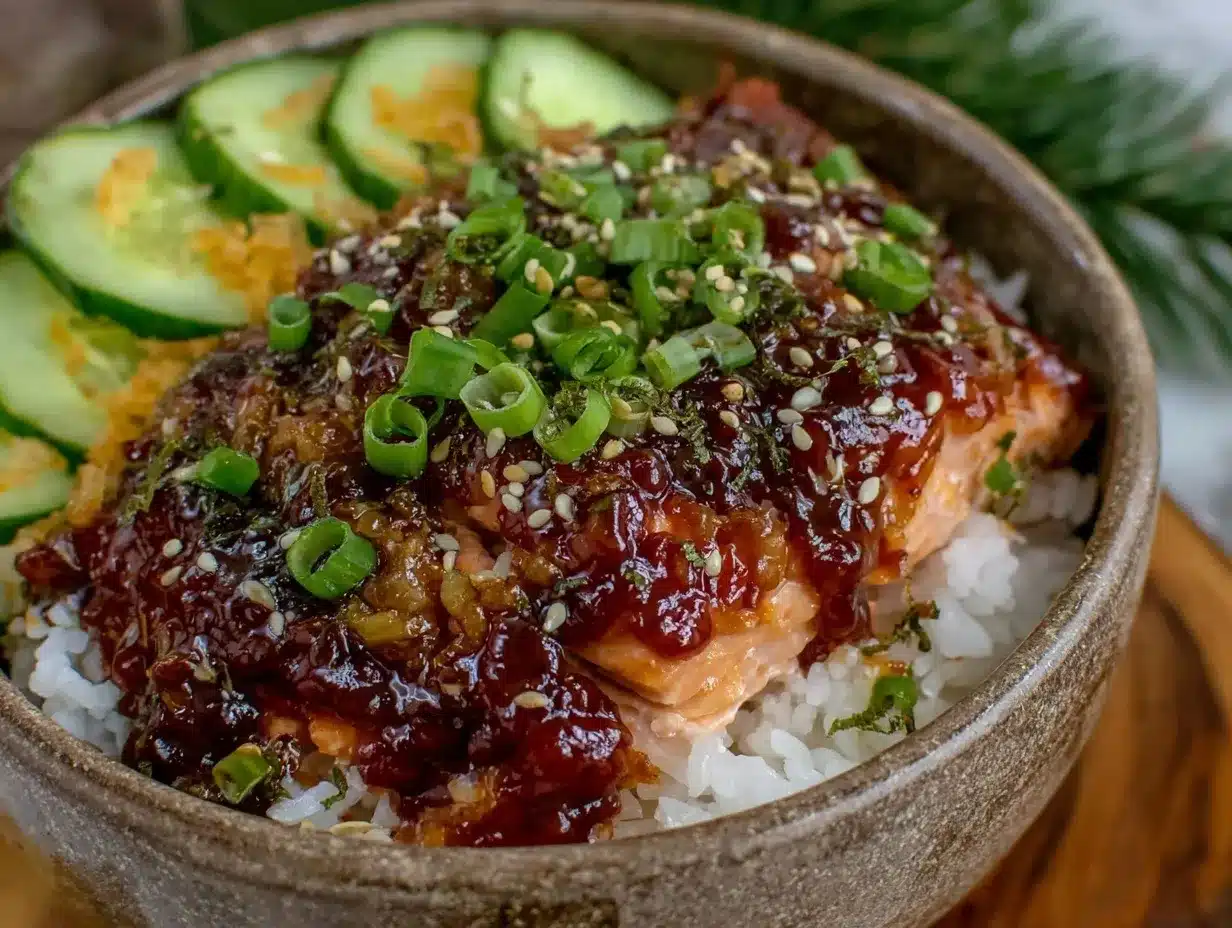
- Prepare the glaze: In a small mixing bowl, whisk together 3 tablespoons gochujang, 2 tablespoons honey, 1 tablespoon soy sauce, 1 tablespoon rice vinegar, minced garlic, and 1 teaspoon toasted sesame oil until smooth. Set aside.
- Season the salmon: Pat the salmon fillets dry with paper towels. Season both sides lightly with salt and pepper. Dry skin helps achieve that crispy finish.
- Cook the rice: If you haven’t already, cook 2 cups of jasmine or short-grain rice according to package instructions. Fluff when done and keep warm.
- Sear the salmon: Heat 1 tablespoon oil in a skillet over medium-high heat until shimmering but not smoking. Place salmon skin-side down and cook without moving for 4-5 minutes, until skin is crisp and the fish is cooked about 3/4 through. Flip carefully and cook for another 1-2 minutes.
- Glaze the salmon: Lower the heat to medium-low. Spoon the gochujang honey glaze generously over the salmon fillets. Let the glaze bubble and thicken, spooning it over the fish as it cooks for 1-2 more minutes. You want a sticky, caramelized finish without burning the sugars.
- Prep the bowls: Divide cooked rice evenly into four serving bowls. Arrange shredded carrots, sliced cucumber, and green onions on top or alongside the rice for freshness and texture contrast.
- Assemble and garnish: Place a glazed salmon fillet on each bowl. Sprinkle with toasted sesame seeds and add optional kimchi or pickled radish if using. Serve immediately for best taste.
Pro tip: If the glaze thickens too quickly or starts to burn, reduce heat slightly and add a splash of water to loosen it. The salmon skin should be crispy but not charred black—adjust cook times depending on thickness. Also, resting the salmon a minute or two after cooking helps the juices settle, keeping it moist.
Cooking Tips & Techniques
Getting the perfect sticky glaze and moist salmon is about timing and heat control. Here are some tips I learned the hard way:
- Don’t overcrowd the pan: Give each fillet room to sear properly. Crowding traps steam and ruins that crisp skin texture.
- Room temperature salmon: Let your fillets sit out for 15 minutes before cooking. Cold fish can cause uneven cooking and soggy skin.
- Pat dry: Moisture is the enemy of crisp skin. Always dry your salmon well before seasoning.
- Use moderate heat for glazing: The sugars in honey and gochujang can burn quickly. Keep the heat medium-low when spooning on the glaze to get that sticky, caramelized finish without bitterness.
- Multitask: While the salmon sears, prep your veggies and rice to save time. The glaze comes together fast, so have everything ready to plate.
- Adjust spice level: If you’re new to gochujang, start with 2 tablespoons and add more after tasting. It’s spicy but not overwhelming once balanced with honey.
I once rushed the glaze step and ended up with a burnt sticky mess that tasted bitter—lesson learned! Taking it slow with the heat really pays off. Also, using the sheet pan teriyaki salmon method from this site gave me ideas for alternative cooking methods when I’m short on time.
Variations & Adaptations
This recipe is flexible and welcomes adaptations to suit your taste or dietary needs:
- Spicy Level: For a milder bowl, reduce gochujang or swap half for sweet chili sauce. If you like it fiery, add a pinch of Korean chili flakes (gochugaru) or a dash of sriracha.
- Gluten-Free: Substitute soy sauce with tamari or coconut aminos to keep it gluten-free without sacrificing umami.
- Vegetarian Version: Replace salmon with thick slices of marinated tofu or tempeh, pan-seared and glazed the same way.
- Rice Alternative: Use quinoa, cauliflower rice, or even noodles like udon or soba for different textures.
- Veggie Boost: Add steamed broccoli, sautéed mushrooms, or roasted sweet potatoes for extra nutrients and color.
One time, I swapped honey with maple syrup for a subtle smoky sweetness and it was surprisingly good. Another favorite twist is pairing this bowl with the spicy stir-fried chicken from the dakgalbi recipe for a Korean-inspired feast.
Serving & Storage Suggestions
These salmon bowls taste best fresh and warm, with the glaze still sticky and the rice fluffy. Serve immediately after plating to enjoy the contrast of textures—the crisp skin, tender fish, and fresh veggies.
Pair with a light side salad or a simple miso soup to round out the meal. A chilled glass of white wine or green tea complements the spicy-sweet flavors nicely.
Leftovers keep well in an airtight container in the refrigerator for up to 2 days. Reheat gently in a skillet or microwave, adding a splash of water to prevent drying out. The glaze may thicken further after refrigeration but loosens with warming.
Flavors actually deepen overnight, so if you’re meal prepping, these bowls taste even better the next day—just reheat carefully to preserve texture.
Nutritional Information & Benefits
Here’s a rough estimate per serving (1 salmon bowl):
| Calories | 450-500 kcal |
|---|---|
| Protein | 35-40 g |
| Fat | 18-22 g (healthy fats from salmon) |
| Carbohydrates | 35-40 g (mainly from rice and veggies) |
Salmon is rich in omega-3 fatty acids, which support heart and brain health. The gochujang paste adds antioxidants and probiotics beneficial for digestion, while honey provides natural sweetness without refined sugars. Using fresh vegetables boosts fiber and vitamins.
This recipe is gluten-free if you use tamari and naturally low in added processed ingredients. It’s a balanced meal that satisfies hunger and nutrition without feeling heavy.
Conclusion
These Flavorful Sticky Gochujang Honey Glazed Salmon Bowls have become a quiet staple in my cooking rotation because they hit all the right notes—easy preparation, bold yet balanced flavors, and comforting textures that make you feel cared for. You can tweak the spice, swap ingredients, and really make it your own without losing the essence of what makes this dish special.
Whether you’re cooking for yourself after a long day or feeding friends, this recipe offers a deliciously simple way to bring a little Korean-inspired flair to your dinner table. Give it a try, and I’m pretty sure it’ll sneak its way into your weeknight favorites like it did mine.
If you try this recipe, I’d love to hear how you made it yours—drop a comment or share your tweaks!
Happy cooking and savor every sticky, spicy, sweet bite.
FAQs
Can I use frozen salmon fillets for this recipe?
Yes, just thaw them completely and pat dry before cooking to ensure the skin crisps up well and the glaze sticks properly.
What can I substitute for gochujang if I can’t find it?
You can mix a bit of miso paste with chili garlic sauce or sriracha as a rough substitute, but the unique fermented flavor of gochujang is hard to replicate exactly.
Is this recipe suitable for meal prep?
Absolutely! The bowls keep well refrigerated for 1-2 days, and the flavors actually improve overnight. Just reheat gently to avoid drying out the salmon.
Can I bake the salmon instead of pan-searing it?
Yes, baking at 400°F (200°C) for 10-12 minutes and then broiling for 1-2 minutes with the glaze can work. Just watch closely to avoid burning the honey.
What sides go well with these salmon bowls?
Simple sides like steamed greens, light salads, or even a bowl of miso soup pair perfectly to keep the meal balanced and fresh.
Pin This Recipe!
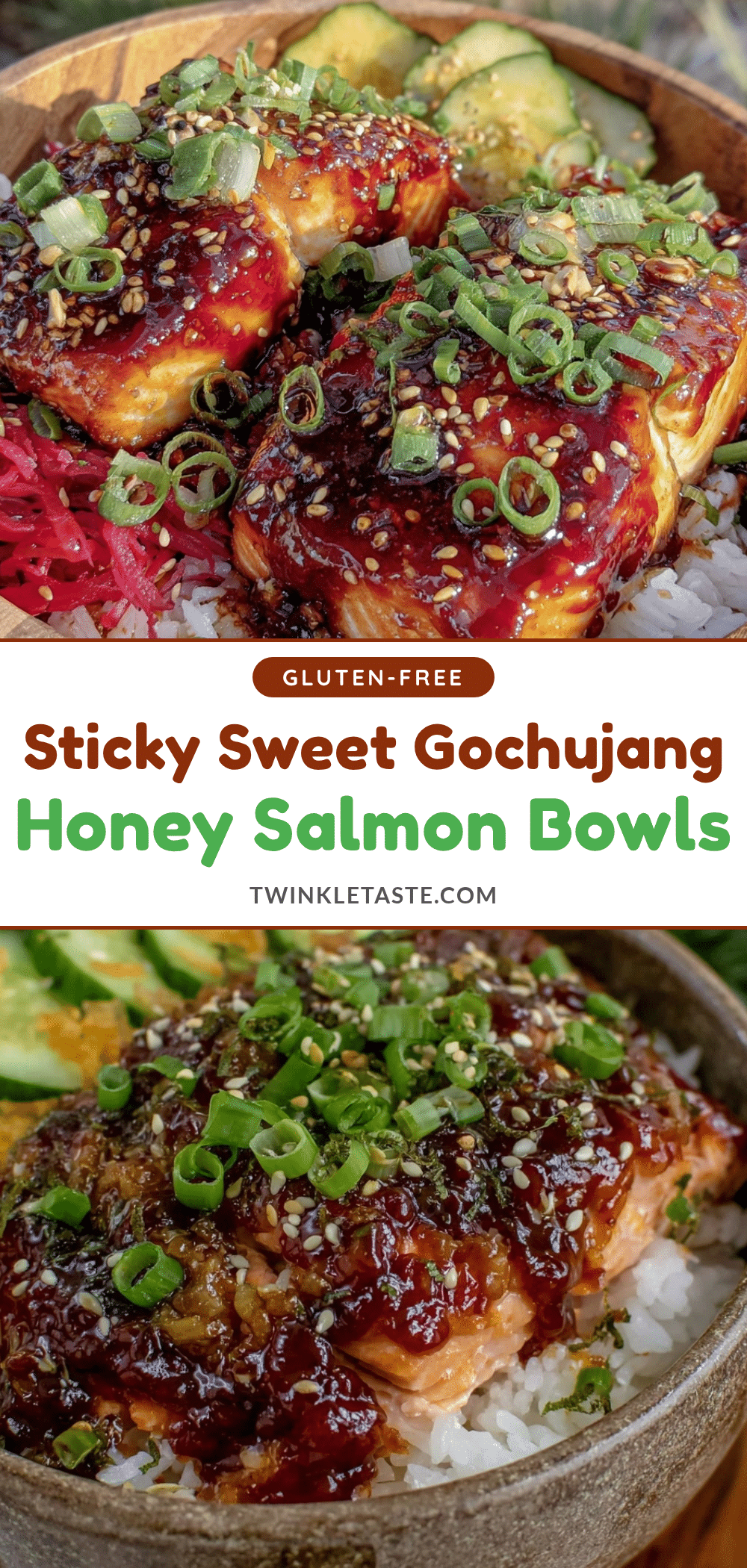
Sticky Gochujang Honey Glazed Salmon Bowls
A quick and easy recipe featuring salmon fillets glazed with a sticky, sweet, and spicy gochujang honey sauce, served over rice with fresh veggies for a balanced and flavorful dinner.
- Prep Time: 10 minutes
- Cook Time: 20 minutes
- Total Time: 30 minutes
- Yield: 4 servings 1x
- Category: Main Course
- Cuisine: Korean-inspired
Ingredients
- 4 salmon fillets (about 6 oz / 170 g each), skin-on
- Salt and black pepper, to taste
- 1 tablespoon olive oil or vegetable oil (for searing)
- 3 tablespoons gochujang (Korean chili paste)
- 2 tablespoons honey (raw or wildflower honey)
- 1 tablespoon soy sauce (low sodium preferred)
- 1 tablespoon rice vinegar
- 2 cloves garlic, minced
- 1 teaspoon toasted sesame oil
- 2 cups cooked jasmine rice or short-grain rice (or substitute cauliflower rice)
- 1 cup shredded carrots
- 1 cucumber, thinly sliced
- 2 green onions, sliced
- 1 tablespoon toasted sesame seeds (for garnish)
- Optional: kimchi or pickled radish
Instructions
- Prepare the glaze: In a small mixing bowl, whisk together 3 tablespoons gochujang, 2 tablespoons honey, 1 tablespoon soy sauce, 1 tablespoon rice vinegar, minced garlic, and 1 teaspoon toasted sesame oil until smooth. Set aside.
- Season the salmon: Pat the salmon fillets dry with paper towels. Season both sides lightly with salt and pepper.
- Cook the rice: Cook 2 cups of jasmine or short-grain rice according to package instructions. Fluff when done and keep warm.
- Sear the salmon: Heat 1 tablespoon oil in a skillet over medium-high heat until shimmering but not smoking. Place salmon skin-side down and cook without moving for 4-5 minutes, until skin is crisp and the fish is cooked about 3/4 through. Flip carefully and cook for another 1-2 minutes.
- Glaze the salmon: Lower the heat to medium-low. Spoon the gochujang honey glaze generously over the salmon fillets. Let the glaze bubble and thicken, spooning it over the fish as it cooks for 1-2 more minutes until sticky and caramelized without burning.
- Prep the bowls: Divide cooked rice evenly into four serving bowls. Arrange shredded carrots, sliced cucumber, and green onions on top or alongside the rice.
- Assemble and garnish: Place a glazed salmon fillet on each bowl. Sprinkle with toasted sesame seeds and add optional kimchi or pickled radish if using. Serve immediately.
Notes
If the glaze thickens too quickly or starts to burn, reduce heat slightly and add a splash of water to loosen it. Let salmon rest a minute or two after cooking to keep it moist. For gluten-free, substitute soy sauce with tamari or coconut aminos. Adjust spice level by reducing gochujang or adding more honey. Room temperature salmon and patting dry helps achieve crispy skin.
Nutrition
- Serving Size: 1 salmon bowl with r
- Calories: 475
- Sugar: 10
- Sodium: 600
- Fat: 20
- Saturated Fat: 3.5
- Carbohydrates: 37
- Fiber: 3
- Protein: 38
Keywords: salmon, gochujang, honey glaze, Korean, sticky glaze, quick dinner, healthy, spicy, sweet, salmon bowls