My sister-in-law Maria wasn’t trying to impress anyone that Tuesday night. I’d stopped by to drop off a birthday present for my nephew and the smell hit me before I even got past the front door. Something sweet and savory and deeply comforting, with that unmistakable nuttiness of roasted squash filling the air. I found her in the kitchen, baby on one hip, stirring a pot with the other hand, looking like she was just making a regular weeknight dinner. She practically shrugged when I asked what was cooking. “Oh, just that butternut squash lasagna I throw together when I need something easy.” Easy? This smelled like something you’d wait all day for at a fancy restaurant.
I stood there watching her layer no-boil noodles with a creamy sauce she’d whipped up in the blender, and honestly, I felt a little foolish. Here I’d been making traditional lasagna for years with all that boiling and draining and messy layering, and she was doing it in one pan with way less fuss. The best part? She hadn’t even planned it. The squash was getting soft on the counter, the kids were hungry, and she just made it work with what she had. Maybe you’ve been there too—staring at a vegetable that needs using up and a family that needs feeding, wondering if you can pull off something that feels special without spending hours in the kitchen.
That first bite when she finally sat down—I mean, honestly, I closed my eyes. The squash had melted into this velvety layer between the noodles, and the whole thing had this cozy, slightly sweet richness that made regular lasagna taste boring. I asked for the recipe before I left, and she scribbled it on a napkin. I’ve tweaked it a bit over the years, but the heart of it is still hers—simple, forgiving, and the kind of meal that makes everyone at the table happy. This is that recipe, the one that turned me into a one-pan believer.
Why You’ll Love This Recipe
This easy one-pan butternut squash lasagna has become my go-to for busy weeknights, and I think you’ll see why after just one try. It’s the kind of recipe that solves real problems for families trying to get dinner on the table without losing their minds.
- One Pan, Less Mess: You read that right—everything comes together in a single skillet or baking dish. No boiling pasta water, no colanders, no extra pots to scrub. I’ve tested this more times than I can count, and the cleanup is genuinely the easiest part.
- Simple Ingredients: You don’t need to hunt down fancy cheese or specialty items. Most of what you need is probably in your kitchen right now. The butternut squash does the heavy lifting, and it’s usually affordable and available year-round.
- Perfect for Family Dinners: This lasagna pleases picky eaters and adults alike. The squash gets so tender and sweet that even kids who swear they don’t like vegetables go back for seconds. It’s happened at my table more than once.
- Crowd-Pleaser: I’ve brought this to potlucks and family gatherings, and it always gets that “who made this?” buzz. The best compliment I ever got was from my brother-in-law, who said it was better than his grandmother’s lasagna—and he does not say things like that lightly.
- Unbelievably Delicious: The texture is what gets me every time. The squash breaks down into this creamy, almost sauce-like layer that coats the noodles perfectly. It’s comfort food that feels a little fancy but is actually incredibly forgiving.
What makes this recipe different from other lasagnas is the technique. Instead of a complicated béchamel or ricotta mixture, you’re essentially roasting the squash right in the pan alongside the noodles. The juices from the squash mix with the other ingredients to create a naturally creamy sauce. It’s not just another version of lasagna—it’s the one that makes you wonder why you ever bothered with all those extra steps.
This is the kind of meal that makes you close your eyes after the first bite. It’s comfort food reimagined—simpler, faster, but with the same soul-soothing satisfaction that lasagna is supposed to deliver. Perfect for impressing guests without stress, or turning a regular Tuesday into something memorable.
What Ingredients You Will Need
This recipe uses simple, wholesome ingredients to deliver big flavor without the fuss. Most of these are pantry staples or easy to find at any grocery store, which is exactly how family cooking should be.
- Butternut squash, peeled and cubed (about 4 cups, or one medium squash) – This is the star of the show. Look for a squash that feels heavy for its size with firm, unblemished skin. I prefer using fresh squash, but frozen pre-cut cubes work in a pinch (just thaw and pat dry first).
- No-boil lasagna noodles (12 sheets, or about 8 ounces) – These are a game-changer. I’ve tried several brands, and Barilla’s no-boil noodles hold up best in this recipe. They soak up the moisture from the squash and sauce perfectly without getting mushy.
- Ricotta cheese (15 ounces, or one standard container) – Full-fat ricotta gives the best texture, but part-skim works fine too. I’ve used whole milk ricotta from Trader Joe’s and it’s consistently creamy and delicious.
- Mozzarella cheese, shredded (2 cups, about 8 ounces) – Freshly shredded melts better than pre-shredded, which often has anti-caking agents. If you’re short on time, pre-shredded will still work—just expect a slightly different texture.
- Parmesan cheese, grated (½ cup, about 2 ounces) – Use the real stuff, not the green can. A good Parmesan adds salty, nutty depth that really rounds out the dish. I like Grana Padano for a slightly milder flavor.
- Garlic, minced (4 cloves, or about 2 teaspoons) – Fresh garlic is non-negotiable here. It adds that aromatic punch that makes the whole kitchen smell incredible. I’ve used jarred minced garlic in a pinch, and it works, but fresh is noticeably better.
- Fresh sage leaves (about 10 leaves) – Sage and butternut squash are a classic pairing. If you don’t have fresh, use 1 teaspoon of dried sage, but add it earlier so the flavor has time to develop.
- Olive oil (3 tablespoons) – A good quality extra virgin olive oil makes a difference. I use California Olive Ranch for everyday cooking—it’s affordable and has a nice, mild flavor.
- Heavy cream (1 cup, or use half-and-half for a lighter option) – This adds richness to the sauce. You can substitute with whole milk plus a tablespoon of butter, but the texture won’t be quite as luxurious.
- Vegetable or chicken broth (1 cup) – Low-sodium is best so you can control the salt level. I’ve used both, and chicken broth adds a subtle savory note that complements the squash beautifully.
- Salt and black pepper (to taste) – Don’t be shy with the salt—it brings out the sweetness of the squash. I use kosher salt for cooking because it’s easier to control.
- Nutmeg, freshly grated (¼ teaspoon) – This is optional but highly recommended. A tiny bit of nutmeg enhances the creamy, cozy flavor of the dish without being noticeable on its own.
- Butter (2 tablespoons, for greasing the pan and adding richness) – Unsalted butter lets you control the salt level. I always keep a few sticks in the freezer for recipes like this.
Equipment Needed
You don’t need a fancy kitchen to make this recipe work. Here’s what you’ll need:
- Large oven-safe skillet or baking dish (12-inch skillet or 9×13-inch dish) – A cast-iron skillet works beautifully because it holds heat evenly. I use my trusty Lodge 12-inch skillet that I’ve had for years. If you don’t have oven-safe, any 9×13 baking dish will do.
- Sharp chef’s knife – Peeling and cubing squash is much easier with a good knife. A dull knife is actually more dangerous, so keep yours sharp. I use a Victorinox 8-inch chef’s knife that cost me about forty bucks and has lasted forever.
- Vegetable peeler – For removing the squash skin. A standard Y-peeler works great and is easier on your wrists than a straight peeler.
- Cutting board – A large wooden or plastic board gives you room to work. I prefer plastic for raw vegetables because it’s easier to sanitize.
- Mixing bowls (one medium, one small) – For combining the ricotta mixture and for holding prepped ingredients.
- Measuring cups and spoons – For accurate ingredient portions. I have a set of stainless steel measuring cups that have lasted through years of heavy use.
- Aluminum foil – For covering the pan during the first part of baking. Heavy-duty foil is worth the extra cost—it doesn’t tear as easily.
- Wooden spoon or spatula – For stirring and spreading ingredients. A silicone spatula is great for getting every last bit of ricotta out of the bowl.
If you don’t have an oven-safe skillet, no worries. Just cook the squash and garlic on the stovetop in a regular pan, then transfer everything to a baking dish before layering. I’ve done it both ways, and the results are the same.
Preparation Method
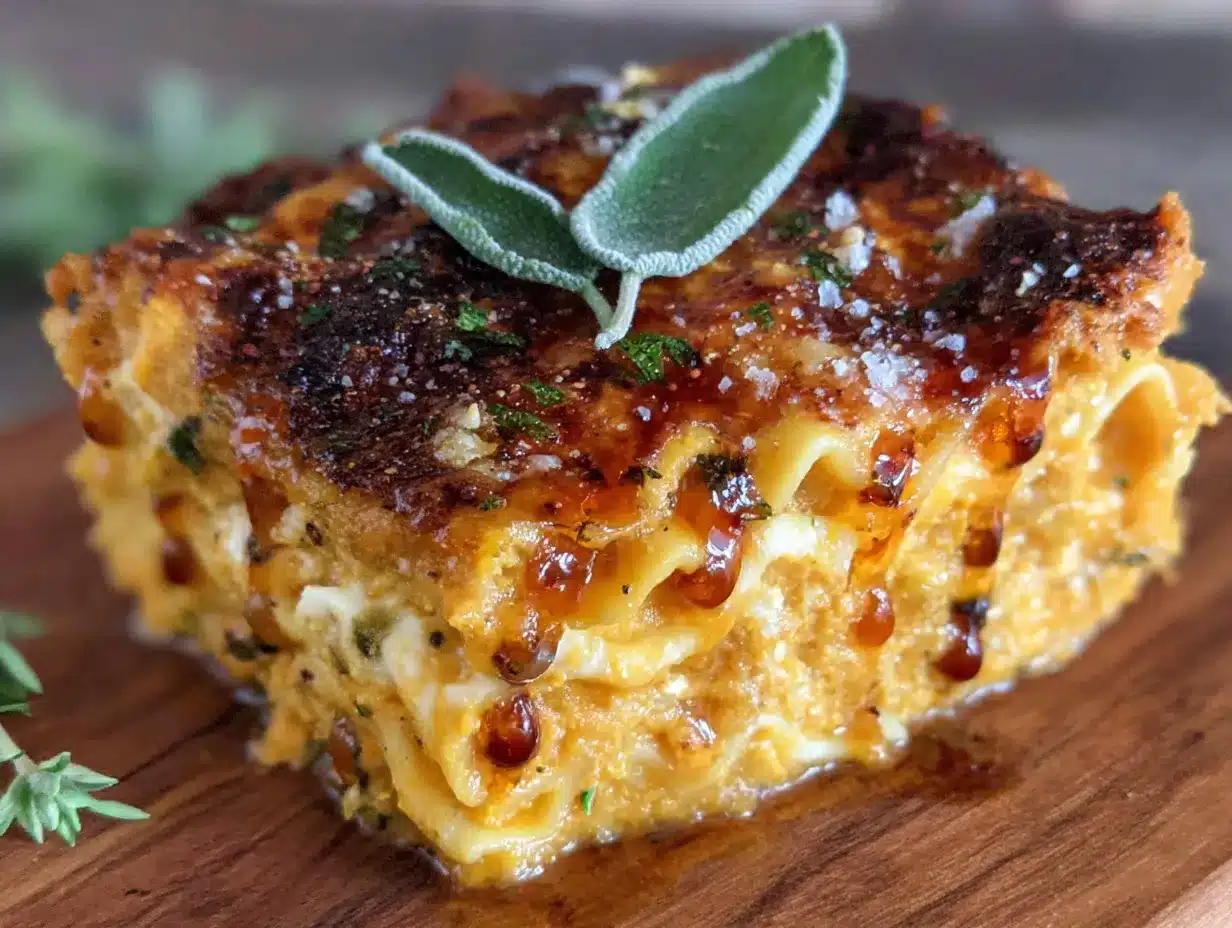
Let me walk you through this step by step. I’ve made this recipe dozens of times, and these are the exact steps that work best.
- Preheat your oven to 375°F (190°C). While it’s heating, peel and cube your butternut squash into ½-inch pieces. This is the most time-consuming part, so give yourself about 10 minutes. The pieces don’t have to be perfect—just roughly the same size so they cook evenly. I usually get about 4 cups of cubes from one medium squash.
- Heat 2 tablespoons of olive oil in your large oven-safe skillet over medium heat. Add the cubed squash and 4 minced garlic cloves. Cook for about 5-7 minutes, stirring occasionally, until the squash starts to soften and the garlic is fragrant. The squash should have some golden-brown edges but doesn’t need to be fully cooked through. Add the fresh sage leaves and cook for another minute until they’re slightly crispy. Season with ½ teaspoon salt and ¼ teaspoon black pepper.
- While the squash is cooking, prepare the ricotta mixture. In a medium bowl, combine 15 ounces of ricotta cheese, 1 cup of shredded mozzarella (reserve the other cup for topping), ¼ cup of grated Parmesan, ¼ teaspoon of freshly grated nutmeg, and a pinch of salt and pepper. Stir until everything is well combined. Taste it—it should be creamy and slightly salty. If it tastes flat, add a little more salt.
- Remove the skillet from heat. Spread the squash mixture evenly across the bottom of the pan. Pour ½ cup of heavy cream and ½ cup of broth over the squash. This liquid will help the no-boil noodles cook properly. Don’t skip this step—the noodles need moisture to soften.
- Layer the lasagna. Place 4 no-boil lasagna noodles over the squash mixture, breaking them if needed to fit. Spread about ⅓ of the ricotta mixture over the noodles. Repeat this process: noodles, ricotta, noodles, ricotta. You should have three layers of noodles and three layers of ricotta. The top layer should be noodles.
- Pour the remaining ½ cup of heavy cream and ½ cup of broth over the top. This ensures the top noodles cook properly. Sprinkle the reserved 1 cup of shredded mozzarella and remaining ¼ cup of grated Parmesan over the top. Dot with 2 tablespoons of butter, cut into small pieces. This adds richness and helps the top brown beautifully.
- Cover the skillet tightly with aluminum foil. Place it in the preheated oven and bake for 30 minutes. The foil traps steam, which helps the noodles soften. After 30 minutes, carefully remove the foil—watch out for the steam, it’s hot! Return the skillet to the oven, uncovered, and bake for another 15-20 minutes, until the top is golden brown and bubbly. The edges should be slightly caramelized, and you should see the sauce bubbling up around the sides.
- Let it rest for 10 minutes before serving. I know it’s hard to wait, but this step is crucial. The lasagna needs time to set so it doesn’t turn into a soupy mess when you cut into it. The internal temperature should be around 165°F (74°C) if you want to check with a thermometer.
Here’s a tip I learned the hard way: if your lasagna looks too watery when you take off the foil, don’t panic. Let it bake uncovered for an extra 5-10 minutes, and the excess liquid will evaporate. If the top is browning too quickly, tent it loosely with foil for the remaining time.
Cooking Tips & Techniques
After making this recipe more times than I can count, I’ve picked up a few tricks that make a real difference. Here are the ones I wish someone had told me from the start.
Don’t skip the squash prep. I know peeling and cubing butternut squash is a hassle—I’ve definitely cursed at a few stubborn squash in my time. But taking the time to get uniform pieces pays off. If your pieces are too big, they won’t soften enough during baking. Too small, and they might turn to mush. Aim for ½-inch cubes, and you’ll get that perfect tender-but-not-mushy texture.
The water content of your squash matters. Fresh butternut squash releases a lot of moisture as it cooks, which is exactly what you need for the no-boil noodles. If you’re using frozen squash, thaw it completely and pat it dry with paper towels before cooking. Otherwise, you’ll end up with a watery lasagna. I learned this the hard way when I made a frozen-squash version that was basically soup.
Let the lasagna rest. I mentioned this in the method, but it bears repeating. Those 10 minutes of rest time are non-negotiable. The lasagna will look a bit loose when it first comes out of the oven, but as it sits, the noodles absorb the remaining liquid and everything firms up. If you cut into it too soon, you’ll have a beautiful presentation ruined by a puddle of sauce.
Watch your oven temperature. Every oven runs a little differently. My old oven ran hot, and I used to burn the top of this lasagna regularly. If your oven tends to run hot, check the lasagna at the 25-minute mark during the uncovered baking phase. If the top is already golden brown, cover it loosely with foil for the remaining time.
Double the recipe for meal prep. This lasagna freezes beautifully, so I often make two at once. I bake one for dinner that night and assemble the other in a disposable aluminum pan, cover it tightly with foil, and freeze it unbaked. When I need a quick dinner, I bake it straight from frozen—just add about 20 minutes to the covered baking time.
Variations & Adaptations
This recipe is incredibly forgiving, and I’ve tried quite a few variations over the years. Here are some of my favorites.
Vegetarian Version: This recipe is already vegetarian if you use vegetable broth. For extra protein, add a layer of sautéed mushrooms or spinach between the noodles. I’ve done a mushroom version with cremini mushrooms that my mushroom-loving friends still talk about.
Gluten-Free Option: Use gluten-free no-boil lasagna noodles. I’ve tested this with Jovial brand brown rice lasagna noodles, and they work perfectly. Just make sure your broth and other ingredients are certified gluten-free. The cooking time might need an extra 5-10 minutes, so check for doneness before serving.
Add Protein: For a heartier meal, add cooked Italian sausage or shredded rotisserie chicken between the layers. Brown the sausage before adding it, and use about 1 pound. I’ve made a version with spicy Italian sausage that adds a nice kick and makes the dish even more satisfying for big appetites.
Dairy-Free Adaptation: Use dairy-free ricotta (Kite Hill makes a good one), dairy-free mozzarella shreds, and coconut cream instead of heavy cream. The texture will be slightly different, but the flavor is still delicious. I’ve served this to dairy-free guests who didn’t even notice the swap.
Seasonal Twist: In the fall, add a teaspoon of maple syrup to the squash while it cooks for extra sweetness. In winter, swap half the squash for cubed sweet potato. In summer, use zucchini instead of squash for a lighter version. The basic technique stays the same, but the flavor changes with the seasons.
Spice It Up: Add ½ teaspoon of red pepper flakes to the squash while it cooks, or stir a pinch of cayenne into the ricotta mixture. The heat balances the sweetness of the squash beautifully. My husband loves this version, though I usually keep it mild for the kids.
Serving & Storage Suggestions
This lasagna is at its best when served warm, but it’s also surprisingly good at room temperature. Here’s how I like to serve and store it.
Serving Temperature: Let the lasagna rest for 10 minutes after baking, then serve it hot. The edges will be slightly crispy, and the center will be creamy and tender. I like to garnish with a few fresh sage leaves or a sprinkle of extra Parmesan right before serving.
What to Serve With It: A simple green salad with a lemon vinaigrette cuts through the richness perfectly. I also love serving it with crusty bread to soak up any extra sauce. For a complete meal, add a side of roasted broccoli or sautéed green beans. The lasagna is rich enough that you don’t need much else.
Storage Instructions: Leftovers keep well in the refrigerator for up to 4 days. Store them in an airtight container. The flavors actually get better after a day or two as they meld together. I’ve eaten this cold straight from the fridge and it’s surprisingly delicious—almost like a deconstructed lasagna salad.
Freezing: This lasagna freezes beautifully for up to 3 months. Let it cool completely, then wrap it tightly in plastic wrap, followed by a layer of aluminum foil. To reheat, thaw overnight in the refrigerator, then bake at 350°F (175°C) for 20-25 minutes, or until heated through. You can also reheat individual portions in the microwave for about 2 minutes.
Reheating Tips: The best way to reheat leftover lasagna is in the oven. Place it in a baking dish, cover with foil, and bake at 350°F (175°C) for 15-20 minutes. If you’re in a hurry, the microwave works fine—just microwave individual portions for 1-2 minutes, then let them sit for a minute before eating. The texture won’t be quite as good as fresh, but it’s still delicious.
Flavor Development: One thing I love about this recipe is that the flavors continue to develop over time. The squash gets even sweeter, and the herbs infuse more deeply. I actually prefer the leftovers on day two. It’s one of those rare dishes that’s just as good, if not better, the next day.
Nutritional Information & Benefits
This lasagna is comfort food that happens to be packed with good-for-you ingredients. Here’s the nutritional breakdown per serving (based on 8 servings):
- Calories: Approximately 420 per serving
- Protein: 18 grams
- Fat: 24 grams
- Carbohydrates: 38 grams
- Fiber: 5 grams
- Sugar: 8 grams (naturally occurring from squash)
- Sodium: 580 milligrams (can be reduced with low-sodium broth)
Health Benefits of Key Ingredients: Butternut squash is a nutritional powerhouse. It’s loaded with vitamin A (one serving provides over 100% of your daily needs), vitamin C, potassium, and fiber. The beta-carotene in squash gives it that beautiful orange color and supports eye health and immune function. Ricotta cheese provides calcium and protein, while the olive oil offers heart-healthy monounsaturated fats.
Dietary Considerations: This recipe is naturally vegetarian. For a gluten-free version, use gluten-free lasagna noodles. For a lower-carb option, swap the lasagna noodles for thinly sliced zucchini or eggplant. The dish is relatively low in added sugar—most of the sweetness comes from the squash itself.
Potential Allergens: This recipe contains dairy (cheese, cream) and gluten (lasagna noodles). It does not contain nuts, eggs, or soy. If you have allergies, use the substitutions mentioned in the variations section.
My Personal Perspective: I love that this recipe feels indulgent but is actually pretty balanced. It’s the kind of meal that fills you up without weighing you down. The squash provides so much natural sweetness and creaminess that you don’t miss heavy cream or tons of cheese. It’s comfort food I can feel good about serving my family.
Conclusion
This easy one-pan butternut squash lasagna has become a staple in my kitchen for good reason. It’s the kind of recipe that solves real problems—busy weeknights, picky eaters, the eternal question of what to make for dinner that everyone will actually eat. It’s simple enough for a Tuesday night but impressive enough for company, and it uses affordable ingredients that won’t blow your grocery budget.
What I love most about this recipe is how forgiving it is. You can swap ingredients, adjust the seasonings, or use whatever cheese you have on hand, and it still turns out delicious. It’s the kind of dish that makes you look like a kitchen rockstar without actually doing much work. And honestly, isn’t that what we all want?
I hope you give this recipe a try and make it your own. Maybe you’ll add some spinach or swap in a different squash. Maybe you’ll double the cheese or add some heat. Whatever you do, I’d love to hear about it. Drop a comment below and let me know how it turned out—did your family love it? Did you make any fun variations? Your feedback helps other readers too, so don’t be shy.
Here’s to easy dinners that bring everyone to the table. Happy cooking!
Frequently Asked Questions
Can I use pre-cut butternut squash from the store?
Absolutely! Pre-cut squash saves a lot of time. Just make sure the pieces are roughly the same size so they cook evenly. If they’re larger than ½ inch, give them a quick chop before cooking. Frozen pre-cut squash works too—just thaw and pat dry first to avoid excess water.
Do I really need to let the lasagna rest for 10 minutes?
Yes, this step is important. The rest time allows the noodles to absorb any remaining liquid and the whole dish to set up properly. If you cut into it too soon, you’ll end up with a soupy mess. I know it’s hard to wait, but it’s worth it for that perfect slice.
Can I make this lasagna ahead of time?
Definitely! You can assemble the entire lasagna a day ahead, cover it, and refrigerate it. When you’re ready to bake, add about 10-15 minutes to the covered baking time since you’re starting from cold. You can also freeze it unbaked for up to 3 months—just thaw overnight in the fridge before baking.
What if I don’t have an oven-safe skillet?
No problem at all. Cook the squash and garlic in a regular skillet, then transfer everything to a 9×13-inch baking dish before layering. The recipe works exactly the same way—you just have one extra dish to wash. I’ve done it this way many times when my cast-iron skillet was already in use.
Can I add meat to this lasagna?
Yes, and it’s delicious. Cooked Italian sausage (mild or spicy), ground beef, or shredded rotisserie chicken all work well. Just add a layer of meat between the noodles, or mix it into the ricotta mixture. I recommend about 1 pound of cooked meat for the full recipe. It makes the lasagna even more filling and satisfying.
Pin This Recipe!
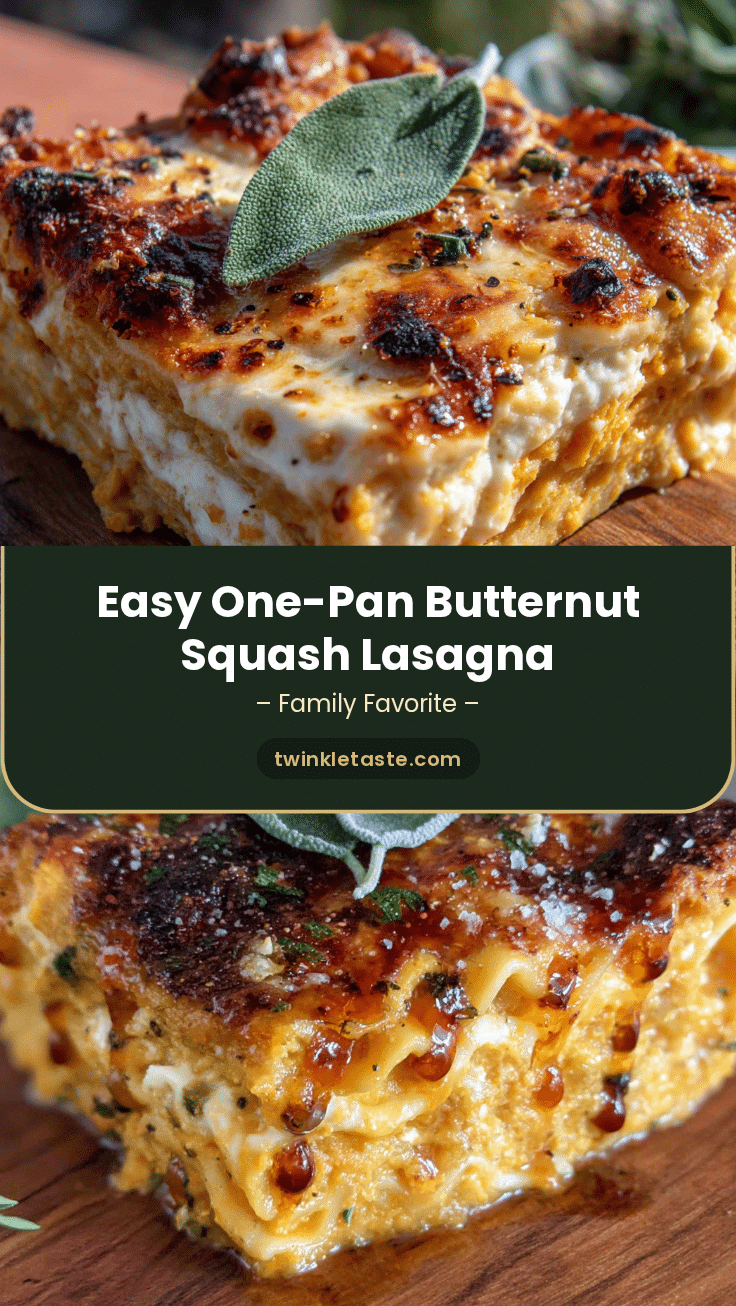
Easy One-Pan Butternut Squash Lasagna: Best Family Dinner

This easy one-pan butternut squash lasagna is a simple, forgiving, and delicious weeknight dinner that uses no-boil noodles and roasted squash to create a creamy, comforting meal with minimal cleanup.
- Prep Time: 20 minutes
- Cook Time: 50 minutes
- Total Time: 1 hour 10 minutes
- Yield: 8 servings
- Category: Main Course
- Cuisine: Italian
Ingredients
- Butternut squash, peeled and cubed (about 4 cups, or one medium squash)
- No-boil lasagna noodles (12 sheets, or about 8 ounces)
- Ricotta cheese (15 ounces, or one standard container)
- Mozzarella cheese, shredded (2 cups, about 8 ounces)
- Parmesan cheese, grated (½ cup, about 2 ounces)
- Garlic, minced (4 cloves, or about 2 teaspoons)
- Fresh sage leaves (about 10 leaves)
- Olive oil (3 tablespoons)
- Heavy cream (1 cup, or use half-and-half for a lighter option)
- Vegetable or chicken broth (1 cup)
- Salt and black pepper (to taste)
- Nutmeg, freshly grated (¼ teaspoon)
- Butter (2 tablespoons, for greasing the pan and adding richness)
Instructions
- Preheat your oven to 375°F (190°C). While it’s heating, peel and cube your butternut squash into ½-inch pieces. This is the most time-consuming part, so give yourself about 10 minutes. The pieces don’t have to be perfect—just roughly the same size so they cook evenly. I usually get about 4 cups of cubes from one medium squash.
- Heat 2 tablespoons of olive oil in your large oven-safe skillet over medium heat. Add the cubed squash and 4 minced garlic cloves. Cook for about 5-7 minutes, stirring occasionally, until the squash starts to soften and the garlic is fragrant. The squash should have some golden-brown edges but doesn’t need to be fully cooked through. Add the fresh sage leaves and cook for another minute until they’re slightly crispy. Season with ½ teaspoon salt and ¼ teaspoon black pepper.
- While the squash is cooking, prepare the ricotta mixture. In a medium bowl, combine 15 ounces of ricotta cheese, 1 cup of shredded mozzarella (reserve the other cup for topping), ¼ cup of grated Parmesan, ¼ teaspoon of freshly grated nutmeg, and a pinch of salt and pepper. Stir until everything is well combined. Taste it—it should be creamy and slightly salty. If it tastes flat, add a little more salt.
- Remove the skillet from heat. Spread the squash mixture evenly across the bottom of the pan. Pour ½ cup of heavy cream and ½ cup of broth over the squash. This liquid will help the no-boil noodles cook properly. Don’t skip this step—the noodles need moisture to soften.
- Layer the lasagna. Place 4 no-boil lasagna noodles over the squash mixture, breaking them if needed to fit. Spread about ⅓ of the ricotta mixture over the noodles. Repeat this process: noodles, ricotta, noodles, ricotta. You should have three layers of noodles and three layers of ricotta. The top layer should be noodles.
- Pour the remaining ½ cup of heavy cream and ½ cup of broth over the top. This ensures the top noodles cook properly. Sprinkle the reserved 1 cup of shredded mozzarella and remaining ¼ cup of grated Parmesan over the top. Dot with 2 tablespoons of butter, cut into small pieces. This adds richness and helps the top brown beautifully.
- Cover the skillet tightly with aluminum foil. Place it in the preheated oven and bake for 30 minutes. The foil traps steam, which helps the noodles soften. After 30 minutes, carefully remove the foil—watch out for the steam, it’s hot! Return the skillet to the oven, uncovered, and bake for another 15-20 minutes, until the top is golden brown and bubbly. The edges should be slightly caramelized, and you should see the sauce bubbling up around the sides.
- Let it rest for 10 minutes before serving. I know it’s hard to wait, but this step is crucial. The lasagna needs time to set so it doesn’t turn into a soupy mess when you cut into it. The internal temperature should be around 165°F (74°C) if you want to check with a thermometer.
Notes
Don’t skip the squash prep: aim for ½-inch cubes for perfect texture. The water content of your squash matters; if using frozen, thaw and pat dry. Let the lasagna rest for 10 minutes before serving to allow it to set. Watch your oven temperature; if it runs hot, check the lasagna at the 25-minute mark during the uncovered baking phase. This lasagna freezes beautifully; double the recipe for meal prep.
Nutrition
- Serving Size: 1 slice (1/8 of lasa
- Calories: 420
- Sugar: 8
- Sodium: 580
- Fat: 24
- Saturated Fat: 12
- Carbohydrates: 38
- Fiber: 5
- Protein: 18
Keywords: butternut squash lasagna, one-pan lasagna, easy lasagna, weeknight dinner, family dinner, vegetarian lasagna, no-boil noodles