It was 11:47 PM on a Wednesday in late October, and I had a fierce, unreasonable craving for something crunchy and sweet. Not candy — something that felt like fall in a bowl. I’d just gotten back from the farmers market that morning, and my fridge was overflowing with butternut squash, apples, and a bunch of kale that was starting to look a little sad. The thing is, I didn’t have any of the fancy stuff you’d expect for a “harvest salad.” No pomegranate molasses. No candied pecans from a gourmet shop. No aged gouda. But I had this bag of honeycrisp apples that were so fragrant they filled up my whole kitchen, and a block of feta I’d bought on a whim.
So I stood there, exhausted but wired, and started chopping. I roasted the squash on a sheet pan with a little smoked paprika because why not. I massaged the kale with my hands until it turned dark and silky, which is honestly the most satisfying kitchen task there is. I crumbled the feta with my fingers and tossed in a handful of dried cranberries I found hiding behind the oat milk. And for the dressing? I whisked together some maple syrup, apple cider vinegar, and a glug of olive oil right in the bottom of the bowl. No measuring spoons. No plan. Just a weird, late-night impulse that somehow worked.
The first bite stopped me mid-chew. It was the kind of salad that makes you forget you’re eating something healthy — the kind that tastes like a cozy sweater feels. The roasted squash was caramelized and tender, the apples added this fresh snap, and the maple vinaigrette tied it all together with this warm, slightly tangy sweetness. I ate it standing at the counter, straight from the mixing bowl, at nearly midnight. And I knew I’d be making it again the next day for lunch. Maybe you’ve been there — staring into your fridge at an unreasonable hour, wondering if you can make something beautiful out of what you’ve got. Trust me, you can. This wholesome harvest fall salad is proof.
Why You’ll Love This Recipe
I’ve made this salad about a dozen times since that first late-night experiment, and it’s become my go-to for everything from meal prep to holiday dinners. Let me tell you why it works so well, especially if you’re someone who wants food that feels indulgent but actually makes you feel good.
- Quick & Easy: This comes together in about 30 minutes, and most of that is hands-off roasting time. Perfect for busy weeknights when you want something satisfying without a complicated production.
- Simple Ingredients: No need to hunt down obscure items. You’ll find everything at a regular grocery store, and you probably already have the dressing ingredients in your pantry.
- Perfect for Meal Prep: This salad actually gets better as it sits. The kale holds up beautifully, and the flavors mingle overnight. Make a big batch on Sunday and eat it all week.
- Crowd-Pleaser: I’ve brought this to potlucks and watched people who “don’t like salads” go back for seconds. The combination of textures and sweet-savory flavors wins everyone over.
- Unbelievably Delicious: Honestly, this is the kind of salad that makes you excited to eat your vegetables. The roasted squash gets almost candy-like, the apples stay crisp, and that maple vinaigrette is pure magic.
What makes this different from other fall salads is the balance. I’ve tested versions with too much dressing (soggy) and not enough salt (boring). This recipe nails the proportions so every bite has a little bit of sweet, tangy, salty, and crunchy. It’s comfort food reimagined — healthier than a heavy pasta dish, but with the same soul-soothing satisfaction. And it’s flexible enough that you can swap in whatever looks good at the market.
What Ingredients You Will Need
This wholesome harvest fall salad uses simple, wholesome ingredients to deliver big flavor without any fuss. Most of these are pantry staples or easy to find at any grocery store. Here’s what you’ll need:
For the Salad:
- 1 medium butternut squash, peeled and cubed into ½-inch pieces (about 3 cups) — look for one that feels heavy for its size
- 1 tablespoon olive oil for roasting
- ½ teaspoon smoked paprika (regular paprika works too, but smoked adds a lovely depth)
- ¼ teaspoon salt
- 1 large bunch curly kale (about 6 cups chopped) — lacinato kale also works beautifully
- 1 large honeycrisp apple, thinly sliced (fuji or gala are great alternatives)
- ½ cup dried cranberries (look for unsweetened if you want to cut down on sugar)
- ½ cup crumbled feta cheese (goat cheese is a fantastic swap)
- ¼ cup toasted pepitas (pumpkin seeds) for crunch
For the Maple Vinaigrette:
- ¼ cup pure maple syrup (the real stuff, not pancake syrup — it makes a difference)
- 3 tablespoons apple cider vinegar (adds that bright tang that cuts through the sweetness)
- 1 teaspoon Dijon mustard (helps emulsify the dressing and adds a little zip)
- ⅓ cup extra virgin olive oil
- ¼ teaspoon salt
- ⅛ teaspoon black pepper
A few notes on ingredients: I prefer using curly kale because it holds up so well to the dressing and stays crunchy even the next day. If you’re using lacinato kale (also called Tuscan kale), it’s a bit more tender and needs slightly less massaging. For the butternut squash, you can buy pre-cut cubes to save time, but I find whole squash tastes better and roasts more evenly. Just make sure your cubes are similar in size so they cook at the same rate. And for the maple syrup, I really recommend using Grade A dark amber — it has a richer flavor that stands up to the other ingredients.
Equipment Needed
You don’t need anything fancy to make this salad, which is part of its charm. Here’s what you’ll need:
- Baking sheet: A rimmed half-sheet pan works best for roasting the squash. If you don’t have one, any sturdy baking pan will do — just make sure it’s not too crowded.
- Large mixing bowl: You’ll need a big bowl for massaging the kale and tossing everything together. I love using a wide wooden bowl, but any large bowl works.
- Chef’s knife and cutting board: For prepping the squash and apple. A sharp knife makes all the difference when dealing with hard squash.
- Vegetable peeler: For peeling the butternut squash. A Y-peeler is my favorite tool for this job — it’s faster and gives you more control.
- Small whisk or fork: For making the vinaigrette. I usually just whisk it right in a mason jar, which also works great for storage.
- Mason jar or small bowl: For shaking or whisking the dressing. A jar with a tight-fitting lid lets you shake it up quickly.
If you don’t have a vegetable peeler, you can use a paring knife to peel the squash — it just takes a little more patience. And if you don’t have a mason jar, any small bowl and a fork will get the job done. I’ve made this salad in a college dorm kitchen with just a butter knife and a cereal bowl, and it still turned out great.
Preparation Method
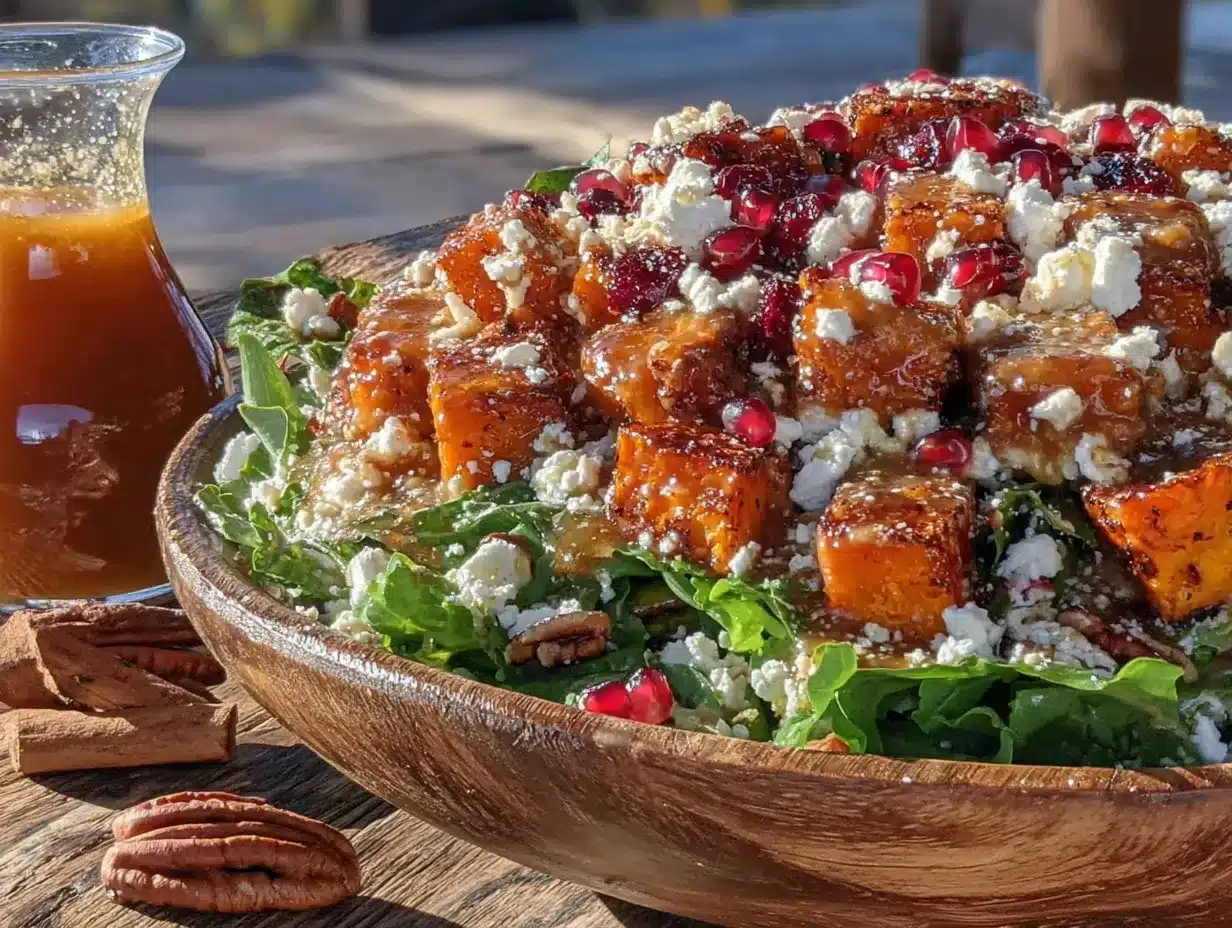
Let’s walk through this step by step. I’ve included all the little details I’ve learned from making this salad over and over — the things that make the difference between a good salad and a great one.
- Preheat your oven to 400°F (200°C). While it’s heating up, line a baking sheet with parchment paper if you have it. It makes cleanup so much easier, but it’s not essential.
- Prep the squash: Peel the butternut squash with a vegetable peeler, then cut off the top and bottom. Slice it in half lengthwise and scoop out the seeds with a spoon. Cut the squash into ½-inch cubes. Try to make them uniform so they roast evenly. This takes about 5-7 minutes once you get the hang of it. (Pro tip: if the squash feels too hard to cut, microwave it whole for 2 minutes to soften it slightly.)
- Roast the squash: Toss the cubed squash with 1 tablespoon olive oil, ½ teaspoon smoked paprika, and ¼ teaspoon salt. Spread them in a single layer on your baking sheet — don’t overcrowd, or they’ll steam instead of caramelizing. Roast for 20-25 minutes, flipping halfway through. You’ll know they’re done when they’re golden brown on the edges and tender when pierced with a fork. The smell in your kitchen at this point is absolutely incredible.
- Massage the kale: While the squash roasts, wash and dry the kale thoroughly. Remove the tough stems by holding the stem at the bottom and stripping the leaves upward with your other hand. Stack the leaves, roll them up, and slice into thin ribbons. Place the kale in your large bowl and add a tiny drizzle of olive oil (about 1 teaspoon) and a pinch of salt. Now, get your hands in there and massage the kale for 2-3 minutes. You’ll feel it transform — it’ll turn darker green, shrink in volume, and become tender. This step is non-negotiable. It makes the kale so much more pleasant to eat.
- Make the vinaigrette: In a small bowl or mason jar, combine ¼ cup maple syrup, 3 tablespoons apple cider vinegar, 1 teaspoon Dijon mustard, ¼ teaspoon salt, and ⅛ teaspoon pepper. Whisk or shake until combined. Then, slowly drizzle in ⅓ cup olive oil while whisking continuously (or shake vigorously if using a jar). The dressing should look slightly thickened and emulsified. Taste it and adjust — if you want more tang, add another splash of vinegar. If you want it sweeter, add a little more maple syrup.
- Slice the apple: Just before serving, thinly slice your apple. I like to leave the skin on for color and texture, but you can peel it if you prefer. Toss the slices with a tiny bit of lemon juice if you’re worried about browning, though honestly, they’ll get dressed quickly enough that it’s usually not an issue.
- Assemble the salad: Add the roasted squash (let it cool for 5 minutes first so it doesn’t wilt the kale), sliced apple, dried cranberries, crumbled feta, and toasted pepitas to the bowl with the massaged kale. Drizzle about half the dressing over the top and toss gently to combine. Add more dressing as needed — you want every bite lightly coated, not drenched. I usually use about ¾ of the dressing and save the rest for later.
- Serve immediately or let it rest: This salad is delicious right away, but I actually prefer it after it’s sat for about 15-20 minutes. The kale softens slightly, and the flavors start to meld together. If you’re meal prepping, keep the dressing separate until you’re ready to eat.
Cooking Tips & Techniques
After making this salad more times than I can count, I’ve picked up a few tricks that make a real difference. Let me share what I’ve learned the hard way so you don’t have to.
The biggest mistake I made early on? Not drying the kale properly. Wet kale makes for a watery dressing, and nobody wants that. After washing, I spin it in a salad spinner and then pat it dry with a clean kitchen towel. It sounds fussy, but it takes 30 seconds and makes a noticeable difference.
Another thing I learned: Don’t dress the entire salad if you’re planning to have leftovers. The kale holds up well, but the apples and pepitas can get soggy. I like to dress just what I’m eating and store the components separately. That way, the leftovers stay fresh and crunchy for days.
For the squash: Giving the pieces enough space on the baking sheet is crucial. If they’re crowded, they’ll steam instead of roasting, and you’ll miss out on those gorgeous caramelized edges. If you need to, use two baking sheets. And don’t skip the flip halfway through — it ensures even browning.
Timing strategy: I like to roast the squash while I prep everything else. By the time the squash comes out of the oven, the kale is massaged, the dressing is made, and the apples are sliced. Then I let the squash cool for a few minutes while I set the table or clean up. It makes the whole process feel effortless.
One more tip: Toast your pepitas in a dry skillet over medium heat for 2-3 minutes until they start to pop and smell nutty. It takes almost no time and adds so much flavor. Just watch them closely — they burn quickly.
Variations & Adaptations
This salad is incredibly flexible, which is one of the reasons I keep coming back to it. Here are some of my favorite variations:
Make it vegan: Skip the feta or swap it for a plant-based alternative. I’ve used crumbled tofu marinated in a little lemon juice and nutritional yeast, and it was surprisingly good. Toasted almonds or walnuts add extra protein and crunch.
Swap the squash: Butternut is my favorite, but roasted sweet potatoes or delicata squash (which you don’t even need to peel) work beautifully. In a pinch, I’ve even used roasted carrots. The key is that caramelized sweetness that balances the tangy dressing.
Change up the greens: If kale isn’t your thing, try mixed greens, arugula, or spinach. Just note that these softer greens won’t hold up as well for leftovers, so dress them right before serving. Arugula adds a nice peppery kick that plays well with the sweet dressing.
Add protein: This salad is hearty on its own, but it’s also great with grilled chicken, roasted chickpeas, or sliced turkey. I’ve added leftover roasted chicken before and it turned into a complete meal that kept me full for hours. For a vegetarian option, try adding some cooked farro or quinoa.
Seasonal twist: In the summer, I swap the apples for fresh peaches or nectarines and use fresh berries instead of dried cranberries. The maple vinaigrette works with pretty much any fruit, honestly. In the winter, I add some pomegranate seeds for a pop of color and tartness.
I once made this for a friend who doesn’t eat dairy, and I used a sprinkle of smoked almonds instead of the feta. She said it was the best salad she’d had in months. So don’t be afraid to experiment — this recipe is built to adapt.
Serving & Storage Suggestions
This salad is versatile enough for so many occasions. Here’s how I like to serve and store it:
Serving temperature: I prefer this salad at room temperature or slightly warm from the roasted squash. If you’re serving it cold, let it sit out for 10-15 minutes first — the flavors are much more pronounced when it’s not straight from the fridge.
Presentation: For a dinner party, I like to arrange the components on a large platter instead of tossing everything together. Lay down a bed of massaged kale, then arrange the roasted squash, apple slices, cranberries, feta, and pepitas in rows. Drizzle the dressing over the top just before serving. It looks stunning and lets people see all the beautiful ingredients.
What to serve with it: This salad pairs beautifully with roasted chicken, grilled salmon, or a warm bowl of butternut squash soup. It’s also fantastic alongside a crusty loaf of bread and some good butter for a simple but satisfying meal. For a fall-themed dinner, I serve it with roasted pork tenderloin or a hearty grain bowl.
Storage: If you’re meal prepping, store the dressing separately and keep the components in an airtight container in the fridge. The massaged kale, roasted squash, and dressing will keep for up to 4 days. The apples and pepitas are best added fresh, but if you’re making a big batch, just toss them in and accept that they’ll soften slightly — it’s still delicious.
Reheating: If you have leftover roasted squash, you can warm it gently in the microwave or a skillet before adding it to the salad. Just be careful not to overheat it, or it’ll turn mushy. The kale is best cold or at room temperature, so I usually keep that separate.
How flavors develop: Honestly, this salad is even better the next day. The kale absorbs some of the dressing and becomes more tender, and the flavors of the squash and cranberries meld together. I often make a double batch just for the leftovers.
Nutritional Information & Benefits
This salad is packed with nutrients, but it doesn’t taste like it’s trying to be healthy — which is exactly the kind of food I love. Here’s a rough breakdown per serving (about 1.5 cups):
- Calories: Approximately 320-350
- Protein: 8-10 grams
- Fat: 18-20 grams (mostly from olive oil and pepitas)
- Carbohydrates: 38-42 grams
- Fiber: 7-9 grams
- Sugar: 18-22 grams (naturally occurring from maple syrup, squash, apples, and cranberries)
Key health benefits: Kale is a powerhouse of vitamins A, C, and K, plus it’s loaded with antioxidants. Butternut squash is rich in beta-carotene and fiber, which supports healthy digestion and vision. The apples provide pectin and vitamin C, while pepitas offer magnesium and healthy fats. And the olive oil in the dressing gives you heart-healthy monounsaturated fats.
Dietary considerations: This salad is naturally gluten-free and can easily be made vegan by omitting the feta. It’s also relatively low in calories while being high in fiber, making it a great option for anyone watching their weight. If you’re watching your sugar intake, use unsweetened dried cranberries and reduce the maple syrup slightly.
Potential allergens: This recipe contains dairy (feta) and tree nuts (pepitas are seeds, but some people with nut allergies react to them). Adjust as needed for your dietary needs.
Conclusion
This wholesome harvest fall salad has become a staple in my kitchen for good reason. It’s the kind of recipe that proves healthy food doesn’t have to be boring or complicated. The combination of tender roasted squash, crisp apples, tangy feta, and that sweet-tart maple vinaigrette is just pure comfort in a bowl. And the best part? It comes together in about 30 minutes with ingredients you can find anywhere.
I love that this salad is flexible enough for a busy weeknight dinner, impressive enough for a holiday table, and sturdy enough for meal prep. It’s one of those recipes that makes you feel good about what you’re eating without making you feel like you’re missing out on anything. Honestly, I’ve served it to people who swore they didn’t like kale, and they went back for seconds.
I’d love to hear how this turns out for you! Did you make any fun substitutions? Found a new favorite way to roast squash? Drop a comment below and let me know. And if you’re looking for more fall recipes that are both wholesome and delicious, check out my cozy butternut squash soup or this maple roasted brussels sprouts dish. Happy cooking!
Frequently Asked Questions
Can I make this salad ahead of time?
Absolutely! I recommend prepping all the components separately — roast the squash, massage the kale, make the dressing — and storing them in the fridge. When you’re ready to eat, just toss everything together with the dressing. The components will keep for 3-4 days.
What can I use instead of butternut squash?
Sweet potatoes, delicata squash, or even roasted carrots work beautifully. The key is something with natural sweetness that caramelizes nicely in the oven. If you’re in a pinch, roasted beets would also be delicious.
How do I keep the apples from browning?
Toss the sliced apples with a little lemon juice or apple cider vinegar before adding them to the salad. The dressing itself also helps prevent browning. I usually just slice them right before serving and don’t worry too much about it.
Is this salad gluten-free?
Yes, this recipe is naturally gluten-free. Just make sure your Dijon mustard and any other packaged ingredients are certified gluten-free if you have celiac disease or a severe sensitivity.
Can I use a different dressing?
Of course! While the maple vinaigrette is a perfect match, this salad also works well with a balsamic vinaigrette, a honey mustard dressing, or even a simple lemon-tahini sauce. The key is something with a balance of sweet and tangy to complement the roasted squash and apples.
Pin This Recipe!
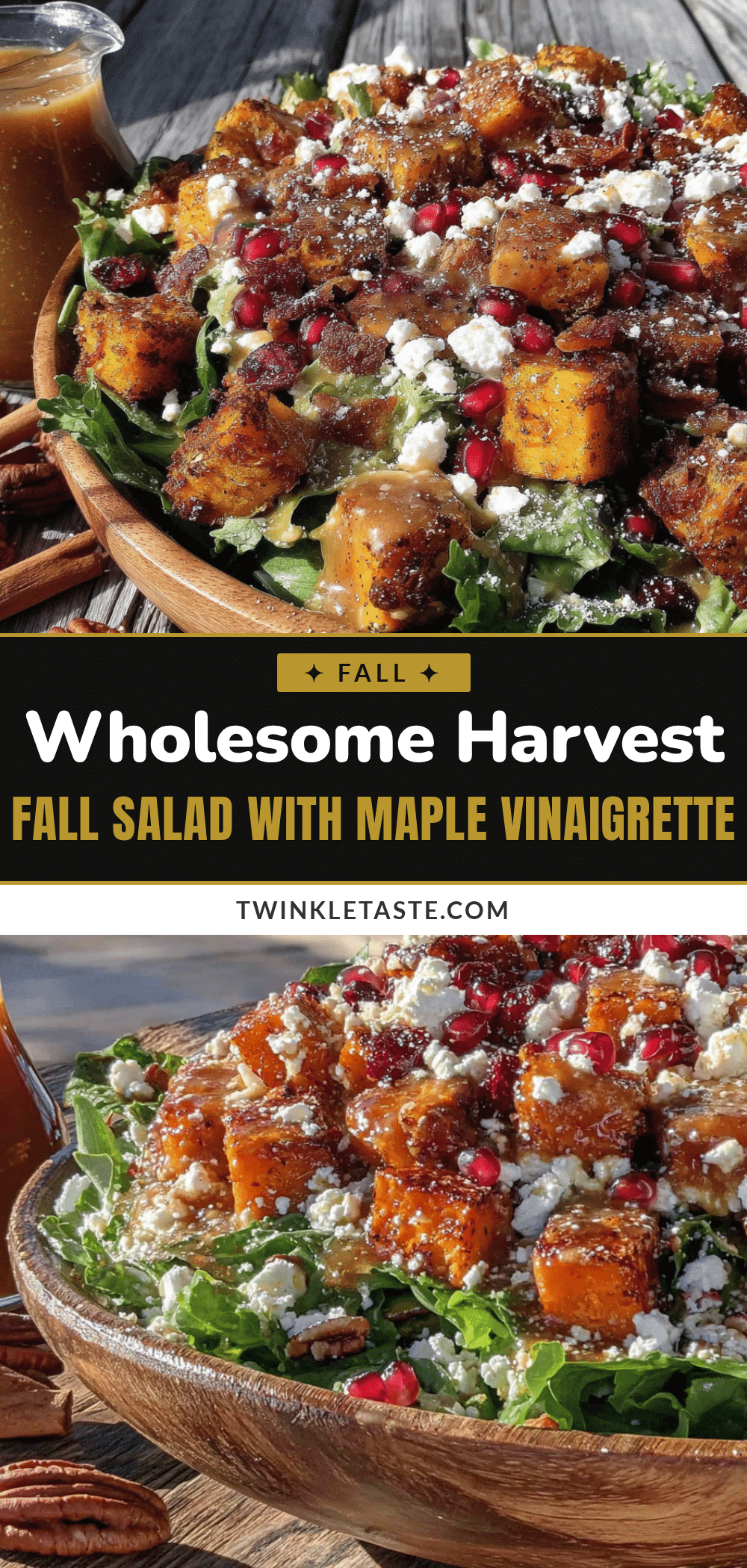
Wholesome Harvest Fall Salad with Easy Maple Vinaigrette
A quick and easy fall salad featuring roasted butternut squash, crisp apples, tangy feta, and a sweet-tart maple vinaigrette. Perfect for meal prep, potlucks, or a cozy weeknight dinner.
- Prep Time: 15 minutes
- Cook Time: 25 minutes
- Total Time: 40 minutes
- Yield: 4 servings 1x
- Category: Salad
- Cuisine: American
Ingredients
- 1 medium butternut squash, peeled and cubed into ½-inch pieces (about 3 cups)
- 1 tablespoon olive oil for roasting
- ½ teaspoon smoked paprika
- ¼ teaspoon salt
- 1 large bunch curly kale (about 6 cups chopped)
- 1 large honeycrisp apple, thinly sliced
- ½ cup dried cranberries
- ½ cup crumbled feta cheese
- ¼ cup toasted pepitas (pumpkin seeds)
- ¼ cup pure maple syrup
- 3 tablespoons apple cider vinegar
- 1 teaspoon Dijon mustard
- ⅓ cup extra virgin olive oil
- ¼ teaspoon salt
- ⅛ teaspoon black pepper
Instructions
- Preheat your oven to 400°F (200°C). Line a baking sheet with parchment paper if desired.
- Peel the butternut squash, cut off the top and bottom, slice in half lengthwise, and scoop out the seeds. Cut into ½-inch cubes.
- Toss the cubed squash with 1 tablespoon olive oil, ½ teaspoon smoked paprika, and ¼ teaspoon salt. Spread in a single layer on the baking sheet. Roast for 20-25 minutes, flipping halfway through, until golden brown and tender.
- While the squash roasts, wash and dry the kale. Remove the tough stems, stack the leaves, roll them up, and slice into thin ribbons. Place in a large bowl, add a tiny drizzle of olive oil (about 1 teaspoon) and a pinch of salt. Massage the kale for 2-3 minutes until dark green and tender.
- In a small bowl or mason jar, combine ¼ cup maple syrup, 3 tablespoons apple cider vinegar, 1 teaspoon Dijon mustard, ¼ teaspoon salt, and ⅛ teaspoon pepper. Whisk or shake until combined. Slowly drizzle in ⅓ cup olive oil while whisking continuously (or shake vigorously if using a jar) until emulsified. Taste and adjust seasoning if needed.
- Just before serving, thinly slice the apple. Toss with a little lemon juice if desired to prevent browning.
- Add the roasted squash (let cool for 5 minutes), sliced apple, dried cranberries, crumbled feta, and toasted pepitas to the bowl with the massaged kale. Drizzle about half the dressing over the top and toss gently to combine. Add more dressing as needed.
- Serve immediately or let rest for 15-20 minutes for flavors to meld. For meal prep, store dressing separately.
Notes
For best results, dry kale thoroughly after washing to avoid watery dressing. If meal prepping, store dressing separately and add fresh apples and pepitas just before serving. Toast pepitas in a dry skillet for 2-3 minutes for extra flavor.
Nutrition
- Serving Size: 1.5 cups
- Calories: 320350
- Sugar: 1822
- Sodium: 400500
- Fat: 1820
- Saturated Fat: 34
- Carbohydrates: 3842
- Fiber: 79
- Protein: 810
Keywords: fall salad, harvest salad, kale salad, butternut squash salad, maple vinaigrette, healthy salad, easy salad recipe