This was supposed to be a slow-simmered Sunday supper. I had this grand vision of spending the afternoon layering flavors, letting sauerkraut bubble away on the stove while apples softened into something almost caramelized. But then Tuesday happened. You know the kind—where you walk in the door at 6:15, the fridge is mocking you, and everyone is already asking what’s for dinner. I grabbed the bratwurst I’d bought for that weekend project, tossed them in a skillet because I didn’t have the patience to fire up the grill, and just started throwing things in. The sauerkraut I’d been hoarding for that slow-cooked masterpiece? Dumped it right in. The apple I was saving for a snack? Sliced it up and added it too, mostly out of desperation. Honestly, I was convinced I was ruining perfectly good ingredients. I mean, who cooks bratwurst in a skillet and calls it German anything?
But here’s the thing about happy accidents in the kitchen—sometimes they work better than the plan ever could have. The high heat gave the bratwurst this incredible caramelized exterior I’d never gotten from grilling. The sauerkraut, instead of turning into a sad, watery mess, actually crisped up at the edges and got this wonderful texture. And the apples? They softened just enough to release their sweetness into the whole pan, balancing the tang of the kraut in a way that made me stop mid-bite and just stare at my plate. Maybe you’ve been there—when a meal you threw together in a panic turns out better than the one you spent all weekend planning. It’s almost annoying, honestly. But I’ve learned to stop fighting it. This Quick German Bratwurst Skillet is now my go-to for those nights when I need dinner on the table in thirty minutes flat. It’s proof that sometimes the best recipes come from when things go wrong.
Why You’ll Love This Recipe
Let me tell you why this skillet has become a weeknight legend in my kitchen. I’ve tested it about a dozen times now, tweaking the heat levels, playing with the apple varieties, and even trying different bratwurst brands. What I landed on is the perfect balance of speed and flavor—something that tastes like it took forever but actually comes together in the time it takes to boil pasta.
- Quick & Easy : From fridge to table in under 30 minutes. No marinating, no complicated techniques, just one skillet and a little bit of chopping.
- Simple Ingredients : You probably already have bratwurst in your freezer (I always do), and sauerkraut keeps forever in the fridge. The apples are the only fresh thing you need to grab.
- Perfect for Busy Weeknights : This is the dinner you make when you have zero energy but still want something that feels like a real meal, not just survival food.
- Crowd-Pleaser : My kids fight over the caramelized apples, and my husband thinks I spent way more effort than I actually did. I’m not correcting him.
- Unbelievably Delicious : The combination of juicy bratwurst, tangy sauerkraut, and sweet apples is next-level comfort food that hits every single note.
What makes this recipe different from every other bratwurst recipe out there is the technique. Most recipes tell you to boil the bratwurst first or simmer everything together. Not here. We’re going for high heat, quick cooking, and letting each ingredient shine on its own while still coming together in the pan. The bratwurst gets that beautiful caramelized crust, the sauerkraut develops crispy edges, and the apples soften just enough to melt into the dish without turning to mush. It’s not just another weeknight dinner—it’s the one you’ll actually look forward to making after a long day.
This recipe is for those nights when you need something that feels like a warm hug but doesn’t require a nap afterward. It’s comfort food that respects your time—and honestly, isn’t that what we all need?
What Ingredients You Will Need
This recipe uses simple, straightforward ingredients that come together to create something surprisingly complex. Most of these are pantry staples or easy-to-find items at any grocery store. Here’s what you’ll need and why each one matters.
- 4-6 fresh bratwurst sausages (about 1.5 lbs total) – I prefer Johnsonville or a local butcher’s bratwurst for the best flavor. Look for uncooked, fresh bratwurst—not pre-smoked. If you can only find frozen, thaw them overnight in the fridge.
- 1 tablespoon olive oil (or any neutral cooking oil) – You need this for browning the bratwurst and sautéing the aromatics. Avocado oil works great too.
- 1 medium yellow onion, thinly sliced – The onion adds sweetness and depth as it caramelizes in the pan. Red onion works in a pinch, but yellow is best here.
- 2 cups sauerkraut, drained but not rinsed – Look for refrigerated sauerkraut in the deli section—it has way more flavor than the canned stuff. Bubbies is my go-to brand. Don’t rinse it; you want that tangy brine flavor.
- 1 large apple, cored and thinly sliced – Honeycrisp or Fuji apples work beautifully here. They hold their shape during cooking and provide the perfect sweetness. Granny Smith adds more tartness if that’s your preference.
- 1 teaspoon caraway seeds (optional but highly recommended) – These little seeds add that classic German flavor that ties everything together. Toast them in the pan for a minute before adding other ingredients for maximum flavor.
- 1/2 cup apple cider or chicken broth – This deglazes the pan and creates a light sauce that brings everything together. Apple cider adds sweetness, while broth keeps it more savory. Both work great.
- 1 tablespoon brown sugar (optional) – If your apples aren’t super sweet or you want a bit more caramelization, this helps. I skip it when using Honeycrisp apples.
- Salt and black pepper to taste – Go easy on the salt since bratwurst and sauerkraut are already salty. Fresh cracked pepper is always better.
- Fresh parsley for garnish (optional) – A sprinkle of green makes it look pretty, but honestly, I skip this half the time when I’m in a rush.
For serving, I love this with crusty bread or over egg noodles. Mustard on the side is non-negotiable in my house—whole grain or spicy brown, take your pick. If you’re feeling extra German, a cold beer alongside makes this meal complete.
Equipment Needed
One of the best things about this recipe is how little equipment it requires. You don’t need a grill, a slow cooker, or any fancy gadgets. Here’s what you’ll actually use:
- Large cast-iron skillet or heavy-bottomed pan (12-inch is ideal) – This is your workhorse. Cast iron gives you that beautiful even heat and helps caramelize the bratwurst perfectly. If you don’t have cast iron, any heavy-bottomed skillet will work—just avoid non-stick if possible, as you won’t get the same browning.
- Sharp chef’s knife – You’ll be slicing onions and apples, so a good knife makes the job faster and safer. I use my 8-inch Wusthof for everything.
- Cutting board – Go for a large wooden or plastic board. I prefer wood because it’s gentler on knives.
- Wooden spoon or spatula – For stirring and scraping up those delicious browned bits from the bottom of the pan. A silicone spatula works too.
- Tongs – These make flipping the bratwurst so much easier than using a fork. You want to avoid piercing the sausages and losing those juices.
- Measuring spoons and cup – For the caraway seeds, brown sugar, and liquid. Nothing fancy needed.
If you don’t have a cast-iron skillet, don’t worry—I’ve made this in a stainless steel pan plenty of times. Just make sure to preheat it properly and use enough oil to prevent sticking. And if you’re buying new cookware, a good 12-inch cast iron skillet is one of the best investments you can make for weeknight cooking. Lodge makes affordable ones that last forever.
Preparation Method
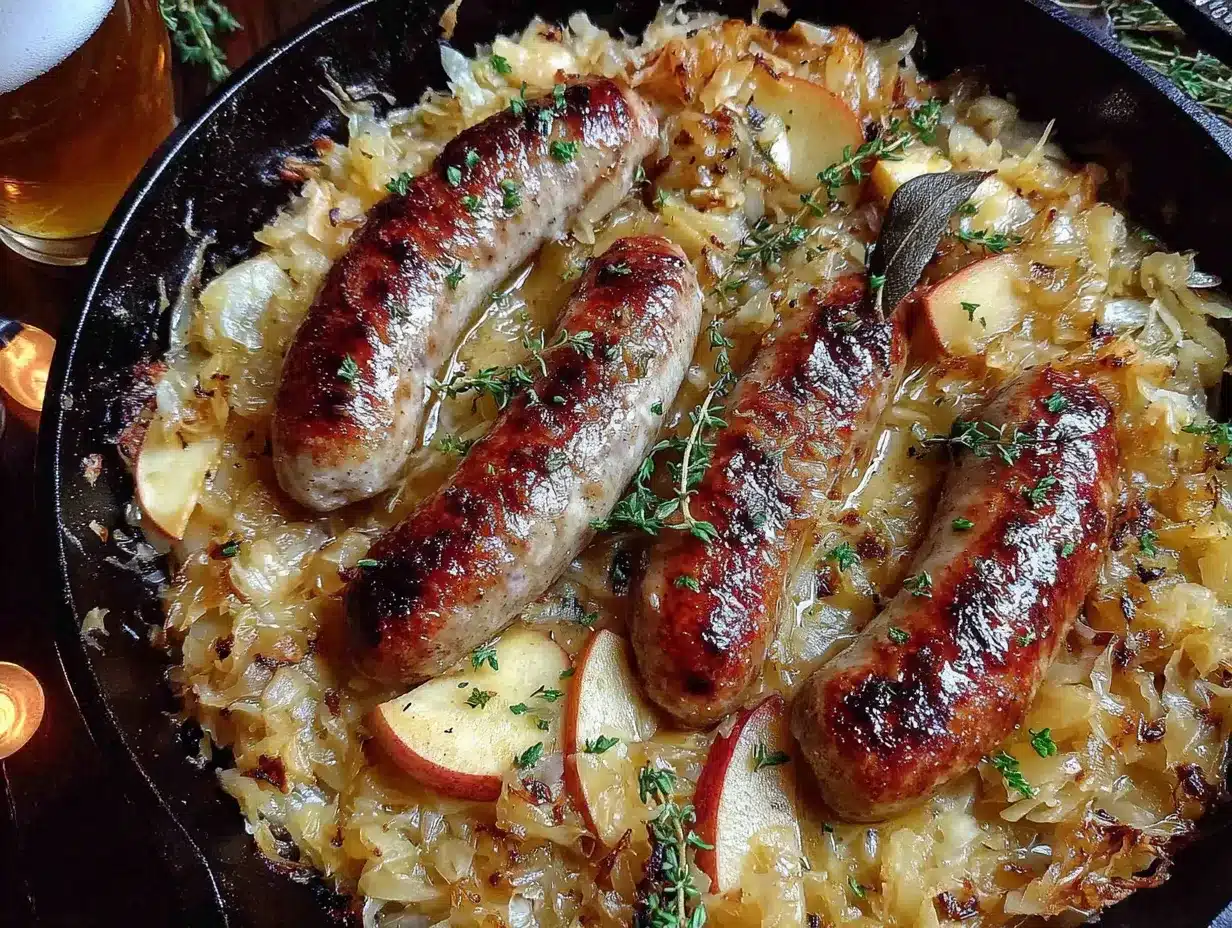
Here’s where the magic happens. Follow these steps, and you’ll have dinner on the table in about 25 minutes. I’ve included all the little details I wish someone had told me the first time I made this.
- Prep your ingredients first (5 minutes) – Before you turn on the heat, slice your onion into thin half-rings, core your apple and slice it into thin wedges (about 1/4-inch thick), and drain your sauerkraut. Having everything ready before you start cooking makes this process smooth and stress-free. Trust me, you don’t want to be slicing apples while bratwurst is burning.
- Brown the bratwurst (8-10 minutes) – Heat your large skillet over medium-high heat and add the olive oil. Once the oil shimmers, carefully place the bratwurst in the pan—don’t crowd them; they need space to brown. Cook for 4-5 minutes per side until they’re deeply golden brown. Don’t move them around too much; let them develop that crust. The internal temperature should reach 160°F if you want to check, but I usually just go by color and feel.
- Remove bratwurst and cook aromatics (3 minutes) – Transfer the browned bratwurst to a plate and set aside. The pan should have some browned bits stuck to the bottom—that’s flavor gold. Reduce heat to medium and add the sliced onion. Cook for 2-3 minutes, stirring occasionally, until the onion softens and starts to turn translucent. If the pan looks dry, add a splash of your apple cider or broth.
- Add sauerkraut and caraway seeds (2 minutes) – Add the drained sauerkraut and caraway seeds to the pan. Stir everything together and let it cook for about 2 minutes, letting the sauerkraut get some color on the edges. This is where the magic happens—those crispy bits of sauerkraut are my favorite part.
- Add apples and liquid (2 minutes) – Tuck the apple slices into the sauerkraut mixture. Pour in the apple cider or broth, and sprinkle with brown sugar if using. Stir gently to combine, scraping up any browned bits from the bottom of the pan. Let this cook for about 2 minutes until the apples start to soften.
- Return bratwurst to the pan (5 minutes) – Nestle the browned bratwurst back into the skillet, pushing them down into the sauerkraut and apples. Reduce heat to medium-low, cover the pan, and let everything simmer together for 5 minutes. This allows the flavors to meld and the bratwurst to finish cooking through.
- Rest and serve (2 minutes) – Remove the skillet from heat and let it rest, covered, for 2 minutes. This resting time lets the juices redistribute. Slice the bratwurst on a bias into thick rounds, or serve them whole—your choice. Spoon the sauerkraut and apple mixture over the top and garnish with fresh parsley if you’re feeling fancy.
One thing I learned the hard way: don’t skip the browning step. I tried to save time once by just simmering everything together, and the bratwurst came out pale and sad. That caramelized crust is what makes this dish special. Also, if your pan seems dry at any point, just add a splash more liquid. The sauerkraut should be moist but not swimming.
Cooking Tips & Techniques
After making this skillet more times than I can count, I’ve picked up a few tricks that make a real difference. Here are the things I wish someone had told me.
Get your pan screaming hot before adding the bratwurst. I know it sounds aggressive, but that initial sear is everything. If the pan isn’t hot enough, the bratwurst will steam instead of brown, and you’ll lose that gorgeous crust. You should hear a satisfying sizzle the moment the sausages hit the pan. If you don’t, wait another minute.
Don’t pierce the bratwurst. I used to poke them with a fork to check if they were done, but that just lets all the juices run out into the pan. Use tongs to flip them, and if you need to check doneness, use an instant-read thermometer. Juicy bratwurst is happy bratwurst.
Let the sauerkraut get crispy. This was a game-changer for me. Most recipes tell you to just warm the sauerkraut, but letting it sit in the hot pan without stirring for a minute or two creates these amazing crispy bits that add texture and concentrated flavor. It’s like sauerkraut bacon, honestly.
Watch your apple slices. Different apple varieties cook at different rates. Honeycrisp holds up beautifully, but softer apples like McIntosh can turn to applesauce in minutes. Cut your slices about 1/4-inch thick—too thin and they’ll disintegrate, too thick and they’ll be crunchy.
Multitask like a pro. While the bratwurst is browning, I slice my apples and measure my liquid. While the onion is cooking, I set the table. This recipe moves fast, so having everything prepped and ready makes it feel effortless.
One mistake I still make: adding too much liquid. The sauerkraut releases moisture as it cooks, so you don’t need much extra liquid. Start with 1/4 cup and add more only if the pan looks dry. Nobody wants soupy sauerkraut.
Variations & Adaptations
This recipe is incredibly flexible, and I’ve tried quite a few variations over the years. Here are some of my favorites.
Dietary Adaptations: For a lower-carb version, skip the brown sugar and serve the bratwurst and sauerkraut on a bed of roasted cauliflower rice. For a dairy-free meal, this recipe is already dairy-free as written—just check your bratwurst ingredients to be sure. If you’re gluten-free, most bratwurst is gluten-free, but always check the label. Serve with gluten-free bread or roasted potatoes.
Flavor Twists: Swap the apple for pear in the fall—it adds a lovely floral sweetness. Add a tablespoon of Dijon mustard to the liquid for extra tang. Throw in some sliced fennel alongside the onion for a subtle licorice note that pairs beautifully with the pork. I once added a splash of beer instead of apple cider, and it was incredible—use a German-style lager for authenticity.
Different Proteins: This works great with smoked sausage, kielbasa, or even chicken bratwurst. If using pre-cooked sausage, skip the initial browning step and just cook everything together for 10 minutes. I’ve also made this with sliced pork tenderloin—just sear it quickly and finish it in the sauerkraut mixture.
Seasonal Variations: In summer, add fresh herbs like thyme or rosemary. In winter, a pinch of cinnamon or allspice in the apple mixture adds warmth. Spring calls for a handful of fresh spinach stirred in at the end—it wilts beautifully into the sauerkraut.
My personal favorite variation: I add a handful of torn kale along with the sauerkraut and let it wilt down. It adds color, nutrients, and a slightly earthy flavor that balances the sweetness of the apples. My kids don’t even notice it’s there.
Serving & Storage Suggestions
This dish is incredibly versatile when it comes to serving. Here’s how I like to do it.
Serving Temperature: Serve this hot, straight from the skillet. The bratwurst should still be sizzling, the sauerkraut steaming, and the apples soft but holding their shape. I love bringing the whole cast-iron pan to the table—it keeps everything warm and looks beautiful.
What to Serve With It: Crusty bread is my go-to for sopping up the juices. Egg noodles tossed with butter and parsley are another favorite. For a lighter option, serve over a bed of arugula or alongside a simple green salad with a tangy vinaigrette. And don’t forget the mustard—whole grain, spicy brown, or even a dollop of sour cream on the side.
Storage Instructions: Leftovers keep beautifully in the fridge for up to 4 days in an airtight container. The flavors actually meld and deepen overnight, so this is one of those rare dishes that tastes even better the next day. I often make a double batch on purpose just for leftovers.
Reheating: The best way to reheat is in a skillet over medium heat with a splash of water or broth. Cover the pan and let it steam for 3-4 minutes until everything is hot. You can also microwave individual portions, but the bratwurst won’t be as crispy. If using the microwave, cover the bowl with a damp paper towel to keep the sauerkraut from drying out.
Freezer Tips: This freezes well for up to 3 months. Let it cool completely, then transfer to a freezer-safe container. To thaw, move it to the fridge overnight and reheat as directed above. The apples will be softer after freezing, but the flavor is still fantastic.
Make-Ahead Notes: You can brown the bratwurst and cook the onions up to 2 days ahead. Store them separately in the fridge, then just reheat everything together in the skillet with the sauerkraut and apples when you’re ready to eat. It saves about 10 minutes on a busy night.
Nutritional Information & Benefits
While I’m not a nutritionist, I can share what I’ve learned about this dish from making it regularly. Here’s a rough breakdown per serving (one bratwurst with about 1/2 cup of the sauerkraut-apple mixture).
Estimated Nutritional Values (per serving):
- Calories: 380-420
- Protein: 18-22g
- Fat: 28-32g
- Carbohydrates: 15-18g
- Fiber: 4-5g
- Sugar: 8-10g (from apples and optional brown sugar)
- Sodium: 900-1100mg (varies by bratwurst brand and sauerkraut)
Health Benefits: Sauerkraut is a fermented food packed with probiotics that support gut health. It’s also high in vitamin C and fiber. Apples add antioxidants and more fiber, while bratwurst provides protein and B vitamins. This isn’t a health food, but it’s a balanced meal that includes protein, vegetables, and fruit—not bad for a 30-minute dinner.
Dietary Considerations: This recipe is naturally dairy-free and can be gluten-free if you choose certified gluten-free bratwurst. It’s not low-fat or low-sodium, but it’s made with whole food ingredients and no artificial additives. If you’re watching your sodium, look for low-sodium sauerkraut and bratwurst.
Allergen Notes: Bratwurst typically contains pork, so this isn’t suitable for those avoiding pork. Check labels for gluten if that’s a concern. The recipe is free of nuts, eggs, and dairy as written.
From my perspective, this is the kind of meal that nourishes more than just your body. It’s the comfort of a warm, satisfying dinner after a long day—and that counts for something too.
Conclusion
This Quick German Bratwurst Skillet has become my secret weapon for those nights when I need dinner to be fast, satisfying, and honestly, a little impressive. It started as a happy accident, but now I make it on purpose—sometimes even when I have more time to cook, because it’s just that good.
I love that this recipe doesn’t ask much from you. No complicated techniques, no obscure ingredients, no hours of simmering. It respects your time while still delivering big, bold flavor. The combination of juicy bratwurst, tangy sauerkraut, and sweet apples is one of those perfect pairings that makes you wonder why you don’t make it every week. And honestly? You probably will after you try it once.
I’d love to hear how this turns out for you. Did you add your own twist? Serve it with something unexpected? Find a new favorite bratwurst brand? Drop a comment below and let me know—I read every single one and I’m always looking for new ideas to try. And if you loved this recipe, share it with a friend who also needs a quick weeknight win. Happy cooking, friends—you’ve got this.
Frequently Asked Questions
Can I use pre-cooked bratwurst for this recipe?
Yes, you can! If using pre-cooked bratwurst, skip the initial browning step and just slice them into rounds. Add them to the pan along with the sauerkraut and apples, and cook everything together for about 8-10 minutes until heated through. You won’t get the same caramelized crust, but it’ll still be delicious.
What’s the best apple variety for this dish?
Honeycrisp is my top choice because it holds its shape during cooking and provides the perfect balance of sweetness and tartness. Fuji and Gala are also great options. If you prefer a more tart flavor, go with Granny Smith. Avoid soft apples like McIntosh or Red Delicious—they’ll turn to mush.
Can I make this in a slow cooker?
You can, but I don’t recommend it for this recipe. The magic of this dish comes from the high-heat browning and the crispy edges on the sauerkraut. A slow cooker will give you softer, more braised results. If you’re set on using one, brown the bratwurst and onions in a skillet first, then transfer everything to the slow cooker and cook on low for 4-6 hours.
How do I store and reheat leftovers?
Store leftovers in an airtight container in the refrigerator for up to 4 days. The best way to reheat is in a skillet over medium heat with a splash of water or broth—cover and let it steam for 3-4 minutes. You can also microwave individual portions, but the bratwurst won’t be as crispy. This dish freezes well for up to 3 months.
Is this recipe gluten-free?
Most bratwurst is gluten-free, but you should always check the label since some brands use fillers that contain gluten. Sauerkraut, apples, onions, and the other ingredients are naturally gluten-free. Serve with gluten-free bread or roasted potatoes instead of regular bread or noodles to keep the whole meal gluten-free.
Looking for more quick weeknight dinners? Try our Creamy German Pork Chops or our Easy Skillet Sausage and Peppers for more one-pan magic.
Pin This Recipe!

Quick German Bratwurst Skillet: Easy 30-Minute Dinner

A quick and easy one-skillet dinner featuring juicy bratwurst, tangy sauerkraut, and sweet apples, ready in under 30 minutes. Perfect for busy weeknights when you need a comforting meal without the fuss.
- Prep Time: 10 minutes
- Cook Time: 20 minutes
- Total Time: 30 minutes
- Yield: 4 servings 1x
- Category: Main Course
- Cuisine: German
Ingredients
- 4–6 fresh bratwurst sausages (about 1.5 lbs total)
- 1 tablespoon olive oil
- 1 medium yellow onion, thinly sliced
- 2 cups sauerkraut, drained but not rinsed
- 1 large apple, cored and thinly sliced (Honeycrisp or Fuji recommended)
- 1 teaspoon caraway seeds (optional)
- 1/2 cup apple cider or chicken broth
- 1 tablespoon brown sugar (optional)
- Salt and black pepper to taste
- Fresh parsley for garnish (optional)
Instructions
- Prep your ingredients first: slice onion into thin half-rings, core and slice apple into thin wedges (about 1/4-inch thick), and drain sauerkraut.
- Heat a large skillet over medium-high heat and add olive oil. Once shimmering, place bratwurst in the pan and cook for 4-5 minutes per side until deeply golden brown. Remove to a plate.
- Reduce heat to medium and add sliced onion. Cook for 2-3 minutes, stirring occasionally, until softened and translucent. Add a splash of apple cider or broth if pan looks dry.
- Add drained sauerkraut and caraway seeds. Cook for about 2 minutes, letting sauerkraut get some color on the edges.
- Tuck apple slices into the sauerkraut mixture. Pour in apple cider or broth, and sprinkle with brown sugar if using. Stir gently and cook for about 2 minutes until apples start to soften.
- Nestle browned bratwurst back into the skillet. Reduce heat to medium-low, cover, and simmer for 5 minutes.
- Remove from heat and let rest, covered, for 2 minutes. Slice bratwurst on a bias into thick rounds or serve whole. Spoon sauerkraut and apple mixture over the top and garnish with parsley if desired.
Notes
For best results, get the pan screaming hot before adding bratwurst to ensure a good sear. Do not pierce the bratwurst while cooking to keep them juicy. Let sauerkraut get crispy edges for added texture. Different apple varieties cook at different rates; Honeycrisp holds up well. Start with 1/4 cup liquid and add more only if needed to avoid soupy sauerkraut.
Nutrition
- Serving Size: 1 bratwurst with abo
- Calories: 400
- Sugar: 9
- Sodium: 1000
- Fat: 30
- Saturated Fat: 10
- Carbohydrates: 16
- Fiber: 4
- Protein: 20
Keywords: bratwurst, skillet, quick dinner, German, sauerkraut, apples, 30-minute meal, one-pan