The way the potatoes almost melt into the broth, leaving behind these soft, buttery edges that barely hold their shape — that’s the whole point of this stew. Everything else (the tender ground beef, the sweet carrot coins, the little pops of corn) just sort of swims around in that rich, savory liquid, but it’s those crumbling potatoes that tell you what you’re in for. I didn’t grow up eating something called Poor Man’s Stew, but I grew up eating whatever my mom could stretch to feed five people on a Tuesday night, and honestly, this tastes exactly like that kind of love.
The first time I made this, I was staring into my fridge at a half-empty bag of potatoes, some sad carrots, and a pound of ground beef I’d forgotten to freeze. It was cold — the kind of damp cold that sits in your bones — and I needed something that would fill the house with steam and smell like dinner was handled. I threw it all in one pot (because the thought of washing extra dishes made me want to cry), crossed my fingers, and let it simmer. An hour later, I was eating the best accident I’d ever made. The broth had thickened just from the potatoes breaking down, and every spoonful felt like a hug from the inside out.
That’s the thing about this Cozy One-Pot Poor Man’s Stew for Chilly Nights. It doesn’t try to be fancy. It doesn’t need expensive cuts of meat or a dozen exotic spices. It just needs a little patience and a big pot. And when you’re cold and tired and the night feels too long, that’s exactly the kind of meal you deserve.
Why You’ll Love This Recipe
I’ve tested this stew more times than I can count, and I can tell you with complete confidence: it works every single time. Here’s why this one’s different from the other beef stew recipes floating around out there.
- Budget-Friendly: This whole pot costs less than a fast-food run for two people, but it feeds a crowd. Ground beef, potatoes, carrots — these are the ingredients that keep your grocery bill in check.
- One Pot, No Fuss: You brown the meat, sweat the veggies, dump everything else in, and walk away. One pot to wash. That’s it. On a chilly night, that’s a game-changer.
- Deep, Rich Flavor Without the Work: Most stews ask you to brown the meat in batches, deglaze the pan, add wine, simmer for hours. This one builds flavor with a simple trick — letting the tomato paste cook until it darkens and sticking with a good quality beef broth. It tastes slow-cooked without the slow-cooker.
- Perfectly Thick Broth: No cornstarch slurry. No flour roux. The potatoes do the work for you, releasing their starch as they simmer and creating that silky, spoon-coating texture naturally.
- Customizable to the Bone: Got leftover veggies in the fridge? Toss ’em in. Want it spicier? Add red pepper flakes. Need it gluten-free? It already is. This recipe bends without breaking.
I’ve made this for my family on nights when everyone was cranky and hungry, and I’ve made it just for myself with a side of crusty bread and a glass of red wine. It never disappoints. It’s the kind of stew that makes you close your eyes after the first bite — not because it’s fancy, but because it tastes like exactly what you needed.
What Ingredients You Will Need
This recipe uses simple, humble ingredients that work together to create something far greater than the sum of their parts. Most of these are probably in your kitchen right now, which is exactly the point.
- Ground Beef (1 lb): I use 80/20 here — the fat adds flavor and keeps the meat tender. You can use ground turkey or even Italian sausage for a different spin, but beef is classic. I’ve tried this with lean ground beef before, and it works, but the stew feels a little less… generous, if that makes sense. Go for the 80/20.
- Yellow Onion (1 large, diced): The backbone of almost every savory dish I make. Sweat it low and slow until it’s translucent and sweet. A sweet onion or even a shallot would work in a pinch.
- Garlic (3 cloves, minced): Fresh garlic is non-negotiable here. The jarred stuff has its place (emergency pasta sauce, maybe), but this stew deserves the real thing. Let it cook just until fragrant — burnt garlic is bitter garlic.
- Carrots (3 medium, peeled and sliced into rounds): They add sweetness and color. I like slicing them thicker (about ½-inch) so they hold their shape during the simmer. Baby carrots work fine — just cut them in half lengthwise so they’re not too chunky.
- Celery (2 stalks, diced): Adds that savory, earthy depth that makes stew taste like stew. If you hate celery (I get it), just leave it out or swap in a diced bell pepper for a slightly sweeter note.
- Potatoes (3-4 medium Yukon Gold or Russet, peeled and cubed into 1-inch pieces): Yukon Golds are my favorite here — they’re waxy enough to hold their shape but starchy enough to thicken the broth. Russets break down more, which is also lovely if you want an almost creamy texture. Red potatoes work, too, but the broth won’t thicken as much.
- Tomato Paste (3 tablespoons): This is the secret weapon. Let it cook in the pot for a minute or two after you add it, stirring constantly. It deepens in color and flavor, turning from bright red to a rusty brick color. That’s where the magic happens.
- Beef Broth (4 cups): Use a good quality broth here — it makes a difference. I like Kitchen Basics or Swanson’s low-sodium version so I can control the salt. If you only have chicken broth, it’ll still work, but the flavor will be lighter.
- Frozen Corn (1 cup): Adds little bursts of sweetness and color. No need to thaw — just dump it in frozen. Canned corn works, too, but drain it first.
- Frozen Peas (½ cup): I add these at the very end so they stay bright green and pop in your mouth. If you’re not a pea person, leave ’em out — no hard feelings.
- Dried Thyme (1 teaspoon): Earthy, slightly floral, and totally at home in a beef stew. Fresh thyme works beautifully, too — use 1 tablespoon of leaves.
- Bay Leaf (1): Adds a subtle herbal note that you won’t be able to pinpoint, but you’ll miss if it’s not there. Remember to fish it out before serving — biting into a bay leaf is no one’s idea of a good time.
- Salt and Black Pepper (to taste): Season as you go — a pinch with the onions, another with the beef, and adjust at the end. I usually end up with about 1 teaspoon of salt and ½ teaspoon of pepper.
- Olive Oil (2 tablespoons): For browning the meat and sweating the veggies. Avocado oil works, too.
- Worcestershire Sauce (1 tablespoon) — optional but recommended: Adds umami depth that makes the stew taste like it’s been simmering all day. I never skip it.
Equipment Needed
You don’t need a fancy kitchen to make this stew. Here’s what you’ll need:
- Large Dutch Oven or Heavy-Bottomed Pot (5-6 quart): This is your workhorse. A Dutch oven holds heat evenly and is perfect for browning and simmering. If you don’t have one, any large, heavy pot will do — just keep an eye on the heat so nothing scorches on the bottom.
- Sharp Chef’s Knife: A dull knife makes dicing onions and carrots a chore. A sharp one makes it almost meditative. I use my 8-inch Wüsthof for everything.
- Cutting Board: Wood or plastic — whatever you’ve got. Just make sure it’s stable.
- Wooden Spoon or Silicone Spatula: For stirring and scraping up the browned bits from the bottom of the pot. Those bits are pure flavor.
- Measuring Cups and Spoons: A set of dry measuring cups and a liquid measuring cup will make your life easier. I’ve eyeballed this recipe plenty of times, but measuring ensures consistency.
- Vegetable Peeler: For the carrots. I use a simple Y-peeler — cheap and effective.
- Ladle: For serving. A deep ladle gets you a good mix of broth and solids in every bowl.
If you don’t have a Dutch oven, don’t sweat it. I’ve made this in a stainless steel stockpot and even a nonstick pasta pot. The key is just giving yourself enough room to stir without splashing broth everywhere.
Preparation Method
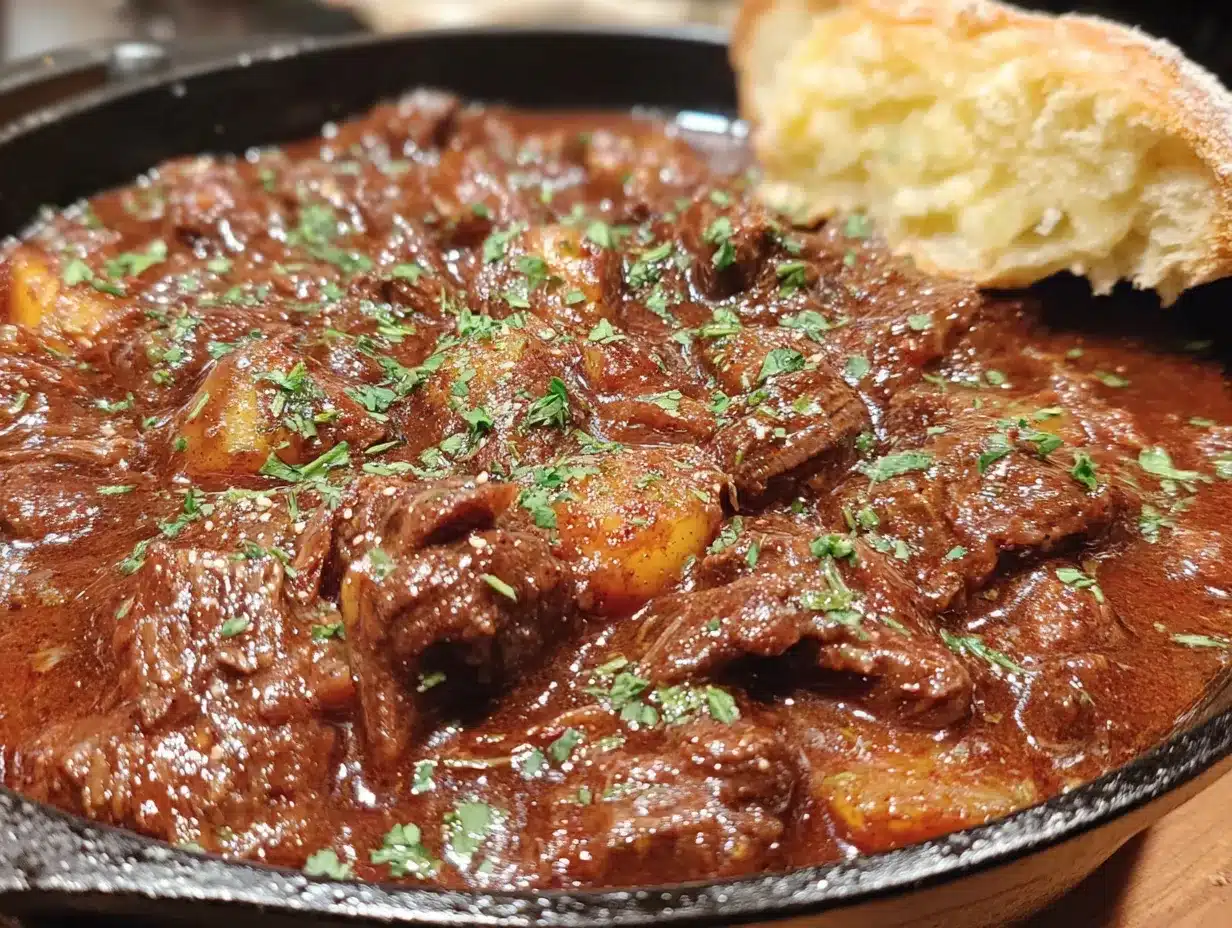
Let’s get cooking. This comes together in about an hour, and most of that time is hands-off simmering.
- Prep your veggies. Dice the onion, mince the garlic, peel and slice the carrots into ½-inch rounds, dice the celery, and peel and cube the potatoes into 1-inch pieces. I like to do all my chopping before I turn on the stove — it makes the process so much calmer. Set everything in separate piles or bowls.
- Brown the beef. Heat 1 tablespoon of olive oil in your Dutch oven over medium-high heat. Add the ground beef and cook, breaking it up with a wooden spoon, until it’s browned all over — about 6-8 minutes. Don’t stir it constantly; let it sit for a minute or two between stirs so it gets a nice crust. Once it’s browned, use a slotted spoon to transfer the beef to a plate. Leave the fat and drippings in the pot.
- Sweat the aromatics. Reduce the heat to medium. Add the remaining 1 tablespoon of olive oil to the pot (if it looks dry). Toss in the diced onion, carrots, and celery. Cook, stirring occasionally, until the onion is translucent and the carrots have started to soften — about 5-7 minutes. Add the minced garlic and cook for 30 seconds more, until it’s fragrant. Your kitchen should smell amazing at this point.
- Cook the tomato paste. Push the veggies to the sides of the pot and add the tomato paste to the center. Let it sizzle for about 30 seconds, then stir it into the vegetables. Cook for another 1-2 minutes, stirring constantly. You’ll see it darken from bright red to a deeper, rustier color. That’s flavor.
- Deglaze the pot. Pour in about ½ cup of the beef broth and scrape up any browned bits from the bottom of the pot with your wooden spoon. This is called deglazing, and it’s where all that flavor from the beef gets incorporated back into the stew.
- Add everything else. Return the browned beef to the pot. Add the cubed potatoes, the remaining beef broth, the Worcestershire sauce (if using), dried thyme, and the bay leaf. Stir everything together. Bring the stew to a gentle boil, then reduce the heat to low, cover the pot, and let it simmer for 30 minutes.
- Add the frozen vegetables. After 30 minutes, remove the lid and stir in the frozen corn. Let the stew simmer uncovered for another 10-15 minutes, or until the potatoes are tender when pierced with a fork and the broth has thickened slightly. During this time, the liquid will reduce a bit, concentrating the flavors.
- Finish with peas. Stir in the frozen peas. Let them warm through for just 2-3 minutes — you want them bright green, not mushy. Remove the bay leaf and discard it.
- Taste and adjust. Give the stew a good stir, then taste it. Add salt and black pepper as needed. I usually start with ½ teaspoon of salt and ¼ teaspoon of pepper, then adjust from there. Remember, the flavors will continue to meld as it sits.
- Serve. Ladle the stew into deep bowls. A sprinkle of fresh parsley on top is nice if you have it, but not necessary. Serve with crusty bread, buttered toast, or even a side of buttery egg noodles for extra comfort.
Cooking Tips & Techniques
I’ve made this stew at least a dozen times, and I’ve learned a few things the hard way. Here’s what I wish I’d known from the start.
Don’t rush the browning. I know it’s tempting to just cook the beef until it’s no longer pink and move on, but taking the time to get a good sear on it adds so much depth. Let it sit in the hot pan for a minute or two before stirring. That brown crust is pure flavor.
Toast the tomato paste. This is the single most important step for building flavor quickly. Raw tomato paste tastes tinny and sharp. Cooked tomato paste tastes rich, sweet, and savory. Give it that extra minute — it’s worth it.
Watch your salt. Beef broth can be salty depending on the brand. I always use low-sodium broth and season at the end. You can always add more salt, but you can’t take it out.
Don’t overcook the potatoes. You want them tender but still holding their shape. If you cook them too long, they’ll dissolve into the broth completely. That’s not the end of the world (it makes a thicker, almost creamy stew), but if you want distinct potato chunks, keep an eye on them after the 30-minute mark.
Let it rest. This stew actually tastes better the next day. The flavors meld and deepen overnight in the fridge. So if you can, make it a day ahead and reheat it gently on the stove. I’ve done this for busy weeknights, and it’s a lifesaver.
One time, I forgot to add the Worcestershire sauce until the very end, and honestly? It still turned out great. Don’t stress if you miss a step — this recipe is forgiving.
Variations & Adaptations
This stew is a blank canvas. Here are some ways to make it your own.
- Make it heartier: Add a can of drained and rinsed kidney beans or chickpeas along with the corn. It adds protein and makes the stew even more filling. I’ve done this on nights when I wanted to stretch the leftovers for another meal.
- Make it spicy: Add ½ teaspoon of red pepper flakes along with the garlic, or stir in a chopped jalapeño with the onions. A dash of hot sauce at the table works, too.
- Make it creamy: Stir in ½ cup of heavy cream or full-fat coconut milk at the very end, just before serving. It turns the broth velvety and rich. I did this once on a whim, and it was dangerously good.
- Swap the protein: Ground turkey, ground pork, or even Italian sausage (casings removed) all work beautifully. If you use sausage, you might want to reduce the salt a bit since sausage is already seasoned.
- Add greens: A handful of chopped kale or spinach stirred in with the peas adds color and nutrients. The greens will wilt quickly, so don’t add them too early.
- Go low-carb: Swap the potatoes for cauliflower florets or cubed turnips. They won’t thicken the broth the same way, so you might want to add a tablespoon of cornstarch mixed with cold water at the end to thicken it up.
- Make it vegetarian: Omit the beef and use vegetable broth instead. Add a can of lentils or chickpeas for protein, and maybe some mushrooms for that savory umami flavor. It won’t be the same, but it’ll be delicious in its own right.
I once made this with leftover roasted sweet potatoes instead of regular potatoes, and it was a whole different experience — sweeter, richer, almost like a fall harvest bowl. Don’t be afraid to experiment.
Serving & Storage Suggestions
This stew is a meal in itself, but a few simple sides can turn it into a feast.
Serving: Ladle the stew into deep bowls while it’s piping hot. A slice of crusty bread with butter is my go-to for sopping up every last drop of broth. A simple green salad with a tangy vinaigrette cuts through the richness beautifully. For an extra cozy touch, serve it with a side of cozy slow cooker Tuscan white bean chicken soup for a soup-and-stew combo night that’ll warm you from the inside out.
Storage: Let the stew cool completely before transferring it to an airtight container. It will keep in the refrigerator for up to 5 days. The flavors actually get better as they meld, so don’t be surprised if day two tastes even better than day one.
Freezing: This stew freezes beautifully. Portion it into freezer-safe containers or zip-top bags (lay them flat to save space). It will keep for up to 3 months. Thaw overnight in the refrigerator before reheating.
Reheating: Reheat gently on the stovetop over medium-low heat, stirring occasionally. If the stew has thickened too much (it happens as the potatoes continue to break down), add a splash of beef broth or water to loosen it up. You can also reheat individual portions in the microwave — just cover the bowl and heat in 1-minute intervals, stirring in between.
How flavors develop: The first day, this stew is good. The second day, it’s incredible. The potatoes continue to release starch, the broth gets thicker, and the flavors meld into something that tastes like it’s been simmering for hours. If you can plan ahead, make it a day early — you won’t regret it.
Nutritional Information & Benefits
Here’s an approximate nutritional breakdown per serving (based on 6 servings):
- Calories: 380
- Protein: 28g
- Fat: 15g
- Carbohydrates: 32g
- Fiber: 5g
- Sugar: 8g
- Sodium: 680mg (varies based on broth and added salt)
This stew is a solid source of protein from the beef, which helps keep you full and satisfied. The carrots and potatoes provide a good dose of vitamin A and potassium, while the peas and corn add a little fiber and natural sweetness. It’s not a low-calorie meal, but it’s a nourishing one — the kind of food that fuels your body and comforts your soul.
If you’re watching your sodium, use low-sodium broth and go easy on the added salt. You can also use ground turkey to reduce the fat content. For a lower-carb version, swap the potatoes for cauliflower as mentioned in the variations section.
Honestly, I don’t make this stew for its nutritional profile. I make it because it makes me feel good — warm, cared for, and full. And sometimes, that’s the most important thing.
Conclusion
This Cozy One-Pot Poor Man’s Stew for Chilly Nights is proof that you don’t need a pantry full of fancy ingredients or hours of hands-on time to make something truly special. It’s humble, honest, and deeply satisfying — the kind of meal that reminds you why home cooking is worth the effort.
I love this recipe because it never lets me down. Whether I’m making it for a crowd or just for myself on a quiet Wednesday night, it always delivers. It’s forgiving, flexible, and full of flavor. And honestly? It makes me feel like I’ve got dinner handled, no matter what else is going on.
If you make this stew, I’d love to hear about it. Leave a comment below and let me know how it turned out — did you add any twists? Serve it with something special? Share a photo on Pinterest and tag me so I can see your cozy creation. And if you’re looking for another one-pot wonder to add to your rotation, don’t miss my easy one-pan zucchini and ground turkey skillet — it’s perfect for those nights when you want something quick, healthy, and delicious.
Until next time, stay warm and keep cooking.
Frequently Asked Questions
Can I make this stew in a slow cooker?
Absolutely. Brown the beef and sauté the veggies on the stovetop first, then transfer everything (except the peas) to a slow cooker. Cook on low for 6-8 hours or on high for 3-4 hours. Stir in the peas during the last 10 minutes. The broth won’t thicken as much in a slow cooker, so you might want to add a cornstarch slurry at the end.
Can I use leftover cooked beef instead of ground beef?
Sure. If you have leftover pot roast or chuck roast, shred or dice it and add it to the pot with the broth. You’ll miss the browning step, so consider adding an extra tablespoon of tomato paste and a splash of Worcestershire sauce to boost the flavor.
How can I thicken the stew if it’s too thin?
If your stew is soupier than you’d like, mash a few of the potato chunks against the side of the pot with your spoon. They’ll release their starch and thicken the broth naturally. Alternatively, mix 1 tablespoon of cornstarch with 2 tablespoons of cold water and stir it in. Let it simmer for 5 minutes to activate.
Can I add other vegetables?
Absolutely. This stew is a great way to use up whatever’s in your crisper drawer. Diced zucchini, bell peppers, green beans, or even chopped cabbage would all work. Just add heartier veggies earlier and tender ones (like zucchini) in the last 10 minutes of cooking.
Is this stew gluten-free?
Yes, as written, this recipe is naturally gluten-free. Just double-check your beef broth and Worcestershire sauce labels to make sure they’re certified gluten-free, as some brands may contain wheat-derived ingredients.
Pin This Recipe!
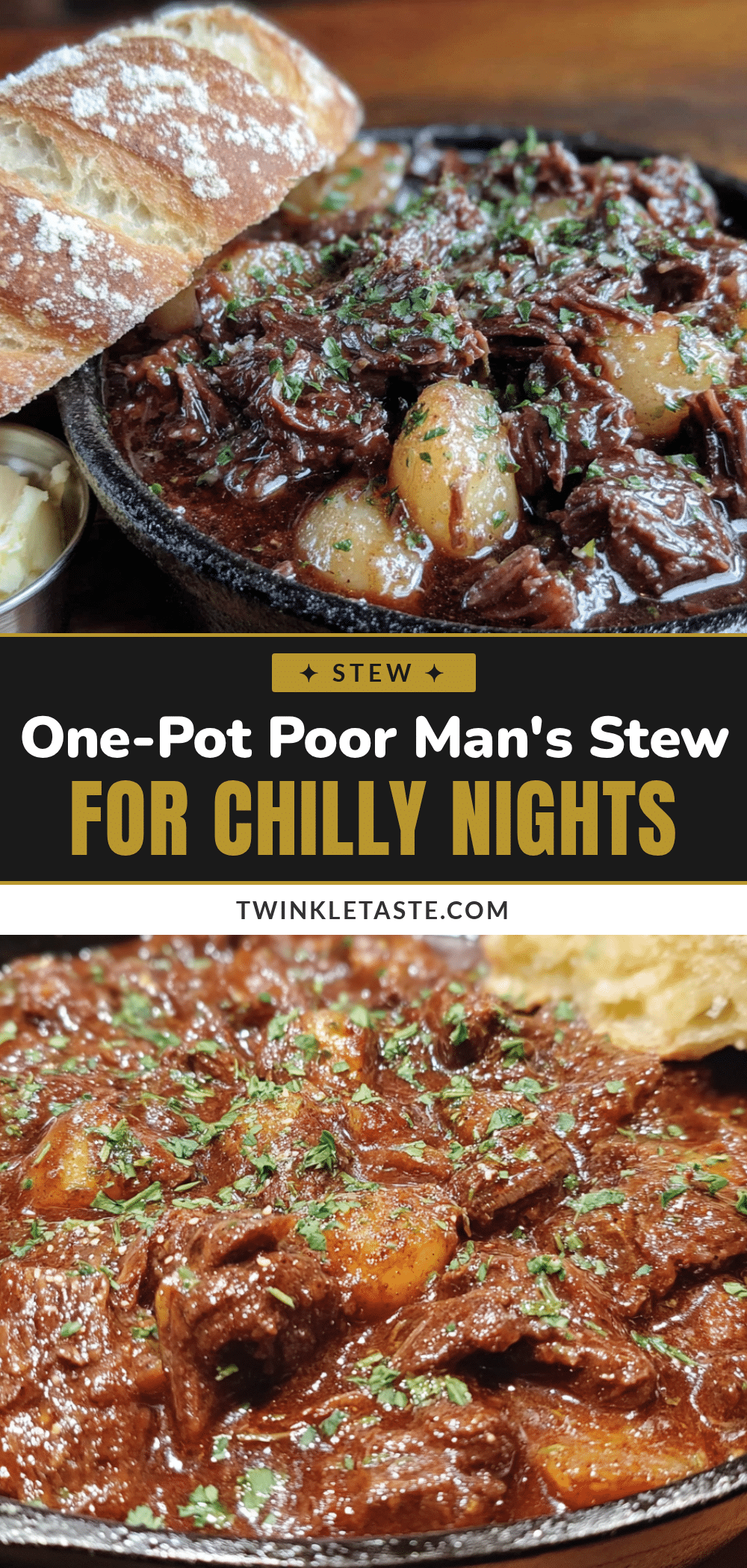
Cozy One-Pot Poor Man’s Stew for Chilly Nights

A humble, budget-friendly stew made with ground beef, potatoes, carrots, and corn in a rich, savory broth. Perfect for chilly nights, this one-pot meal is deeply satisfying and easy to make.
- Prep Time: 15 minutes
- Cook Time: 45 minutes
- Total Time: 1 hour
- Yield: 6 servings 1x
- Category: Main Course
- Cuisine: American
Ingredients
- 1 lb ground beef (80/20)
- 1 large yellow onion, diced
- 3 cloves garlic, minced
- 3 medium carrots, peeled and sliced into ½-inch rounds
- 2 stalks celery, diced
- 3–4 medium Yukon Gold or Russet potatoes, peeled and cubed into 1-inch pieces
- 3 tablespoons tomato paste
- 4 cups beef broth (low-sodium recommended)
- 1 cup frozen corn
- ½ cup frozen peas
- 1 teaspoon dried thyme
- 1 bay leaf
- Salt and black pepper to taste
- 2 tablespoons olive oil
- 1 tablespoon Worcestershire sauce (optional but recommended)
Instructions
- Prep your veggies: dice the onion, mince the garlic, peel and slice the carrots into ½-inch rounds, dice the celery, and peel and cube the potatoes into 1-inch pieces.
- Heat 1 tablespoon of olive oil in a large Dutch oven over medium-high heat. Add the ground beef and cook, breaking it up with a wooden spoon, until browned all over (6-8 minutes). Transfer beef to a plate with a slotted spoon, leaving fat and drippings in the pot.
- Reduce heat to medium. Add remaining 1 tablespoon olive oil to the pot. Add diced onion, carrots, and celery. Cook, stirring occasionally, until onion is translucent and carrots have softened (5-7 minutes). Add minced garlic and cook for 30 seconds until fragrant.
- Push veggies to the sides of the pot and add tomato paste to the center. Let it sizzle for 30 seconds, then stir into vegetables. Cook for 1-2 minutes, stirring constantly, until tomato paste darkens.
- Pour in about ½ cup of beef broth and scrape up any browned bits from the bottom of the pot (deglaze).
- Return browned beef to the pot. Add cubed potatoes, remaining beef broth, Worcestershire sauce (if using), dried thyme, and bay leaf. Stir to combine. Bring to a gentle boil, then reduce heat to low, cover, and simmer for 30 minutes.
- After 30 minutes, remove lid and stir in frozen corn. Simmer uncovered for 10-15 minutes, until potatoes are tender and broth has thickened slightly.
- Stir in frozen peas and let warm through for 2-3 minutes. Remove bay leaf and discard.
- Taste and adjust seasoning with salt and black pepper as needed.
- Ladle into deep bowls and serve hot. Optionally garnish with fresh parsley and serve with crusty bread.
Notes
This stew tastes even better the next day as flavors meld. For a thicker broth, mash some potato chunks against the pot. Use low-sodium broth to control salt. The recipe is naturally gluten-free; check broth and Worcestershire sauce labels if needed.
Nutrition
- Serving Size: 1 serving (about 1.5
- Calories: 380
- Sugar: 8
- Sodium: 680
- Fat: 15
- Saturated Fat: 5
- Carbohydrates: 32
- Fiber: 5
- Protein: 28
Keywords: poor man's stew, one-pot stew, ground beef stew, budget-friendly stew, cozy stew, chilly night dinner, easy stew recipe