That first deep breath of sage leaves hitting hot olive oil — the kind that curls up from the pan before you’ve even taken your coat off — still takes me straight to my friend’s tiny apartment kitchen in early November a few years back. It was one of those evenings where the sky started getting dark at four-thirty, and all you wanted was something warm that took its time. She was stirring this pot of rice, not rushing, just adding broth ladle by ladle, and the whole place smelled like earth and butter and something almost sweet. I didn’t know then that I was watching the birth of my favorite fall dish.
I’d always thought risotto was one of those restaurant-only things, you know? Something you order when you want to feel fancy, not something you attempt on a Tuesday. But that night changed my mind. The butternut squash was already roasted — soft and caramelized at the edges — and she folded it in at the very end like it was the most natural thing in the world. I remember asking her if it was hard, and she just laughed and said, “It’s just rice and patience.” Honestly? She wasn’t wrong.
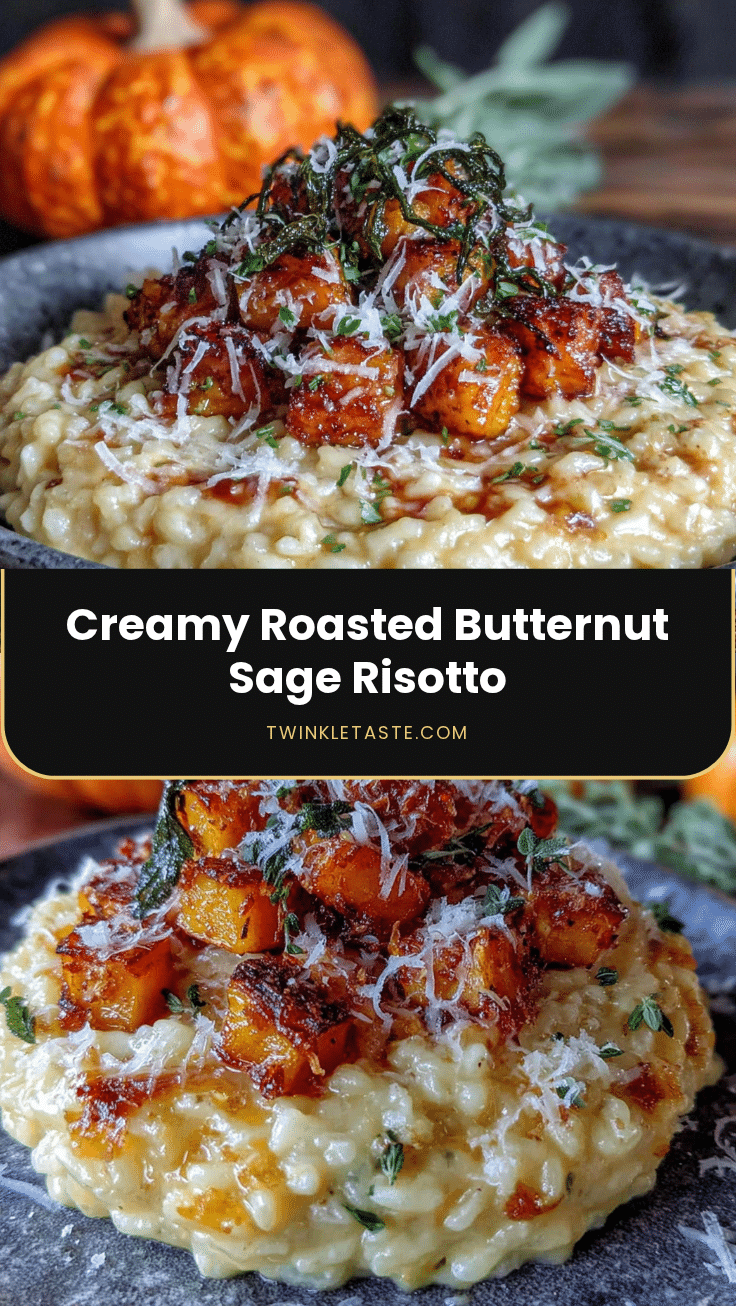
This creamy roasted butternut squash and sage risotto has become my go-to when I want to slow down. It’s the kind of meal that forces you to stand at the stove for a bit, which sounds like a chore until you realize how good it feels to just stir and breathe. The squash gets all jammy and sweet from roasting, the sage gets crispy and fragrant, and the rice turns into this velvety, almost cloud-like situation. It’s comfort food that doesn’t rush you. And honestly? That’s exactly what fall cooking should be.
So if you’ve never made risotto before, or if you’ve tried and ended up with something gluey and sad, stick with me. This version is forgiving, full of flavor, and feels way more special than the effort it actually takes.
Why You’ll Love This Recipe
Let me tell you why this particular butternut squash sage risotto has earned a permanent spot in my fall rotation. It’s not just because it’s delicious — though it absolutely is — but because it solves a bunch of problems at once.
- Restaurant-Quality at Home : There’s something deeply satisfying about making a dish that tastes like it came from a cozy Italian trattoria, right in your own kitchen. The texture is luxuriously creamy without any heavy cream — it’s all about the starch from the rice and the velvety squash.
- Simple, Whole Ingredients : No weird processed stuff here. Just butternut squash, arborio rice, fresh sage, good broth, and a few pantry staples. You probably have most of this already, minus the squash and maybe the sage.
- Perfect for Cozy Nights : This is the ultimate “let’s stay in and cook together” meal. It’s great for a date night, a quiet dinner with friends, or even just a solo evening where you want to treat yourself to something special.
- Naturally Vegetarian and Gluten-Free : As written, this recipe is vegetarian and uses vegetable broth. It’s also naturally gluten-free, so it works for a lot of different diets without any complicated swaps.
- That Sage-Squash Combo : The earthy, slightly peppery sage against the sweet, nutty roasted squash is honestly one of the best flavor pairings in fall cooking. It’s a match made in seasonal heaven.
I’ve made this for picky eaters, for friends who “don’t like squash,” and for my mom who usually prefers meat-and-potatoes meals. Every single time, people go back for seconds. There’s just something about that creamy texture and those crispy sage leaves that gets everyone.
What Ingredients You Will Need
This recipe uses simple, wholesome ingredients that work together to create something truly special. Most of these are easy to find at any grocery store, especially during fall and winter.
For the Roasted Squash
- 1 medium butternut squash (about 2-2.5 pounds) — Peeled, seeded, and cut into 1/2-inch cubes. Look for one that feels heavy for its size with a matte, not shiny, skin. That means it’s ripe and sweet.
- 2 tablespoons olive oil — A good quality extra virgin olive oil makes a difference here. It helps the squash caramelize beautifully.
- 1/2 teaspoon salt — I use fine sea salt for roasting. It distributes more evenly.
- 1/4 teaspoon black pepper — Freshly ground, always.
For the Risotto

- 1 1/2 cups arborio rice — This is the classic risotto rice. Its high starch content is what gives you that signature creamy texture. Don’t substitute with regular long-grain rice; it won’t work the same way. Carnaroli or vialone nano are good substitutes if you can find them.
- 4 cups vegetable broth (or chicken broth) — Warm the broth before you start adding it to the rice. Cold broth will shock the rice and mess with the cooking time. I prefer homemade or a good quality low-sodium store-bought broth.
- 1 cup dry white wine — Something you’d actually drink, like a pinot grigio or sauvignon blanc. The wine adds acidity that balances the richness. No wine? Use an extra cup of broth with a tablespoon of lemon juice.
- 1 small yellow onion (about 1 cup diced) — Finely diced. The smaller the pieces, the more they’ll melt into the rice.
- 3 cloves garlic — Minced. Fresh garlic is non-negotiable here. Don’t use the jarred stuff.
- 4 tablespoons unsalted butter — Divided. Two tablespoons for cooking the onions and rice, and two to stir in at the very end for that glossy finish.
- 1/2 cup freshly grated Parmesan cheese — Please, please grate your own. The pre-shredded stuff has anti-caking agents that prevent it from melting smoothly. Pecorino Romano works too for a saltier kick.
- 1/2 teaspoon salt — Plus more to taste. Remember your broth and cheese add salt too.
- 1/4 teaspoon black pepper
For the Crispy Sage
- 15-20 fresh sage leaves — Look for leaves that are vibrant green and not wilted. The fresher they are, the crispier they’ll get.
- 2 tablespoons olive oil or butter — For frying the sage.
Equipment Needed
You don’t need a ton of fancy equipment for this one, which is part of the beauty. Here’s what you’ll want to have on hand:
- Large, heavy-bottomed pot or Dutch oven — This is crucial. A heavy pot distributes heat evenly and prevents the rice from scorching. I use my 5.5-quart Le Creuset Dutch oven and it works perfectly. A stainless steel pot with a thick bottom is fine too.
- Baking sheet — For roasting the squash. A rimmed baking sheet is best so nothing slides off.
- Medium saucepan — For warming the broth.
- Wooden spoon or silicone spatula — For stirring. You want something sturdy that won’t scratch your pot.
- Small skillet — For frying the sage leaves.
- Chef’s knife and cutting board — For all that chopping. A sharp knife makes the squash prep so much easier.
- Vegetable peeler — For peeling the butternut squash. A Y-peeler works great for this.
- Ladle — For adding the broth to the rice. A 1/2-cup ladle is ideal.
If you don’t have a Dutch oven, don’t worry. A deep, heavy skillet or a large soup pot will work. Just keep an eye on the heat and stir a little more often to prevent sticking.
Preparation Method
Alright, let’s get cooking. This might look like a lot of steps, but I promise it flows really nicely once you get going. Put on some music or a podcast — this is a stirring kind of meal.
Step 1: Roast the Squash
Preheat your oven to 400°F (200°C). While it’s heating up, peel your butternut squash. I find it easiest to cut off the top and bottom first, then stand it upright and slice down with a sharp vegetable peeler. Cut the squash in half lengthwise, scoop out the seeds with a spoon, and cut the flesh into even 1/2-inch cubes. Try to make them roughly the same size so they cook evenly.
Toss the cubes with 2 tablespoons olive oil, 1/2 teaspoon salt, and 1/4 teaspoon pepper. Spread them in a single layer on your baking sheet — don’t overcrowd or they’ll steam instead of roast. Roast for 25-30 minutes, flipping halfway through, until the squash is tender and the edges are golden brown and caramelized. Set aside about 1 cup of the squash for stirring into the risotto later. You can mash the rest with a fork or blend it with a splash of broth for an extra creamy finish — I like to do this because it makes the risotto even richer.
Step 2: Warm the Broth
While the squash roasts, pour your 4 cups of broth into a medium saucepan and warm it over low heat. You want it hot but not boiling. Having warm broth ready to go is the single biggest tip I can give you for successful risotto. Cold broth stops the cooking process every time you add it, and that leads to unevenly cooked rice.
Step 3: Start the Risotto Base
In your large pot or Dutch oven, melt 2 tablespoons of butter over medium heat. Add the finely diced onion and cook, stirring occasionally, for about 4-5 minutes until it’s soft and translucent. Don’t let it brown — you want it sweet, not caramelized. Add the minced garlic and cook for another 30 seconds until it smells amazing.
Step 4: Toast the Rice
Add the 1 1/2 cups of arborio rice to the pot and stir it around for about 2 minutes. You’ll notice the grains start to look a little translucent at the edges. This toasting step is important — it helps the rice hold its shape during the long cooking process and gives it a slightly nutty flavor.
Step 5: Add the Wine
Pour in the 1 cup of white wine and stir. It will sizzle and smell incredible. Let it cook, stirring constantly, until the wine is mostly absorbed. This usually takes about 2-3 minutes. The alcohol cooks off, leaving behind acidity that balances the richness of the dish.
Step 6: The Ladle Game
Now comes the part everyone talks about. Add your warm broth one ladleful (about 1/2 cup) at a time, stirring frequently. Wait until each addition is mostly absorbed before adding the next. This whole process takes about 18-22 minutes. You don’t have to stir constantly — every 30 seconds or so is fine — but don’t walk away for too long.
You’re looking for the rice to be tender but still with a slight bite in the center (al dente). The mixture should be creamy and flow slowly when you tilt the pot. You might not use all the broth, and that’s okay. Stop when the rice is where you want it.
Step 7: Finish the Risotto
Once the rice is perfectly al dente, remove the pot from the heat. Stir in the reserved roasted squash cubes, the mashed squash (if using), the remaining 2 tablespoons of butter, and the 1/2 cup of grated Parmesan. Stir vigorously for about a minute — this extra stirring is what gives risotto that iconic creamy texture. Taste and adjust salt and pepper. Remember the Parmesan adds salt, so go easy at first.
Step 8: Make the Crispy Sage
While the risotto rests, heat 2 tablespoons of olive oil or butter in a small skillet over medium heat. Once it’s shimmering, add the sage leaves in a single layer. They’ll fry for about 10-15 seconds per side — they should turn bright green and crisp up quickly. Don’t walk away; they burn in seconds. Transfer them to a paper towel-lined plate to drain.
Cooking Tips & Techniques
I’ve made this butternut squash sage risotto at least a dozen times, and I’ve definitely learned a few things the hard way. Here are my best tips so you don’t have to make the same mistakes I did.
Don’t rinse the rice. I know, it sounds weird if you’re used to rinsing rice for other dishes. But for risotto, you want all that surface starch to stay on the grains. That starch is what creates the creamy texture. Rinsing it off will give you sad, separate grains.
Low and slow is the way to go. Keep your heat at a gentle simmer, not a rolling boil. If the broth is bubbling aggressively, the rice will cook too quickly on the outside and stay hard in the center. You want a steady, gentle bubble. If you’re unsure, err on the side of lower heat.
The squash game. I used to just stir all the roasted squash into the risotto at the end, but I found it kind of disappeared. Now I set aside some nice cubes for texture and mash the rest. That way you get both the creamy squash flavor throughout and little pockets of sweet, caramelized squash in every bite. It’s a game-changer.
Trust your senses. Recipes give you time estimates, but your eyes, nose, and taste buds are better guides. The rice should look creamy, smell nutty and savory, and taste tender with a slight resistance. When you drag your spoon through the risotto, it should slowly flow back together — not hold its shape like mashed potatoes, but not be soupy either.
Rest it. Let the risotto sit off the heat for a minute or two before serving. This lets everything settle and the texture relaxes into something even creamier. It’s worth the wait.
Variations & Adaptations
One of the best things about this recipe is how flexible it is. Here are some ways to make it your own.
Make it vegan. Swap the butter for a good quality vegan butter or olive oil, use a vegan Parmesan (or nutritional yeast for a cheesy flavor), and make sure your broth is vegetable-based. It won’t be exactly the same, but it’ll still be deliciously creamy.
Add some protein. This risotto is fantastic on its own, but if you want to bulk it up, try topping it with some crispy prosciutto, sautéed mushrooms, or even leftover shredded rotisserie chicken. I’ve also stirred in some cooked Italian sausage before and it was incredible. For a lighter option, flaked honey garlic salmon on top adds a lovely sweet-savory contrast.
Switch up the squash. No butternut squash? No problem. Roasted pumpkin, delicata squash, or even sweet potatoes work beautifully here. Just adjust the roasting time based on your chosen vegetable.
Try different herbs. While sage is classic, this risotto is also amazing with fresh thyme, rosemary, or even a little bit of fresh basil stirred in at the end. I once made it with a handful of chopped fresh parsley and lemon zest, and it was bright and wonderful.
Go seasonal. In the summer, swap the squash for roasted cherry tomatoes and fresh corn. In the winter, try roasted Brussels sprouts or caramelized mushrooms. This risotto is really a template for whatever looks good at the market.
Serving & Storage Suggestions
This risotto is best served immediately while it’s hot and creamy. Spoon it into warm bowls — warming the bowls in a low oven or with hot water helps keep the risotto hot longer. Top each serving with a few crispy sage leaves and an extra shower of Parmesan cheese. A drizzle of good olive oil or a pat of butter on top right before serving is never a bad idea.
For sides, this risotto is rich enough to be a main dish, but it also pairs beautifully with a simple green salad dressed with lemon vinaigrette. The acidity cuts through the creaminess perfectly. You could also serve it alongside crispy sheet pan chicken thighs or a piece of simply grilled fish.
Storage: Leftover risotto will keep in the refrigerator for up to 3 days in an airtight container. It will firm up quite a bit as it cools — that’s normal. To reheat, add a splash of broth or water and warm it gently in a pot over low heat, stirring frequently. You can also microwave it in 30-second bursts, stirring in between. The texture won’t be quite as perfect as day one, but it’s still delicious.
Freezer: Risotto freezes surprisingly well. Let it cool completely, then transfer to a freezer-safe container. It will keep for up to 3 months. Thaw in the refrigerator overnight and reheat gently with a little extra liquid.
One thing I love about this dish is that the flavors actually deepen overnight. The sage and squash get even more cozy and integrated. So if you have leftovers, consider yourself lucky.
Nutritional Information & Benefits
While I wouldn’t call risotto a health food, this version is packed with wholesome ingredients that offer some real nutritional perks.
Butternut squash is a star here. It’s loaded with vitamin A (from beta-carotene), vitamin C, and fiber. It’s also naturally sweet, which helps satisfy cravings without loads of added sugar. Sage isn’t just for flavor — it’s been used for centuries in traditional medicine and is rich in antioxidants and anti-inflammatory compounds. Arborio rice provides energy in the form of complex carbohydrates, and the Parmesan adds a good dose of calcium and protein.
Here’s an approximate breakdown per serving (based on 6 servings):
- Calories: 420-480
- Fat: 18-22g
- Carbohydrates: 55-60g
- Fiber: 5-7g
- Protein: 10-12g
Dietary notes: This recipe is naturally vegetarian and gluten-free. To make it vegan, see the variations section above. It contains dairy from butter and Parmesan. For a lower-calorie version, you can reduce the butter and cheese slightly, but honestly, this dish is about indulgence. I say enjoy it as-is and pair it with a big green salad.
Conclusion
This creamy roasted butternut squash and sage risotto is more than just a recipe — it’s a little ritual. It’s the kind of meal that asks you to slow down, to pay attention, to stir and taste and adjust. And in a world that’s always rushing, that feels like a gift.
I love that this dish starts with a humble squash and a bag of rice and turns into something that feels genuinely special. It’s fancy enough for company but easy enough for a Tuesday night when you need a little comfort. The sweet, caramelized squash, the earthy sage, the creamy, almost velvety rice — it all comes together in a way that just makes sense.
I’d love to hear how yours turns out. Did you add mushrooms? Use a different squash? Forget to warm the broth and panic a little? (Been there.) Drop a comment below and let me know. And if you loved it, share it with a friend who needs a little fall comfort in their life. Happy cooking!
Frequently Asked Questions
Can I make this risotto ahead of time?
Risotto is best enjoyed fresh, but you can absolutely make it ahead. Cook it until it’s about 2 minutes shy of done, then spread it on a baking sheet to cool quickly. When you’re ready to serve, reheat it with a little extra broth, stirring until it’s hot and creamy again.
Do I have to use wine?
Not at all. If you prefer not to cook with wine, simply replace it with an equal amount of warm broth and add a squeeze of lemon juice at the end for acidity. The flavor will be slightly different but still delicious.
Can I use frozen butternut squash?
You can, but I don’t recommend it for this recipe. Frozen squash releases a lot of water as it thaws, which can make your risotto watery instead of creamy. If you’re in a pinch, thaw and drain the squash well, then pat it dry before roasting.
Why is my risotto gluey?
Gluey risotto usually means one of two things: you stirred too aggressively (which breaks the grains) or you cooked it too long. Next time, stir gently and stop cooking when the rice is al dente — tender but with a slight bite in the center.
How do I know when the risotto is done?
Taste it! The rice should be tender but still have a tiny bit of resistance in the center — like perfectly cooked pasta. Visually, the risotto should be creamy and flow slowly when you tilt the pot. If it holds its shape like mashed potatoes, it needs more broth. If it’s soupy, you’ve added too much liquid.
Pin This Recipe!
Creamy Butternut Squash Sage Risotto: Easy Fall Dinner

A creamy, comforting risotto featuring roasted butternut squash and crispy sage. This easy fall dinner is naturally vegetarian and gluten-free, perfect for cozy nights in.
- Prep Time: 20 minutes
- Cook Time: 40 minutes
- Total Time: 60 minutes
- Yield: 6 servings 1x
- Category: Main Course
- Cuisine: Italian
Ingredients
- 1 medium butternut squash (about 2–2.5 pounds), peeled, seeded, and cut into 1/2-inch cubes
- 2 tablespoons olive oil
- 1/2 teaspoon salt
- 1/4 teaspoon black pepper
- 1 1/2 cups arborio rice
- 4 cups vegetable broth (or chicken broth), warmed
- 1 cup dry white wine (e.g., pinot grigio or sauvignon blanc)
- 1 small yellow onion (about 1 cup), finely diced
- 3 cloves garlic, minced
- 4 tablespoons unsalted butter, divided
- 1/2 cup freshly grated Parmesan cheese
- 1/2 teaspoon salt
- 1/4 teaspoon black pepper
- 15–20 fresh sage leaves
- 2 tablespoons olive oil or butter (for frying sage)
Instructions
- Preheat oven to 400°F (200°C). Peel butternut squash, cut in half lengthwise, scoop out seeds, and cut into 1/2-inch cubes.
- Toss squash cubes with 2 tablespoons olive oil, 1/2 teaspoon salt, and 1/4 teaspoon pepper. Spread in a single layer on a baking sheet. Roast for 25-30 minutes, flipping halfway, until tender and golden brown. Set aside 1 cup of cubes; mash the rest with a fork or blend with a splash of broth.
- Warm 4 cups of broth in a medium saucepan over low heat. Keep hot but not boiling.
- In a large pot or Dutch oven, melt 2 tablespoons butter over medium heat. Add diced onion and cook 4-5 minutes until soft and translucent. Add minced garlic and cook 30 seconds.
- Add arborio rice and stir for 2 minutes until grains are translucent at the edges.
- Pour in white wine and stir until mostly absorbed, about 2-3 minutes.
- Add warm broth one ladleful (about 1/2 cup) at a time, stirring frequently. Wait until each addition is mostly absorbed before adding the next. Continue for 18-22 minutes until rice is tender but al dente and mixture is creamy.
- Remove pot from heat. Stir in reserved roasted squash cubes, mashed squash, remaining 2 tablespoons butter, and 1/2 cup Parmesan. Stir vigorously for 1 minute. Season with salt and pepper to taste.
- While risotto rests, heat 2 tablespoons olive oil or butter in a small skillet over medium heat. Add sage leaves in a single layer and fry for 10-15 seconds per side until bright green and crisp. Transfer to paper towels to drain.
- Serve risotto warm, topped with crispy sage leaves and extra Parmesan.
Notes
Don’t rinse the rice; the starch is essential for creaminess. Keep heat at a gentle simmer. Let risotto rest 1-2 minutes before serving. For vegan option, use vegan butter and Parmesan or nutritional yeast. Leftovers keep up to 3 days in the fridge or 3 months in the freezer.
Nutrition
- Serving Size: 1 serving (about 1.5
- Calories: 450
- Sugar: 8
- Sodium: 800
- Fat: 20
- Saturated Fat: 8
- Carbohydrates: 58
- Fiber: 6
- Protein: 11
Keywords: butternut squash risotto, sage risotto, fall dinner, vegetarian risotto, gluten-free risotto, creamy risotto, easy risotto