I had been looking for a weeknight pork dinner that actually tasted like something you’d order at a restaurant, not something you resigned yourself to eating on a Tuesday. For a while, I just accepted that pork tenderloin was either going to be dry or bland, or sometimes both at the same time—which is honestly worse. It felt like the kind of meat that demanded a marinade and a thermometer and a prayer, and I was tired of the whole production.
The maple glaze happened by accident, the way most good things do in my kitchen. I was making pancakes one Saturday and had a little too much real maple syrup left in the measuring cup. I poured it over a pork tenderloin I had sitting in the fridge, figuring it couldn’t hurt, and threw some vegetables on the same pan because I didn’t want to wash another dish. The smell that filled my kitchen was the kind that makes neighbors text you asking what you’re cooking.
That first bite was quiet. Not dramatic. Just quiet, the way food tastes when everything finally clicks. The pork was tender—like, actually tender—and the maple had caramelized into something that felt almost fancy, even though it came from a pancake breakfast. The roasted vegetables soaked up the juices and turned sweet and salty in a way that made me wonder why I’d ever cooked them separately.
This recipe stuck because it’s honest. It doesn’t need a complicated spice rub or a two-hour marinade. It just needs good ingredients and a hot oven. And honestly, that’s the kind of cooking I want to do more of.
Why You’ll Love This Recipe
This easy maple glazed pork tenderloin with roasted vegetables has become my go-to for nights when I want to feel like I’ve accomplished something in the kitchen without actually spending hours there. It’s one of those rare recipes that looks impressive but asks very little of you.
- Quick & Easy : Comes together in under 45 minutes from start to finish, with only about 10 minutes of active prep time. Perfect for busy weeknights when you still want a real dinner.
- Simple Ingredients : No fancy grocery trips needed. You likely have maple syrup, mustard, and garlic in your kitchen right now. The vegetables are flexible too—use whatever you have in the crisper drawer.
- Perfect for Company : This is the kind of dish that makes people think you worked harder than you did. Great for Sunday dinners, holiday meals, or when you’re trying to impress someone without breaking a sweat.
- One Pan Wonder : Everything cooks on a single sheet pan, which means minimal cleanup. Your future self will thank you when there’s only one pan to wash.
- Unbelievably Delicious : The maple glaze caramelizes into a sticky, sweet-savory coating that locks in moisture. The pork stays juicy, the vegetables get crispy edges, and the whole thing tastes like comfort food that’s secretly healthy.
What makes this recipe different from the rest is the balance. The maple syrup isn’t just for sweetness—it helps create a crust that seals in the juices while the pork roasts. The Dijon mustard cuts through the sweetness with just enough tang, and the garlic adds depth without overpowering anything. It’s simple, but it’s smart.
This isn’t just good for a weeknight dinner. It’s the kind of meal that makes you slow down and actually taste what you’re eating. The kind where you look at the empty plate and feel a little proud of yourself for making something that good with so little effort.
What Ingredients You Will Need
This recipe uses simple, wholesome ingredients to deliver bold flavor and satisfying texture without the fuss. Most of these are pantry staples, which is exactly what you want on a busy night.
For the Pork Tenderloin
- 1 pork tenderloin (about 1 to 1.5 pounds) — Look for one that’s uniform in thickness so it cooks evenly. I usually grab mine from the butcher counter rather than the pre-packaged ones, but both work fine.
- 1/3 cup pure maple syrup — Please use real maple syrup, not pancake syrup. The real stuff has a deeper flavor and caramelizes better. Grade A dark amber is my preference here.
- 2 tablespoons Dijon mustard — Adds a subtle tang that balances the sweetness. Whole grain mustard works too if you want a little texture.
- 2 cloves garlic, minced — Fresh garlic is non-negotiable here. The jarred stuff won’t give you the same punch.
- 1 tablespoon olive oil — Helps the glaze spread evenly and aids in browning.
- 1 teaspoon salt — I use kosher salt. If you’re using table salt, reduce to 3/4 teaspoon.
- 1/2 teaspoon black pepper — Freshly ground if you have it.
- 1/2 teaspoon dried thyme — Adds an earthy note that pairs beautifully with maple. Rosemary works too if that’s what you have.
For the Roasted Vegetables
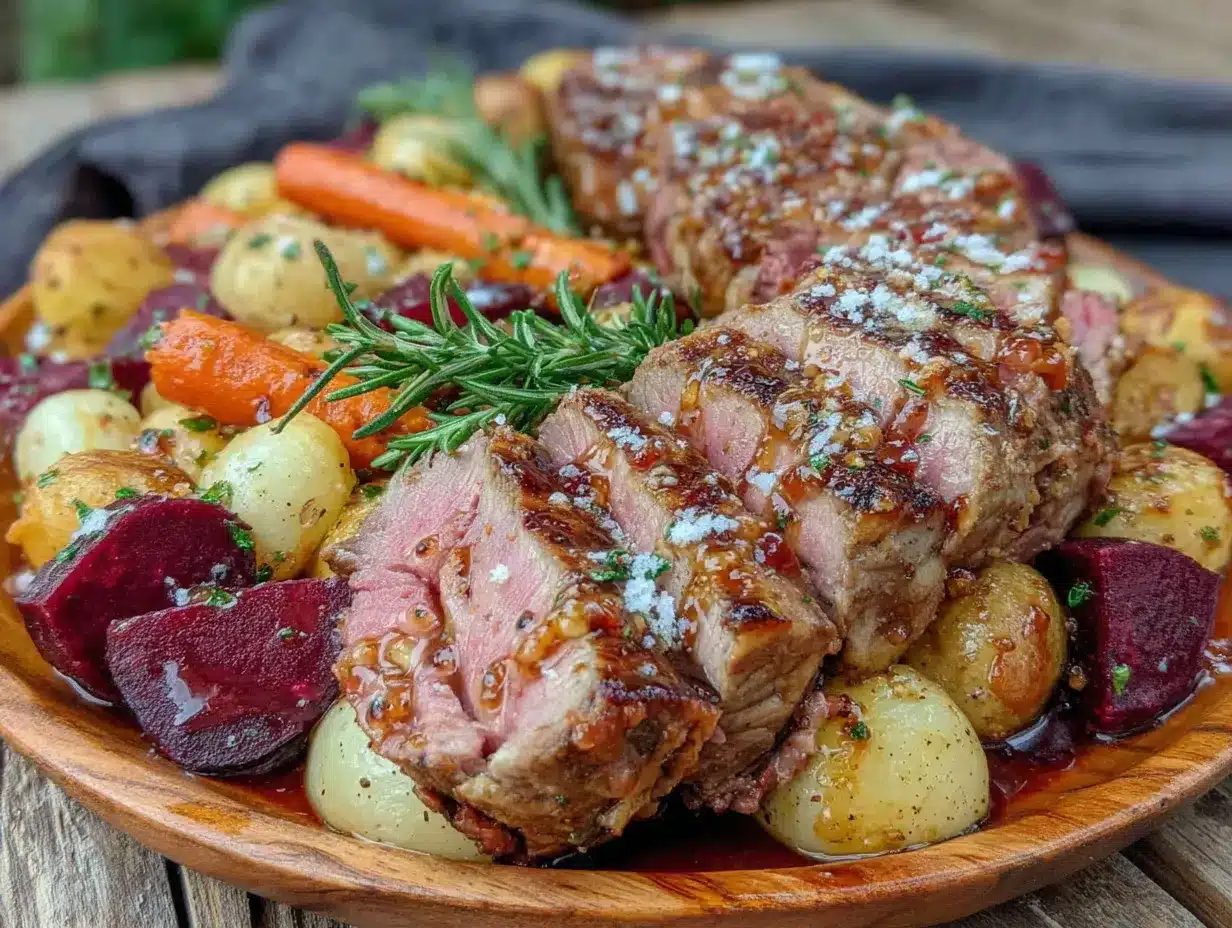
- 2 cups Brussels sprouts, halved — Look for ones that are similar in size so they roast evenly. If they’re huge, quarter them instead.
- 2 cups butternut squash, cubed (about 1-inch pieces) — Pre-cut squash from the store is totally fine here. I use it all the time when I’m in a hurry.
- 1 red onion, cut into wedges — The sweetness of roasted onion is a perfect match for the maple glaze.
- 2 tablespoons olive oil — Toss the vegetables in this before roasting.
- 1/2 teaspoon salt
- 1/4 teaspoon black pepper
- Optional: fresh rosemary or thyme sprigs for garnish
I recommend using real maple syrup from a trusted brand like Maple Grove Farms or Coombs Family Farms for the best flavor. For the vegetables, feel free to swap in whatever you have—carrots, sweet potatoes, or even broccoli work beautifully here. In summer, I’ve used zucchini and bell peppers with great results.
Equipment Needed
You don’t need a lot of fancy equipment for this one, which is part of the appeal. Here’s what you’ll need:
- Large sheet pan or rimmed baking sheet — A half-sheet pan (18×13 inches) works perfectly. Make sure it has a rim to catch any juices. I’ve used my Nordic Ware sheet pan for years and it still looks great.
- Parchment paper or aluminum foil — Lining the pan makes cleanup even easier. I prefer parchment because it doesn’t stick as much.
- Small bowl — For mixing the glaze.
- Chef’s knife and cutting board — For prepping the vegetables and trimming the pork.
- Meat thermometer — This is the one tool I really recommend. Pork tenderloin is lean and can go from perfect to dry in minutes. A thermometer takes the guesswork out. The ThermoPro instant-read is budget-friendly and accurate.
- Basting brush (optional) — Helpful for applying the glaze, but you can also just use a spoon.
If you don’t have a meat thermometer, you can check doneness by cutting into the thickest part of the tenderloin. It should be slightly pink in the center and the juices should run clear. But honestly, the thermometer is worth the investment for peace of mind.
Preparation Method
Let me walk you through this step by step. The key to this recipe is timing—getting the vegetables started first since they take a little longer than the pork.
- Preheat your oven to 400°F (200°C). Position a rack in the middle of the oven. Line your sheet pan with parchment paper or foil for easy cleanup.
- Prep the vegetables. In a large bowl, toss the Brussels sprouts, butternut squash, and red onion wedges with 2 tablespoons olive oil, 1/2 teaspoon salt, and 1/4 teaspoon pepper. Spread them out on one half of the prepared sheet pan. Don’t overcrowd them—they need space to roast, not steam. If they’re crowded, use two pans.
- Start the vegetables roasting. Place the pan in the oven and roast the vegetables for 15 minutes while you prepare the pork. This head start ensures everything finishes at the same time.
- Prepare the pork tenderloin. While the vegetables roast, pat the pork tenderloin dry with paper towels. This helps the glaze stick and promotes browning. Trim off any silver skin or excess fat. Season the pork all over with 1 teaspoon salt, 1/2 teaspoon pepper, and the dried thyme.
- Make the maple glaze. In a small bowl, whisk together the maple syrup, Dijon mustard, minced garlic, and 1 tablespoon olive oil until smooth. The mixture should be thick but pourable. Taste it—you want a balance of sweet and tangy. If it’s too sweet for your liking, add another half teaspoon of mustard.
- Glaze the pork. Place the seasoned pork tenderloin in the bowl with the glaze and turn to coat it evenly. Let it sit for about 5 minutes while the vegetables finish their head start. This isn’t a long marinade, but it’s enough time for the flavors to start penetrating.
- Add the pork to the pan. After the vegetables have roasted for 15 minutes, remove the pan from the oven. Push the vegetables to one side and place the glazed pork tenderloin on the other side. Pour any remaining glaze from the bowl over the pork.
- Roast everything together. Return the pan to the oven and roast for 20-25 minutes, or until the internal temperature of the pork reaches 140°F (60°C) for medium, or 145°F (63°C) for medium-well. The vegetables should be tender and caramelized. About halfway through, you can brush the pork with any pan juices if you want extra glaze on top.
- Rest the pork. This step is crucial. Remove the pan from the oven and transfer the pork tenderloin to a cutting board. Tent it loosely with foil and let it rest for 5-10 minutes. The temperature will continue to rise by about 5 degrees during resting, and the juices will redistribute throughout the meat. If you skip this step, you’ll lose all those beautiful juices when you slice it.
- Slice and serve. Slice the pork into 1/2-inch thick medallions. Arrange them on a platter with the roasted vegetables. Drizzle any accumulated juices from the cutting board over the top. Garnish with fresh rosemary or thyme sprigs if you’re feeling fancy.
Pro tip: The vegetables should be golden brown and slightly crispy on the edges when done. If they need more time after the pork is cooked, you can remove the pork to rest and return the vegetables to the oven for another 5-10 minutes while the pork rests.
Cooking Tips & Techniques
I’ve made this recipe more times than I can count, and I’ve learned a few things along the way. Here are the tips that make the biggest difference:
Don’t skip patting the pork dry. I know it seems like a small step, but moisture is the enemy of browning. If the pork is wet, the glaze will slide right off and you’ll end up with pale, sad meat. Take the extra 30 seconds to dry it thoroughly.
Let the pork come to room temperature. Take it out of the fridge about 20 minutes before you start cooking. A cold tenderloin cooks unevenly—the outside will be done while the inside is still raw. Room temperature meat cooks more evenly and stays juicier.
Watch the sugar content in the glaze. Maple syrup is sugar, and sugar burns. If your oven runs hot or you’re using a dark pan, check the pork at 18 minutes instead of 20. I’ve had a few batches where the glaze got a little too dark on the edges. It still tasted good, but it wasn’t pretty.
Use a meat thermometer. I cannot stress this enough. Pork tenderloin is one of those cuts that goes from perfect to dry in about 90 seconds. The difference between 140°F and 150°F is the difference between juicy and leather. Spend the $15 on a good thermometer.
Cut the vegetables uniformly. This is the number one mistake I see people make. If your squash pieces are twice the size of your Brussels sprouts, something’s going to burn while something else is still raw. Take the time to cut everything to roughly the same size.
Don’t overcrowd the pan. If everything is crammed together, the vegetables will steam instead of roast. You want caramelization, not mushy vegetables. If you’re doubling the recipe, use two pans.
Rest the pork. I know I already said this, but it’s worth repeating. The resting period allows the juices to redistribute. If you slice it immediately, all those delicious juices will end up on the cutting board instead of in your mouth.
Variations & Adaptations
This recipe is flexible, and I’ve tried several variations over the years. Here are some of my favorites:
Dietary Adaptations: To make this recipe gluten-free, simply ensure your Dijon mustard is certified gluten-free (most are). The recipe is naturally dairy-free as written. For a lower sugar option, you can reduce the maple syrup to 1/4 cup and add an extra tablespoon of mustard for flavor.
Seasonal Vegetable Swaps: This recipe shines with whatever vegetables are in season. In spring, try asparagus and baby carrots. In summer, zucchini, bell peppers, and cherry tomatoes are fantastic. Fall is perfect for the Brussels sprouts and squash combination I’ve written here. In winter, root vegetables like parsnips, turnips, and sweet potatoes work beautifully.
Flavor Variations: I’ve experimented with adding different herbs to the glaze. Fresh rosemary is my favorite substitution for thyme—it pairs beautifully with maple. You can also add a pinch of cayenne pepper or red pepper flakes to the glaze for a sweet-spicy kick. For a more savory version, add a tablespoon of soy sauce or tamari to the glaze.
Different Cooking Methods: This recipe works wonderfully on the grill. Preheat your grill to medium-high heat and cook the pork for about 15-20 minutes, turning occasionally, until it reaches 140°F. You can grill the vegetables in a grill basket or foil packet at the same time. In winter, I’ve also made this in a cast iron skillet on the stovetop, finishing it in the oven—similar timing, just a different vessel.
One personal variation I love: I sometimes add a tablespoon of bourbon to the maple glaze. It adds a smoky depth that’s incredible with the pork. Just be aware that the alcohol will cook off, so it’s safe for everyone. It’s become my go-to for dinner parties.
Serving & Storage Suggestions
This dish is best served fresh from the oven, but there are ways to make it work for leftovers too.
Serving: Slice the pork into medallions and arrange them on a warm platter surrounded by the roasted vegetables. Drizzle any pan juices over the top. I like to garnish with fresh herbs—rosemary or thyme sprigs add a nice touch. This dish pairs beautifully with a simple green salad dressed with a vinaigrette to cut through the sweetness. A side of crusty bread is also lovely for sopping up the juices.
Complementary dishes: For a complete meal, serve this alongside a fresh cowboy caviar with black beans and zesty lime dressing for a pop of freshness. Or start with a creamy smashed cucumber salad with sesame and chili crisp for a cool, crunchy contrast. If you want to keep it simple, mashed potatoes or roasted sweet potatoes are always a hit.
Storage: Store leftover pork and vegetables separately in airtight containers in the refrigerator for up to 3 days. The vegetables will soften over time, but the flavor actually gets better as it sits. The pork will dry out slightly upon reheating, so be gentle with it.
Reheating: The best way to reheat this is in a 350°F oven for about 10 minutes, covered loosely with foil to prevent drying. You can also reheat in a skillet over medium heat with a splash of water or broth to create steam. The microwave works in a pinch, but it will toughen the pork and make the vegetables mushy.
Freezing: You can freeze the cooked pork for up to 2 months. Wrap it tightly in plastic wrap and then foil. Thaw overnight in the refrigerator before reheating. I don’t recommend freezing the roasted vegetables—they become waterlogged and lose their texture.
Nutritional Information & Benefits
This recipe is surprisingly nutritious for how indulgent it tastes. Here’s a rough estimate per serving (based on 4 servings):
- Calories: Approximately 380-420
- Protein: 32-35g
- Fat: 14-16g
- Carbohydrates: 32-36g
- Fiber: 5-7g
- Sugar: 18-22g (mostly from maple syrup and natural sugars in vegetables)
Health Benefits: Pork tenderloin is one of the leanest cuts of pork, comparable to skinless chicken breast in terms of fat content. It’s an excellent source of high-quality protein, B vitamins (especially B6 and B12), and selenium. The Brussels sprouts and butternut squash are packed with fiber, vitamins A and C, and antioxidants. The maple syrup, while still sugar, contains some minerals like zinc and manganese that refined sugar doesn’t have.
Dietary Considerations: This recipe is naturally gluten-free and dairy-free. It’s also relatively low in saturated fat. If you’re watching your sugar intake, you can reduce the maple syrup by a tablespoon or two without sacrificing too much flavor.
Potential Allergens: This recipe is free of the top eight allergens (dairy, eggs, peanuts, tree nuts, fish, shellfish, soy, wheat) when using certified gluten-free mustard. Always check your ingredient labels if you have specific allergies.
I love that this recipe feels like comfort food but doesn’t leave me feeling heavy afterward. It’s the kind of meal that satisfies both the craving for something delicious and the desire to eat well.
Conclusion
This easy maple glazed pork tenderloin with roasted vegetables has become a staple in my kitchen for good reason. It’s simple enough for a Tuesday night but impressive enough for company. The maple glaze caramelizes into something magical, the pork stays juicy and tender, and the vegetables soak up all those sweet-savory juices. It’s one of those rare recipes that feels both effortless and special at the same time.
I love that this recipe invites experimentation. Swap the vegetables based on what’s in season. Add a pinch of cayenne for heat or a splash of bourbon for depth. Make it your own, because that’s what cooking is all about. The first time I made this, I was just trying to use up leftover maple syrup. Now it’s the recipe I turn to when I want to feel like I’ve really accomplished something in the kitchen.
I’d love to hear how this turns out for you. Did you try a different vegetable combination? Add a new spice? Leave a comment below and let me know how you made it your own. And if you loved it, share it with a friend who needs a good weeknight dinner in their rotation. Happy cooking!
Frequently Asked Questions
Can I use a different cut of pork for this recipe?
Yes, but the cooking time will vary. Pork loin (which is thicker and leaner) will need about 5-10 minutes more cooking time. Pork chops will cook faster, about 12-15 minutes depending on thickness. Just use your meat thermometer to check for doneness—145°F is the target for all pork cuts.
Can I make the maple glaze ahead of time?
Absolutely. You can whisk together the maple syrup, mustard, garlic, and olive oil up to 3 days in advance and store it in the refrigerator. Let it come to room temperature before using, as the maple syrup will thicken when cold. Give it a good stir before brushing it on the pork.
What if I don’t have maple syrup? Can I use honey instead?
Yes, honey works as a substitute in equal amounts. The flavor will be different—honey is floral and slightly thicker than maple syrup—but it will still caramelize beautifully. Keep an eye on it during roasting because honey can burn a little faster than maple syrup. You can also try agave nectar for a similar consistency.
How do I know when the pork tenderloin is done without a meat thermometer?
While a thermometer is ideal, you can check by cutting into the thickest part of the tenderloin. The meat should be slightly pink in the center with clear juices. If the juices run pink or red, it needs more time. If there are no juices at all, it’s likely overcooked. The pork should feel firm but still have a little give when pressed. Honestly though, the thermometer is worth it for perfect results every time.
Can I use frozen vegetables for this recipe?
You can, but the texture won’t be the same. Frozen vegetables release more moisture as they cook, which can prevent them from getting those crispy, caramelized edges. If you’re using frozen vegetables, thaw them first and pat them dry with paper towels. You may also need to add 5-10 minutes of roasting time to evaporate the extra moisture. Fresh vegetables really do give the best results here.
Pin This Recipe!
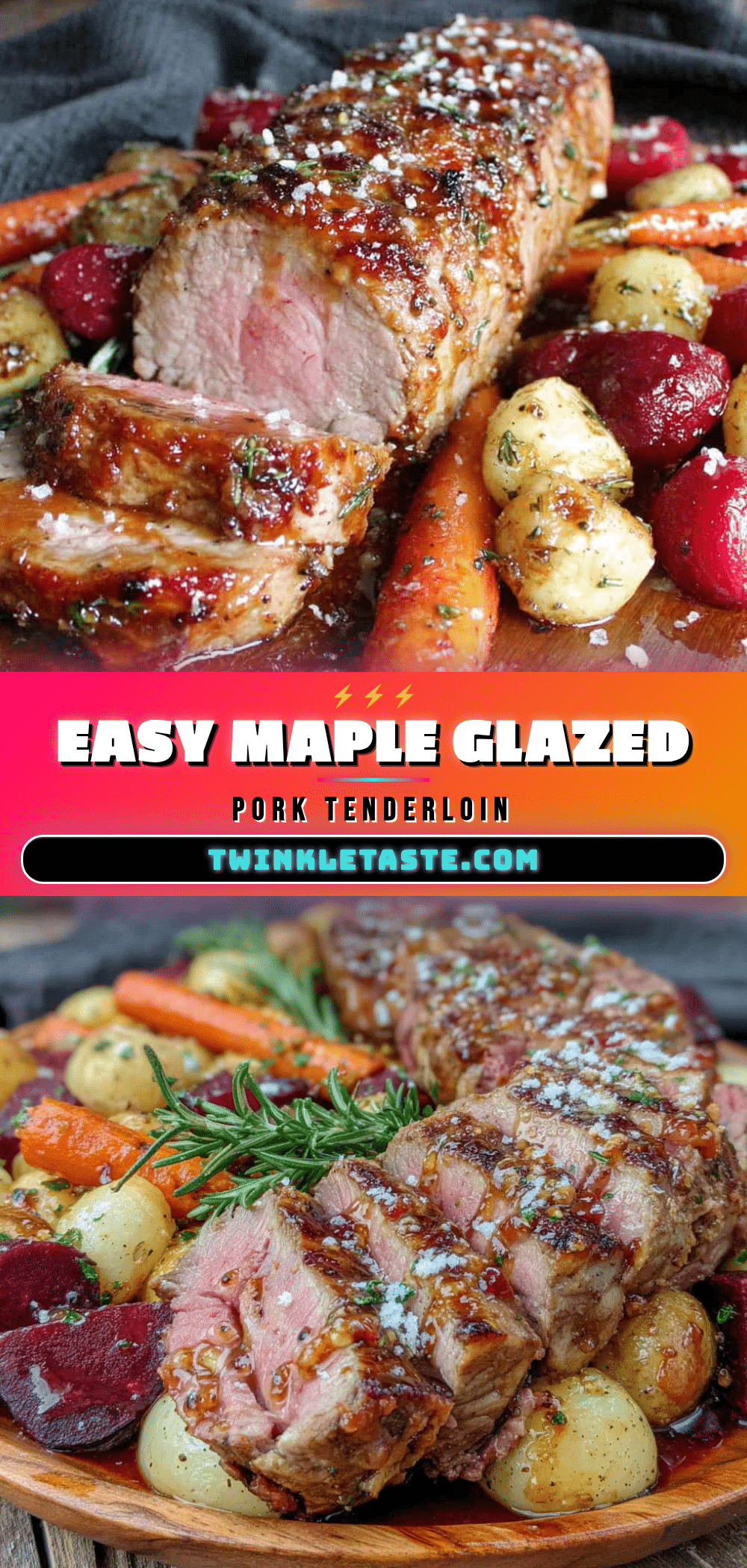
Easy Maple Glazed Pork Tenderloin with Roasted Vegetables

This easy maple glazed pork tenderloin with roasted vegetables is a quick and impressive one-pan dinner. The maple glaze caramelizes into a sticky, sweet-savory coating that locks in moisture, while the vegetables get crispy edges.
- Prep Time: 10 minutes
- Cook Time: 35 minutes
- Total Time: 45 minutes
- Yield: 4 servings 1x
- Category: Main Course
- Cuisine: American
Ingredients
- 1 pork tenderloin (about 1 to 1.5 pounds)
- 1/3 cup pure maple syrup
- 2 tablespoons Dijon mustard
- 2 cloves garlic, minced
- 1 tablespoon olive oil
- 1 teaspoon salt
- 1/2 teaspoon black pepper
- 1/2 teaspoon dried thyme
- 2 cups Brussels sprouts, halved
- 2 cups butternut squash, cubed (about 1-inch pieces)
- 1 red onion, cut into wedges
- 2 tablespoons olive oil
- 1/2 teaspoon salt
- 1/4 teaspoon black pepper
- Optional: fresh rosemary or thyme sprigs for garnish
Instructions
- Preheat your oven to 400°F (200°C). Position a rack in the middle of the oven. Line your sheet pan with parchment paper or foil for easy cleanup.
- Prep the vegetables. In a large bowl, toss the Brussels sprouts, butternut squash, and red onion wedges with 2 tablespoons olive oil, 1/2 teaspoon salt, and 1/4 teaspoon pepper. Spread them out on one half of the prepared sheet pan.
- Start the vegetables roasting. Place the pan in the oven and roast the vegetables for 15 minutes while you prepare the pork.
- Prepare the pork tenderloin. Pat the pork tenderloin dry with paper towels. Trim off any silver skin or excess fat. Season the pork all over with 1 teaspoon salt, 1/2 teaspoon pepper, and the dried thyme.
- Make the maple glaze. In a small bowl, whisk together the maple syrup, Dijon mustard, minced garlic, and 1 tablespoon olive oil until smooth.
- Glaze the pork. Place the seasoned pork tenderloin in the bowl with the glaze and turn to coat it evenly. Let it sit for about 5 minutes.
- Add the pork to the pan. After the vegetables have roasted for 15 minutes, remove the pan from the oven. Push the vegetables to one side and place the glazed pork tenderloin on the other side. Pour any remaining glaze from the bowl over the pork.
- Roast everything together. Return the pan to the oven and roast for 20-25 minutes, or until the internal temperature of the pork reaches 140°F (60°C) for medium, or 145°F (63°C) for medium-well.
- Rest the pork. Remove the pan from the oven and transfer the pork tenderloin to a cutting board. Tent it loosely with foil and let it rest for 5-10 minutes.
- Slice and serve. Slice the pork into 1/2-inch thick medallions. Arrange them on a platter with the roasted vegetables. Drizzle any accumulated juices from the cutting board over the top. Garnish with fresh rosemary or thyme sprigs if desired.
Notes
Don’t skip patting the pork dry. Let the pork come to room temperature before cooking. Watch the sugar content in the glaze to prevent burning. Use a meat thermometer for best results. Cut vegetables uniformly. Don’t overcrowd the pan. Rest the pork before slicing.
Nutrition
- Serving Size: 1 serving
- Calories: 400
- Sugar: 20
- Sodium: 800
- Fat: 15
- Saturated Fat: 3
- Carbohydrates: 34
- Fiber: 6
- Protein: 33
Keywords: maple glazed pork tenderloin, roasted vegetables, one pan dinner, easy weeknight dinner, pork tenderloin recipe