Three different kinds of salami in my cart and I still didn’t know what I was doing. The game was in four hours, friends were bringing dips, and I had volunteered to handle “the spread” like someone who actually plans these things. Truth be told, I’d never made a charcuterie board that didn’t look like someone just dumped lunch meat on a plate. But this year felt different. I wanted something that actually looked like I tried — but without the stress that usually comes with trying.
That’s when the mini football skewers idea hit. Right there in the deli aisle, holding a block of cheddar like it owed me answers. I thought, what if the food actually looked like the game? Not in a cheesy themed way, but in a “oh those are adorable and I want ten of them” kind of way. And honestly? That one little idea changed everything about how I approach party food now.
This Best Game Day Charcuterie Board with Easy Mini Football Skewers became my go-to for every watch party since. It’s the kind of board that makes people stop mid-conversation to grab a photo. But more importantly, it comes together without the panic. The mini footballs are just cheese and meat cut into shapes — no special tools required, no culinary degree needed. Just a knife, a little patience, and the willingness to look like a hero when everyone asks where you got the idea.
So whether you’re hosting the Super Bowl, a college rivalry game, or just a Sunday afternoon where football happens to be on, this board delivers. It’s snackable, shareable, and just fun enough to feel special without feeling fussy. And honestly? That’s exactly the kind of energy game day deserves.
Why You’ll Love This Recipe
I’ve tested this board at four different parties now, and every single time, the mini football skewers disappear first. There’s something about food that looks like tiny sports equipment that brings out the kid in everyone. But beyond the cute factor, here’s why this board works:
- Completely Customizable — Use whatever meats, cheeses, and snacks your crew loves. No rigid rules here.
- Make-Ahead Friendly — Assemble the skewers and prep ingredients the night before. Just arrange before guests arrive.
- No Cooking Required — Seriously. Zero heat. Just slicing, skewering, and arranging.
- Crowd-Pleasing Variety — Something for everyone: meat lovers, cheese fans, veggie seekers, and sweet tooths.
- Instagram-Worthy Without Effort — The mini footballs do all the heavy lifting visually. The rest just fills in around them.
What makes this board different from the usual meat-and-cheese platter is the intentionality behind it. The mini football skewers give people a reason to stop and grab one — they’re pre-portioned, easy to eat while standing, and somehow more satisfying than grabbing a slice of cheese off a plate. Plus, the combination of textures and flavors means every bite feels a little different.
This isn’t just another charcuterie board. It’s the one that gets talked about after the game ends. The one someone will text you about the next day asking for the recipe. And honestly? That feels pretty great.
What Ingredients You Will Need
This recipe uses simple, readily available ingredients to create a stunning spread that looks way more complicated than it actually is. The key is choosing a good variety of textures, flavors, and colors so every section of the board offers something different.
For the Mini Football Skewers
- 8 ounces sharp cheddar cheese block (I prefer Tillamook or Cabot for clean slicing)
- 8 ounces provolone or mozzarella cheese block
- 4 ounces thinly sliced salami or pepperoni (for the football “stripes”)
- 4 ounces thinly sliced prosciutto (optional, for wrapping)
- 50-60 short wooden skewers or toothpicks (6-inch works best)
For the Charcuterie Board Base
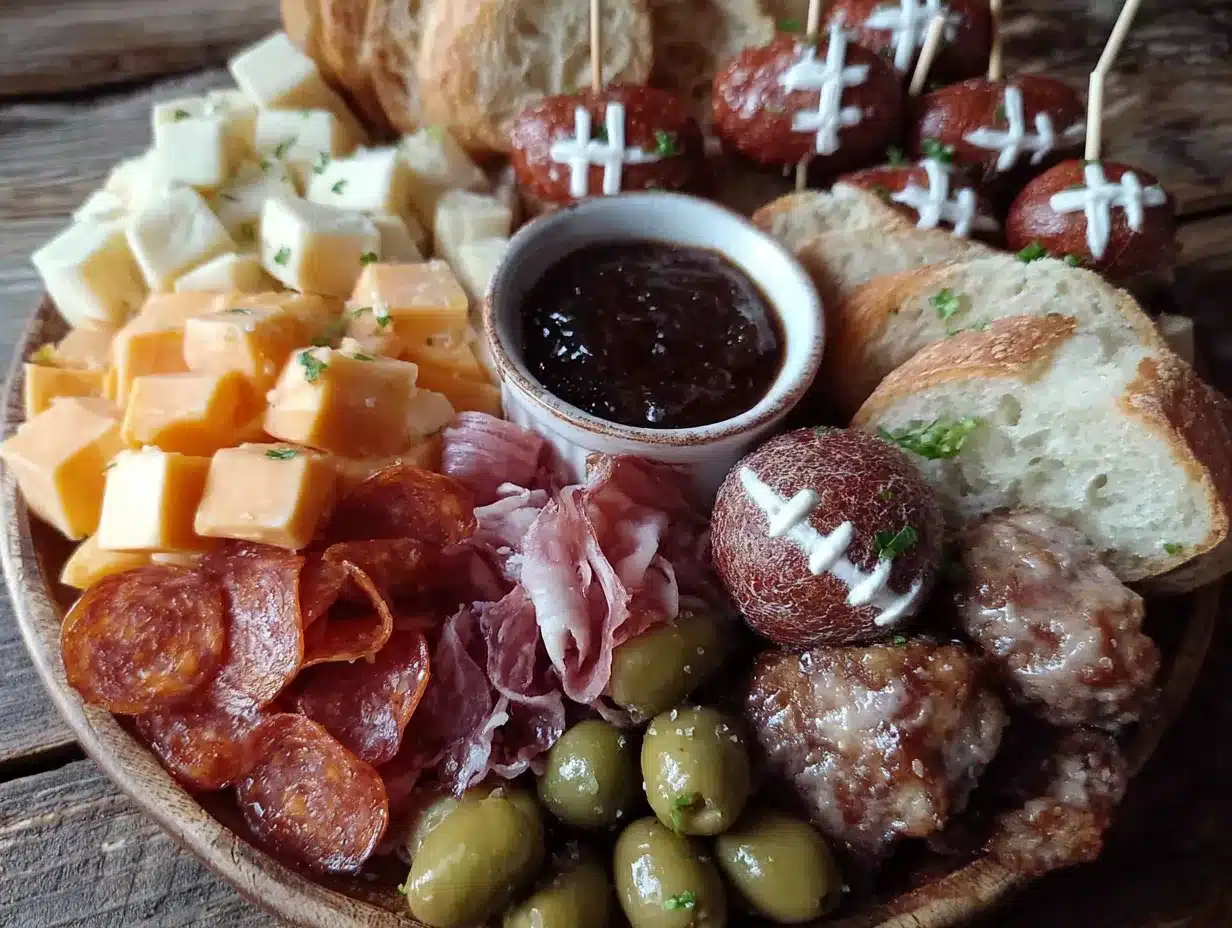
- 8 ounces genoa salami, thinly sliced
- 6 ounces soppressata, thinly sliced
- 6 ounces prosciutto, thinly sliced
- 8 ounces aged gouda or manchego, sliced
- 6 ounces brie or camembert
- 4 ounces blue cheese crumbles or a small wedge
For Accompaniments
- 1 cup mixed olives (kalamata, castelvetrano, or your favorites)
- 1 cup cornichons or small pickles
- 1 cup roasted red peppers, drained and sliced
- 1/2 cup sun-dried tomatoes in oil, drained
- 1 cup cherry tomatoes, halved
- 1 cup grapes or dried figs
- 1/2 cup honey or fig jam for drizzling
- 1 cup Marcona almonds or mixed nuts
- 1 baguette, sliced and lightly toasted
- 1 box crackers (water crackers, rosemary crackers, or buttery rounds)
When selecting your cheeses, look for blocks that are firm enough to slice cleanly for the football shapes. Soft cheeses like brie work better as a spreadable element rather than for cutting. For the meats, ask your deli counter to slice everything thin — it makes rolling and layering much easier.
A note on substitutions: You can absolutely swap in your favorite cheeses and meats. The mini footballs work with any semi-firm cheese — even pepper jack for a spicy kick. If you’re feeding a crowd with dietary restrictions, include a separate section with dairy-free cheese and gluten-free crackers. The beauty of a charcuterie board is its flexibility.
Equipment Needed
You don’t need anything fancy to pull this board together, but having the right tools makes the process smoother and more enjoyable.
- Large wooden cutting board or serving board — At least 18×12 inches to fit everything comfortably. A baking sheet lined with parchment works in a pinch.
- Sharp chef’s knife — Essential for cleanly cutting cheese blocks into football shapes. A dull knife will crush the cheese instead of slicing it.
- Small paring knife — Useful for scoring the football “laces” and making precise cuts.
- Cutting board for prep — Keep your main board clean for final assembly.
- Small bowls or ramekins — For olives, honey, jam, nuts, and any wet ingredients.
- Toothpicks or short wooden skewers — 6-inch skewers are ideal for the mini footballs. Regular toothpicks work but are harder to grab.
- Tongs or small serving spoons — For olives and pickles to keep things tidy.
- Cheese knives or spreaders — One for soft cheese, one for hard cheese.
I’ve made this board with nothing more than a cutting board, a knife, and a few ramekins from my kitchen cabinets. Don’t overthink the equipment. If you have a flat surface and something sharp, you’re good to go. For budget-friendly options, dollar stores often carry wooden boards and small bowls that work perfectly for this purpose.
Preparation Method
Let’s break this down step by step. The mini football skewers are the star, so we’ll start there and build the board around them.
- Make the Mini Football Cheese Shapes
Cut your cheddar and provolone blocks into 1/2-inch thick slices. Then cut each slice into 1-inch wide rectangles. Round the top and bottom edges slightly with your knife to create an oval football shape. Don’t stress about perfection — footballs come in all shapes and sizes, and yours will look charmingly handmade. You should get about 20-25 pieces from each cheese block. - Add the Football Laces
Using the tip of your paring knife, score 2-3 small horizontal lines across the center of each cheese oval. Then score 1-2 short vertical lines perpendicular to those, creating the classic lace pattern. This takes about 10 seconds per piece and makes them instantly recognizable as footballs. - Wrap with Salami or Prosciutto
Cut your salami or pepperoni slices in half. Wrap one half around the center of each cheese football, covering the lace area. The meat acts like the “stripes” on a real football. For a different look, use a thin strip of prosciutto instead. Press gently so the meat adheres to the cheese. - Assemble the Skewers
Take a short wooden skewer and thread one wrapped cheese football onto it. Add a grape, cherry tomato, or olive on either side of the football for color contrast. You can also add a small piece of salami or a basil leaf for extra flavor. Each skewer should have the football as the centerpiece with something on each side. Repeat until all your cheese pieces are used up. This should yield 20-25 skewers. - Prepare the Remaining Ingredients
While the skewers rest, slice your baguette into 1/2-inch rounds and toast them lightly if desired. Halve your cherry tomatoes. Drain and slice roasted red peppers. Arrange olives, cornichons, nuts, and dried fruit in small bowls. Slice your hard cheeses into thin wedges or cubes. Leave soft cheeses like brie whole or cut into wedges. - Arrange the Board
Start by placing your small bowls of olives, honey, and jam on the board — these act as anchors. Then fan out your sliced meats in folds or rolls around the bowls. Add cheese wedges and cubes in clusters. Fill gaps with crackers and baguette slices. Finally, place the mini football skewers in a prominent spot — maybe in the center or along one side where they’ll be easily spotted. Scatter grapes, cherry tomatoes, and nuts in any remaining empty spaces. The goal is to make it look abundant but not cluttered. - Final Touches
Drizzle a little honey over the brie or aged gouda. Sprinkle fresh herbs like rosemary or thyme sprigs around for color. Add a small dish of fig jam or whole grain mustard for spreading. Step back and admire your work — then snap a photo before the first guests arrive!
A quick note on timing: The mini football skewers can be made up to 24 hours in advance and stored in an airtight container in the fridge. The rest of the board ingredients can be prepped the night before, but arrange everything within an hour of serving to keep crackers crisp and meats from drying out.
Cooking Tips & Techniques
After making this board more times than I can count, I’ve learned a few things the hard way. Here are my best tips to make yours look like a pro did it.
Don’t overthink the football shapes. I spent my first attempt trying to make them perfectly symmetrical with a cookie cutter. Total disaster. The cheese crumbled, the edges were ragged, and I wasted half a block. Now I just use a knife and freehand it. Imperfect footballs look more authentic anyway — like real footballs that have been through a few games.
Keep the cheese cold while cutting. Warm cheese is soft cheese, and soft cheese doesn’t cut cleanly. Pop your cheese blocks in the freezer for 10 minutes before slicing. They’ll be firm enough to cut precise shapes without crumbling. Let them sit at room temperature for 15 minutes before serving so the flavor comes through.
Layer your board strategically. Start with the bowls and largest items first, then fill in with smaller pieces. This prevents you from running out of space halfway through. Think of it like a puzzle — the big pieces go in first, then the medium ones, then the small ones fill the gaps.
Use contrasting colors. A board that’s all beige and brown is visually boring. Add pops of red from cherry tomatoes or roasted peppers, green from olives or herbs, and deep purple from grapes. The mini football skewers already bring visual interest with their cheese-and-meat combo, so use the rest of the board to complement them.
Prep everything before you start arranging. There’s nothing worse than having half the board set up and realizing you forgot to slice the baguette. Do all your cutting, bowl-filling, and skewering first. Then arrange in one smooth session. Your board will look more cohesive and you’ll feel less stressed.
Variations & Adaptations
One of the best things about a charcuterie board is how easily it adapts to different tastes, diets, and occasions. Here are some of my favorite variations.
Dietary Variations:
- Vegetarian — Skip the meat entirely and double up on cheeses, roasted vegetables, and marinated artichokes. Use the mini football skewers with just cheese and grapes — they’re still adorable.
- Gluten-Free — Replace crackers and baguette with gluten-free crackers, rice cakes, or sliced vegetables like cucumber and bell pepper for dipping.
- Dairy-Free — Use dairy-free cheese alternatives for the footballs (look for block-style options) and load up on meats, nuts, fruits, and vegetables.
- Low-Carb/Keto — Focus on meats, hard cheeses, nuts, and olives. Skip the crackers and bread. The mini footballs work perfectly with cheddar or gouda.
Flavor Twists:
- Spicy Game Day Board — Use pepper jack cheese for the footballs, add spicy soppressata, jalapeño-stuffed olives, and a side of hot honey for drizzling.
- Italian-Inspired Board — Swap in fresh mozzarella pearls, prosciutto, salami, marinated mushrooms, and a balsamic glaze drizzle. Add basil leaves for freshness.
- Sweet and Savory Board — Include dark chocolate squares, dried apricots, candied pecans, and a honeycomb alongside the traditional meats and cheeses.
Seasonal Adaptations:
- Fall Game Day — Add apple slices, pear wedges, and a small dish of pumpkin seed butter. Use sharp white cheddar for the footballs.
- Summer Tailgate — Include fresh berries, watermelon cubes, and a citrusy vinaigrette for drizzling over fresh mozzarella.
Personal Variation: I once made a “breakfast charcuterie board” using the same mini football concept but with cheese cubes wrapped in bacon. It was ridiculous and wonderful. Don’t be afraid to experiment — that’s half the fun.
Serving & Storage Suggestions
This board is best served at room temperature, so pull everything out of the fridge about 30 minutes before guests arrive. The cheeses will be softer and more flavorful, and the meats will be easier to separate and roll.
Presentation Tips:
- Arrange the mini football skewers in a small vase or cup for easy grabbing — they’ll stand up like a bouquet of snackable goodness.
- Place the honey or jam near the soft cheese so guests can drizzle as they please.
- Keep crackers and bread on one side of the board to prevent them from getting soggy from wet ingredients.
- Add fresh herbs like rosemary sprigs or edible flowers for a pop of color that looks intentional.
What to Serve Alongside:
- A light, crisp white wine like Sauvignon Blanc or a dry rosé
- Beer — IPAs, pilsners, or a stout all work well depending on the cheese
- Sparkling water with lemon or cucumber for non-alcoholic options
- A simple green salad with lemon vinaigrette to balance the richness
Storage:
- Leftover mini football skewers can be stored in an airtight container in the fridge for up to 3 days. The cheese might soften slightly, but they’ll still taste great.
- Separate leftover meats and cheeses into individual containers to prevent flavors from mingling.
- Hard cheeses like cheddar and gouda can be wrapped in parchment paper and stored for up to a week.
- Crackers and bread should be stored in a sealed bag at room temperature — never in the fridge, where they’ll go stale faster.
Reheating: Honestly, nothing on this board needs reheating. If you’ve included toasted baguette slices, you can refresh them in a 350°F oven for 3-4 minutes. But everything else is best enjoyed as-is.
One thing I’ve noticed: the flavors actually meld together beautifully after a few hours at room temperature. The honey seeps into the cheese slightly, the olives release their brine, and everything becomes more cohesive. If you’re making this for a party that stretches across the whole game, it’ll only get better as the evening goes on.
Nutritional Information & Benefits
While a charcuterie board isn’t exactly health food, it does offer some surprising nutritional benefits when you build it thoughtfully.
Estimated Nutritional Values (per serving, approximately 1/8 of the board):
| Nutrient | Amount |
|---|---|
| Calories | 380-450 |
| Protein | 18-22g |
| Fat | 28-35g |
| Carbohydrates | 15-20g |
| Fiber | 3-5g |
| Sugar | 8-12g (mostly natural from fruit) |
| Sodium | 800-1000mg |
Health Benefits of Key Ingredients:
- Cheese — Rich in calcium, protein, and vitamin B12. Hard cheeses like cheddar and gouda also contain probiotics when aged.
- Olives — Packed with healthy monounsaturated fats and antioxidants like vitamin E.
- Nuts — Almonds and walnuts provide heart-healthy omega-3s and fiber.
- Grapes — Contain resveratrol, an antioxidant linked to heart health.
- Prosciutto and Salami — Good source of protein and iron, though higher in sodium, so enjoy in moderation.
Dietary Considerations:
- This board contains dairy, gluten (from crackers and bread), and nitrates (from cured meats).
- For a lower-sodium version, choose low-sodium meats and unsalted nuts.
- To boost fiber, add more fresh vegetables like cucumber slices, bell pepper strips, and celery.
My personal perspective: I love that a charcuterie board encourages grazing and mindful eating. Instead of sitting down to a heavy meal, you’re picking at small, satisfying bites throughout the game. It’s easier to listen to your body’s hunger cues, and you end up eating a wider variety of foods than you might with a traditional meal. Just don’t forget to balance it with plenty of water — all that cheese and cured meat can be dehydrating.
Conclusion
This Best Game Day Charcuterie Board with Easy Mini Football Skewers has become my signature party move, and I honestly can’t imagine game day without it now. There’s something about seeing a board full of tiny footballs that makes people smile before they even take a bite. And when they do take a bite? The combination of creamy cheese, salty meat, and sweet grapes is just perfect.
I love that this recipe doesn’t require any cooking skills — just a little patience and a willingness to have fun with your food. Whether you’re hosting a Super Bowl party, a tailgate, or just a casual Sunday with friends, this board delivers on every level. It’s impressive without being pretentious, customizable without being complicated, and delicious without being fussy.
So go ahead and give it a try. Make the mini footballs your own way, pile on your favorite snacks, and watch your guests light up when they see it. I’d love to hear how yours turns out — drop a comment below and let me know what variations you tried. And if you’re looking for more game day inspiration, don’t miss our savory sun-dried tomato pesto pinwheels or these crispy parmesan zucchini fritters with garlic herb dip — both perfect additions to any game day spread.
Happy snacking, and may your team win!
Frequently Asked Questions
Can I make the mini football skewers ahead of time?
Absolutely! You can make them up to 24 hours in advance. Store them in an airtight container in the fridge, layered between sheets of parchment paper so they don’t stick together. Let them sit at room temperature for 15 minutes before serving.
What if I don’t have wooden skewers?
No problem! Regular toothpicks work fine — just make them a little shorter. You can also use pretzel sticks for a salty, crunchy alternative that adds extra flavor.
How do I keep the board from getting messy?
Use small bowls for wet ingredients like olives, pickles, and honey. Place crackers and bread on one side away from anything moist. And don’t overcrowd the board — leave a little space between sections so guests can grab items without knocking everything over.
Can I use pre-sliced cheese from the store?
You can, but block cheese gives you much better control for cutting the football shapes. Pre-sliced cheese is often too thin and won’t hold its shape as well. If you’re in a pinch, use thicker-cut slices and stack two together.
What’s the best way to arrange the board for maximum visual impact?
Start with your largest items (bowls, cheese wedges) as anchors. Then fan out meats in folds or rolls. Place the mini football skewers in a prominent spot — maybe in the center or along one edge. Fill gaps with smaller items like nuts, grapes, and cherry tomatoes. The key is creating height and texture by layering items at different levels.
Pin This Recipe!
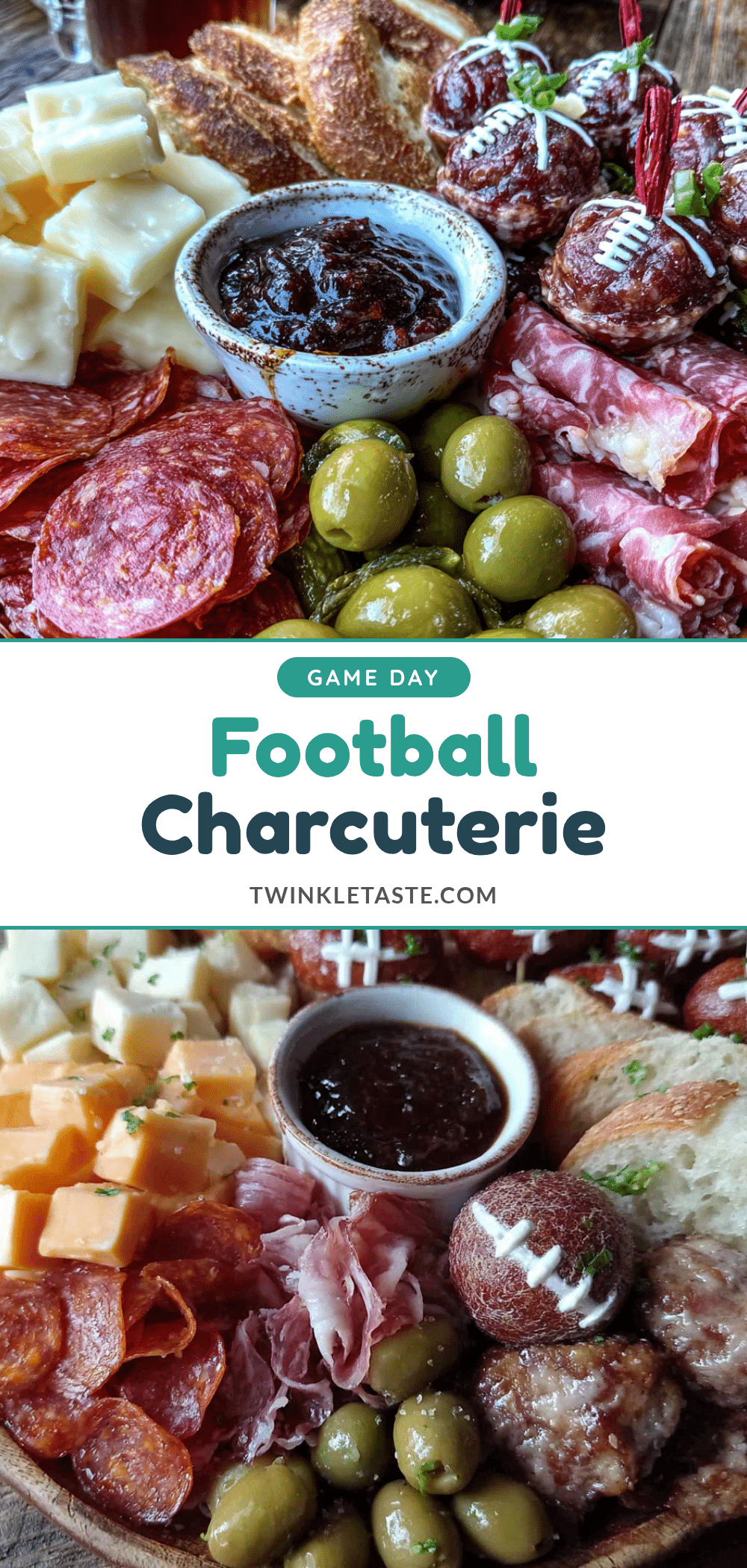
Best Game Day Charcuterie Board with Easy Mini Football Skewers
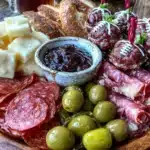
A stunning game day charcuterie board featuring adorable mini football skewers made from cheese and salami. This no-cook, customizable board is perfect for watch parties and will have guests snapping photos before they dig in.
- Prep Time: 30 minutes
- Cook Time: 0 minutes
- Total Time: 30 minutes
- Yield: 8 servings 1x
- Category: Appetizer
- Cuisine: American
Ingredients
- 8 ounces sharp cheddar cheese block
- 8 ounces provolone or mozzarella cheese block
- 4 ounces thinly sliced salami or pepperoni
- 4 ounces thinly sliced prosciutto (optional)
- 50–60 short wooden skewers or toothpicks
- 8 ounces genoa salami, thinly sliced
- 6 ounces soppressata, thinly sliced
- 6 ounces prosciutto, thinly sliced
- 8 ounces aged gouda or manchego, sliced
- 6 ounces brie or camembert
- 4 ounces blue cheese crumbles or small wedge
- 1 cup mixed olives (kalamata, castelvetrano, or favorites)
- 1 cup cornichons or small pickles
- 1 cup roasted red peppers, drained and sliced
- 1/2 cup sun-dried tomatoes in oil, drained
- 1 cup cherry tomatoes, halved
- 1 cup grapes or dried figs
- 1/2 cup honey or fig jam
- 1 cup Marcona almonds or mixed nuts
- 1 baguette, sliced and lightly toasted
- 1 box crackers (water crackers, rosemary crackers, or buttery rounds)
Instructions
- Make the Mini Football Cheese Shapes: Cut cheddar and provolone blocks into 1/2-inch thick slices, then into 1-inch wide rectangles. Round the top and bottom edges slightly to create oval football shapes. You should get about 20-25 pieces from each cheese block.
- Add the Football Laces: Using the tip of a paring knife, score 2-3 small horizontal lines across the center of each cheese oval, then 1-2 short vertical lines perpendicular to those to create the classic lace pattern.
- Wrap with Salami or Prosciutto: Cut salami or pepperoni slices in half. Wrap one half around the center of each cheese football, covering the lace area. Press gently so the meat adheres.
- Assemble the Skewers: Thread one wrapped cheese football onto a short wooden skewer. Add a grape, cherry tomato, or olive on either side for color contrast. Repeat until all cheese pieces are used, yielding 20-25 skewers.
- Prepare the Remaining Ingredients: Slice baguette into 1/2-inch rounds and toast lightly if desired. Halve cherry tomatoes. Drain and slice roasted red peppers. Arrange olives, cornichons, nuts, and dried fruit in small bowls. Slice hard cheeses into thin wedges or cubes. Leave soft cheeses whole or cut into wedges.
- Arrange the Board: Place small bowls of olives, honey, and jam on the board as anchors. Fan out sliced meats in folds or rolls around the bowls. Add cheese wedges and cubes in clusters. Fill gaps with crackers and baguette slices. Place mini football skewers in a prominent spot. Scatter grapes, cherry tomatoes, and nuts in remaining spaces.
- Final Touches: Drizzle honey over brie or aged gouda. Sprinkle fresh herbs like rosemary or thyme sprigs around for color. Add a small dish of fig jam or whole grain mustard for spreading.
Notes
The mini football skewers can be made up to 24 hours in advance and stored in an airtight container in the fridge. Let them sit at room temperature for 15 minutes before serving. For best results, keep cheese cold while cutting by popping blocks in the freezer for 10 minutes. Arrange the board within an hour of serving to keep crackers crisp and meats from drying out.
Nutrition
- Serving Size: 1/8 of the board
- Calories: 380450
- Sugar: 812
- Sodium: 8001000
- Fat: 2835
- Saturated Fat: 1216
- Carbohydrates: 1520
- Fiber: 35
- Protein: 1822
Keywords: game day charcuterie board, mini football skewers, charcuterie board, football party food, easy appetizer, no-cook appetizer, Super Bowl snack