That warm, spicy scent—the kind that curls around your nose before you even open the jar—still takes me straight to my grandmother’s kitchen every autumn afternoon. It was the smell of cinnamon and cloves mingling with simmering berries, a concoction she swore by for keeping the whole family well through the chilly months. I remember hovering by the stove, the steam fogging my glasses, as she stirred the elderberry syrup, her hands steady despite the bubbling pot. There was something quietly reassuring about that ritual—the way the syrup thickened, dark and rich, promising immunity and comfort all in one. Years later, I keep that memory alive every time I make this wholesome homemade elderberry syrup with cinnamon and cloves, a recipe steeped in tradition yet perfectly suited for today’s kitchen.
It’s not just about the health boost, though that’s a big part of the draw. There’s a softness to the taste—sweet but with a spicy undertone—that feels like wrapping yourself in a cozy blanket. Honestly, it’s become my go-to remedy and a little act of self-care that reminds me of slower, simpler days. This syrup isn’t just medicine; it’s a flavor memory, one that’s stuck with me because it’s both practical and deeply comforting.
Making elderberry syrup at home might sound like a weekend project, but once you get the hang of it, it’s surprisingly straightforward and rewarding. And if you’re anything like me, you’ll find yourself reaching for it not just when you feel under the weather, but whenever you want a little reminder of home.
Why You’ll Love This Recipe
After countless trials and tweaks, this elderberry syrup recipe with cinnamon and cloves stands out for several reasons—trust me, I’ve tested it enough to know what works and what doesn’t. Here’s why it’s worth making:
- Quick & Easy: You can have this syrup simmered and bottled in about 30 minutes, perfect for busy days when you want to keep your immune system in check without fuss.
- Simple Ingredients: No need for exotic spices or hard-to-find herbs; cinnamon sticks, cloves, and dried elderberries are pantry staples or easy to find at your local market.
- Perfect for Seasonal Wellness: Ideal for cold and flu season, this syrup also works great as a natural sweetener in teas or drizzled over pancakes (try it on fluffy banana pancakes with chocolate chips for a special treat!).
- Crowd-Pleaser: Kids and adults alike appreciate the gentle sweetness paired with warming spices—plus, it’s a neat way to sneak in antioxidants.
- Unbelievably Delicious: The combination of elderberries with cinnamon and cloves creates a complex, cozy flavor that’s as soothing as it is tasty.
- Unique Touch: Unlike other elderberry syrups, this one uses whole spices rather than ground versions, which infuse the syrup slowly and can be strained out for a smooth finish. It’s a subtle technique I picked up from my herbalist friend that really makes a difference.
This isn’t just another elderberry syrup—it’s my trusted recipe for keeping wellness front and center without sacrificing flavor or ease. Plus, it pairs beautifully with other homemade favorites, like my creamy overnight oats with peanut butter and berries, making for a wholesome start to any day.
Ingredients You’ll Need
This recipe relies on simple, wholesome ingredients to deliver bold flavor and a satisfying texture without any fuss. Most of these are pantry staples, and if you’re lucky enough to have access to fresh elderberries, all the better. Otherwise, dried elderberries work just fine and are often easier to find year-round.
- Dried elderberries – 1 cup (about 100g; look for organic, no fillers)
- Water – 4 cups (950ml; filtered if possible for best taste)
- Cinnamon sticks – 2 large sticks (adds warm, aromatic depth)
- Whole cloves – 6-8 (fresh, not ground, for smooth infusion)
- Fresh ginger – 1 tablespoon, peeled and sliced thin (optional, for a gentle spicy kick)
- Raw honey – ½ to ¾ cup (120-180ml; add after cooking to preserve nutrients, and adjust sweetness to taste)
- Fresh lemon juice – 2 tablespoons (30ml; brightens flavor and acts as a natural preservative)
If you prefer a vegan option, swap the honey for maple syrup or agave nectar—though honey’s natural antimicrobial properties give a nice boost to this syrup’s shelf life. When picking cinnamon sticks, I tend to go for Ceylon cinnamon from trusted brands like Simply Organic, which offers a sweeter, less harsh flavor compared to cassia cinnamon.
In summer, you might try fresh elderberries if you can find them, but be careful to cook them thoroughly as raw elderberries can be toxic. Dried elderberries are safer and much easier to work with for this syrup. For a twist, some folks add star anise or cardamom pods, but I prefer to keep the spice profile simple and focused on cinnamon and cloves.
Equipment Needed
- Medium saucepan – A 2 to 3-quart (2-3 liter) pot works great for simmering the syrup without it boiling over.
- Fine mesh strainer or cheesecloth – Essential for straining out the elderberries and whole spices to leave you with a smooth syrup.
- Measuring cups and spoons – For accuracy in both liquid and dry ingredients.
- Wooden spoon or heatproof spatula – To stir the mixture gently during simmering.
- Glass bottles or jars with airtight lids – For storing the finished syrup. Mason jars or small glass bottles work best.
- Funnel (optional) – Makes transferring syrup into bottles less messy.
I’ve tried plastic containers for storage before, but the syrup keeps best in glass, especially if you want to preserve the flavor. And if you’re like me, you’ll appreciate that glass jars are easy to sterilize and reuse. For straining, cheesecloth gives a super smooth finish but can be a bit messy; a fine mesh strainer works just fine if you press gently with a spoon to extract every last drop.
Preparation Method
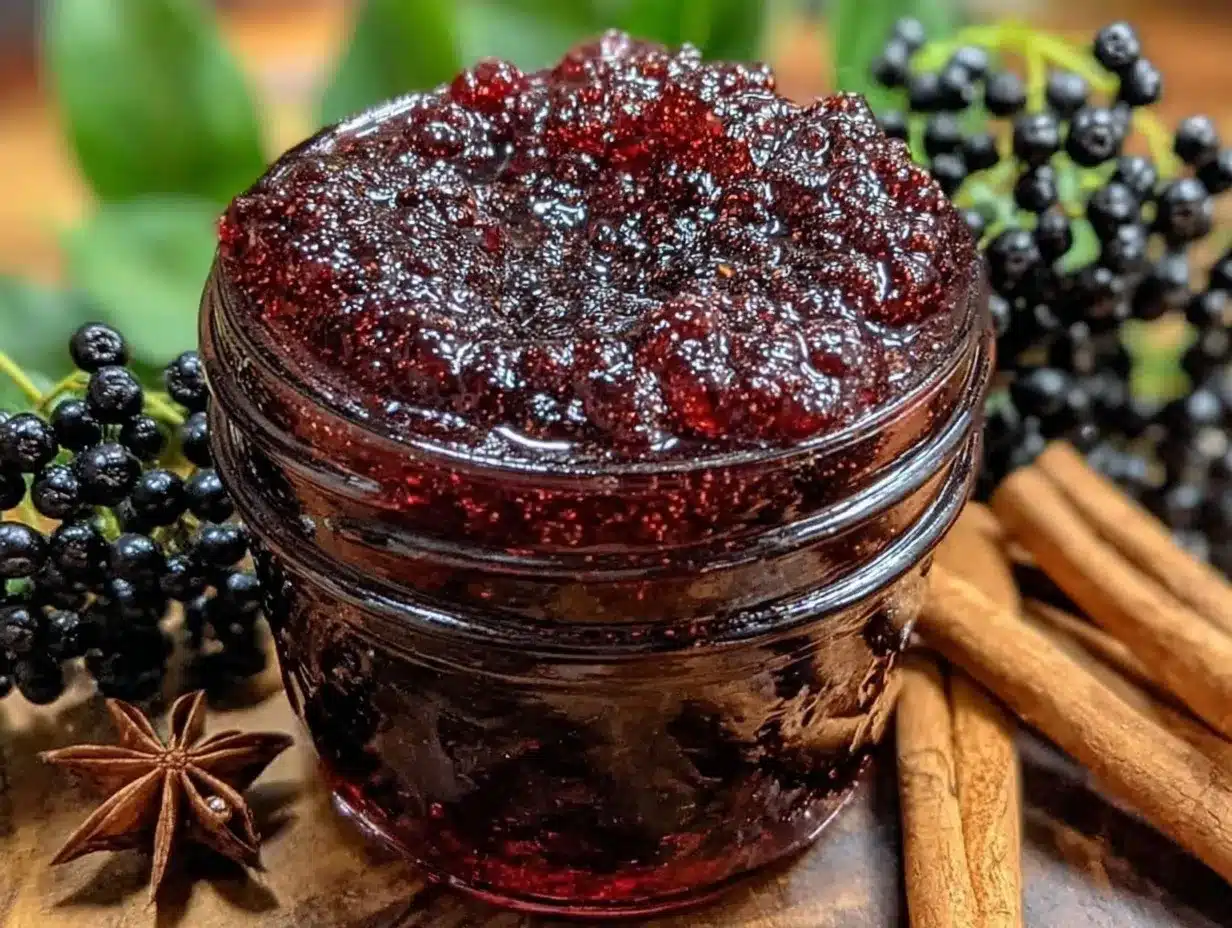
- Combine elderberries and spices: In your medium saucepan, add 1 cup (100g) dried elderberries, 4 cups (950ml) water, 2 cinnamon sticks, 6-8 whole cloves, and the sliced ginger (if using). Stir gently to mix.
- Bring to a simmer: Place the pot over medium heat and bring the mixture to a gentle boil. Once boiling, reduce heat to low and let it simmer uncovered for 30-40 minutes. You’ll notice the liquid darkening and reducing slightly—this concentration is key to a potent syrup.
- Monitor the simmer: Stir occasionally to prevent elderberries from sticking to the bottom. The mixture should smell intensely fruity and spicy, a good sign that flavors are infusing well.
- Remove from heat and strain: After simmering, remove the pot from heat and let it cool for a few minutes. Then, strain the mixture through a fine mesh strainer or cheesecloth into a clean bowl or jug. Press the berries lightly with a spoon to extract all the juice but avoid squeezing seeds, which can add bitterness.
- Add honey and lemon juice: While the liquid is still warm (not hot), stir in ½ to ¾ cup (120-180ml) raw honey and 2 tablespoons (30ml) fresh lemon juice. Adjust honey to your preferred sweetness; lemon juice brightens the flavor and helps preserve the syrup.
- Cool and bottle: Let the syrup cool to room temperature before transferring it to sterilized glass bottles or jars. Seal tightly and store in the refrigerator.
- Use and enjoy: Take 1 tablespoon daily as an immune booster or mix into hot tea or sparkling water for a delicious seasonal drink.
Tip: If you notice the syrup is too thick once cooled, stir in a little warm water to loosen it up. Also, don’t rush adding the honey while the syrup is boiling hot; high heat can damage its beneficial properties.
Cooking Tips & Techniques
From my experience, a few tricks can make this elderberry syrup recipe truly shine. First, be patient with the simmering step. The slow reduction concentrates flavor and extracts the beneficial compounds from elderberries and spices without turning bitter. If you rush it, you’ll lose that rich, deep taste.
Using whole spices instead of ground ones is another little secret that helps keep the syrup smooth and easy to strain. Ground spices tend to cloud the syrup and can create a grainy texture, which isn’t very pleasant on the tongue. Plus, whole spices release their flavor more gently over time—a subtle but noticeable difference.
One common mistake I’ve made is not properly straining the syrup. Pushing the berries too hard can release seeds and pulp, which add bitterness. Strain gently and discard solids after pressing just enough juice out.
Timing is also key for adding honey and lemon juice. Add these after the syrup has cooled slightly to preserve their nutritional benefits. Honey, especially raw honey, contains enzymes and antioxidants that degrade at high heat.
If you want to multitask, prepare the syrup while baking something like crispy loaded potato skins, and you’ll fill your home with cozy aromas on all fronts. Just keep an eye on your simmering pot and stir occasionally.
Variations & Adaptations
- Vegan version: Replace raw honey with maple syrup or agave nectar. The flavor changes slightly but remains delicious and friendly for plant-based diets.
- Spice swaps: Try adding star anise or cardamom pods for a more exotic twist. Just use sparingly to avoid overpowering the elderberries.
- Boosted immunity: Add a teaspoon of dried echinacea or elderflower during simmering for an extra herbal kick. Just be sure to strain well.
- Seasonal fresh berries: In late summer or early fall, fresh elderberries or a mix of elderberries and blackberries can add a fresh, juicy note. Adjust the simmer time slightly for fresh fruits—usually 20-25 minutes works well.
- Alcohol infusion: For a slightly boozy version, add a splash of brandy or vodka after bottling. This also helps with preservation if you plan to store the syrup longer.
Personally, I tried adding a few dried rose hips once, inspired by my love for floral notes in drinks, and it added a lovely citrusy hint that balanced the spices nicely.
Serving & Storage Suggestions
This elderberry syrup is best enjoyed chilled or warmed gently in tea. I like to drizzle a little over hot oatmeal or mix it into sparkling water with a wedge of lemon for a refreshing immune-boosting soda. It pairs surprisingly well with breakfast favorites like my fluffy spinach and feta breakfast quiche, offering a sweet-spicy counterpoint to the savory flavors.
Store the syrup in the refrigerator in airtight glass bottles or jars. It will keep for up to 3 weeks, sometimes longer if your honey and lemon juice are fresh. You can also freeze the syrup in ice cube trays and pop out cubes as needed to thaw and use.
When reheating, do it gently over low heat to preserve the honey’s benefits and prevent boiling off the delicate flavors. Over time, the syrup’s flavors meld and deepen, making it even tastier after a few days.
Nutritional Information & Benefits
One tablespoon (about 15ml) of this elderberry syrup contains roughly 40-50 calories, mostly from natural sugars in honey and elderberries. Elderberries are rich in antioxidants, vitamins A and C, and have been traditionally used to support the immune system.
Cinnamon and cloves add more than flavor—they bring anti-inflammatory and antimicrobial properties. Ginger, if included, aids digestion and adds warmth. This syrup is naturally gluten-free and can be adapted for vegan diets by substituting the honey.
From a wellness perspective, this syrup is a gentle way to support your body’s defenses during cold and flu season. I appreciate it because it feels like a natural, tasty ritual rather than a chore or medicine.
Conclusion
This wholesome homemade elderberry syrup with cinnamon and cloves is more than just a recipe—it’s a comforting tradition you can carry forward in your own kitchen. It’s simple enough to make without stress, yet it delivers a rich, soothing flavor and a natural boost for your immune system. What I love most is how it connects me to moments of calm and care, making wellness feel like a warm hug.
Feel free to tweak the spices and sweetness to suit your taste—after all, the best recipes are the ones that fit your kitchen and your life. And if you try it, I’d love to hear how you make it your own. Sharing little rituals like this keeps us all connected, one spoonful at a time.
Frequently Asked Questions
How long does homemade elderberry syrup last?
Stored in a sealed glass container in the refrigerator, elderberry syrup typically lasts up to 3 weeks. Freezing in ice cube trays extends its life for several months.
Can I use fresh elderberries instead of dried?
Yes, fresh elderberries can be used, but they require a shorter simmer time (about 20-25 minutes). Always cook elderberries thoroughly as raw berries can be toxic.
Is this syrup safe for children?
Generally, elderberry syrup is safe for children over 1 year old. However, always consult with your pediatrician before giving herbal remedies to young children.
Can I skip the honey and use sugar instead?
You can use sugar, but honey offers natural antimicrobial benefits and a richer flavor. For a vegan alternative, maple syrup or agave nectar works well.
What’s the best way to take elderberry syrup?
Most people take 1 tablespoon daily as a preventative measure or up to 3 tablespoons daily when feeling under the weather. You can take it straight or mix it into tea or juice.
Pin This Recipe!

Wholesome Homemade Elderberry Syrup Recipe with Cinnamon and Cloves for Immunity Boost
A warm, spicy elderberry syrup infused with cinnamon and cloves, perfect for boosting immunity and adding cozy flavor to your seasonal wellness routine.
- Prep Time: 5 minutes
- Cook Time: 30-40 minutes
- Total Time: 35-45 minutes
- Yield: About 1 ½ cups syrup (approximately 12 servings of 1 tablespoon each) 1x
- Category: Health Tonic / Syrup
- Cuisine: American
Ingredients
- 1 cup dried elderberries (about 100g; organic, no fillers)
- 4 cups water (950ml; filtered if possible)
- 2 large cinnamon sticks
- 6–8 whole cloves
- 1 tablespoon fresh ginger, peeled and sliced thin (optional)
- ½ to ¾ cup raw honey (120-180ml; add after cooking)
- 2 tablespoons fresh lemon juice (30ml)
Instructions
- In a medium saucepan, combine dried elderberries, water, cinnamon sticks, whole cloves, and sliced ginger (if using). Stir gently to mix.
- Place the pot over medium heat and bring the mixture to a gentle boil. Reduce heat to low and simmer uncovered for 30-40 minutes, stirring occasionally.
- Remove from heat and let cool for a few minutes. Strain the mixture through a fine mesh strainer or cheesecloth into a clean bowl or jug, pressing lightly to extract juice without squeezing seeds.
- While the liquid is still warm, stir in raw honey and fresh lemon juice. Adjust honey to taste.
- Let the syrup cool to room temperature, then transfer to sterilized glass bottles or jars. Seal tightly and store in the refrigerator.
- Take 1 tablespoon daily as an immune booster or mix into hot tea or sparkling water.
Notes
Add honey after the syrup has cooled slightly to preserve its nutrients. Use whole spices for a smoother syrup and strain gently to avoid bitterness. Store syrup in glass containers in the refrigerator for up to 3 weeks or freeze in ice cube trays for longer storage.
Nutrition
- Serving Size: 1 tablespoon (15ml)
- Calories: 45
- Sugar: 10
- Sodium: 5
- Carbohydrates: 12
- Fiber: 1
Keywords: elderberry syrup, immunity booster, cinnamon, cloves, homemade syrup, natural remedy, elderberry recipe, wellness syrup