Introduction
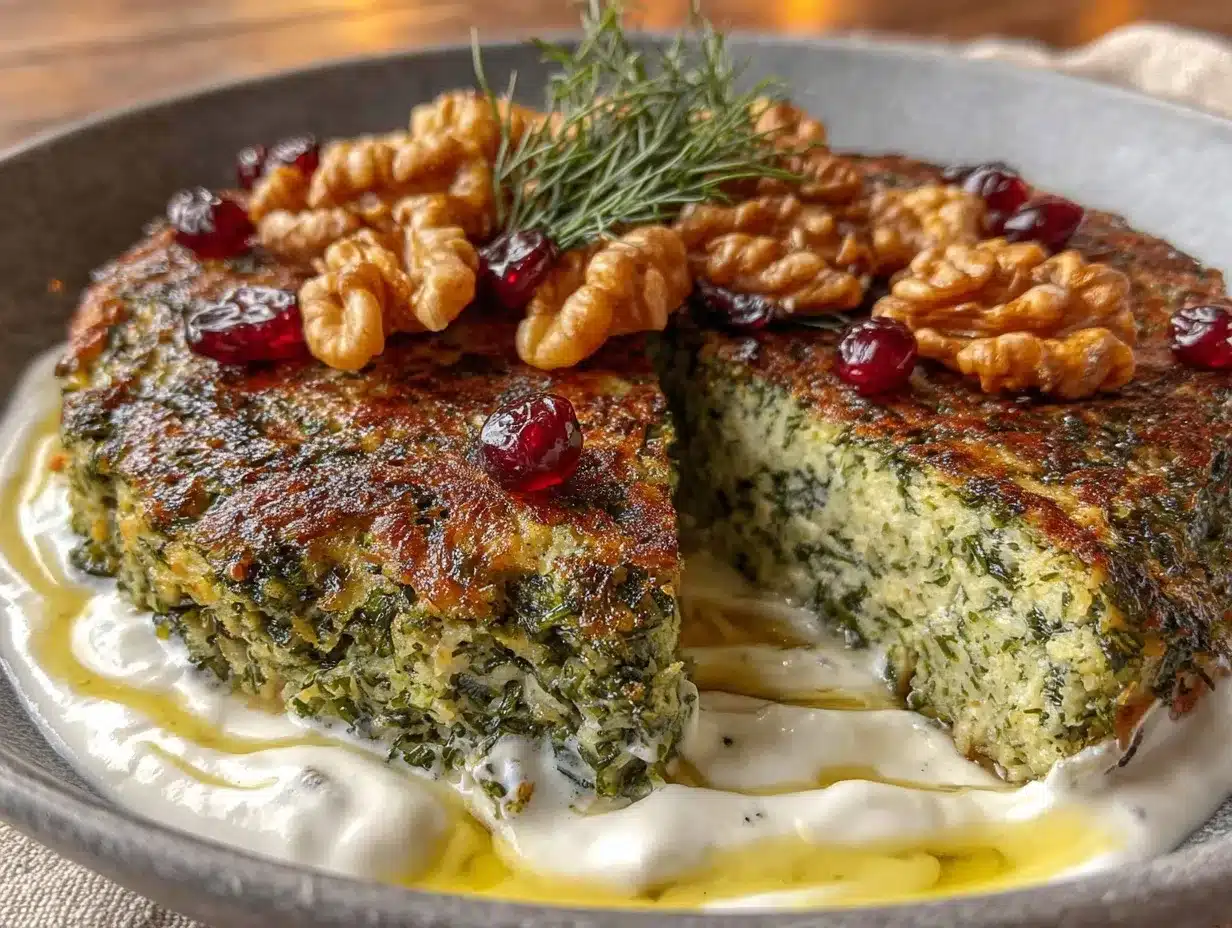
“Have you ever had one of those days where you open the fridge, and all you’ve got are some random herbs and a handful of walnuts? I was staring at a jumble of parsley, cilantro, and chives one evening, thinking, ‘Well, what now?’ Honestly, I didn’t expect much when I threw those together with eggs, but the result was this vibrant, herb-packed Persian frittata known as kuku sabzi. It quickly turned dinner into something unexpectedly delightful, with the tangy burst of barberries and the crunch of walnuts adding layers of flavor I hadn’t anticipated.”
This dish became a go-to whenever I needed something quick but satisfying, especially when evenings were hectic and I didn’t have time for a complicated meal. It’s funny how a simple mix of fresh herbs and a few pantry staples can feel so fresh and bright on the palate. The green flecks from the herbs, the ruby-red pops of barberries, and the toasted walnuts make this kuku sabzi not just a meal but a little celebration on a plate.
It took a few tries to get the balance just right. At first, I was skeptical about the combination of tart barberries with earthy walnuts, but trust me, it works beautifully here. Each bite offers a different note—herbal, nutty, slightly sweet, and tangy—and somehow it all comes together in a way that feels like home. If you’re curious about Persian flavors or just want a refreshing break from the usual egg dishes, this recipe might become your unexpected favorite too.
Why You’ll Love This Recipe
After testing this Persian herb frittata recipe several times, I can say it’s a keeper for many reasons. Here’s why you might find yourself making it again and again:
- Quick & Easy: Ready in about 35 minutes, it’s perfect for busy weeknights or a last-minute brunch that feels special.
- Simple Ingredients: No need to hunt for exotic items — most of these are pantry and fridge staples, with barberries and walnuts adding that unique twist.
- Perfect for Entertaining: Kuku sabzi is a crowd-pleaser at potlucks or family gatherings, bringing something fresh and vibrant to the table.
- Crowd-Pleaser: Kids and adults alike tend to love it, especially with the mild nutty crunch and tangy bursts of barberries.
- Unbelievably Delicious: The herbaceous flavors combined with the texture of walnuts and the sweet-tart zing from barberries make it far from your average frittata.
What sets this version apart is the balance of flavors and textures. The walnuts are lightly toasted for extra crunch, and the barberries are soaked just enough to soften but keep their sharpness. No soggy bits here! Plus, the herbs are finely chopped for an even distribution, creating that signature green speckled look that’s pure Persian charm. I also appreciate how the eggs bind everything with just the right fluffiness—not rubbery or dry.
Honestly, this kuku sabzi feels like a fresh take on comfort food. It’s a recipe that, once mastered, can be whipped up anytime you want a bright, healthy, and filling dish that doesn’t feel like work. And if you enjoy dishes with nuts and a hint of tartness, this will definitely hit the spot. You might find yourself reaching for walnuts and barberries in your pantry more often than you expected!
What Ingredients You Will Need
This recipe depends on fresh, wholesome ingredients that bring herbal brightness and contrasting textures without fuss. Here’s what you’ll want on hand:
- Eggs: 6 large eggs (room temperature for best mixing and fluffiness)
- Fresh Herbs: A mix of parsley (1 cup, finely chopped), cilantro (1 cup, finely chopped), dill (½ cup, finely chopped), and chives (½ cup, finely chopped). These are the soul of kuku sabzi, giving it its signature green color and fresh flavor.
- Walnuts: ½ cup, toasted and roughly chopped (adds crunch and earthiness)
- Barberries (Zereshk): ¼ cup, soaked in warm water for 10 minutes to soften, then drained (provides that tangy pop)
- Green onions: 3 medium, thinly sliced (contributes mild oniony notes)
- Flour: 2 tablespoons all-purpose flour (you can swap with chickpea flour for gluten-free)
- Turmeric powder: ½ teaspoon (for gentle warmth and color)
- Salt and black pepper: to taste
- Olive oil or vegetable oil: 3–4 tablespoons for frying
For best results, I like to use organic eggs and fresh herbs from local markets—there’s a brightness you just can’t beat. When it comes to walnuts, lightly toasting them in a dry pan brings out their natural oils and flavor, which really complements the herbs. Barberries, often found in Middle Eastern or specialty stores, are a bit tart, and soaking them softens that sharpness just enough to balance the dish.
If you can’t find barberries, dried cranberries or currants can work in a pinch, but it won’t be quite the same. For a nut-free version, try toasted pumpkin seeds instead of walnuts. And yes, this kuku sabzi is flexible—you can adjust herbs based on what you have, but keep the fresh green vibe intact!
Equipment Needed
To make this flavorful Persian herb frittata, you’ll need a handful of kitchen essentials:
- A medium mixing bowl for whisking eggs and combining ingredients
- A sharp knife and cutting board for finely chopping herbs and green onions
- A non-stick or well-seasoned cast iron skillet (around 8 to 10 inches) is ideal for even cooking and easy flipping
- A spatula for loosening edges and flipping the kuku sabzi
- Optional: A small bowl for soaking barberries
- A fine mesh strainer or colander to drain soaked barberries
I personally swear by my cast iron skillet for this recipe because it holds heat beautifully and gives a nice crust on the bottom without sticking. But if you don’t have one, a good non-stick pan works well too. Just be careful when flipping to keep that green frittata intact.
For chopping herbs, a sharp chef’s knife saves time and effort—dull knives tend to bruise the herbs and affect the final taste. If you don’t have a big knife, a pair of clean kitchen scissors can work to snip the herbs finely. No fancy gadgets needed here, which is always a win when you want to keep things simple.
Preparation Method
- Prep the herbs and barberries: Thoroughly wash all fresh herbs and green onions. Finely chop parsley, cilantro, dill, and chives, then slice the green onions thinly. Place the chopped herbs and onions in a large mixing bowl. Soak the barberries in warm water for about 10 minutes, then drain well using a fine mesh strainer. Set aside.
- Toast the walnuts: In a dry skillet over medium heat, toast the walnuts for 3-5 minutes, stirring frequently until fragrant and lightly browned. Remove from heat and roughly chop them once cooled. This step boosts their flavor and crunch.
- Mix the eggs and spices: Crack the eggs into the bowl with herbs. Add the flour, turmeric, salt, and pepper. Whisk everything together until the mixture is well combined and slightly frothy. The flour helps bind the herbs and eggs, giving kuku sabzi its signature texture.
- Add walnuts and barberries: Gently fold in the toasted walnuts and soaked barberries into the egg-herb mixture. Be careful not to crush the barberries; you want those bright pops intact.
- Heat the skillet: Add 2 tablespoons of olive oil to your skillet and heat over medium heat until shimmering but not smoking. The oil should coat the pan evenly.
- Cook the kuku sabzi: Pour the egg mixture into the skillet, spreading it evenly. Reduce heat to low and cover the pan with a lid. Cook for about 12-15 minutes or until the edges are set and the top is mostly firm but still slightly jiggly.
- Flip carefully: Here’s the tricky bit. Slide the kuku sabzi onto a large plate, then invert the skillet over the plate and flip it so the uncooked side is down. Add a bit more oil if needed, then cook uncovered for another 8-10 minutes until fully set and lightly golden on both sides.
- Rest and serve: Let the kuku sabzi cool for a few minutes before slicing. This helps it firm up and makes serving easier. It’s delicious warm or at room temperature.
If you’re worried about flipping, you can cut kuku sabzi into wedges and finish cooking in the oven at 350°F (175°C) for 10 minutes instead. Just cover with foil to prevent drying out. Keep an eye on the color — it should be a beautiful golden green.
From personal experience, chopping herbs finely and avoiding overcooking are key. Overcooked kuku can get rubbery, and big herb chunks make it harder for the eggs to bind properly. Also, don’t skip soaking the barberries; it transforms their texture and balances their tartness perfectly.
Cooking Tips & Techniques
Making kuku sabzi feel effortless comes down to a few insider tips I’ve picked up along the way:
- Chop herbs finely: This helps the herbs blend into the eggs evenly and gives a nice texture. I use a rocking motion with a chef’s knife to get them just right.
- Toast walnuts gently: Keep an eye on them—they can go from toasted to burnt in seconds. The toasting releases oils that add a rich nuttiness.
- Soak barberries: Don’t skip this step! Soaking tempers their sharpness and prevents them from drying out or burning during cooking.
- Cook low and slow: Using low heat lets the kuku cook through without browning too quickly or burning. Patience here means a tender, moist frittata.
- Flipping finesse: If flipping feels daunting, try using a plate larger than your skillet. Slide the kuku onto the plate, then invert the skillet over it and flip quickly but carefully.
- Don’t overmix eggs: Whisk just enough to combine. Overbeating can make the kuku dense instead of light and fluffy.
- Oil matters: Use good-quality olive oil or a neutral vegetable oil with a high smoke point. Too little oil and the kuku might stick; too much and it can feel greasy.
Once, I tried rushing the process and cooked on high heat—result? A burnt bottom and raw center. Learned my lesson! Slow and steady wins the race here. Also, if you want to add a little extra depth, a pinch of ground cumin or smoked paprika can be a nice touch, but keep it subtle.
Variations & Adaptations
Kuku sabzi is a wonderfully flexible dish. Here are some ways to make it your own:
- Vegetarian & Vegan: Swap eggs for a chickpea flour batter mixed with water and a bit of turmeric. The texture won’t be exactly the same, but you’ll get a similar herb-packed flavor.
- Seasonal herbs: In winter, try adding fresh spinach or kale alongside parsley and cilantro. Summer? Fresh basil or mint can bring a new brightness.
- Nut alternatives: If you’re allergic to walnuts, toasted sunflower seeds or pine nuts work well for crunch.
- Spice it up: Add minced green chili or a pinch of red pepper flakes to the egg mixture for a gentle heat kick.
- Cheesy twist: Mix in a few tablespoons of crumbled feta or grated mozzarella to add creaminess and a salty tang.
My personal favorite variation adds a sprinkle of sumac alongside barberries for an extra citrusy zing. And once, I combined this kuku with a side of easy cheesy pasta bake for a cozy dinner that balanced fresh herbs with hearty comfort. It was a hit!
Serving & Storage Suggestions
Kuku sabzi tastes amazing warm or at room temperature, making it a perfect dish for casual meals or elegant gatherings.
- Serving: Cut into wedges and serve with a dollop of plain yogurt or tzatziki. A squeeze of fresh lemon juice brightens the flavors even more.
- Pairings: It goes well with simple Persian sides like saffron rice or a fresh cucumber and tomato salad. For something different, pair it with a crisp white wine or a light herbal tea.
- Storage: Store leftovers in an airtight container in the fridge for up to 3 days. The flavors actually deepen over time.
- Reheating: Warm gently in a skillet over low heat or microwave in short bursts to avoid drying it out. Adding a splash of water before reheating helps keep it moist.
If you want to take meal prep up a notch, kuku sabzi can be made ahead and served cold or room temp for picnic lunches. It’s a lovely alternative to your usual egg salad or sandwich fillers. And speaking of make-ahead dishes, if you’re into simple yet delicious breakfast ideas, you might appreciate the ease and flavor of fluffy almond milk pancakes as a sweet contrast on another morning.
Nutritional Information & Benefits
This Persian herb frittata is not just tasty but packed with nutrition from fresh herbs, nuts, and eggs.
- Each serving provides a good dose of protein from eggs and walnuts, essential for muscle repair and sustained energy.
- The fresh herbs are loaded with antioxidants and vitamins A, C, and K, supporting immune function and skin health.
- Walnuts offer heart-healthy omega-3 fatty acids and beneficial minerals like magnesium.
- Barberries are rich in vitamin C and have traditionally been used to aid digestion.
- The recipe is naturally gluten-free if you swap the flour for almond or chickpea flour, and it’s low in carbs, making it suitable for many dietary preferences.
From a wellness perspective, kuku sabzi feels like a green light for eating fresh, wholesome food without guilt. It’s one of those dishes that nourishes body and soul, especially when you want a meal that feels light yet satisfying.
Conclusion
Flavorful Persian herb frittata kuku sabzi is one of those recipes that surprises you with how fresh and comforting it is. With a handful of herbs, walnuts, and barberries, you’re creating a dish that’s full of character, color, and texture without any fuss. I love how it’s adaptable, quick, and just downright delicious any time of day.
Whether you serve it for brunch, a light dinner, or bring it along to a potluck, it’s bound to impress quietly and satisfy deeply. You can tweak the herbs or nuts to suit your taste, making it your own little green masterpiece. If you try this recipe, I’d be thrilled to hear how you make it your own or what variations you come up with—sharing those moments makes cooking even better.
Here’s to simple flavors that feel special and a recipe that might just become a new favorite in your kitchen.
FAQs about Flavorful Persian Herb Frittata Kuku Sabzi
What herbs are traditionally used in kuku sabzi?
Parsley, cilantro, dill, and chives are the classic herbs. Sometimes spinach or fenugreek leaves are added depending on the region or season.
Can I make kuku sabzi ahead of time?
Yes, it stores well in the fridge for up to 3 days and can be served warm or at room temperature.
How do I flip the kuku sabzi without breaking it?
Use a large plate to invert the frittata and then flip the skillet over the plate, or finish cooking in the oven to avoid flipping.
Are barberries essential to the recipe?
They add a unique tartness, but if unavailable, dried cranberries or currants can be a substitute, though the flavor will differ.
Can I make kuku sabzi vegan?
You can substitute eggs with a chickpea flour batter, but the texture and flavor will change somewhat. It’s worth experimenting if you want a vegan version.
Pin This Recipe!
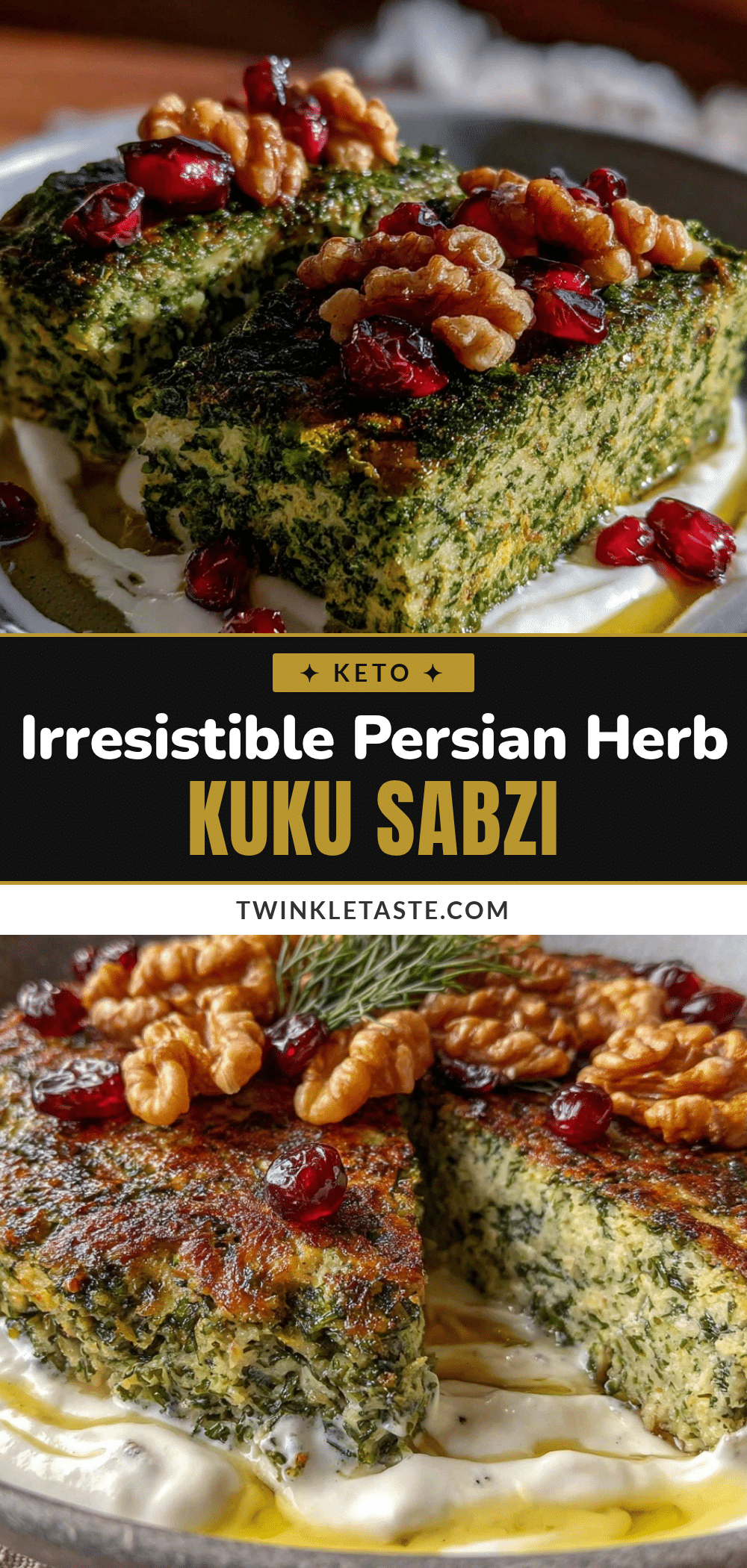
Flavorful Persian Herb Frittata Kuku Sabzi Recipe with Walnuts and Barberries
A vibrant, herb-packed Persian frittata known as kuku sabzi, featuring a fresh mix of parsley, cilantro, dill, and chives, complemented by the crunch of toasted walnuts and the tangy burst of barberries. Perfect for a quick, satisfying meal with bright, fresh flavors.
- Prep Time: 15 minutes
- Cook Time: 20 minutes
- Total Time: 35 minutes
- Yield: 6 servings 1x
- Category: Main Course
- Cuisine: Persian
Ingredients
- 6 large eggs (room temperature)
- 1 cup parsley, finely chopped
- 1 cup cilantro, finely chopped
- ½ cup dill, finely chopped
- ½ cup chives, finely chopped
- ½ cup walnuts, toasted and roughly chopped
- ¼ cup barberries (Zereshk), soaked in warm water for 10 minutes then drained
- 3 medium green onions, thinly sliced
- 2 tablespoons all-purpose flour (or chickpea flour for gluten-free)
- ½ teaspoon turmeric powder
- Salt, to taste
- Black pepper, to taste
- 3–4 tablespoons olive oil or vegetable oil for frying
Instructions
- Thoroughly wash all fresh herbs and green onions. Finely chop parsley, cilantro, dill, and chives, then slice the green onions thinly. Place the chopped herbs and onions in a large mixing bowl.
- Soak the barberries in warm water for about 10 minutes, then drain well using a fine mesh strainer. Set aside.
- In a dry skillet over medium heat, toast the walnuts for 3-5 minutes, stirring frequently until fragrant and lightly browned. Remove from heat and roughly chop once cooled.
- Crack the eggs into the bowl with herbs. Add the flour, turmeric, salt, and pepper. Whisk everything together until well combined and slightly frothy.
- Gently fold in the toasted walnuts and soaked barberries into the egg-herb mixture, being careful not to crush the barberries.
- Add 2 tablespoons of olive oil to a skillet and heat over medium heat until shimmering but not smoking.
- Pour the egg mixture into the skillet, spreading it evenly. Reduce heat to low and cover the pan with a lid. Cook for about 12-15 minutes or until edges are set and the top is mostly firm but still slightly jiggly.
- Slide the kuku sabzi onto a large plate, then invert the skillet over the plate and flip it so the uncooked side is down. Add a bit more oil if needed, then cook uncovered for another 8-10 minutes until fully set and lightly golden on both sides.
- Let the kuku sabzi cool for a few minutes before slicing. Serve warm or at room temperature.
Notes
Chop herbs finely for even texture and flavor. Toast walnuts gently to avoid burning. Soak barberries to soften and balance tartness. Cook on low heat to avoid rubbery texture. Use a large plate to flip the kuku sabzi carefully or finish cooking in the oven at 350°F for 10 minutes if flipping is difficult. Avoid overmixing eggs to keep the frittata light and fluffy.
Nutrition
- Serving Size: 1 wedge (approximate
- Calories: 210
- Sugar: 1
- Sodium: 180
- Fat: 16
- Saturated Fat: 2
- Carbohydrates: 6
- Fiber: 2
- Protein: 10
Keywords: kuku sabzi, Persian frittata, herb frittata, walnuts, barberries, Persian herbs, kuku sabzi recipe, Persian cuisine, herb-packed eggs, healthy frittata