It was 11:47 PM on a random Tuesday, and I was staring into the fridge like it held the secrets to the universe. The craving was very specific—I wanted the creamy, cheesy, bacony goodness of a twice-baked potato, but the thought of individually stuffing and baking eight potato skins felt like a cruel joke at that hour. I didn’t have the energy for fancy presentation, but I had a bag of russets, a block of cheddar that was staring back at me, and a half-empty container of sour cream. And then it hit me—what if I just… skipped the skins? What if I mashed it all up, threw it in a dish, and called it a casserole? Honestly, I was too tired to talk myself out of it, so I just went for it. I mean, what was the worst that could happen? A delicious mess?
I started peeling potatoes at midnight, which felt a little unhinged, but the quiet of the kitchen and that specific craving had me locked in. I boiled them, mashed them with butter and sour cream, and folded in a mountain of shredded cheese and crispy bacon. I poured it into a baking dish, topped it with more cheese (obviously), and slid it into the oven. The house smelled like a loaded baked potato bar, and I stood there, spatula in hand, feeling like a mad scientist who just discovered fire. When I took that first bite, I let out a sound that probably woke up the dog. It was everything I wanted—creamy, tangy, salty, and so much easier than the real deal. Maybe you’ve been there, standing in your kitchen at a ridiculous hour, wondering if a shortcut is worth it. Let me tell you, it is. This recipe stuck with me because it solved a problem I didn’t even know I had: how to get that twice-baked potato flavor without all the fuss. And now, it’s the only way I make it.
Why You’ll Love This Recipe
This isn’t just another potato casserole. This is the one that makes your weeknight dinners feel like Sunday supper without the stress. I’ve tested this recipe more times than I can count, tweaking the cheese ratios and the bake times to make sure it’s absolutely foolproof. It’s been approved by my pickiest eater (my four-year-old nephew, who once rejected mac and cheese because it was “too orange”) and my budget-conscious sister-in-law, who loves that it uses basic ingredients. Here is why this casserole earns a permanent spot in your meal rotation:
- Quick & Easy: The active prep time is about 20 minutes. You boil the potatoes, mix everything together, and you’re done. The oven does the rest.
- Simple Ingredients: No fancy grocery trips needed. Potatoes, cheese, sour cream, butter, bacon—these are things you probably already have in your kitchen.
- Perfect for Family Dinners: This is the kind of side dish that makes everyone happy. It goes with roasted chicken, grilled steak, or even a simple salad for a meatless meal.
- Crowd-Pleaser: I’ve brought this to potlucks and family gatherings, and the dish comes back empty every single time. Kids and adults go crazy for it.
- Unbelievably Delicious: The texture is pure comfort—creamy on the inside, slightly crispy and golden on top. It’s the flavor of a loaded baked potato in every single bite.
What makes this recipe different? It’s the technique. Instead of baking the potatoes first and then scooping them out, you boil them whole, mash them with the good stuff, and bake it all together. This saves a ton of time and makes the casserole incredibly creamy. Plus, you can make it a day ahead, which is a lifesaver for busy weeknights or holiday dinners. This isn’t just another version of a potato dish—it’s the best version. It’s comfort food reimagined: faster, easier, but with the same soul-soothing satisfaction.
What Ingredients You Will Need
This recipe uses simple, wholesome ingredients to deliver bold flavor and satisfying texture without the fuss. Most of these are pantry staples, and I’ve included a few notes on what to look for to get the best results.
For the Casserole Base
- 3 pounds russet potatoes (about 6 medium potatoes) – Russets are ideal because they’re starchy and get super fluffy when mashed. Yukon Golds work too, but the texture will be a little denser.
- 1/2 cup unsalted butter (1 stick), softened – Adds richness and that classic buttery flavor. I prefer Land O’Lakes for consistent quality.
- 1 cup sour cream – Use full-fat for the creamiest result. Light sour cream works, but the texture won’t be as luxurious.
- 1/2 cup whole milk – Helps thin the mash slightly so it bakes up perfectly creamy. You can use 2% or even oat milk in a pinch.
- 1 teaspoon salt – Kosher salt is best for seasoning evenly.
- 1/2 teaspoon black pepper – Freshly ground adds a little bite.
- 1/2 teaspoon garlic powder – This adds a subtle savory depth that makes the casserole taste like it cooked all day.
For the Mix-Ins and Topping
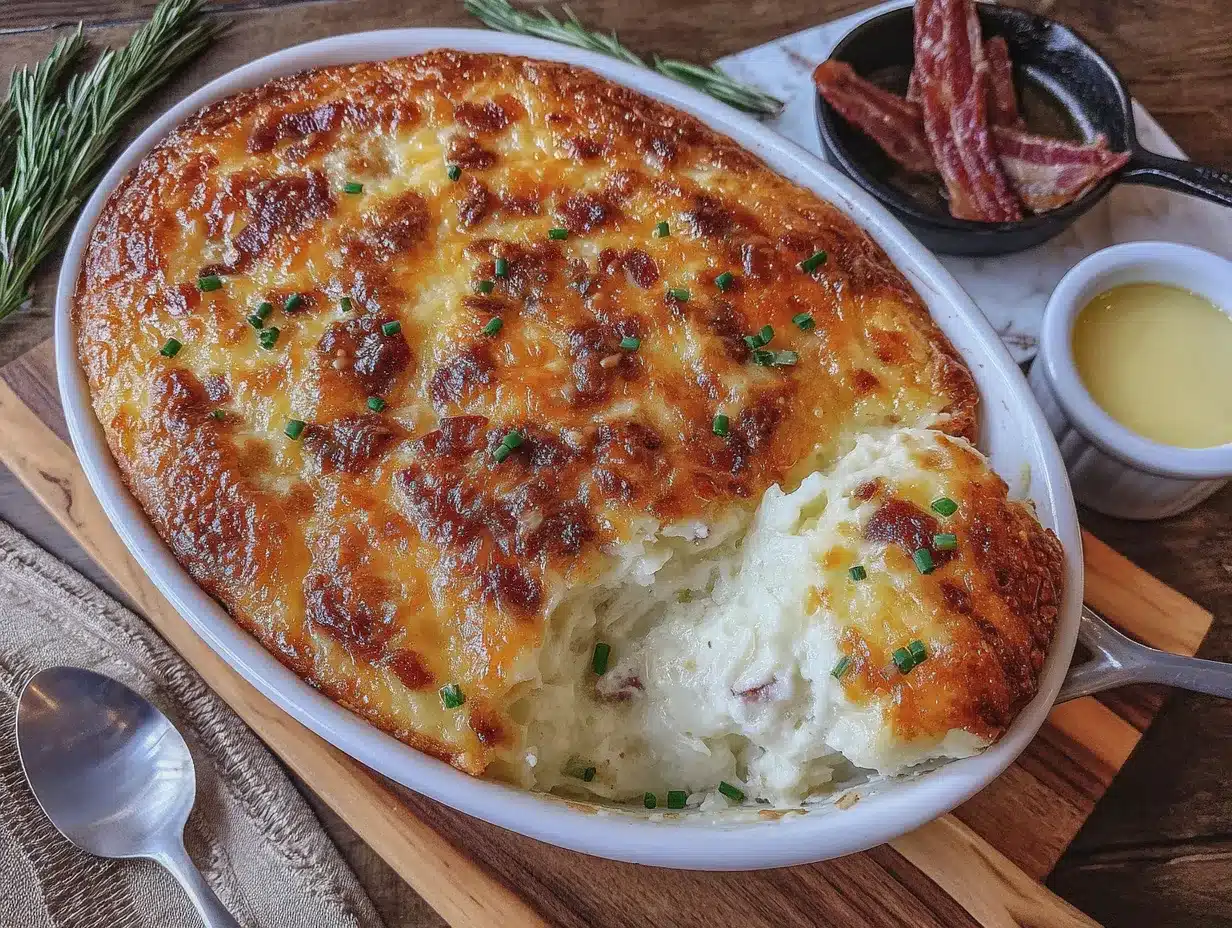
- 2 cups shredded sharp cheddar cheese, divided – Sharp cheddar gives the most flavor. I recommend Tillamook or Cabot for a great melt. Reserve 1/2 cup for the topping.
- 8 slices bacon, cooked and crumbled – Thick-cut bacon adds a smoky, salty crunch. You can also use turkey bacon or omit it for a vegetarian version.
- 3 green onions, thinly sliced – For a fresh, mild onion flavor and a pop of color.
- 1/2 cup shredded mozzarella cheese (optional) – This makes the top extra bubbly and golden. I use it when I’m feeling extra indulgent.
Ingredient Selection Tips: Look for potatoes that are firm and free of green spots or sprouts. For the bacon, I like to bake it in the oven at 400°F for 15-18 minutes—it comes out perfectly crispy and doesn’t splatter all over the stove. If you’re making this dairy-free, use a plant-based butter, sour cream, and cheese. The texture will be slightly different, but it still tastes great.
Equipment Needed
You don’t need a lot of fancy tools for this recipe, which is part of its charm. Here is what you will need:
- Large pot (6-8 quarts) – For boiling the potatoes. Make sure it’s big enough so the potatoes have room to cook evenly.
- Colander – For draining the potatoes.
- Potato masher or hand mixer – A masher gives you a chunkier texture, which I personally love. A hand mixer makes it super smooth. Both work great.
- Large mixing bowl – For combining all the ingredients.
- 9×13-inch baking dish – This is the standard size for this casserole. A 3-quart dish works too.
- Cheese grater – Pre-shredded cheese has anti-caking agents that prevent it from melting smoothly. Grating your own is worth the extra minute.
- Measuring cups and spoons – For accuracy, especially with the butter and milk.
Budget-Friendly Tip: If you don’t have a potato masher, you can use a fork or the bottom of a sturdy glass. It takes a little more elbow grease, but it works perfectly. Also, a glass or ceramic baking dish is fine—no need to buy a fancy metal one.
Preparation Method
This recipe comes together in a few simple steps. The key is to not overwork the potatoes—you want them creamy, not gluey. Here is how to do it:
- Boil the potatoes (25-30 minutes): Scrub the potatoes clean, but leave the skins on. Place them in a large pot and cover with cold water by about 2 inches. Add a generous pinch of salt. Bring to a boil over high heat, then reduce to a simmer. Cook until the potatoes are fork-tender—a knife should slide in with no resistance. Drain them in a colander and let them cool for about 5 minutes, just until they’re cool enough to handle. Pro tip: Don’t let them cool completely, or they won’t mash as smoothly.
- Preheat the oven (5 minutes): While the potatoes are cooking, preheat your oven to 375°F (190°C). Grease your 9×13-inch baking dish with a little butter or non-stick spray.
- Mash the potatoes (5 minutes): Peel the potatoes while they’re still warm. The skins should slip off easily. Place the peeled potatoes in a large mixing bowl. Add the softened butter and mash until the butter is melted and the potatoes are mostly smooth. A few lumps are totally fine—they add texture.
- Add the creamy ingredients (3 minutes): Pour in the sour cream, milk, salt, pepper, and garlic powder. Stir until everything is well combined. The mixture should be thick but creamy, like a very rich mashed potato. If it seems too stiff, add an extra tablespoon of milk.
- Fold in the mix-ins (2 minutes): Add 1 1/2 cups of the shredded cheddar cheese, the crumbled bacon (reserve a tablespoon for the topping), and the sliced green onions. Fold gently until everything is evenly distributed. Be careful not to overmix—you want the cheese and bacon to stay in distinct pockets.
- Assemble the casserole (2 minutes): Spread the potato mixture evenly into the prepared baking dish. Sprinkle the remaining 1/2 cup of cheddar cheese (and the mozzarella, if using) over the top. Sprinkle the reserved bacon bits on top of the cheese.
- Bake (25-30 minutes): Place the dish in the preheated oven and bake until the casserole is hot all the way through and the cheese on top is melted and bubbly. The edges should be just starting to brown. If you want a deeper golden top, switch the oven to broil for the last 2-3 minutes. Watch it closely so it doesn’t burn!
- Rest and serve (5 minutes): Let the casserole rest on the counter for about 5 minutes before serving. This allows it to set up slightly so it doesn’t turn into a soupy mess on the plate. Garnish with extra green onions or a dollop of sour cream if you’re feeling fancy.
Make-Ahead Instructions: To make this a day ahead, prepare the casserole through step 6, but do not bake it. Cover the dish tightly with foil and refrigerate for up to 24 hours. When you’re ready to bake, remove it from the fridge while the oven preheats (about 20 minutes). Bake covered with foil for 20 minutes, then remove the foil and bake for another 15-20 minutes, until hot and bubbly.
Cooking Tips & Techniques
I’ve made this casserole about a dozen times, and I’ve learned a few things the hard way. Here are my best tips to make sure yours turns out perfect every time:
- Don’t overboil the potatoes. If you cook them too long, they absorb too much water and become waterlogged. This makes the casserole gummy instead of creamy. Test them with a knife at the 20-minute mark.
- Use room temperature dairy. Cold sour cream or milk can seize up the butter and make the mash lumpy. Let them sit on the counter for 15 minutes before you start mixing.
- Season in layers. I add salt to the boiling water and again to the mash. This ensures the potatoes are seasoned all the way through, not just on top.
- Bake uncovered for a crispy top. If you cover the dish, the steam will make the top soggy. You want that golden, slightly crunchy cheese crust.
- Avoid the gluey trap. Overmashing or using a food processor can release too much starch, turning your potatoes into glue. A hand masher or a hand mixer on low speed is your best friend here.
My Biggest Failure: The first time I made this, I used pre-shredded cheese from a bag. The casserole came out greasy and the cheese didn’t melt properly. It was a sad, oily mess. Now I always grate my own cheese—it melts like a dream and the texture is so much better. Learn from my mistake!
Variations & Adaptations
This casserole is incredibly forgiving, so feel free to make it your own. Here are a few ways I’ve tweaked it over the years:
- Loaded Baked Potato Style: Add 1/2 cup of cooked, crumbled sausage or diced ham along with the bacon. It turns it into a full meal. I did this for a Super Bowl party, and it was gone in 20 minutes.
- Vegetarian Version: Skip the bacon and add 1 cup of sautéed mushrooms and 1/2 cup of roasted corn kernels. The umami from the mushrooms gives it that savory depth you’d miss from the meat.
- Spicy Southwest Twist: Add 1 can of drained and rinsed black beans, 1/2 cup of diced pickled jalapeños, and use pepper jack cheese instead of cheddar. Top with fresh cilantro before serving. This is my personal favorite when I’m craving something with a kick.
- Lighter Option: Use Greek yogurt instead of sour cream, reduce the butter to 1/4 cup, and use low-fat cheese. It’s still creamy and delicious, just a little less indulgent.
- Gluten-Free: This recipe is naturally gluten-free as written. Just double-check your bacon and cheese labels to make sure there are no hidden additives.
Serving & Storage Suggestions
This casserole is best served hot, straight from the oven. The cheese should be bubbly and the top slightly crispy. I like to scoop it onto plates with a big spoon and garnish with a sprinkle of fresh chives or a dollop of sour cream. It pairs beautifully with:
- Grilled or roasted chicken
- Pan-seared steak or pork chops
- A simple green salad with a tangy vinaigrette (the acidity cuts through the richness)
- Roasted vegetables like broccoli or asparagus
Storage: Leftovers keep well in an airtight container in the refrigerator for up to 4 days. The flavors actually meld together overnight, so it tastes even better the next day.
Reheating: The best way to reheat is in the oven at 350°F for about 15 minutes, or until warmed through. The microwave works in a pinch (about 2 minutes on high), but the top won’t be as crispy. For a quick fix, I sometimes reheat individual portions in a small skillet over medium heat, stirring occasionally.
Freezing: This casserole freezes beautifully. Assemble it completely (without baking), cover tightly with foil and plastic wrap, and freeze for up to 3 months. To bake from frozen, remove the plastic wrap, cover with foil, and bake at 375°F for 45-50 minutes. Remove the foil for the last 10 minutes to let the top brown.
Nutritional Information & Benefits
This is comfort food, so it’s definitely a treat, but it does have some redeeming qualities. Here is an approximate breakdown per serving (based on 8 servings):
| Nutrient | Amount per Serving |
|---|---|
| Calories | 385 |
| Total Fat | 22g |
| Saturated Fat | 13g |
| Cholesterol | 65mg |
| Sodium | 620mg |
| Total Carbohydrates | 35g |
| Dietary Fiber | 3g |
| Sugar | 3g |
| Protein | 14g |
| Vitamin C | 15% DV |
| Potassium | 800mg |
Health Benefits: Potatoes often get a bad rap, but they’re actually a good source of vitamin C, potassium, and fiber (especially if you leave the skins on). The calcium from the cheese and sour cream supports bone health. And the protein from the bacon and cheese helps keep you full. Is it a health food? No. But it’s a nourishing, satisfying dish that brings people together, and that counts for something.
Dietary Considerations: This recipe contains dairy and gluten (check your bacon). It can be made vegetarian by omitting the bacon and adding mushrooms or beans. For a low-carb option, swap the potatoes for cauliflower florets (boil and mash them the same way).
Conclusion
This Make-Ahead Twice Baked Potato Casserole is the kind of recipe that makes you look like a hero with very little effort. It’s creamy, cheesy, and packed with all the flavors of a classic loaded baked potato—but without the hassle of stuffing individual skins. Whether you’re making it for a busy weeknight dinner, a holiday feast, or a potluck with friends, it always delivers. I love this recipe because it’s forgiving, adaptable, and guaranteed to put smiles on faces around the table. It’s become my go-to for those nights when I need a little comfort, and I hope it becomes one of yours too.
I’d love to hear how it turns out for you! Did you add any fun twists? Did your kids go back for seconds? Drop a comment below and let me know—your feedback helps other home cooks too. And if you loved it, share this recipe with a friend who needs a little comfort food in their life. Happy cooking!
Frequently Asked Questions
Can I use red potatoes or Yukon Golds instead of russets?
Yes, you can! Yukon Golds will give you a creamier, slightly buttery texture, while red potatoes will be a bit waxier and hold more shape. Both work, but the texture will be a little different from the classic fluffy russet version.
How do I prevent the casserole from turning out watery?
The key is to not overboil the potatoes and to let them drain well after cooking. Also, if you’re using frozen bacon, make sure you cook it until very crispy and drain it on paper towels to remove excess grease.
Can I prepare this casserole completely and freeze it?
Absolutely! Assemble the casserole in the dish, cover it tightly with foil and plastic wrap, and freeze for up to 3 months. When you’re ready to bake, thaw it in the refrigerator overnight, then bake as directed.
What can I use instead of sour cream?
Greek yogurt is the best substitute—it has a similar tang and creaminess. You can also use crème fraîche or even plain full-fat yogurt. Avoid low-fat or non-fat versions, as they can make the casserole watery.
How do I make this recipe dairy-free?
Use plant-based butter, dairy-free sour cream (like Tofutti or Kite Hill), and your favorite vegan shredded cheese. The texture will be slightly less creamy, but it still tastes fantastic. I’ve tested it with Miyoko’s vegan butter and Violife cheddar, and it was a hit with my dairy-free friends.
Pin This Recipe!
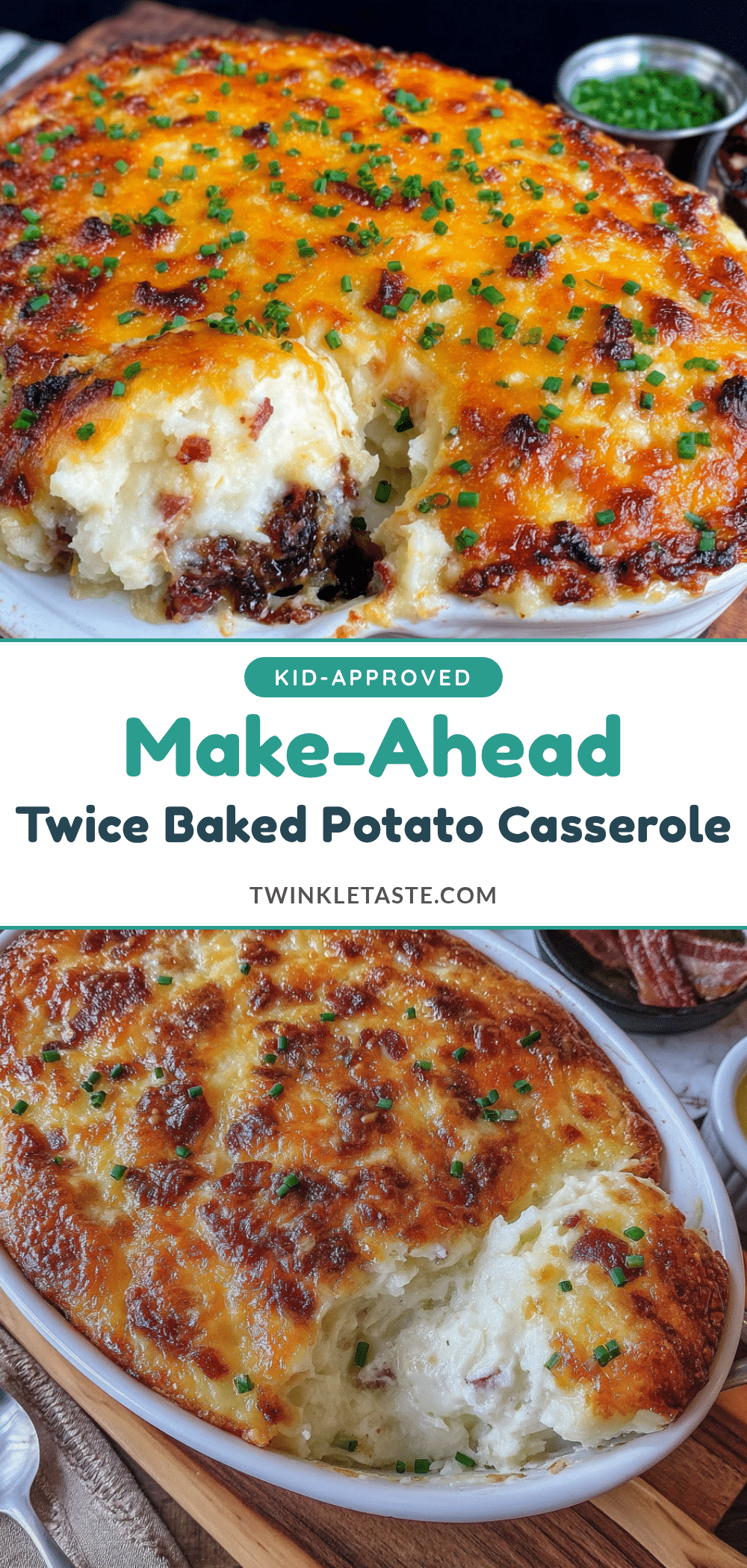
Best Make-Ahead Twice Baked Potato Casserole Recipe

This creamy, cheesy, and bacony casserole delivers all the flavor of a loaded twice-baked potato without the fuss of stuffing individual skins. It’s quick, easy, and perfect for family dinners, potlucks, or holiday feasts.
- Prep Time: 20 minutes
- Cook Time: 30 minutes
- Total Time: 50 minutes
- Yield: 8 servings 1x
- Category: Side Dish
- Cuisine: American
Ingredients
- 3 pounds russet potatoes (about 6 medium potatoes)
- 1/2 cup unsalted butter (1 stick), softened
- 1 cup sour cream
- 1/2 cup whole milk
- 1 teaspoon salt
- 1/2 teaspoon black pepper
- 1/2 teaspoon garlic powder
- 2 cups shredded sharp cheddar cheese, divided
- 8 slices bacon, cooked and crumbled
- 3 green onions, thinly sliced
- 1/2 cup shredded mozzarella cheese (optional)
Instructions
- Boil the potatoes (25-30 minutes): Scrub the potatoes clean, but leave the skins on. Place them in a large pot and cover with cold water by about 2 inches. Add a generous pinch of salt. Bring to a boil over high heat, then reduce to a simmer. Cook until the potatoes are fork-tender—a knife should slide in with no resistance. Drain them in a colander and let them cool for about 5 minutes, just until they’re cool enough to handle. Pro tip: Don’t let them cool completely, or they won’t mash as smoo…
- Preheat the oven (5 minutes): While the potatoes are cooking, preheat your oven to 375°F (190°C). Grease your 9×13-inch baking dish with a little butter or non-stick spray.
- Mash the potatoes (5 minutes): Peel the potatoes while they’re still warm. The skins should slip off easily. Place the peeled potatoes in a large mixing bowl. Add the softened butter and mash until the butter is melted and the potatoes are mostly smooth. A few lumps are totally fine—they add texture.
- Add the creamy ingredients (3 minutes): Pour in the sour cream, milk, salt, pepper, and garlic powder. Stir until everything is well combined. The mixture should be thick but creamy, like a very rich mashed potato. If it seems too stiff, add an extra tablespoon of milk.
- Fold in the mix-ins (2 minutes): Add 1 1/2 cups of the shredded cheddar cheese, the crumbled bacon (reserve a tablespoon for the topping), and the sliced green onions. Fold gently until everything is evenly distributed. Be careful not to overmix—you want the cheese and bacon to stay in distinct pockets.
- Assemble the casserole (2 minutes): Spread the potato mixture evenly into the prepared baking dish. Sprinkle the remaining 1/2 cup of cheddar cheese (and the mozzarella, if using) over the top. Sprinkle the reserved bacon bits on top of the cheese.
- Bake (25-30 minutes): Place the dish in the preheated oven and bake until the casserole is hot all the way through and the cheese on top is melted and bubbly. The edges should be just starting to brown. If you want a deeper golden top, switch the oven to broil for the last 2-3 minutes. Watch it closely so it doesn’t burn!
- Rest and serve (5 minutes): Let the casserole rest on the counter for about 5 minutes before serving. This allows it to set up slightly so it doesn’t turn into a soupy mess on the plate. Garnish with extra green onions or a dollop of sour cream if you’re feeling fancy.
Notes
Make-Ahead Instructions: To make this a day ahead, prepare the casserole through step 6, but do not bake it. Cover the dish tightly with foil and refrigerate for up to 24 hours. When you’re ready to bake, remove it from the fridge while the oven preheats (about 20 minutes). Bake covered with foil for 20 minutes, then remove the foil and bake for another 15-20 minutes, until hot and bubbly. Don’t overboil the potatoes or they’ll become waterlogged. Use room temperature dairy for best results. Grate your own cheese for optimal melting.
Nutrition
- Serving Size: 1 serving (about 1 c
- Calories: 385
- Sugar: 3
- Sodium: 620
- Fat: 22
- Saturated Fat: 13
- Carbohydrates: 35
- Fiber: 3
- Protein: 14
Keywords: twice baked potato casserole, make ahead potato casserole, loaded potato casserole, cheesy potato casserole, bacon potato casserole, easy potato casserole, holiday side dish, comfort food