I wasn’t expecting cooking advice from my accountant, but there I was, sitting in his cluttered office on a drizzly December afternoon, listening to him describe exactly how to make black-eyed pea soup. He had just finished explaining my tax extensions—a mess I’d made of my quarterly filings, honestly—and somehow we’d gotten onto the topic of New Year’s traditions. He leaned back in his squeaky chair, rubbed his hands together, and said, “You know, the secret to a good luck soup isn’t the peas themselves. It’s the ham hock and a whole lot of patience.” I scribbled his instructions on the back of an old receipt. Let me tell you, I was skeptical at first. An accountant? Giving soup advice? But that first batch he described? It changed my whole January first.
The power went out halfway through my first attempt at making this soup. There I was, standing in a dark kitchen at four in the afternoon on New Year’s Eve, the ham hock barely simmered, and the peas still hard as pebbles. I fumbled for candles, muttered a few choice words, and somehow kept stirring by flashlight. You know that feeling when a recipe just refuses to cooperate? That was this soup, that first time. But I refused to give up. I lit the gas stove with a match—probably not my smartest move—and finished it by candlelight. When I finally tasted it, I almost cried. Not from the stress, but because it was so ridiculously good. That bowl of soup, born from a tax office tip and a power outage, has been my New Year’s tradition ever since.
This cozy New Year’s Day black-eyed pea soup is the kind of meal that makes you slow down. It’s rich, smoky, and hearty, with tender peas swimming in a savory broth that tastes like it simmered all day—because it did. But here’s the thing: it’s not complicated. You don’t need fancy techniques or exotic ingredients. You just need time, a big pot, and the willingness to let the flavors do their thing. I’ve made this for friends who swore they didn’t like black-eyed peas, and watched them go back for seconds. It’s that kind of recipe. The kind that turns skeptics into believers. And honestly, starting the year with a bowl of something this good? That feels like the right kind of luck.
Why You’ll Love This Recipe
This isn’t just another black-eyed pea soup. It’s the one I’ve tested, tweaked, and perfected over five New Year’s Days. I’ve burned it, undersalted it, and once accidentally used way too much smoked paprika (don’t ask). But every mistake taught me something, and this version is the result of all that trial and error. It’s family-approved, budget-friendly, and honestly, it’s the soup that makes my kids actually excited about legumes. That’s no small feat.
- Budget-Friendly: A single ham hock and a bag of dried peas feed a crowd for pennies per serving. No fancy cuts of meat needed.
- Picky Eater Approved: My youngest, who usually pushes vegetables around her plate, asks for extra broth. The smoky flavor does the heavy lifting.
- Make-Ahead Magic: This soup tastes even better the next day. The flavors meld overnight, making it perfect for New Year’s Day when you’d rather relax than cook.
- Crowd-Pleaser: I’ve brought this to potlucks and family dinners, and it always disappears first. People who think they don’t like black-eyed peas? They’re the ones asking for the recipe.
- Good Luck Tradition: Eating black-eyed peas on New Year’s Day is supposed to bring prosperity. Whether you believe it or not, starting the year with a warm, satisfying meal feels like a win.
What makes this recipe different? It’s the technique. Most versions just dump everything in a pot and hope for the best. But I’ve learned that sautéing the aromatics first, deglazing the pot, and letting the ham hock simmer low and slow creates a broth that’s deeply flavorful without being greasy. It’s comfort food that feels intentional, not thrown together. And for a family feeding on a budget, that’s exactly what you need—a meal that tastes like you spent hours on it, even if the active time is minimal.
What Ingredients You Will Need
This recipe uses simple, wholesome ingredients to deliver bold flavor and satisfying texture without the fuss. Most of these are pantry staples or easy to find at any grocery store. Here’s what you’ll need and why each one matters.
- 1 pound dried black-eyed peas (about 2 cups) — Look for bags that are firm and not cracked. I prefer the store brand for this; they all cook up the same. No need to soak overnight if you’re short on time—just do a quick soak (more on that below).
- 1 meaty ham hock (about 1 to 1.5 pounds) — This is the soul of the soup. The smoky, salty flavor infuses the broth as it simmers. I get mine from the butcher counter, but pre-packaged ones work fine too. If you can’t find a ham hock, a smoked turkey leg works beautifully.
- 2 tablespoons olive oil — For sautéing the aromatics. You could use vegetable oil or bacon fat if you have it saved (and honestly, bacon fat adds even more flavor).
- 1 large yellow onion, diced (about 2 cups) — Onions provide the savory base. Yellow or sweet onions are best; red onions are too sharp for this.
- 3 celery stalks, diced (about 1 cup) — Celery adds that classic mirepoix flavor. Don’t skip it—even if you’re tempted, it adds a subtle freshness.
- 3 medium carrots, peeled and diced (about 1.5 cups) — Carrots bring sweetness and color. I like to dice them small so they soften evenly with the peas.
- 4 cloves garlic, minced — Fresh garlic is non-negotiable here. The jarred stuff just doesn’t have the same punch. Add it after the vegetables have softened so it doesn’t burn.
- 1 teaspoon smoked paprika — This is my secret weapon. It adds a deep, smoky warmth that makes the soup taste like it simmered all day over a fire. I use La Chinata smoked paprika—it’s worth seeking out.
- 1 teaspoon dried thyme — Thyme pairs beautifully with ham and peas. If you have fresh, use 2 teaspoons, but dried works perfectly.
- 1/2 teaspoon black pepper — Freshly ground is best. Start with this and adjust at the end.
- 1/2 teaspoon salt (plus more to taste) — Go easy on salt early on; the ham hock adds plenty. You can always add more at the end.
- 2 bay leaves — These add a subtle herbal note. Remember to fish them out before serving (I always forget one, and someone finds it).
- 6 cups chicken broth (low-sodium) — Homemade is lovely, but store-bought works great. Low-sodium lets you control the salt level. You can also use vegetable broth for a lighter flavor.
- 2 cups water — This helps stretch the broth without making it too salty. Add more if the soup gets too thick as it sits.
- 1 tablespoon apple cider vinegar — Added at the end, this brightens the whole soup. It cuts through the richness and wakes up all the flavors. Don’t skip it.
- Optional garnish: chopped fresh parsley or green onions — A sprinkle of green adds color and freshness. It’s not essential, but it makes the bowl look pretty.
Equipment Needed
You don’t need a fancy kitchen for this soup. A few basic tools will get the job done, and I’ve included some budget-friendly alternatives.
- Large Dutch oven or heavy-bottomed pot (at least 6 quarts) — This is my go-to for soups. The heavy bottom distributes heat evenly and prevents scorching. If you don’t have a Dutch oven, any large stockpot will work. I’ve even made this in a cast-iron enamel pot I found at a thrift store for $15.
- Sharp chef’s knife and cutting board — You’ll be dicing a fair amount of vegetables. A sharp knife makes the job faster and safer. I use a Victorinox chef’s knife—it’s affordable and stays sharp.
- Wooden spoon or spatula — For stirring and scraping up the browned bits from the bottom of the pot. A wooden spoon won’t scratch your cookware.
- Measuring cups and spoons — For accuracy. I use a set of stainless steel measuring cups that have lasted for years.
- Large bowl — For rinsing and soaking the black-eyed peas. Any large mixing bowl will do.
- Colander — For draining the soaked peas. A fine-mesh sieve works too.
- Tongs — For removing the ham hock from the pot once it’s tender. A slotted spoon also works.
- Ladle — For serving. A deep ladle is best for soups with chunks.
That’s it. No immersion blender, no special gadgets. Just good old-fashioned tools that any home cook would have. If you’re missing something, get creative. I’ve used a butter knife to stir in a pinch, and a coffee mug as a measuring cup. It’s not pretty, but it works.
Preparation Method
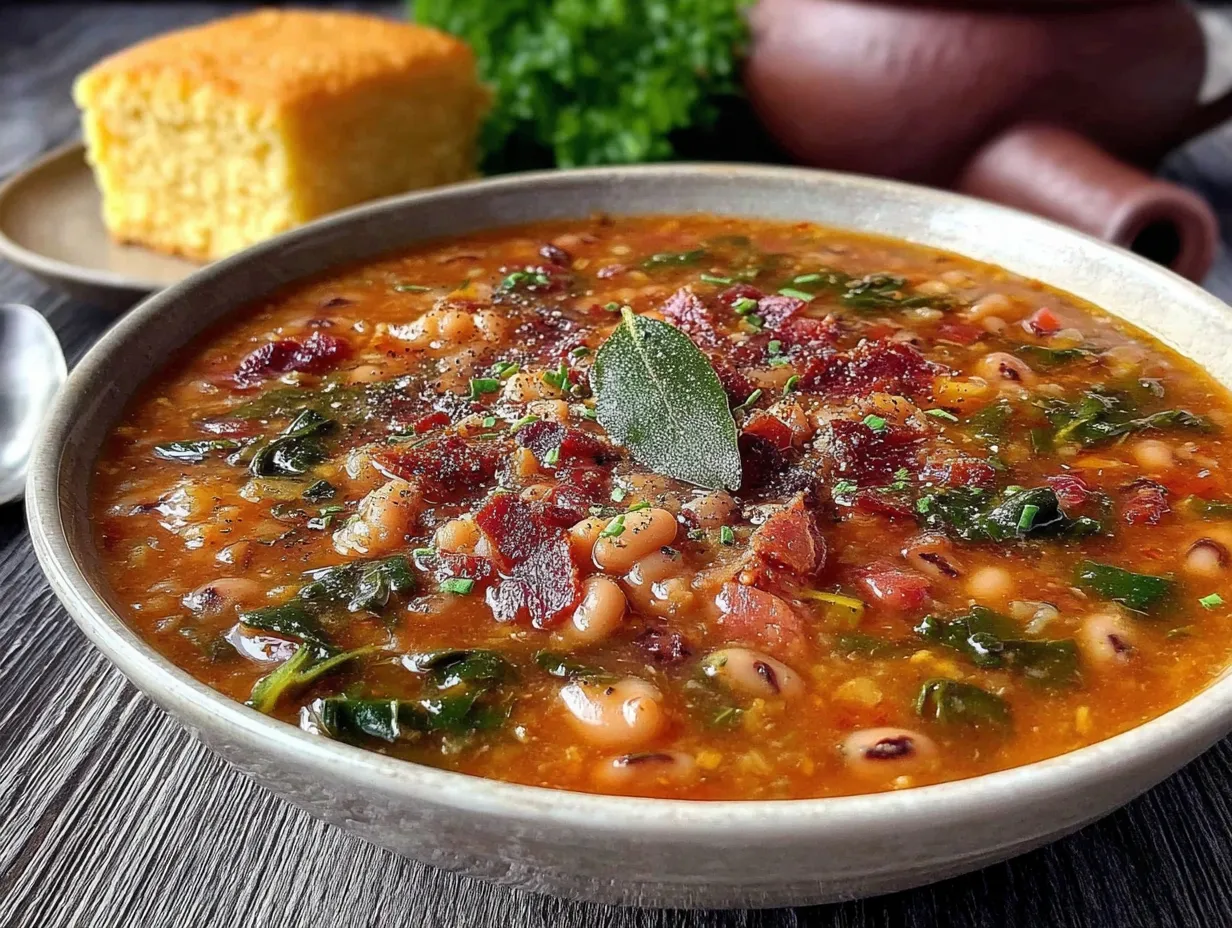
Let’s get cooking. This soup takes about 2.5 hours from start to finish, but most of that is hands-off simmering. Here’s the step-by-step.
- Rinse and quick-soak the black-eyed peas. Place the dried peas in a large bowl and cover with cold water by 2 inches. Swish them around with your hand, then drain. Return the peas to the bowl, cover with fresh water, and let them soak for 1 hour. This quick soak softens them enough to cook evenly without the overnight commitment. If you forgot to soak, you can skip this step, but the cooking time will increase by about 30 minutes. Drain and rinse the peas again before using.
- Prep the vegetables. While the peas soak, dice the onion, celery, and carrots into small, even pieces—about 1/4 inch. Mince the garlic and set it aside. Having everything ready before you start cooking makes the process smoother. I like to keep a small bowl for the garlic so it doesn’t get lost in the pile of onions.
- Sauté the aromatics. Heat the olive oil in your Dutch oven over medium heat. Add the diced onion, celery, and carrots. Cook, stirring occasionally, for 8-10 minutes, until the vegetables are softened and the onions are translucent. The smell at this stage is incredible—sweet and savory. Don’t rush this step; building flavor now pays off later.
- Add the garlic and spices. Stir in the minced garlic, smoked paprika, dried thyme, and black pepper. Cook for 1 minute, stirring constantly, until the garlic is fragrant. Be careful not to let the garlic burn—it turns bitter quickly. If the pot looks dry, add a splash of olive oil.
- Deglaze the pot. Pour in about 1/2 cup of the chicken broth and scrape the bottom of the pot with your wooden spoon. This lifts up all the browned bits (called fond) that are packed with flavor. Let it simmer for 30 seconds, then add the remaining broth, water, bay leaves, and the 1/2 teaspoon of salt.
- Add the ham hock and peas. Nestle the ham hock into the pot, then add the drained black-eyed peas. Stir everything together. The ham hock might stick up a bit—that’s fine. It will cook down as it simmers.
- Bring to a boil, then simmer. Increase the heat to high and bring the soup to a rolling boil. Once it boils, reduce the heat to low, cover the pot with a lid slightly ajar, and let it simmer gently. Set a timer for 1 hour and 30 minutes. Check the pot occasionally and give it a stir to prevent sticking. If the soup looks too thick, add more water or broth—1/2 cup at a time.
- Remove the ham hock. After 1.5 hours, the peas should be tender and the ham hock should be falling apart. Use tongs to carefully lift the ham hock out of the pot and place it on a cutting board. Let it cool for 5 minutes—it’s hot! The meat should be so tender that it pulls away from the bone easily.
- Shred the ham. Once cool enough to handle, use two forks to shred the meat from the bone. Discard the bone, skin, and any large chunks of fat. Don’t worry about getting every bit of fat—a little adds flavor. Return the shredded ham to the pot and stir it in.
- Finish with vinegar. Stir in the apple cider vinegar. Taste the soup and adjust seasoning—add more salt, pepper, or a splash more vinegar if it needs brightness. Remove the bay leaves (I always miss one, so double-check).
- Let it rest. Turn off the heat and let the soup sit for 10-15 minutes before serving. This allows the flavors to meld and the soup to thicken slightly. It will look a bit loose now, but it thickens as it cools.
- Serve and garnish. Ladle the soup into bowls and top with a sprinkle of fresh parsley or green onions if you have them. A slice of crusty bread on the side is perfect for soaking up the broth.
Cooking Tips & Techniques
I’ve made this soup enough times to know where things can go wrong. Here are the lessons I’ve learned the hard way, so you don’t have to.
Don’t skip the quick soak. I know, I know—soaking beans feels like a hassle. But black-eyed peas that aren’t soaked can end up with a gritty texture and uneven cooking. The quick soak (1 hour) is the sweet spot. If you’re really pressed for time, you can skip it, but plan on simmering for an extra 30-40 minutes, and check the peas frequently. They should be creamy but not mushy.
Watch your salt. Ham hocks are salty. Really salty. I learned this the hard way when I added a full teaspoon of salt at the beginning and ended up with soup that tasted like the Atlantic Ocean. Start with 1/2 teaspoon, and only add more at the end after tasting. If you accidentally oversalt, add a peeled potato to the pot and simmer for 20 minutes—it absorbs excess salt. Remove the potato before serving.
Low and slow wins the race. This soup needs gentle simmering, not a vigorous boil. A rolling boil will break the peas apart into mush and toughen the ham. You want small bubbles breaking the surface, not a violent churn. If your stove runs hot, use a flame tamer or move the pot to a smaller burner.
Make it ahead for better flavor. This is one of those soups that tastes better the next day. The flavors deepen and meld overnight. I often make it on December 30th, let it cool, and refrigerate it. On New Year’s Day, I reheat it gently on the stove, adding a splash of broth or water to thin it out. It tastes like I spent all day cooking, when really I just reheated leftovers.
De-fat the broth if needed. Ham hocks release fat as they simmer. If your soup looks greasy, let it cool slightly, then skim the surface with a spoon or use a fat separator. I actually like a little fat in the broth—it adds richness—but if you prefer a leaner soup, skim it off.
Variations & Adaptations
This recipe is flexible. Here are some ways to make it your own, depending on what you have on hand or who you’re feeding.
Vegetarian Version: Skip the ham hock and use vegetable broth instead of chicken broth. To get that smoky flavor, add 1 teaspoon of liquid smoke and 1/2 cup of finely diced smoked tofu or tempeh. Sauté the tofu with the vegetables for extra depth. You can also add a can of diced tomatoes for acidity—though it changes the color, it’s still delicious.
Spicy Kick: If your family likes heat, add 1 diced jalapeño (seeds removed for less heat) along with the onions, or stir in 1/2 teaspoon of cayenne pepper with the paprika. For an even smokier kick, use chipotle powder instead of smoked paprika. My husband loves this version, but my kids find it too spicy—so I often split the pot.
Herb-Loaded: Fresh herbs can brighten this soup beautifully. Stir in 2 tablespoons of chopped fresh parsley, 1 tablespoon of fresh dill, or 1 teaspoon of fresh rosemary at the end. I once added a handful of chopped kale in the last 10 minutes of cooking—it wilted into the broth and added color and nutrients.
Slow Cooker Adaptation: This recipe works great in a slow cooker. After sautéing the vegetables and garlic, transfer everything to the slow cooker. Add the broth, water, bay leaves, soaked peas, and ham hock. Cook on low for 6-8 hours or high for 3-4 hours, until the peas are tender. Remove the ham hock, shred the meat, and stir it back in. Add the vinegar at the end. The slow cooker version is less hands-on, but the flavor is just as good.
Thicker or Thinner: If you prefer a stew-like consistency, mash some of the peas against the side of the pot with a spoon before adding the shredded ham. For a thinner soup, add an extra cup of broth or water. I like it somewhere in between—thick enough to coat a spoon, but still brothy enough to sip.
Serving & Storage Suggestions
This soup is a meal in itself, but a few thoughtful sides make it even better.
Serving Temperature: Serve the soup piping hot, straight from the pot. The broth should be steaming, and the peas should be tender but holding their shape. I like to let it cool for 5 minutes in the bowl before digging in—it’s less likely to burn your tongue, and the flavors settle.
What to Serve With It: A thick slice of crusty bread is mandatory. Cornbread is also fantastic—the sweetness balances the smoky broth. For a lighter side, a simple green salad with a lemon vinaigrette cuts through the richness. I’ve also served this with rice (pour the soup over it for a heartier meal) or with a side of sautéed greens like collards or spinach.
Storage: Let the soup cool completely before storing. Transfer it to an airtight container and refrigerate for up to 5 days. The soup will thicken significantly as it sits—don’t worry, that’s normal. When reheating, add a splash of broth or water to thin it to your desired consistency. Reheat gently on the stove over medium-low heat, stirring occasionally, or in the microwave in 30-second bursts.
Freezing: This soup freezes beautifully. Portion it into freezer-safe containers or zip-top bags, leaving 1 inch of headroom for expansion. Freeze for up to 3 months. To thaw, transfer the container to the refrigerator overnight, then reheat on the stove. The texture of the peas might soften slightly after freezing, but the flavor remains excellent. I often double the batch and freeze half for a busy weeknight.
Flavor Development: Honestly, this soup is at its best on day two or three. The flavors meld and deepen, and the peas absorb more of the smoky broth. If you can, make it a day ahead. Your future self will thank you.
Nutritional Information & Benefits
This soup is as nourishing as it is comforting. Here’s what you’re getting in a typical serving (about 1.5 cups, without bread).
- Calories: Approximately 320-350 per serving
- Protein: 18-22 grams (thanks to the ham and peas)
- Fiber: 10-12 grams (black-eyed peas are fiber powerhouses)
- Fat: 8-10 grams (mostly from the ham hock and olive oil)
- Carbohydrates: 40-45 grams (complex carbs for sustained energy)
- Iron: 15-20% of the daily value (black-eyed peas are a good plant-based source)
- Vitamin A: 80-100% of the daily value (from the carrots)
Black-eyed peas are packed with fiber, which supports digestion and helps you feel full longer. They’re also a good source of folate, magnesium, and potassium. The carrots and celery add vitamins and antioxidants, while the broth keeps you hydrated. This is the kind of meal that fuels a cold winter day without weighing you down.
Dietary Considerations: This recipe is naturally gluten-free and dairy-free. For a lower-sodium version, use a low-sodium ham hock (if available) and low-sodium broth. For a vegetarian version (see variations above), the protein and fiber content will be slightly lower but still substantial. If you’re watching your fat intake, skim the fat from the surface after cooking.
Conclusion
This cozy New Year’s Day black-eyed pea soup is more than just a recipe—it’s a tradition. It’s the pot that simmers while you watch the ball drop, the bowl you warm your hands around on a chilly January morning, the leftovers that taste even better the next day. It came from an unlikely source—my accountant, of all people—but it’s become a staple in my kitchen, and I hope it becomes one in yours too.
Don’t be afraid to make it your own. Add extra vegetables, adjust the spice level, or serve it over rice. The beauty of this soup is that it’s forgiving and adaptable. And if you make it for your family on New Year’s Day, you’re not just feeding them—you’re giving them a little bit of luck, warmth, and comfort to start the year right.
I’d love to hear how yours turns out. Did you add a secret ingredient? Did your picky eater ask for seconds? Drop a comment below and let me know. And if you’re looking for more cozy soup recipes, check out my hearty lentil and sausage soup or this slow cooker chicken noodle soup for another family-friendly meal. Happy New Year, and happy cooking!
Frequently Asked Questions
Do I have to soak black-eyed peas before making soup?
Not strictly, but it helps. A quick 1-hour soak softens the peas and ensures even cooking. If you skip it, the soup will need to simmer about 30 minutes longer, and some peas might be a little firmer than others. I always soak—it’s a small step that makes a big difference.
Can I use canned black-eyed peas instead of dried?
You can, but the texture and flavor won’t be the same. Canned peas are already cooked, so they’ll break down faster and won’t absorb the smoky broth as well. If you’re in a pinch, use two 15-ounce cans, drained and rinsed, and add them during the last 30 minutes of simmering. Reduce the cooking time to about 1 hour total.
How do I make this soup in a slow cooker?
Sauté the vegetables and garlic first, then transfer everything to the slow cooker. Add the broth, water, bay leaves, soaked peas, and ham hock. Cook on low for 6-8 hours or high for 3-4 hours. Remove the ham hock, shred the meat, and stir it back in with the vinegar. It’s incredibly easy and perfect for a busy day.
Can I freeze this soup?
Absolutely. Let the soup cool completely, then portion it into freezer-safe containers. It will keep for up to 3 months. Thaw overnight in the refrigerator and reheat gently on the stove. The peas might soften a bit more, but the flavor remains excellent. I always double the batch and freeze half for later.
What can I use instead of a ham hock?
Smoked turkey legs or wings are a great substitute—they add the same smoky flavor with less fat. You can also use 1/2 pound of diced ham steak or bacon (cook the bacon first and use the rendered fat for sautéing). For a vegetarian version, skip the meat and add liquid smoke and smoked paprika for depth.
Pin This Recipe!

Cozy New Year’s Day Black-Eyed Pea Soup – Best Family Recipe

This rich, smoky, and hearty black-eyed pea soup is a New Year’s tradition that turns skeptics into believers. Made with a ham hock, simple vegetables, and a touch of smoked paprika, it’s budget-friendly, family-approved, and tastes even better the next day.
- Prep Time: 15 minutes
- Cook Time: 1 hour 45 minutes
- Total Time: 2 hours 30 minutes (including 1 hour soaking)
- Yield: 8 servings 1x
- Category: Soup
- Cuisine: American Southern
Ingredients
- 1 pound dried black-eyed peas (about 2 cups)
- 1 meaty ham hock (about 1 to 1.5 pounds)
- 2 tablespoons olive oil
- 1 large yellow onion, diced (about 2 cups)
- 3 celery stalks, diced (about 1 cup)
- 3 medium carrots, peeled and diced (about 1.5 cups)
- 4 cloves garlic, minced
- 1 teaspoon smoked paprika
- 1 teaspoon dried thyme
- 1/2 teaspoon black pepper
- 1/2 teaspoon salt (plus more to taste)
- 2 bay leaves
- 6 cups low-sodium chicken broth
- 2 cups water
- 1 tablespoon apple cider vinegar
- Optional garnish: chopped fresh parsley or green onions
Instructions
- Rinse and quick-soak the black-eyed peas: Place the dried peas in a large bowl and cover with cold water by 2 inches. Swish them around, then drain. Return the peas to the bowl, cover with fresh water, and let them soak for 1 hour. Drain and rinse again before using.
- Prep the vegetables: Dice the onion, celery, and carrots into small, even pieces (about 1/4 inch). Mince the garlic and set aside.
- Sauté the aromatics: Heat the olive oil in a large Dutch oven over medium heat. Add the diced onion, celery, and carrots. Cook, stirring occasionally, for 8-10 minutes until softened and the onions are translucent.
- Add the garlic and spices: Stir in the minced garlic, smoked paprika, dried thyme, and black pepper. Cook for 1 minute, stirring constantly, until fragrant. Do not let the garlic burn.
- Deglaze the pot: Pour in about 1/2 cup of the chicken broth and scrape the bottom of the pot with a wooden spoon to lift up the browned bits. Let it simmer for 30 seconds, then add the remaining broth, water, bay leaves, and 1/2 teaspoon of salt.
- Add the ham hock and peas: Nestle the ham hock into the pot, then add the drained black-eyed peas. Stir everything together.
- Bring to a boil, then simmer: Increase the heat to high and bring the soup to a rolling boil. Reduce the heat to low, cover the pot with a lid slightly ajar, and let it simmer gently for 1 hour and 30 minutes. Stir occasionally and add more water or broth if needed.
- Remove the ham hock: After 1.5 hours, use tongs to carefully lift the ham hock out of the pot and place it on a cutting board. Let it cool for 5 minutes.
- Shred the ham: Once cool enough to handle, use two forks to shred the meat from the bone. Discard the bone, skin, and any large chunks of fat. Return the shredded ham to the pot and stir it in.
- Finish with vinegar: Stir in the apple cider vinegar. Taste and adjust seasoning with more salt, pepper, or vinegar if needed. Remove the bay leaves.
- Let it rest: Turn off the heat and let the soup sit for 10-15 minutes before serving to allow flavors to meld and the soup to thicken slightly.
- Serve and garnish: Ladle the soup into bowls and top with a sprinkle of fresh parsley or green onions if desired. Serve with crusty bread on the side.
Notes
This soup tastes even better the next day. For a vegetarian version, skip the ham hock and use vegetable broth with 1 teaspoon liquid smoke and 1/2 cup diced smoked tofu. To make in a slow cooker, sauté vegetables first, then cook on low for 6-8 hours. If soup is too salty, add a peeled potato and simmer for 20 minutes, then remove before serving.
Nutrition
- Serving Size: 1.5 cups
- Calories: 335
- Sugar: 6
- Sodium: 680
- Fat: 9
- Saturated Fat: 2.5
- Carbohydrates: 42
- Fiber: 11
- Protein: 20
Keywords: black-eyed pea soup, New Year's Day soup, ham hock soup, lucky soup, Southern soup, cozy soup, budget-friendly soup, make-ahead soup