“You’ve got to try something lighter tonight,” my friend texted me last week after a long day of back-to-back meetings. Honestly, I was craving comfort food, the kind that sticks to your ribs, but there was something about that message and the promise of fresh spring dinner ideas that made me pause. The idea of tossing together something bright, easy, and not too heavy—especially after a day like that—felt like a breath of fresh air. So, I rummaged through my fridge, grabbed some crisp asparagus, sweet cherry tomatoes, and a few leftover herbs, and started playing around in the kitchen.
What came out of that quick session surprised me: a dinner that’s as refreshing as it is satisfying, perfect for those weeknights when you want something simple but not boring. It wasn’t just about eating light; it was about capturing the essence of spring on a plate—and it stuck with me. Since then, I’ve found myself coming back to these fresh spring dinner ideas again and again. They’re the kind of meals that feel like a reset button after a hectic day, easy enough for a solo cook but impressive enough if you happen to have company.
What really makes these dinners special? It’s the balance—the way crisp veggies, lean proteins, and just a touch of seasoning come together effortlessly. No heavy sauces, no complicated steps, just fresh ingredients that celebrate the season and make weeknight cooking something you actually look forward to. And if you’re anything like me, juggling work, life, and dinner prep, you’ll appreciate how these recipes keep things simple without skimping on flavor.
So, if you need a little kitchen inspiration for fresh spring dinner ideas that are light, easy, and perfect for weeknights, I’m sharing what I’ve learned, tested, and loved. This isn’t some fancy chef’s menu—it’s real food for real life, with a few clever twists to make your dinner routine a little brighter and a lot more delicious.
Why You’ll Love These Fresh Spring Dinner Ideas for Light and Easy Weeknights
After trying countless recipes and tweaking them to fit busy evenings, I can honestly say these fresh spring dinner ideas have become staples in my weeknight rotation. You know how sometimes a recipe just clicks? These do that—and here’s why:
- Quick & Easy: Most of these dinners come together in under 30 minutes, making them perfect when you’re short on time but still want something wholesome.
- Simple Ingredients: You probably already have most of these in your pantry or fridge—nothing fancy or intimidating, just fresh produce and basic staples.
- Perfect for Weeknights: These meals hit the sweet spot between light and filling, great for those nights when you want to wind down without feeling weighed down.
- Crowd-Pleaser: Whether you’re feeding picky eaters or hosting friends, these recipes get rave reviews thanks to their fresh flavors and satisfying textures.
- Unbelievably Delicious: The combination of crisp, vibrant vegetables with simple seasoning and lean proteins makes these dinners feel like a treat rather than a chore.
What sets these recipes apart is the little touches—like using fresh lemon zest to brighten a dish or adding a handful of toasted nuts for crunch. There’s also a focus on balancing textures and flavors without overcomplicating things. I love that these dinners encourage you to celebrate what’s fresh and seasonal, so every bite feels like spring on your fork.
For example, I often swap in baked salmon with lemon and herbs for protein; it’s a breeze to prepare and pairs beautifully with spring veggies. Or, when craving something quick yet comforting, the 20-minute shrimp stir-fry with frozen vegetables is my go-to, full of vibrant colors and fresh flavors in no time.
Honestly, these spring dinner ideas aren’t just recipes—they’re a way to make weeknight cooking more enjoyable, lighter, and a little more inspired.
What Ingredients You Will Need
This collection of fresh spring dinner ideas relies on simple, wholesome ingredients that bring bold flavor and refreshing texture without fuss. Most are pantry staples or easy-to-find seasonal produce, making substitutions a breeze.
- Fresh Vegetables: Asparagus (trimmed), snap peas, cherry tomatoes (halved), baby spinach or arugula, radishes (thinly sliced), and spring onions. These veggies add crunch, sweetness, and a pop of color.
- Proteins: Lean proteins like skinless chicken breasts or thighs, wild-caught salmon fillets, peeled shrimp, or firm tofu for a vegetarian option. I usually keep frozen shrimp on hand for quick dinners.
- Grains & Base: Quinoa, couscous, or whole-grain pasta work well to add substance without heaviness. Brown rice or cauliflower rice can be swapped for gluten-free or lower-carb preferences.
- Herbs & Aromatics: Fresh parsley, basil, dill, and mint—these brighten dishes instantly. Garlic (minced), lemon zest, and juice add zing and depth.
- Healthy Fats: Extra virgin olive oil for sautéing and drizzling, plus toasted nuts like almonds or pine nuts for a satisfying crunch.
- Seasonings: Sea salt, freshly ground black pepper, a pinch of red chili flakes for heat, and sometimes a splash of soy sauce or balsamic vinegar for contrast.
If you’re aiming for dairy-free or vegan options, swap butter for olive oil and use coconut or almond yogurt in dressings. For gluten-free needs, quinoa and rice are excellent, and you can always substitute grains to suit your pantry.
I personally prefer small-curd cottage cheese when adding creamy elements because it blends smoothly without overpowering freshness. For herbs, buying a small bunch of organic parsley or basil makes a noticeable difference in flavor.
Equipment Needed
These fresh spring dinner ideas don’t require fancy kitchen gadgets—just everyday tools that make cooking straightforward and enjoyable.
- Skillet or Sauté Pan: A good non-stick or stainless steel skillet works wonders for quick sautéing of proteins and veggies.
- Baking Sheet: Perfect for roasting vegetables or baking fish evenly without fuss. I use a rimmed sheet lined with parchment paper for easy cleanup.
- Sharp Chef’s Knife: Essential for chopping fresh vegetables quickly and safely. Keeping it sharp is key to speeding up prep time.
- Cutting Board: Opt for a sturdy, easy-to-clean board. I use separate boards for veggies and proteins to avoid cross-contamination.
- Mixing Bowls: For tossing salads, grains, or marinating proteins. Glass or stainless steel bowls are my go-to as they don’t retain odors.
- Measuring Cups and Spoons: Accuracy helps, especially with seasoning and grains.
If you don’t have a skillet, a heavy-bottomed frying pan will do just fine. For roasting, a cast iron pan is a great alternative to a baking sheet and can be used on the stovetop too. I’ve found that investing in a good chef’s knife changed my dinner prep game entirely—worth every penny!
Preparation Method
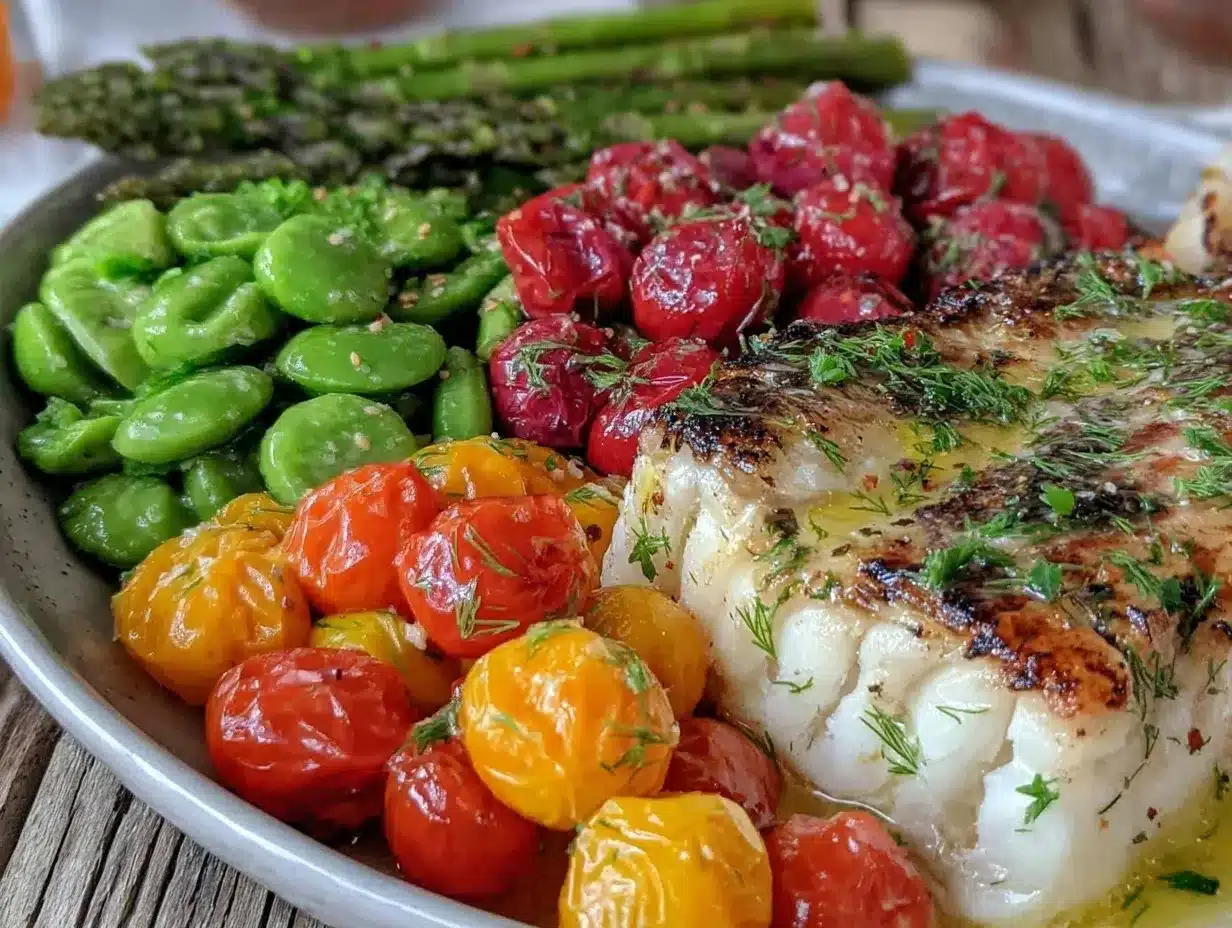
- Prep the Vegetables (10 minutes): Rinse and trim asparagus, halve cherry tomatoes, thinly slice radishes, and chop spring onions. Set aside baby greens for tossing at the end. Keeping veggies uniform in size helps them cook evenly.
- Cook the Grain Base (15 minutes): Prepare quinoa or couscous according to package instructions. For quinoa, rinse before cooking to reduce bitterness. Fluff with a fork when done and set aside to cool slightly.
- Cook the Protein (10-15 minutes): Season chicken breasts or salmon fillets with salt, pepper, and a little lemon zest. Heat olive oil in a skillet over medium heat. Cook chicken about 5-7 minutes per side until cooked through, or salmon skin-side down first for 4 minutes, then flip to finish. For shrimp, sauté until pink and firm, about 2-3 minutes per side. Avoid overcooking to keep proteins tender.
- Sauté or Roast Vegetables (8-12 minutes): For a quick sauté, heat olive oil in a skillet and toss asparagus and snap peas with garlic until tender-crisp. Alternatively, roast asparagus and cherry tomatoes on a baking sheet at 425°F (220°C) for 10-12 minutes, drizzled with olive oil and sprinkled with salt. Roasting brings out natural sweetness and adds depth.
- Toss the Salad or Grain Bowl (5 minutes): Combine cooked grains, sautéed or roasted vegetables, fresh herbs, and baby greens in a large bowl. Add a squeeze of fresh lemon juice, a drizzle of olive oil, salt, and pepper. Toss gently to combine flavors without bruising delicate greens.
- Assemble and Serve: Plate your grain and veggie mix, top with sliced cooked protein, and sprinkle toasted nuts or seeds for crunch. Add a final zest of lemon or fresh herbs for brightness. Serve immediately to enjoy the fresh textures.
Note: If you’re pressed for time, cooking the grain ahead and storing it in the fridge can save precious minutes on busy nights. Also, when roasting vegetables, watch carefully during the last few minutes to prevent burning—slight charring is good for flavor, but too much can turn bitter.
Cooking Tips & Techniques
When cooking light spring dinners, timing and technique make a world of difference. Here are some pointers I’ve picked up through trial (and the occasional error):
- Don’t Overcook Veggies: Crisp-tender is the goal. Overdone asparagus or snap peas lose their snap and vibrant color, making the dish feel heavy and dull.
- Season in Layers: Lightly salt proteins before cooking, then adjust seasoning again after combining with grains and veggies. This builds flavor instead of relying on a heavy sauce.
- Use Fresh Herbs Generously: Adding herbs at the end preserves their bright, fresh flavor. I usually add a handful of chopped parsley or basil right before serving.
- Rest Cooked Proteins: Let chicken or salmon rest for a few minutes after cooking to keep juices locked in. This small step makes a huge difference in tenderness.
- Toast Nuts or Seeds: A quick toast in a dry pan before sprinkling adds warmth and crunch that elevates texture and flavor.
- Multitask Efficiently: While grains cook, prep veggies and protein to streamline dinner prep. This keeps weeknight cooking stress low.
One time, I left the garlic in the skillet too long and ended up with a bitter undertone—lesson learned the hard way! Cooking garlic just until fragrant (about 30 seconds) prevents that harsh burnt flavor. Also, make sure your pan is hot enough before adding protein to get a nice sear without sticking.
Variations & Adaptations
These fresh spring dinner ideas are flexible to fit many tastes and dietary needs. Here are some ways to mix things up:
- Vegetarian/Vegan: Swap proteins with grilled tofu, tempeh, or chickpeas. For creamy dressings, use dairy-free yogurt or avocado-based sauces.
- Seasonal Twists: In warmer months, fresh peas, fava beans, or baby zucchini can replace asparagus. In early spring, add shaved fennel or radishes for peppery crunch.
- Different Cooking Methods: Instead of roasting, try grilling asparagus and salmon for a smoky flavor. Pan-searing shrimp or chicken with a squeeze of fresh lemon works great too.
- Flavor Profiles: Introduce Mediterranean vibes with olives, sun-dried tomatoes, and feta cheese. Or go Asian-inspired with sesame oil, soy sauce, and fresh ginger.
- Allergen-Friendly: For nut allergies, skip toasted almonds and use pumpkin seeds or crispy chickpeas for crunch.
Personally, I love swapping quinoa for a light couscous in summer for a fluffier base. One variation I tried recently was adding fresh mint and a touch of sumac to brighten flavors even more—it was unexpectedly refreshing and quickly became a new favorite.
Serving & Storage Suggestions
These fresh spring dinners are best enjoyed warm or at room temperature, which makes them perfect for quick plating or even packing for lunch the next day.
- Serving: Serve plated as individual bowls or family-style in a large dish. Garnish with extra herbs and a lemon wedge for guests to add their own touch.
- Pairings: Complement these meals with a crisp white wine or sparkling water with lemon for a refreshing drink. A light cucumber salad or crusty bread can round out the meal.
- Storage: Store leftovers in airtight containers in the refrigerator for up to 3 days. Keep dressings separate when possible to prevent sogginess.
- Reheating: Reheat gently in a skillet or microwave until just warmed through—overheating wilts the fresh veggies and dulls the flavors.
- Flavor Development: Leftovers often taste even better the next day once the flavors meld. Just add fresh herbs or a squeeze of lemon before serving again.
Nutritional Information & Benefits
These fresh spring dinner ideas are packed with nutrients while keeping calories moderate—ideal for light weeknight meals that support wellness without sacrificing taste.
- High in Vitamins: Seasonal vegetables like asparagus and snap peas provide vitamins A, C, and K, plus antioxidants to support immune health.
- Lean Protein Sources: Salmon and chicken deliver quality protein and essential omega-3 fatty acids (in salmon’s case) for heart health.
- Fiber-Rich Grains: Quinoa and couscous add fiber and complex carbs to keep you satisfied and energized.
- Low in Added Sugars and Saturated Fats: Light use of olive oil and fresh herbs keeps dishes heart-healthy and balanced.
- Dietary Considerations: Many of these recipes are naturally gluten-free or can be adapted easily. They fit well into low-carb or plant-forward lifestyles.
From a wellness perspective, these meals support digestion, energy levels, and overall vitality. I often find that eating fresh and light during spring helps me feel more connected to the season’s rhythm—and more ready to tackle whatever the week throws at me.
Conclusion
Fresh spring dinner ideas like these remind me that weeknight cooking doesn’t have to be complicated or heavy to be satisfying. With just a handful of simple ingredients and straightforward steps, you can create meals that honor the season and your busy life. Whether you’re cooking for one or sharing with loved ones, these dishes offer a chance to enjoy fresh flavors without stress.
Feel free to tweak these recipes to fit your taste—add your favorite herbs, swap proteins, or try different grains. That’s the fun of cooking at home, after all. I hope these ideas bring a little lightness and joy to your weeknight dinners, just like they did for me.
And if you find yourself craving more easy meal inspiration, you might enjoy the quick and creamy comfort of the microwave mug mac and cheese or the fresh vibrancy of the no-cook summer roll bowls.
Frequently Asked Questions
What are some quick protein options for fresh spring dinners?
Lean chicken breasts, wild-caught salmon, peeled shrimp, or firm tofu are all quick to cook and pair well with spring vegetables.
Can I make these dinners gluten-free?
Absolutely! Use gluten-free grains like quinoa or rice instead of couscous or pasta, and check all sauces or seasonings for gluten content.
How do I keep vegetables crisp when reheating leftovers?
Reheat gently over low heat or in short bursts in the microwave to avoid overcooking. Adding fresh herbs or a squeeze of lemon after reheating helps refresh flavors.
Are these recipes suitable for meal prep?
Yes, most components like grains and roasted vegetables can be made ahead and combined when ready to eat. Keep dressings separate until serving.
What can I substitute if I don’t have fresh herbs on hand?
Dried herbs can work in a pinch but add them earlier in cooking. For fresh herbs’ bright flavor, you can also use a small squeeze of lemon juice or a sprinkle of lemon zest.
Pin This Recipe!
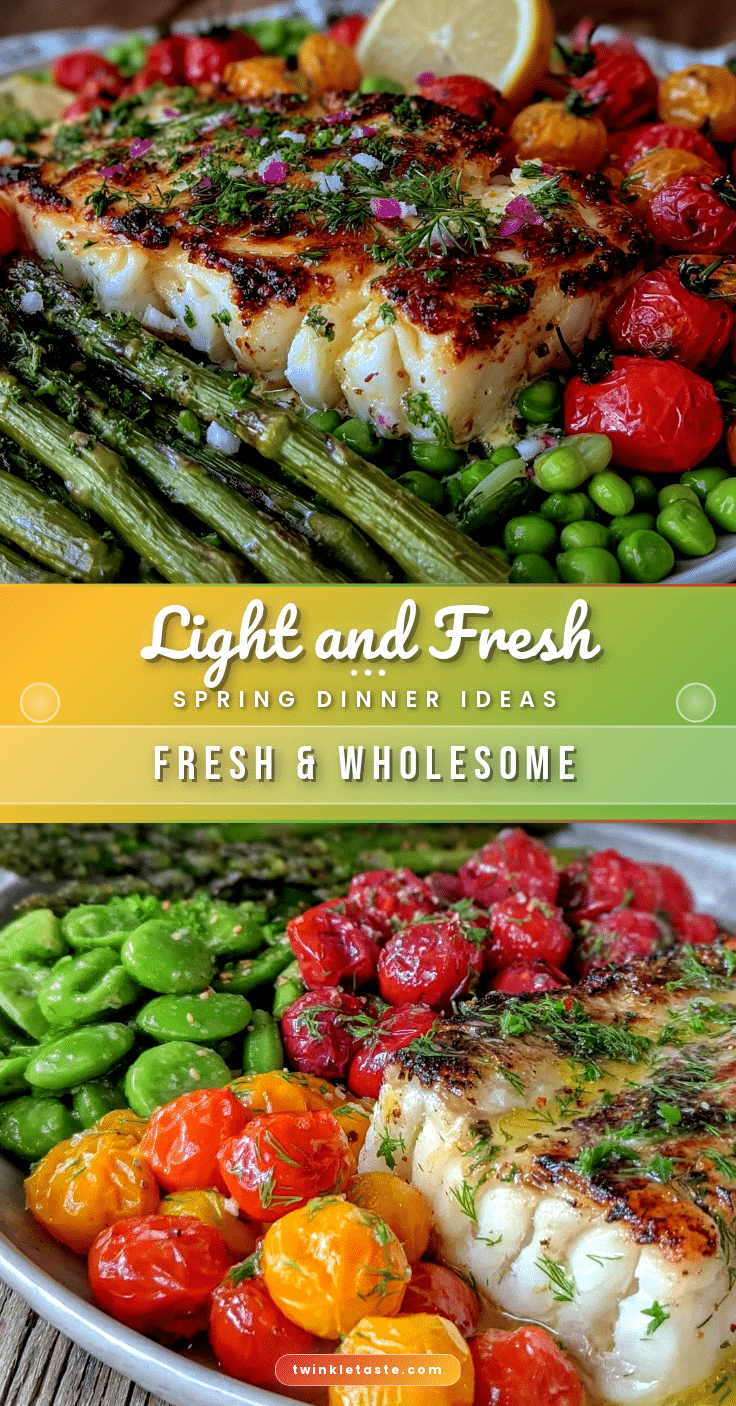
Fresh Spring Dinner Ideas Easy Light Recipes for Weeknights
A collection of fresh, light, and easy spring dinner ideas perfect for weeknights, featuring crisp vegetables, lean proteins, and simple seasonings for quick and satisfying meals.
- Prep Time: 10 minutes
- Cook Time: 30 minutes
- Total Time: 40 minutes
- Yield: 4 servings
- Category: Main Course
- Cuisine: American
Ingredients
- Asparagus (trimmed)
- Snap peas
- Cherry tomatoes (halved)
- Baby spinach or arugula
- Radishes (thinly sliced)
- Spring onions
- Skinless chicken breasts or thighs
- Wild-caught salmon fillets
- Peeled shrimp
- Firm tofu (vegetarian option)
- Quinoa, couscous, or whole-grain pasta
- Brown rice or cauliflower rice (gluten-free or lower-carb option)
- Fresh parsley, basil, dill, and mint
- Garlic (minced)
- Lemon zest and juice
- Extra virgin olive oil
- Toasted nuts like almonds or pine nuts
- Sea salt
- Freshly ground black pepper
- Red chili flakes (optional)
- Soy sauce or balsamic vinegar (optional)
- Small-curd cottage cheese (optional for creamy element)
Instructions
- Prep the Vegetables (10 minutes): Rinse and trim asparagus, halve cherry tomatoes, thinly slice radishes, and chop spring onions. Set aside baby greens for tossing at the end.
- Cook the Grain Base (15 minutes): Prepare quinoa or couscous according to package instructions. For quinoa, rinse before cooking to reduce bitterness. Fluff with a fork when done and set aside to cool slightly.
- Cook the Protein (10-15 minutes): Season chicken breasts or salmon fillets with salt, pepper, and a little lemon zest. Heat olive oil in a skillet over medium heat. Cook chicken about 5-7 minutes per side until cooked through, or salmon skin-side down first for 4 minutes, then flip to finish. For shrimp, sauté until pink and firm, about 2-3 minutes per side.
- Sauté or Roast Vegetables (8-12 minutes): For a quick sauté, heat olive oil in a skillet and toss asparagus and snap peas with garlic until tender-crisp. Alternatively, roast asparagus and cherry tomatoes on a baking sheet at 425°F (220°C) for 10-12 minutes, drizzled with olive oil and sprinkled with salt.
- Toss the Salad or Grain Bowl (5 minutes): Combine cooked grains, sautéed or roasted vegetables, fresh herbs, and baby greens in a large bowl. Add a squeeze of fresh lemon juice, a drizzle of olive oil, salt, and pepper. Toss gently to combine.
- Assemble and Serve: Plate your grain and veggie mix, top with sliced cooked protein, and sprinkle toasted nuts or seeds for crunch. Add a final zest of lemon or fresh herbs for brightness. Serve immediately.
Notes
Cook grains ahead to save time. Watch vegetables carefully when roasting to avoid burning. Toast nuts or seeds before serving for added crunch. Rest cooked proteins for juiciness. Use fresh herbs generously at the end for brightness. Reheat leftovers gently to keep vegetables crisp.
Nutrition
- Serving Size: 1 bowl with grains,
- Calories: 350450
- Sugar: 5
- Sodium: 350
- Fat: 12
- Saturated Fat: 2
- Carbohydrates: 35
- Fiber: 6
- Protein: 30
Keywords: spring dinner, light recipes, easy weeknight meals, fresh vegetables, lean protein, healthy dinner, quick cooking, gluten-free options, vegetarian options