“You have to try this salmon,” my friend texted me one evening, totally casual but with a hint of insistence. Honestly, I was skeptical—salmon on a cedar plank sounded fancy and messy, not exactly my go-to weeknight meal. But curiosity got the best of me, and I decided to give this Easy Flavorful Sheet Pan Cedar Plank Salmon a whirl. The funny thing is, it started as a rushed dinner plan after a long day where I didn’t want to fuss over multiple pans or complicated steps.
With the cedar plank soaking in water and the salmon seasoned simply but thoughtfully, the kitchen filled with this unexpected smoky aroma that instantly relaxed me. There’s something about that subtle woodsy scent mingling with fresh salmon that feels like a quiet celebration, even if it’s just a Tuesday night. I found myself making it again and again that week, tweaking the glaze and trying different herbs, but the core recipe stayed the same—easy, flavorful, and satisfying enough to impress anyone at the table.
What’s cool is that you don’t have to grill this outdoors or be a pro with fire; the sheet pan method makes it surprisingly approachable for busy cooks who want that cedar plank charm without the hassle. It’s a perfect little secret for turning salmon into a meal that feels both rustic and special. I guess that’s why this recipe stuck around—it’s my quiet little kitchen win that anyone can pull off, even on a hectic evening.
Why You’ll Love This Recipe
This Easy Flavorful Sheet Pan Cedar Plank Salmon recipe has quickly become one of my favorites for several reasons that go beyond just taste:
- Quick & Easy: The entire meal comes together in under 30 minutes, which is perfect when you need a wholesome dinner fast without compromising flavor.
- Simple Ingredients: No obscure spices or hard-to-find items—most of these are pantry staples or basics you can grab at any grocery store.
- Perfect for Weeknight Dinners: Whether you’re cooking for one or feeding a small family, this recipe scales well and requires minimal cleanup.
- Crowd-Pleaser: The smoky cedar aroma paired with a lightly sweet and tangy glaze gets consistent thumbs-up from kids and adults alike.
- Unbelievably Delicious: The cedar plank imparts a subtle woodsy flavor that’s unlike your typical baked salmon, plus the texture stays moist and flaky.
What really sets this recipe apart is the sheet pan approach. Honestly, I used to think cedar plank salmon meant firing up the grill and dealing with flare-ups and guesswork on timing. This method lets you get that same smoky essence with zero grilling skills needed. Plus, the glaze—made with just a few ingredients like maple syrup and Dijon mustard—creates a perfect balance of sweet, tangy, and savory that’s just right, not overpowering. It’s the kind of dish that makes you close your eyes after the first bite and just savor.
It’s also flexible. I’ve swapped the maple syrup for honey or added fresh herbs from my garden without losing any of the magic. So if you want to impress guests without breaking a sweat or just treat yourself to something simple but special, this recipe fits the bill.
What Ingredients You Will Need
This recipe uses simple, wholesome ingredients to deliver bold flavor and satisfying texture without the fuss. Most of these are pantry staples, so you probably already have what you need.
- Salmon Fillets: Skin-on, preferably wild-caught for best flavor and texture. About 4 fillets (6 oz / 170 g each) works well.
- Cedar Plank: Pre-soaked in water for at least 1 hour to prevent burning and add smoky aroma during baking.
- Maple Syrup: Pure maple syrup adds natural sweetness and helps caramelize the glaze. You can substitute with honey if preferred.
- Dijon Mustard: Adds a tangy, slightly sharp kick that balances the sweetness.
- Garlic: 2 cloves, minced for depth of flavor.
- Lemon Juice: Freshly squeezed, about 1 tablespoon to brighten everything up.
- Olive Oil: Extra virgin, about 2 tablespoons for richness and to help the glaze stick.
- Salt & Black Pepper: To taste. I recommend kosher salt for even seasoning.
- Fresh Herbs: Optional but fantastic. Dill or parsley chopped finely adds a fresh note.
Pro tip: I always keep a cedar plank soaking in water for recipes like this—it’s a small prep step but makes a big difference. Look for small-curd Dijon mustard brands like Grey Poupon for the best balance, and wild-caught salmon from trusted sources ensures the best flavor and texture every time.
Equipment Needed
- Baking Sheet / Sheet Pan: Essential for the sheet pan method. Choose a rimmed sheet pan to catch any drips from the salmon glaze.
- Oven: Reliable and preheated to 400°F (205°C) for perfectly cooked salmon.
- Mixing Bowl: For whisking the glaze ingredients together.
- Brush: A silicone brush works great for spreading the glaze evenly over the salmon.
- Tongs or Spatula: To carefully place and remove the cedar plank from the baking sheet.
If you don’t have a cedar plank, you can find affordable options online or at specialty grocery stores. Alternatively, a piece of aluminum foil can work, but you’ll miss that signature smoky aroma. I’ve tried both, and the cedar plank makes a real difference without extra effort. Also, a silicone brush cleans easily and lasts forever compared to disposable brushes.
Preparation Method
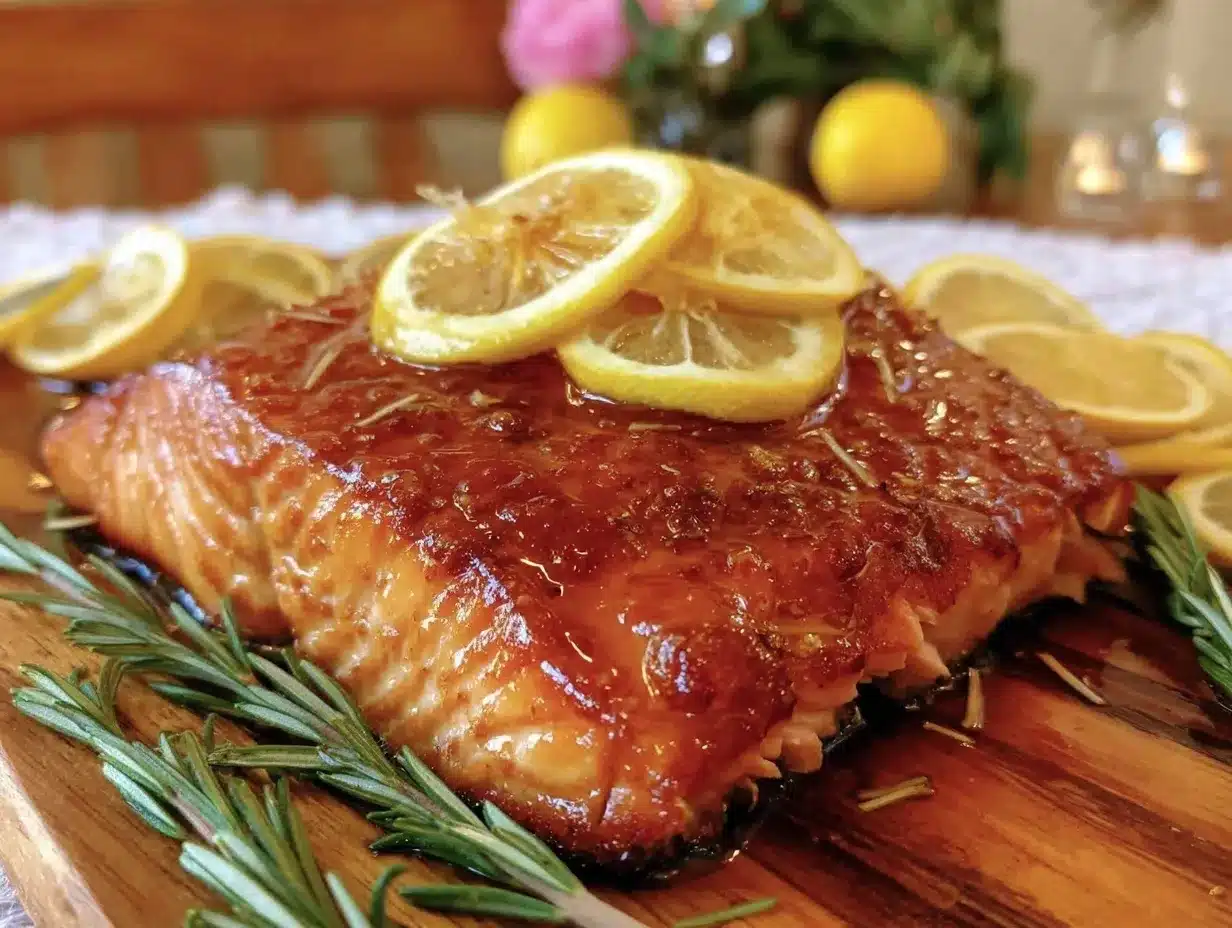
- Soak the Cedar Plank: Place the cedar plank in a large container or sink filled with water and let it soak for at least 1 hour. This prevents burning and helps release that smoky aroma during cooking.
- Preheat the Oven: Set your oven to 400°F (205°C). This temperature cooks the salmon evenly while allowing the glaze to caramelize nicely.
- Prepare the Glaze: In a medium mixing bowl, whisk together 2 tablespoons maple syrup, 2 tablespoons olive oil, 1 tablespoon Dijon mustard, 2 minced garlic cloves, and 1 tablespoon fresh lemon juice. Add salt and pepper to taste (about ½ teaspoon salt and ¼ teaspoon black pepper). The glaze should be smooth and slightly thick.
- Season the Salmon: Pat the salmon fillets dry with paper towels. This helps the glaze stick better. Place the fillets skin-side down on the soaked cedar plank, spacing them evenly.
- Brush On the Glaze: Using a silicone brush, generously coat the salmon fillets with the prepared glaze. Don’t be shy—this layer locks in moisture and flavor.
- Bake the Salmon: Place the cedar plank on the rimmed baking sheet and put it in the oven. Bake for 15–18 minutes, depending on the thickness of your fillets (about 1 inch thick). The salmon should flake easily with a fork and reach an internal temperature of 145°F (63°C).
- Check for Doneness: Look for the salmon to turn opaque pink throughout and the glaze to caramelize slightly without burning. If the glaze starts to darken too much, loosely cover the plank with foil for the last few minutes.
- Rest and Garnish: Remove the plank from the oven and let the salmon rest for 3–5 minutes. Sprinkle chopped fresh dill or parsley on top for a bright finish.
- Serve Directly on the Plank: For a rustic presentation, serve the salmon straight from the cedar plank. Pair it with your favorite sides and enjoy.
Note: If you want to try something different, this method also works beautifully with other fish like trout or steelhead. Just adjust the cooking time based on thickness.
Cooking Tips & Techniques
Getting cedar plank salmon right can feel intimidating at first, but these tips will help you nail it every time:
- Always soak your cedar plank! This is non-negotiable. Dry wood will catch fire or burn too quickly, ruining your salmon and potentially your oven. I learned this the hard way once (smoke alarm involved).
- Pat dry the salmon before glazing. Excess moisture prevents the glaze from sticking properly and can cause sogginess.
- Use a rimmed baking sheet. The cedar plank will release some juices and glaze drips—this keeps your oven clean and prevents flare-ups.
- Don’t overcook. Salmon dries out fast. I recommend checking at 15 minutes and testing flakiness with a fork.
- Multitasking tip: While the plank is soaking, prep your glaze and sides. This saves time and keeps your workflow smooth.
- For extra smoky flavor, you can briefly broil the salmon for 1–2 minutes at the end, but watch closely to avoid burning.
- Cleanup is easy—just soak the cedar plank after use and gently scrub. Don’t toss it after one use; it can hold flavor for a few cooks.
One time I forgot to soak the plank and ended up with a smoky mess, so trust me on this. Also, using a silicone brush instead of a spoon for glazing makes spreading much easier and less messy. If you like experimenting, try adding a pinch of smoked paprika or crushed red pepper flakes to the glaze for a subtle kick.
Variations & Adaptations
This recipe is a solid base to customize based on your mood, dietary needs, or what’s on hand:
- Gluten-Free Version: Naturally gluten-free as is, but double-check mustard labels if you’re sensitive.
- Maple-Honey Glaze: Mix 1 tablespoon maple syrup and 1 tablespoon honey for a mellow, richer sweetness.
- Herb Infusion: Add fresh thyme or rosemary sprigs on top before baking for an herbal aroma that complements the cedar smoke.
- Spicy Twist: Incorporate a teaspoon of sriracha or chili flakes into the glaze for heat without overpowering the salmon.
- Sheet Pan Combo: Place veggies like asparagus, baby potatoes, or cherry tomatoes around the plank on the baking sheet for a one-pan meal. Just toss veggies in olive oil, salt, and pepper.
- Outdoor Grill Adaptation: If you want to grill instead, soak the plank longer (at least 2 hours), preheat the grill, and cook over indirect heat for about 20 minutes.
Personally, I love adding a few lemon slices on top before baking for extra zing, especially when serving alongside a fresh salad. This recipe also pairs well with sides from my fresh Greek orzo pasta salad or even the crunchy broccoli salad with bacon and cranberries for something green and vibrant.
Serving & Storage Suggestions
This cedar plank salmon shines best served warm, right off the plank for that rustic feel. I usually plate it with a wedge of lemon and a sprinkle of fresh herbs. It pairs beautifully with light sides like roasted vegetables, quinoa, or a simple green salad.
For a casual dinner, try serving it alongside crusty bread or garlic breadsticks—if you’re in a carb mood, the soft Olive Garden breadsticks recipe is a personal favorite that complements the salmon perfectly.
Leftovers keep well in an airtight container in the fridge for up to 2 days. When reheating, gently warm in the oven at 300°F (150°C) for about 10 minutes to avoid drying out. Avoid microwaving if possible—it tends to make the salmon rubbery. Flavors actually deepen overnight, so sometimes I enjoy the salmon cold or at room temp the next day in salads or sandwiches.
Nutritional Information & Benefits
This Easy Flavorful Sheet Pan Cedar Plank Salmon is a nutrient powerhouse. A 6-ounce (170 g) serving provides approximately 350 calories, 22 grams of protein, and 20 grams of heart-healthy fats, primarily omega-3 fatty acids.
Salmon is known for its anti-inflammatory properties and is a great source of B vitamins and selenium. The glaze ingredients add minimal sugars but plenty of flavor without unnecessary additives. This recipe is naturally gluten-free and low-carb, fitting well into many dietary lifestyles.
From a wellness perspective, I appreciate how this dish balances indulgence and nutrition—comfort food that supports brain and heart health without feeling heavy or greasy.
Conclusion
Why does this Easy Flavorful Sheet Pan Cedar Plank Salmon stand out? Because it’s one of those rare recipes that feels both special and approachable. It’s fuss-free enough for busy nights but delivers that smoky, caramelized flavor that usually requires grilling skills or long prep times.
I encourage you to make it your own—experiment with glazes, herbs, or sides to suit your taste. This recipe has earned a permanent spot in my rotation because it’s reliable, delicious, and makes dinner feel like a small celebration without extra stress.
If you try it, I’d love to hear how you customize your glaze or what sides you served alongside. Sharing those little tweaks is what makes cooking fun and personal. Here’s to many cozy dinners with cedar plank salmon on your table!
FAQs About Easy Flavorful Sheet Pan Cedar Plank Salmon
Can I use frozen salmon for this recipe?
Yes, but make sure to thaw it fully and pat it dry before applying the glaze to prevent sogginess and ensure even cooking.
How long should I soak the cedar plank?
At least 1 hour in water. Longer soaking (up to 3 hours) is better if you plan to grill, but 1 hour works well for oven baking.
Can I make the glaze in advance?
Absolutely! The glaze can be mixed and stored in the fridge for up to 2 days. Just give it a quick whisk before using.
What if I don’t have a cedar plank?
You can cook the salmon directly on a baking sheet lined with parchment paper or foil, but you’ll miss the subtle smoky flavor the plank imparts.
How do I know when the salmon is done?
Check for opaque, flaky flesh that separates easily with a fork. The internal temperature should reach 145°F (63°C) for safe consumption.
Pin This Recipe!
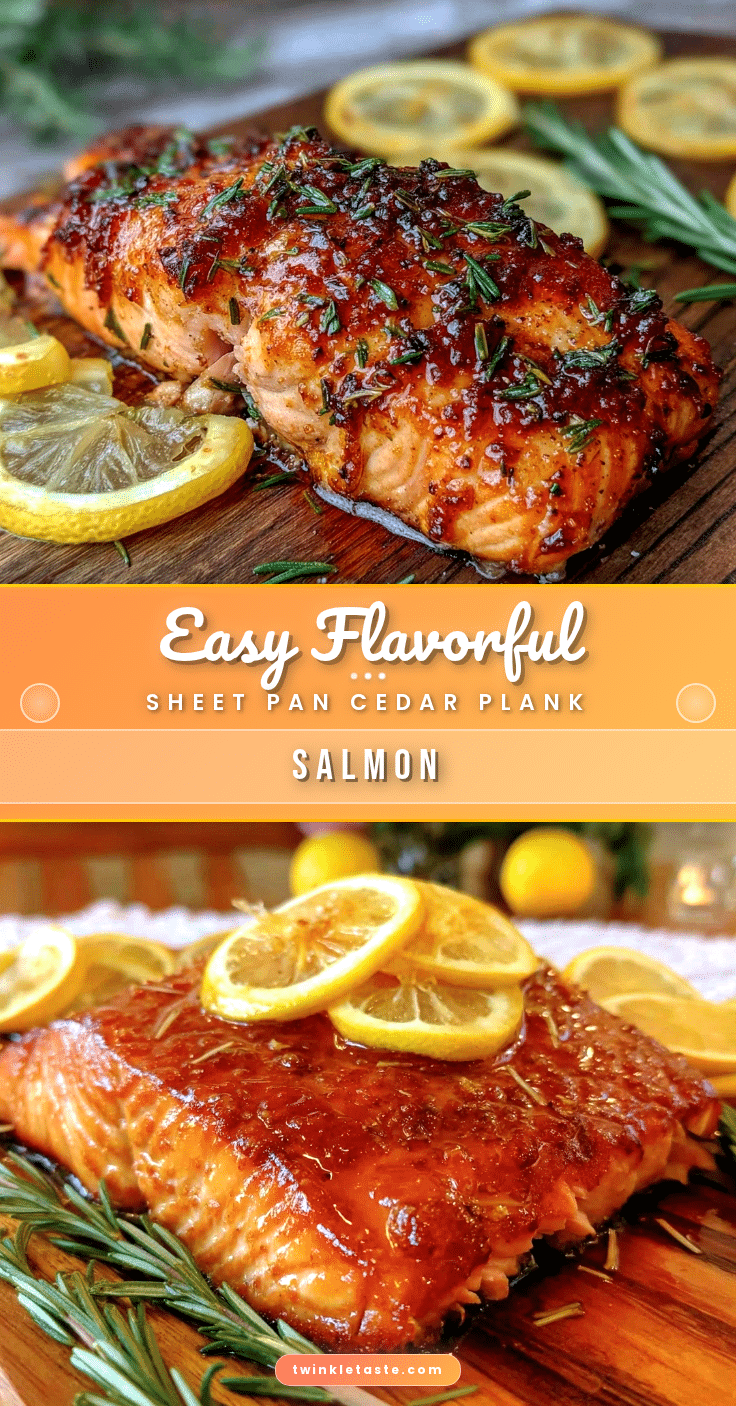
Easy Flavorful Sheet Pan Cedar Plank Salmon Recipe for Perfect Dinner

An easy and flavorful cedar plank salmon recipe using a sheet pan method that delivers a smoky, moist, and delicious meal in under 30 minutes, perfect for weeknight dinners.
- Prep Time: 10 minutes
- Cook Time: 15-18 minutes
- Total Time: 25-28 minutes
- Yield: 4 servings 1x
- Category: Main Course
- Cuisine: American
Ingredients
- 4 salmon fillets (6 oz / 170 g each), skin-on, preferably wild-caught
- 1 cedar plank, soaked in water for at least 1 hour
- 2 tablespoons pure maple syrup (can substitute with honey)
- 2 tablespoons extra virgin olive oil
- 1 tablespoon Dijon mustard
- 2 cloves garlic, minced
- 1 tablespoon fresh lemon juice
- Salt to taste (about ½ teaspoon kosher salt recommended)
- Black pepper to taste (about ¼ teaspoon)
- Fresh herbs (dill or parsley), chopped finely, optional
Instructions
- Soak the cedar plank in water for at least 1 hour to prevent burning and add smoky aroma during baking.
- Preheat the oven to 400°F (205°C).
- In a mixing bowl, whisk together maple syrup, olive oil, Dijon mustard, minced garlic, lemon juice, salt, and black pepper until smooth and slightly thick.
- Pat the salmon fillets dry with paper towels to help the glaze stick better.
- Place the salmon fillets skin-side down on the soaked cedar plank, spacing them evenly.
- Using a silicone brush, generously coat the salmon fillets with the prepared glaze.
- Place the cedar plank on a rimmed baking sheet and bake in the oven for 15–18 minutes, depending on fillet thickness, until salmon flakes easily and reaches an internal temperature of 145°F (63°C).
- Check for doneness by looking for opaque pink flesh and slightly caramelized glaze; if glaze darkens too much, cover loosely with foil for the last few minutes.
- Remove the plank from the oven and let the salmon rest for 3–5 minutes.
- Sprinkle chopped fresh dill or parsley on top for garnish.
- Serve the salmon directly on the cedar plank with your favorite sides.
Notes
Always soak the cedar plank for at least 1 hour to prevent burning. Pat salmon dry before glazing to ensure the glaze sticks well. Use a rimmed baking sheet to catch drips and keep the oven clean. Check salmon at 15 minutes to avoid overcooking. For extra smoky flavor, briefly broil for 1–2 minutes at the end but watch closely to avoid burning. Leftover salmon keeps well refrigerated for up to 2 days; reheat gently in the oven at 300°F for about 10 minutes. Avoid microwaving to prevent rubbery texture.
Nutrition
- Serving Size: 1 salmon fillet (6 o
- Calories: 350
- Sugar: 5
- Sodium: 300
- Fat: 20
- Saturated Fat: 3
- Carbohydrates: 6
- Protein: 22
Keywords: cedar plank salmon, sheet pan salmon, easy salmon recipe, weeknight dinner, maple glaze salmon, healthy salmon, baked salmon, smoky salmon