“Are you sure this chicken’s still good?” my roommate asked, eyeing the leftover rotisserie bird perched on the counter. Honestly, I wasn’t totally convinced either. After a chaotic weekend, I had grabbed a rotisserie chicken with zero plan except to not waste it. But as I poked around the kitchen, I realized those leftovers were a goldmine for quick, satisfying dinners that didn’t involve ordering takeout or extensive prep. That night, I threw together a mix of meals that felt anything but boring—each one surprisingly fresh and flavorful in its own way.
Using leftover rotisserie chicken is such a lifesaver when you want to whip up something delicious without fussing over raw meat or complicated recipes. Somehow, these meals don’t taste like “leftovers” at all. There’s a comforting magic to transforming that cooked chicken into everything from creamy pastas to vibrant bowls packed with flavor. I’ve found myself making these recipes over and over—some weeks, it’s the go-to when I’m juggling work, errands, and just life in general.
What’s cool is each recipe carries its own little story, like the time I accidentally mixed the wrong sauce and ended up with a spicy-sweet sensation, or when a friend dropped by last minute and we tossed together a fresh chicken salad with what was in the fridge. This post isn’t just about saving a chicken carcass from the bin; it’s about turning those scraps into meals that feel intentional, quick, and downright tasty. You might find yourself closing your eyes after the first bite, just like I do.
Why You’ll Love These Easy Delicious Leftover Rotisserie Chicken Meals
From my kitchen to yours, these recipes have been tested through many dinner crunches and impromptu get-togethers. Here’s why they’ve earned a spot in my weekly rotation:
- Quick & Easy: Each recipe comes together in under 30 minutes, perfect for nights when you’d rather relax than cook for hours.
- Simple Ingredients: No obscure spices or specialty items needed—just what you probably already have in your pantry and fridge.
- Perfect for Any Night: Whether it’s a busy weeknight, casual weekend, or unexpected guests, these meals fit right in.
- Crowd-Pleaser: Everyone from picky kids to friends who claim they “don’t like leftovers” end up asking for seconds.
- Unbelievably Delicious: The mix of textures and flavors makes these meals far from boring—think creamy, tangy, spicy, and fresh all in one.
What sets these recipes apart? Well, it’s not just throwing chicken onto a plate. One of my favorites involves blending cottage cheese into the sauce for a silky smooth texture that’s rich but lighter than cream. Another has a quick, tangy glaze that I accidentally invented while experimenting with pantry staples. These aren’t your run-of-the-mill leftover dishes—they’re thoughtful, tested, and crafted to keep your taste buds guessing in a good way.
In short, these recipes bring comfort without the usual effort, and the kind of satisfaction that makes you pause and appreciate a simple meal done right. If you’ve ever wondered how to stretch a rotisserie chicken into multiple nights of memorable meals, you’re in the right place.
What Ingredients You Will Need
These recipes focus on straightforward, pantry-friendly ingredients that combine easily with leftover rotisserie chicken to create satisfying dishes. Most of these ingredients are staples, which means less grocery shopping and more time cooking.
- Rotisserie chicken: shredded or chopped, skin removed if you prefer less fat
- For creamy sauces & bases:
- Cottage cheese (small-curd, for smooth blending)
- Greek yogurt (adds tang and creaminess, can swap for dairy-free coconut yogurt)
- Heavy cream or half-and-half (optional, for richer dishes)
- Vegetables:
- Onions (yellow or red, diced)
- Garlic cloves (minced)
- Bell peppers (any color, sliced or diced)
- Spinach or kale (fresh or frozen)
- Cherry tomatoes or canned diced tomatoes
- Carbs & grains:
- Pasta (penne, fusilli, or any preferred type)
- Rice (white, brown, or jasmine)
- Flour tortillas or bread for wraps and sandwiches
- Seasonings & extras:
- Olive oil or butter
- Fresh herbs (parsley, basil, or cilantro)
- Spices: paprika, cumin, chili flakes, black pepper, salt
- Lemon juice or vinegar (adds brightness)
- Grated Parmesan or shredded mozzarella cheese
- Optional add-ins:
- Avocado (for creaminess)
- Beans or chickpeas (for extra protein and fiber)
- Nuts or seeds (for crunch)
Personally, I like using brands like Daisy cottage cheese because it blends into a really smooth sauce without lumps. For pasta, Barilla penne holds the sauce nicely, but any shape works. If you prefer gluten-free, almond flour tortillas or gluten-free pasta are easy swaps. When fresh veggies are out of season, frozen spinach or bell peppers work just as well and save prep time.
Equipment Needed
Luckily, these leftover rotisserie chicken meals don’t require fancy gadgets or specialty tools. Here’s what you’ll want handy in your kitchen:
- Sharp chef’s knife – essential for chopping veggies quickly
- Cutting board – ideally one dedicated to cooked meats and veggies
- Mixing bowls – for tossing salads or combining sauces
- Large skillet or sauté pan – for sautéing, simmering sauces, and warming chicken
- Medium saucepan – for boiling pasta or rice
- Measuring cups and spoons – to keep flavors balanced
- Blender or food processor – optional but helpful for blending cottage cheese or making creamy sauces super smooth
I once tried making one of these recipes without a blender, and honestly, the texture wasn’t quite as dreamy. A budget-friendly immersion blender can do the trick if you want to avoid bulky appliances. For cleanup, I recommend non-stick pans—they save time and prevent sticking, especially when dealing with cream-based sauces.
Preparation Method

- Prep the chicken and veggies (10 minutes): Start by shredding your leftover rotisserie chicken into bite-sized pieces. Remove the skin if you want a leaner meal. Dice onions, mince garlic, and slice any bell peppers or other veggies you’re using.
- Cook the base (5-8 minutes): Heat 1 tablespoon olive oil or butter in a skillet over medium heat. Add the onions and sauté until translucent and fragrant, about 3-4 minutes. Toss in garlic and cook another minute, making sure it doesn’t brown too much.
- Add vegetables (5 minutes): Stir in bell peppers, spinach, or other veggies. Cook until softened but still vibrant. If using tomatoes, add now to release their juices and build flavor.
- Mix in liquids and seasonings (5 minutes): Pour in cottage cheese or Greek yogurt, stirring to combine with the veggies. Add a splash of chicken broth or water if the mixture looks thick. Season with salt, pepper, paprika, and a pinch of chili flakes for a subtle kick. Simmer on low heat to meld flavors.
- Combine chicken and sauce (3 minutes): Add shredded rotisserie chicken to the pan, gently folding it in so it warms through and absorbs the sauce. Taste and adjust seasoning with lemon juice or vinegar to brighten the dish.
- Prepare carbs (10-15 minutes, simultaneous): While the sauce simmers, cook pasta or rice according to package instructions. Drain pasta and reserve a little cooking water to loosen sauce if needed.
- Finish and serve (2 minutes): Toss pasta or rice with the chicken mixture, adding reserved pasta water for desired consistency. Sprinkle with fresh herbs and grated cheese. Serve warm with crusty bread or a simple side salad.
One thing I’ve learned: don’t rush the sautéing stage. Those first few minutes of cooking onions and garlic really build the flavor foundation. If your sauce feels too thick, a splash of pasta water or broth works wonders. And if you ever notice the chicken drying out, a quick stir-in of a little butter or cream can rescue the texture.
Cooking Tips & Techniques
Making the most of leftover rotisserie chicken is part skill, part intuition. Here’s what I keep in mind:
- Don’t overcook the chicken: Since it’s already cooked, you’re mostly reheating it. Overheating can dry it out fast, so add it near the end of cooking and warm gently.
- Layer flavors: Sautéing onions and garlic first develops a deep base. Adding acid like lemon juice or vinegar at the end brightens the whole dish and balances richness.
- Blend for creaminess: I swear by blending cottage cheese or Greek yogurt into sauces for a silky texture without heavy cream. It’s a trick I picked up from a chef friend who swore by healthier comfort food.
- Use reserved pasta water: Don’t toss out that starchy water—adding a splash loosens sauce and helps it cling to pasta perfectly.
- Multitask smartly: While pasta or rice cooks, prep your veggies and chicken. It keeps the process efficient, so dinner’s ready faster.
- Watch seasoning: Leftover chicken is often already seasoned, so taste before adding salt or spices to avoid overdoing it.
One time, I rushed and added all the chicken at once, then simmered too long. The result was dry chicken bits scattered through the sauce—not great. Now, I add chicken last, fold gently, and pull off heat as soon as warm. It’s a little thing but makes a big difference.
Variations & Adaptations
These leftover rotisserie chicken meals are pretty flexible. Here are some ways to switch things up:
- Low-carb option: Swap pasta or rice for spiralized zucchini noodles or cauliflower rice to keep it light and keto-friendly. I’ve made this version often when craving something green and fresh.
- Spicy twist: Add a teaspoon of chipotle powder or a splash of hot sauce for a smoky heat that wakes up your taste buds.
- Vegan-ish swap: Use shredded jackfruit or chickpeas instead of chicken, and swap dairy for coconut yogurt or cashew cream to mimic the creamy textures.
- Seasonal veggies: In summer, toss in fresh peas, corn, or diced tomatoes. Winter calls for roasted root veggies or kale.
- Sandwich or wrap: Turn the creamy chicken mixture into a filling for wraps or toasted sandwiches—perfect for lunch or a lighter dinner.
One favorite variation I stumbled on was adding a spoonful of pesto and sun-dried tomatoes for a Mediterranean vibe. Totally changed the flavor profile and made it feel like a completely new dish. The beauty is you can adjust these meals based on what you have and what you’re craving.
Serving & Storage Suggestions
These meals are best served warm, right off the stove or fresh from the oven if you bake a pasta version. Garnish with fresh herbs like parsley or basil to add a pop of color and freshness. Pair these dishes with a crisp green salad or a side of steamed veggies for a balanced plate.
For storage, keep leftovers in airtight containers in the refrigerator. They’ll stay good for 3-4 days, making them perfect for next-day lunches or quick dinners. I find reheating gently on the stove or in the microwave with a splash of water or broth keeps the texture from drying out.
If you want to freeze portions, pack them in freezer-safe containers and thaw overnight in the fridge before reheating. Note that creamy sauces may separate slightly after freezing but stirring them back together works fine.
Flavors often deepen after a night in the fridge, so sometimes I prefer these meals the next day. It’s like the chicken and sauce have had a chance to get to know each other better!
Nutritional Information & Benefits
Leftover rotisserie chicken meals are a convenient way to enjoy protein-rich dinners without extra fuss. A typical serving provides approximately:
| Nutrient | Amount |
|---|---|
| Calories | 350-450 kcal |
| Protein | 30-35 grams |
| Carbohydrates | 30-40 grams (depending on sides) |
| Fat | 10-15 grams |
| Fiber | 3-5 grams |
Chicken is a lean source of complete protein, supporting muscle repair and satiety. Adding veggies boosts fiber, vitamins, and antioxidants. Using cottage cheese or Greek yogurt increases calcium and probiotics, aiding digestion and bone health.
These recipes can be adapted for gluten-free diets by swapping pasta or wraps with gluten-free versions. For low-carb eaters, substituting veggies for grains works well. Be mindful of dairy if you have allergies—coconut or almond-based alternatives blend nicely into sauces.
Personally, these meals fit into my approach of balanced, straightforward eating—comfort food without excess guilt or complicated prep.
Conclusion
Transforming leftover rotisserie chicken into quick, delicious meals has become a little ritual in my kitchen—a way to honor food, save time, and enjoy a variety of flavors without stress. These recipes aren’t about perfection; they’re about making the most of what you have and finding joy in simple, tasty dishes.
Feel free to tweak these meals to your taste, whether that means adding more spice, swapping veggies, or turning them into handheld wraps. This kind of cooking invites creativity and adapts to your life, not the other way around.
For me, the magic lies in the ease and the way these meals bring comfort after a long day. I hope you find them as satisfying and reliable as I do—something to come back to again and again.
If you try any of these recipes or come up with your own twists, I’d love to hear about it in the comments. Sharing your kitchen wins is what makes cooking fun and communal.
Here’s to many delicious nights with leftover rotisserie chicken!
Frequently Asked Questions
How long can I keep leftover rotisserie chicken in the fridge?
Leftover cooked chicken can be safely stored in the refrigerator for 3 to 4 days in an airtight container.
Can I freeze leftover rotisserie chicken meals?
Yes, you can freeze cooked chicken dishes in freezer-safe containers for up to 2 months. Thaw overnight in the fridge before reheating.
Is it better to remove the skin before using leftover rotisserie chicken?
Removing the skin reduces fat content, but it’s a personal preference. The skin adds flavor and moisture but also extra fat.
Can I use leftover rotisserie chicken in salads?
Absolutely! Shredded chicken is perfect for quick salads, especially when tossed with fresh veggies and a tangy dressing.
What are easy side dishes to serve with leftover rotisserie chicken meals?
Simple sides like steamed green beans, roasted vegetables, or a fresh garden salad complement these meals well and keep dinner balanced.
By the way, for a comforting, creamy side to pair with your chicken dishes, you might enjoy the cozy scalloped potatoes and ham bake. Or, if you want a quick creamy pasta option that’s perfect for busy nights, the quick creamy microwave mug mac and cheese recipe is a winner too.
Pin This Recipe!
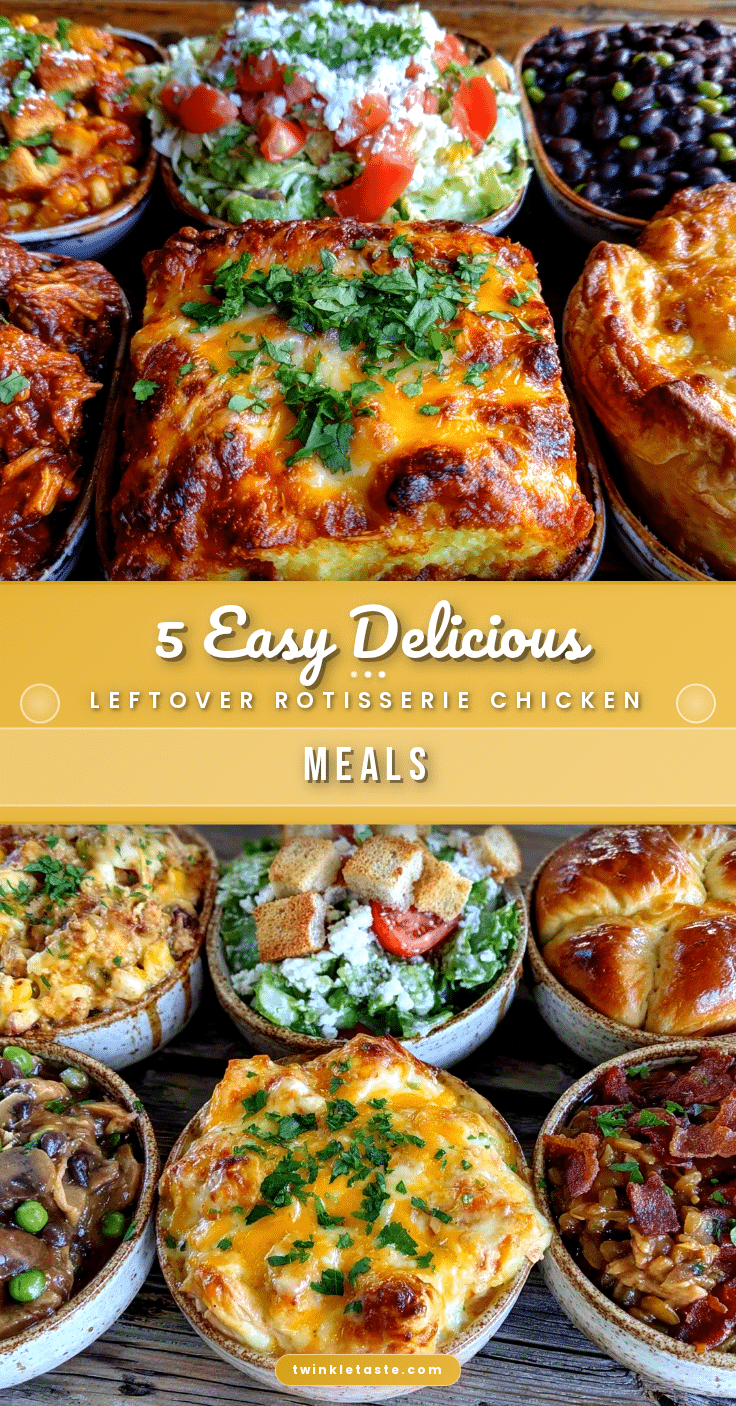
Easy Delicious Leftover Rotisserie Chicken Meals

Quick and satisfying meals using leftover rotisserie chicken that come together in under 30 minutes with simple pantry ingredients. These recipes transform leftovers into fresh, flavorful dinners perfect for any night.
- Prep Time: 10 minutes
- Cook Time: 20 minutes
- Total Time: 30 minutes
- Yield: 4 servings
- Category: Main Course
- Cuisine: American
Ingredients
- Leftover rotisserie chicken, shredded or chopped, skin removed if preferred
- Cottage cheese (small-curd, for smooth blending)
- Greek yogurt (can substitute dairy-free coconut yogurt)
- Heavy cream or half-and-half (optional)
- Onions (yellow or red, diced)
- Garlic cloves (minced)
- Bell peppers (any color, sliced or diced)
- Spinach or kale (fresh or frozen)
- Cherry tomatoes or canned diced tomatoes
- Pasta (penne, fusilli, or preferred type)
- Rice (white, brown, or jasmine)
- Flour tortillas or bread for wraps and sandwiches
- Olive oil or butter
- Fresh herbs (parsley, basil, or cilantro)
- Spices: paprika, cumin, chili flakes, black pepper, salt
- Lemon juice or vinegar
- Grated Parmesan or shredded mozzarella cheese
- Optional add-ins: avocado, beans or chickpeas, nuts or seeds
Instructions
- Prep the chicken and veggies (10 minutes): Shred leftover rotisserie chicken into bite-sized pieces, removing skin if desired. Dice onions, mince garlic, and slice bell peppers or other veggies.
- Cook the base (5-8 minutes): Heat 1 tablespoon olive oil or butter in a skillet over medium heat. Sauté onions until translucent, about 3-4 minutes. Add garlic and cook for 1 minute without browning.
- Add vegetables (5 minutes): Stir in bell peppers, spinach, or other veggies. Cook until softened but still vibrant. Add tomatoes now if using.
- Mix in liquids and seasonings (5 minutes): Pour in cottage cheese or Greek yogurt, stirring to combine. Add a splash of chicken broth or water if mixture is thick. Season with salt, pepper, paprika, and chili flakes. Simmer on low to meld flavors.
- Combine chicken and sauce (3 minutes): Add shredded chicken to pan, folding gently to warm through and absorb sauce. Adjust seasoning with lemon juice or vinegar.
- Prepare carbs (10-15 minutes, simultaneous): Cook pasta or rice according to package instructions. Drain pasta and reserve some cooking water.
- Finish and serve (2 minutes): Toss pasta or rice with chicken mixture, adding reserved pasta water to loosen sauce if needed. Sprinkle with fresh herbs and grated cheese. Serve warm with crusty bread or side salad.
Notes
Do not overcook the chicken; add it near the end to avoid drying out. Use reserved pasta water to loosen sauce if too thick. Blending cottage cheese or Greek yogurt creates a silky smooth sauce without heavy cream. Use non-stick pans for easier cleanup and to prevent sticking. Variations include low-carb swaps with zucchini noodles or cauliflower rice, adding spice with chipotle powder or hot sauce, or vegan-ish swaps using jackfruit or chickpeas and dairy-free alternatives.
Nutrition
- Serving Size: 1 serving (approxima
- Calories: 350450
- Sugar: 36
- Sodium: 400600
- Fat: 1015
- Saturated Fat: 35
- Carbohydrates: 3040
- Fiber: 35
- Protein: 3035
Keywords: leftover rotisserie chicken, quick chicken meals, easy chicken recipes, creamy chicken dishes, chicken pasta, chicken rice bowl, simple dinner ideas