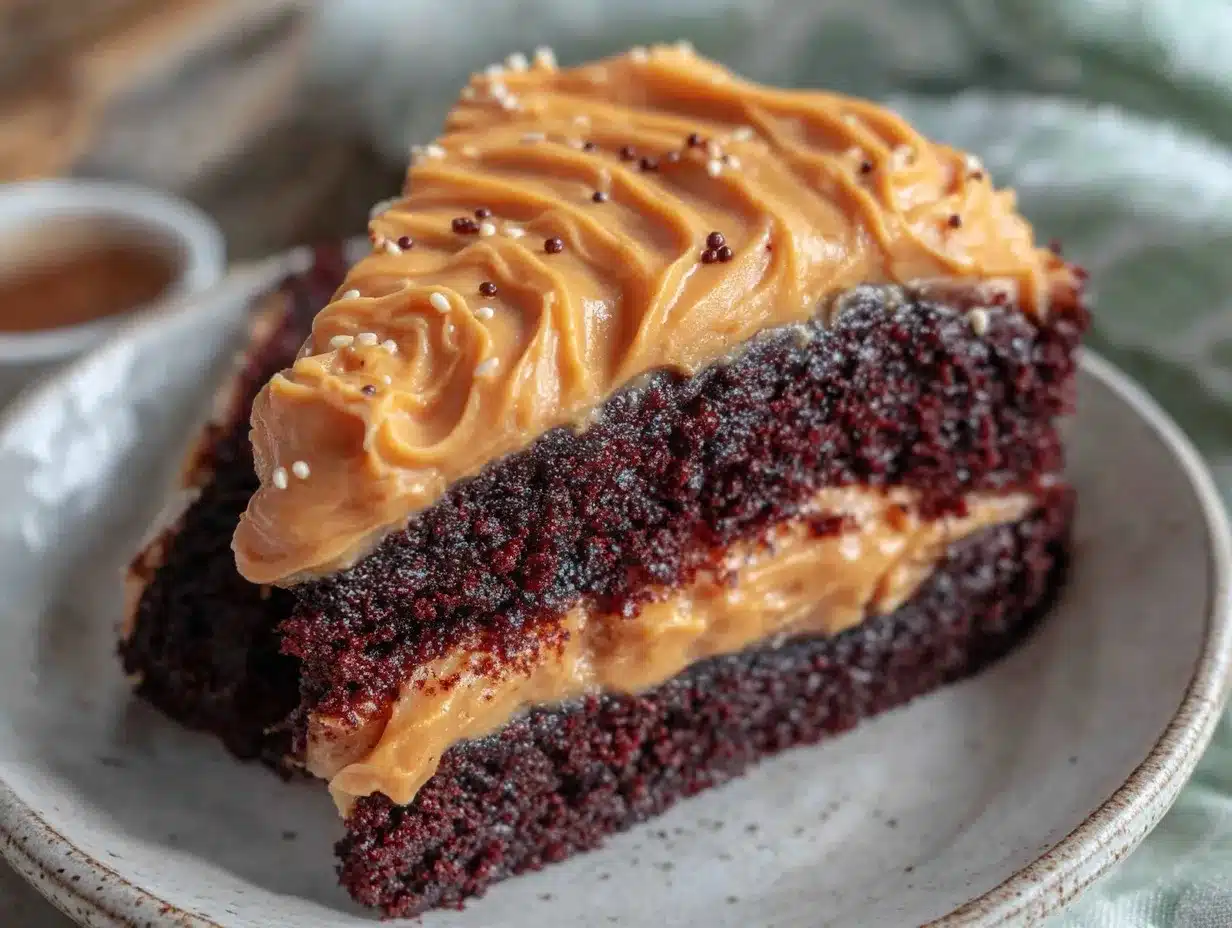
“Are you sure the frosting is orange cream cheese and not some secret potion?” my friend joked as I carefully piped the delicate spiderweb pattern on this black velvet layer cake. Honestly, I had my doubts too when I first tried this recipe. The idea of a black velvet cake—rich, dark, and silky—paired with a tangy, citrus-infused cream cheese frosting sounded like a gamble. But that night, with the kitchen dimly lit and a faint scent of orange zest lingering in the air, I realized this cake was something special.
What started as a last-minute Halloween dessert idea turned into an obsession. I made this decadent black velvet spiderweb layer cake with orange cream cheese frosting three times in one week, tweaking the frosting’s balance and perfecting the piping technique. The contrast between the dark, moist layers and the bright, creamy frosting is like the perfect little drama on a plate. It’s not just about the looks—the flavor combo is unexpectedly refreshing, and the texture is pure silk.
That spiderweb design? It began as a playful challenge to myself, trying to capture a spooky yet elegant vibe without turning the kitchen into a total mess. The slow, soothing swirl of the frosting as it spread, the tang of fresh orange zest cutting through the richness, and the deep, almost bittersweet cocoa notes in the cake layers all came together in a quiet moment of “okay, this is worth every minute.” This is more than just a cake; it’s the kind that sticks with you, the kind friends ask for again before the first slice is even gone.
Why You’ll Love This Recipe
Making this decadent black velvet spiderweb layer cake with orange cream cheese frosting isn’t just fun—it’s a treat that will wow your senses and your guests. Here’s why it’s a keeper in my kitchen:
- Quick & Easy: You can whip up the cake batter and frosting in under an hour, perfect for when you need an impressive dessert without spending all day.
- Simple Ingredients: No need for fancy or hard-to-find items. Most ingredients are pantry staples or easy to grab at your local store.
- Perfect for Special Occasions: Whether it’s a Halloween party, a birthday, or a cozy dinner, this cake’s dramatic look and flavor combo make it unforgettable.
- Crowd-Pleaser: It gets rave reviews from both kids and adults—who can resist that silky black velvet paired with zesty cream cheese frosting?
- Unbelievably Delicious: The moist, tender crumb of the black velvet cake combined with the tangy, bright orange cream cheese frosting creates a balance that’s oddly addictive.
What sets this apart isn’t just the spiderweb design or the unique frosting. The secret lies in the cake’s deep cocoa flavor, which isn’t too sweet and keeps the layers moist and tender. The frosting uses fresh orange zest and juice, giving it a lively brightness that cuts through the richness. I’ve tried a lot of cream cheese frostings, but this one is silky smooth without being overly sweet or heavy. It’s a texture thing—like that moment when you realize the frosting almost melts in your mouth.
Honestly, this cake is a little showstopper, but it’s also one of those recipes that makes you feel like you nailed it in the kitchen without hours of effort. It’s a recipe I keep coming back to, one that’s perfect for impressing guests and, more importantly, making yourself feel a little fancy on an ordinary day.
What Ingredients You Will Need
This decadent black velvet spiderweb layer cake with orange cream cheese frosting uses straightforward ingredients that come together to create bold flavor and a stunning presentation. You probably have most of these in your pantry already.
- For the Cake:
- All-purpose flour (2 ½ cups / 315 grams) – I prefer King Arthur for consistent texture
- Cocoa powder, unsweetened (¾ cup / 75 grams) – Dutch-processed works best for that deep black velvet color
- Baking soda (1 ½ teaspoons)
- Salt (1 teaspoon)
- Granulated sugar (2 cups / 400 grams)
- Buttermilk (1 cup / 240 ml), room temperature – adds moisture and slight tang
- Vegetable oil (1 cup / 240 ml) – keeps the crumb tender
- Eggs (2 large), room temperature
- Vanilla extract (2 teaspoons)
- Black food coloring (optional, 1 teaspoon) – for a more intense black hue without affecting flavor
- Brewed coffee (1 cup / 240 ml), hot – enhances the cocoa flavor without tasting like coffee
- For the Orange Cream Cheese Frosting:
- Cream cheese (8 oz / 225 grams), softened – I like Philadelphia for smoothness
- Unsalted butter (½ cup / 115 grams), softened
- Powdered sugar (4 cups / 480 grams), sifted to avoid lumps
- Fresh orange zest (2 teaspoons) – the real star for flavor
- Fresh orange juice (2 tablespoons) – adds a bright, natural tang
- Vanilla extract (1 teaspoon)
Looking for substitutions? You can swap all-purpose flour for a gluten-free blend (ensure it includes xanthan gum). Use dairy-free cream cheese and butter alternatives if needed. If fresh oranges aren’t in season, high-quality orange extract works in a pinch but fresh is worth the wait.
Equipment Needed
- Two 8-inch (20 cm) round cake pans – non-stick or lined with parchment paper for easy release
- Electric mixer (stand or handheld) – essential for smooth batter and creamy frosting
- Mixing bowls – medium and large sizes
- Measuring cups and spoons – accurate measurement is key for baking success
- Rubber spatula – for scraping down the bowl and folding ingredients gently
- Cooling racks – important to cool cakes evenly
- Offset spatula or butter knife – for spreading frosting smoothly
- Small piping bag or plastic sandwich bag with a small hole cut in the corner – to create the spiderweb design
If you don’t have a piping bag, a zip-top plastic bag works just fine. For cake pans, I’ve had good luck with budget-friendly aluminum pans that heat evenly if you can’t splurge on specialty bakeware. Remember to grease and flour your pans well to avoid sticking. Cleaning your electric mixer right after use keeps it running smoothly for years.
Preparation Method
- Preheat your oven to 350°F (175°C). Grease and flour two 8-inch (20 cm) round cake pans, then line the bottoms with parchment paper for easy removal.
- Mix the dry ingredients: In a large bowl, sift together the all-purpose flour (315 g), cocoa powder (75 g), baking soda (1 ½ tsp), and salt (1 tsp). Whisk to combine evenly. This step helps avoid lumps and ensures a smooth, even crumb.
- Combine sugar and wet ingredients: In another bowl, whisk granulated sugar (400 g), vegetable oil (240 ml), eggs (2 large), and vanilla extract (2 tsp) until smooth and pale. Add black food coloring if using, and mix well so the batter gets that rich black velvet tone.
- Alternate adding dry ingredients and buttermilk: Add the dry mixture and buttermilk (240 ml) alternately to the wet mixture, starting and ending with the dry. Mix gently after each addition until just combined—overmixing can make the cake dense.
- Stir in hot coffee: Pour in 1 cup (240 ml) of hot brewed coffee slowly, stirring until the batter is smooth. The coffee deepens the cocoa flavor but won’t taste like coffee itself. The batter will be thin—that’s perfect for a moist cake.
- Divide the batter evenly: Pour the batter into the prepared pans, smoothing the tops with an offset spatula. Tap the pans lightly on the counter to release air bubbles.
- Bake: Place pans in the oven and bake for 30-35 minutes, or until a toothpick inserted in the center comes out clean or with a few moist crumbs. Avoid opening the oven door too often to keep the cake rising evenly.
- Cool: Let the cakes cool in the pans for 10 minutes, then turn them out onto cooling racks. Peel off the parchment and allow the cakes to cool completely before frosting—warm cakes will make your frosting melt and slide off.
- Prepare the frosting: In a large bowl, beat softened cream cheese (225 g) and butter (115 g) together until creamy and smooth, about 3-4 minutes. Gradually add sifted powdered sugar (480 g), mixing on low speed to avoid a sugar cloud. Add fresh orange zest (2 tsp), orange juice (2 tbsp), and vanilla extract (1 tsp). Beat on medium-high speed until light and fluffy.
- Assemble the cake: Place one cake layer on your serving plate. Spread a thick, even layer of frosting on top. Place the second cake layer on top and apply a thin crumb coat of frosting around the entire cake. Chill for 15 minutes to set.
- Create the spiderweb design: Use the remaining frosting in a piping bag fitted with a small round tip or a plastic bag with a tiny corner snipped off. Pipe concentric circles starting from the center of the cake to the edges. Use a toothpick or skewer to drag lines from the center outward to form the spiderweb pattern. Chill again to set the design.
Tip: If you want super clean layers, trim the domed tops of the cakes before assembling. This cake freezes well — just wrap tightly and thaw overnight in the fridge before frosting.
Cooking Tips & Techniques
Getting this decadent black velvet spiderweb layer cake just right comes down to a few handy tips I picked up after a couple of trial runs:
- Use room temperature ingredients: Eggs, buttermilk, cream cheese, and butter all come together smoother when not cold. It helps the batter and frosting mix evenly, avoiding lumps or curdling.
- Don’t overmix your batter: Once you combine the wet and dry ingredients, mix just until incorporated. Overmixing can make the cake tough instead of tender and moist.
- Hot coffee is your secret weapon: Adding brewed coffee intensifies the cocoa flavor without adding bitterness. If you’ve ever tried brown butter chocolate chip cookies, you’ll appreciate how coffee deepens chocolate notes similarly in cakes.
- Chill the cake after crumb coating: It makes the final frosting layer smoother and easier to pipe your spiderweb design.
- Practice your piping on parchment paper first: If you’re not confident with the spiderweb, try it a few times on paper before decorating the cake.
I learned the hard way that skipping the chilling steps made the frosting slide right off. Also, using fresh orange zest makes all the difference — bottled orange extract just can’t compete with that zingy brightness.
Variations & Adaptations
This decadent black velvet spiderweb layer cake is pretty fantastic as is, but you can customize it to suit your taste or dietary needs:
- Seasonal Twist: Swap the orange zest and juice in the frosting with lemon or lime for a different citrus punch. Or add a teaspoon of cinnamon or pumpkin pie spice for fall vibes.
- Diet-Friendly: Use almond flour instead of all-purpose to make it gluten-free. Replace regular cream cheese and butter with dairy-free alternatives to make it vegan-friendly.
- Flavor Swap: Try folding in finely chopped candied ginger or crystallized orange peel into the frosting for texture and bursts of flavor.
- Alternative Design: Instead of a spiderweb, pipe simple rosettes or stripes with the frosting for a less spooky but equally elegant look.
Once, I made this cake with a moist olive oil lemon almond cake base for a lighter texture but kept the orange cream cheese frosting. The combination was surprisingly fresh and light, perfect for spring.
Serving & Storage Suggestions
This decadent black velvet spiderweb layer cake with orange cream cheese frosting is best served chilled or at cool room temperature. The frosting firms up nicely in the fridge, and the orange flavor shines through more when slightly cooled.
Pair it with a cup of dark roast coffee or a citrusy black tea to complement the bold flavors. For a full dessert spread, this cake sits beautifully alongside a simple vanilla bean ice cream or a fresh berry salad.
Store leftover cake tightly wrapped in plastic wrap or in an airtight container in the refrigerator for up to 4 days. It also freezes well for up to 3 months — slice into portions before freezing for easier thawing. To reheat, let thaw overnight in the fridge and bring to room temperature before serving for the best texture.
Fun fact: The flavors of the orange cream cheese frosting mellow and deepen after a day or two, making this cake taste even better the next day.
Nutritional Information & Benefits
Per slice (based on 12 servings), this decadent black velvet spiderweb layer cake with orange cream cheese frosting offers approximately:
| Calories | 350 kcal |
|---|---|
| Fat | 18 g |
| Carbohydrates | 45 g |
| Protein | 4 g |
| Sugar | 32 g |
Key ingredients like cocoa powder bring antioxidants and minerals, while fresh orange zest adds vitamin C and a natural boost without extra sugar. The cream cheese provides calcium and protein, though this cake is definitely an indulgence best enjoyed in moderation.
For those monitoring gluten or dairy, simple substitutions make this cake accessible without losing much of its signature flavor and texture. This recipe strikes a nice balance between indulgence and fresh brightness, making it a satisfying treat that feels a little less heavy than your typical chocolate layer cake.
Conclusion
This decadent black velvet spiderweb layer cake with orange cream cheese frosting has earned a special spot in my baking repertoire. It’s the kind of cake that’s dramatic without being complicated, rich yet bright, and surprisingly easy to make. The combination of deep cocoa and zesty orange cream cheese frosting creates a flavor harmony that’s hard to forget.
Whether you’re looking for a striking dessert for a party, a Halloween centerpiece, or just a personal treat to savor, this recipe invites you to bring your own twists and make it your own. I love how it brings a little festive fun without fuss, and I hope it becomes a favorite in your kitchen too.
Feel free to share your own adaptations or questions—I’m always excited to hear how this cake turns out for you. Baking is better when it’s shared, after all!
Frequently Asked Questions
Can I make this cake ahead of time?
Yes! You can bake the cake layers up to two days in advance and keep them wrapped at room temperature. Frost the cake the day you plan to serve it for the best texture. The assembled cake can be refrigerated for up to 4 days.
How do I get the black velvet cake so dark?
Using Dutch-processed cocoa powder and a small amount of black food coloring helps achieve that rich black color without adding bitterness. The hot coffee also deepens the color and flavor.
Can I use regular milk instead of buttermilk?
You can substitute buttermilk with regular milk mixed with 1 tablespoon of lemon juice or vinegar, let it sit 5 minutes before using. This adds the necessary acidity for tender crumb and flavor balance.
What’s the best way to store leftover cake?
Wrap leftover cake tightly with plastic wrap or place in an airtight container and refrigerate for up to 4 days. You can also freeze slices for up to 3 months. Thaw in the fridge overnight before serving.
How do I make the spiderweb design neat?
Practice piping concentric circles on parchment paper first. Use a toothpick to drag lines from the center outward quickly and steadily. Chilling the cake after the crumb coat helps the frosting set and makes piping easier.
Pin This Recipe!
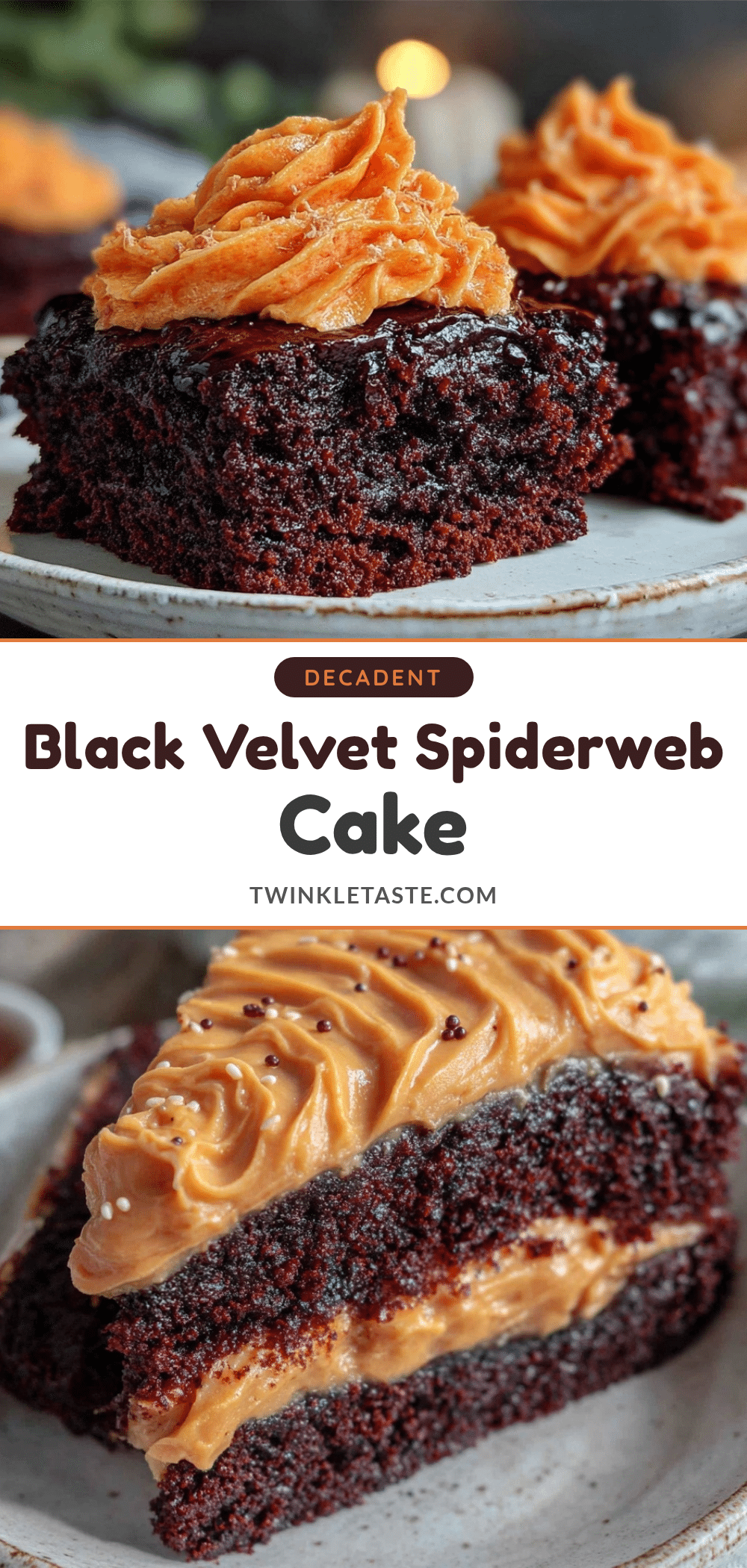
Decadent Black Velvet Spiderweb Layer Cake Recipe with Easy Orange Cream Cheese Frosting

A rich, dark black velvet cake paired with a tangy, citrus-infused orange cream cheese frosting, decorated with a delicate spiderweb design. Perfect for special occasions and impressing guests with its dramatic look and refreshing flavor.
- Prep Time: 20 minutes
- Cook Time: 35 minutes
- Total Time: 55 minutes
- Yield: 12 servings 1x
- Category: Dessert
- Cuisine: American
Ingredients
- 2 ½ cups (315 grams) all-purpose flour
- ¾ cup (75 grams) unsweetened Dutch-processed cocoa powder
- 1 ½ teaspoons baking soda
- 1 teaspoon salt
- 2 cups (400 grams) granulated sugar
- 1 cup (240 ml) buttermilk, room temperature
- 1 cup (240 ml) vegetable oil
- 2 large eggs, room temperature
- 2 teaspoons vanilla extract
- 1 teaspoon black food coloring (optional)
- 1 cup (240 ml) hot brewed coffee
- 8 oz (225 grams) cream cheese, softened
- ½ cup (115 grams) unsalted butter, softened
- 4 cups (480 grams) powdered sugar, sifted
- 2 teaspoons fresh orange zest
- 2 tablespoons fresh orange juice
- 1 teaspoon vanilla extract
Instructions
- Preheat your oven to 350°F (175°C). Grease and flour two 8-inch (20 cm) round cake pans, then line the bottoms with parchment paper for easy removal.
- In a large bowl, sift together the all-purpose flour, cocoa powder, baking soda, and salt. Whisk to combine evenly.
- In another bowl, whisk granulated sugar, vegetable oil, eggs, and vanilla extract until smooth and pale. Add black food coloring if using, and mix well.
- Add the dry mixture and buttermilk alternately to the wet mixture, starting and ending with the dry. Mix gently after each addition until just combined.
- Pour in hot brewed coffee slowly, stirring until the batter is smooth.
- Divide the batter evenly into the prepared pans, smoothing the tops with an offset spatula. Tap the pans lightly to release air bubbles.
- Bake for 30-35 minutes, or until a toothpick inserted in the center comes out clean or with a few moist crumbs.
- Let the cakes cool in the pans for 10 minutes, then turn out onto cooling racks. Peel off parchment and cool completely before frosting.
- Beat softened cream cheese and butter together until creamy and smooth, about 3-4 minutes. Gradually add powdered sugar, mixing on low speed.
- Add fresh orange zest, orange juice, and vanilla extract. Beat on medium-high speed until light and fluffy.
- Place one cake layer on a serving plate. Spread a thick, even layer of frosting on top. Place the second layer on top and apply a thin crumb coat around the cake. Chill for 15 minutes.
- Use remaining frosting in a piping bag with a small round tip or plastic bag with a small corner cut off. Pipe concentric circles from center to edges.
- Drag lines from the center outward with a toothpick to create the spiderweb design. Chill again to set the design.
Notes
Use room temperature ingredients for smoother batter and frosting. Do not overmix the batter to keep the cake tender. Hot coffee enhances cocoa flavor without bitterness. Chill the cake after crumb coating for easier frosting and piping. Practice piping the spiderweb design on parchment paper first. The cake freezes well; thaw overnight in the fridge before frosting.
Nutrition
- Serving Size: 1 slice (1/12 of cak
- Calories: 350
- Sugar: 32
- Fat: 18
- Carbohydrates: 45
- Protein: 4
Keywords: black velvet cake, orange cream cheese frosting, spiderweb cake, Halloween cake, layer cake, chocolate cake, citrus frosting