“You’ve got to taste this,” my friend said one lazy Sunday afternoon, waving a slice of homemade German chocolate cake in front of me like it was the Holy Grail of desserts. Honestly, I was skeptical—German chocolate cake always seemed like a fancy, complicated affair reserved for special occasions or professional bakers. But the moment I took that first bite, rich chocolate sponge meeting the toasted coconut pecan frosting that crackled slightly under my teeth, I was hooked.
What surprised me most was how approachable this recipe was. It wasn’t the usual fuss of complex layering or mysterious ingredients; it felt like a cozy, indulgent project that anyone with a bit of patience could tackle. Over the next week, I found myself making this Perfect Homemade German Chocolate Cake more times than I care to admit—each one a little tweak, a little experiment, but always that same soul-soothing flavor combo.
That toasted coconut pecan frosting? It’s a game changer. The way the toasted coconut flakes and crunchy pecans mingle with the caramel-like sweetness feels like a little celebration in every bite. This cake isn’t just dessert; it’s a reminder to slow down, savor the process, and enjoy the cozy comforts of home baking. And that, honestly, is why it stuck with me.
Why You’ll Love This Recipe
This Perfect Homemade German Chocolate Cake with Toasted Coconut Pecan Frosting isn’t just another dessert recipe you’ll find on the internet. It’s a carefully tested, family-approved masterpiece that stands out for several reasons:
- Quick & Easy: Despite its rich appearance, this cake comes together in about 90 minutes from start to finish—perfect for last-minute celebrations or a weekend baking project.
- Simple Ingredients: No strange or hard-to-find components here. You probably already have most of these staples in your pantry and fridge.
- Perfect for Any Occasion: Whether it’s a birthday, holiday gathering, or a casual dinner party, this cake impresses without the stress.
- Crowd-Pleaser: The combination of moist chocolate layers and that signature toasted coconut pecan frosting consistently gets rave reviews from kids and adults alike.
- Unbelievably Delicious: The frosting’s texture and flavor strike the perfect balance between sweet, nutty, and slightly chewy, setting this cake apart from run-of-the-mill chocolate cakes.
What makes this recipe truly special is the way the frosting is crafted. Toasting the coconut and pecans beforehand brings out a depth of flavor that you won’t get from just mixing everything in raw. Plus, the cake layers themselves stay moist and tender, thanks to a touch of buttermilk and the right balance of cocoa powder. It’s not just a cake—it’s an experience you’ll want to revisit time and again.
What Ingredients You Will Need
This recipe uses simple, wholesome ingredients to deliver bold flavor and satisfying texture without the fuss. Most are pantry staples, but a few fresh components make all the difference.
- For the Cake:
- All-purpose flour – 2 1/4 cups (280 g)
- Granulated sugar – 1 3/4 cups (350 g)
- Unsweetened cocoa powder – 1/4 cup (25 g), preferably Dutch-processed for richness
- Baking soda – 1 1/2 teaspoons
- Baking powder – 1 teaspoon
- Salt – 1/2 teaspoon
- Buttermilk – 1 cup (240 ml), room temperature (adds moisture and tang)
- Vegetable oil – 1/2 cup (120 ml), neutral flavor
- Large eggs – 2, room temperature
- Vanilla extract – 2 teaspoons
- Hot water – 1 cup (240 ml), to bloom the cocoa for intense chocolate flavor
- For the Toasted Coconut Pecan Frosting:
- Evaporated milk – 1 cup (240 ml), the base for that classic gooey texture
- Granulated sugar – 1 1/2 cups (300 g)
- Egg yolks – 4, beaten (for richness and structure)
- Unsalted butter – 1/2 cup (115 g), cut into small pieces
- Vanilla extract – 1 teaspoon
- Sweetened shredded coconut – 1 1/2 cups (135 g), toasted until golden (watch carefully!)
- Chopped pecans – 1 cup (120 g), toasted for that irresistible crunch
Tip: For the best texture in frosting, look for small-curd evaporated milk brands (like Carnation). And if you want a dairy-free twist, swap butter for coconut oil and use dairy-free evaporated milk alternatives.
Equipment Needed
- Two 9-inch (23 cm) round cake pans – non-stick or greased and floured
- Mixing bowls – medium and large
- Electric mixer or stand mixer – to get that smooth cake batter and creamy frosting base
- Whisk – handy for beating eggs and mixing the frosting
- Measuring cups and spoons – precise measurements make all the difference
- Spatula – for folding and scraping
- Saucepan – for cooking the frosting mixture
- Cooling rack – to let cakes cool evenly before frosting
I used my trusty KitchenAid stand mixer, but a handheld electric mixer works just fine. For budget-friendly baking, silicone spatulas and simple metal pans are great options. Just keep an eye on the frosting pot to avoid scorching.
Preparation Method
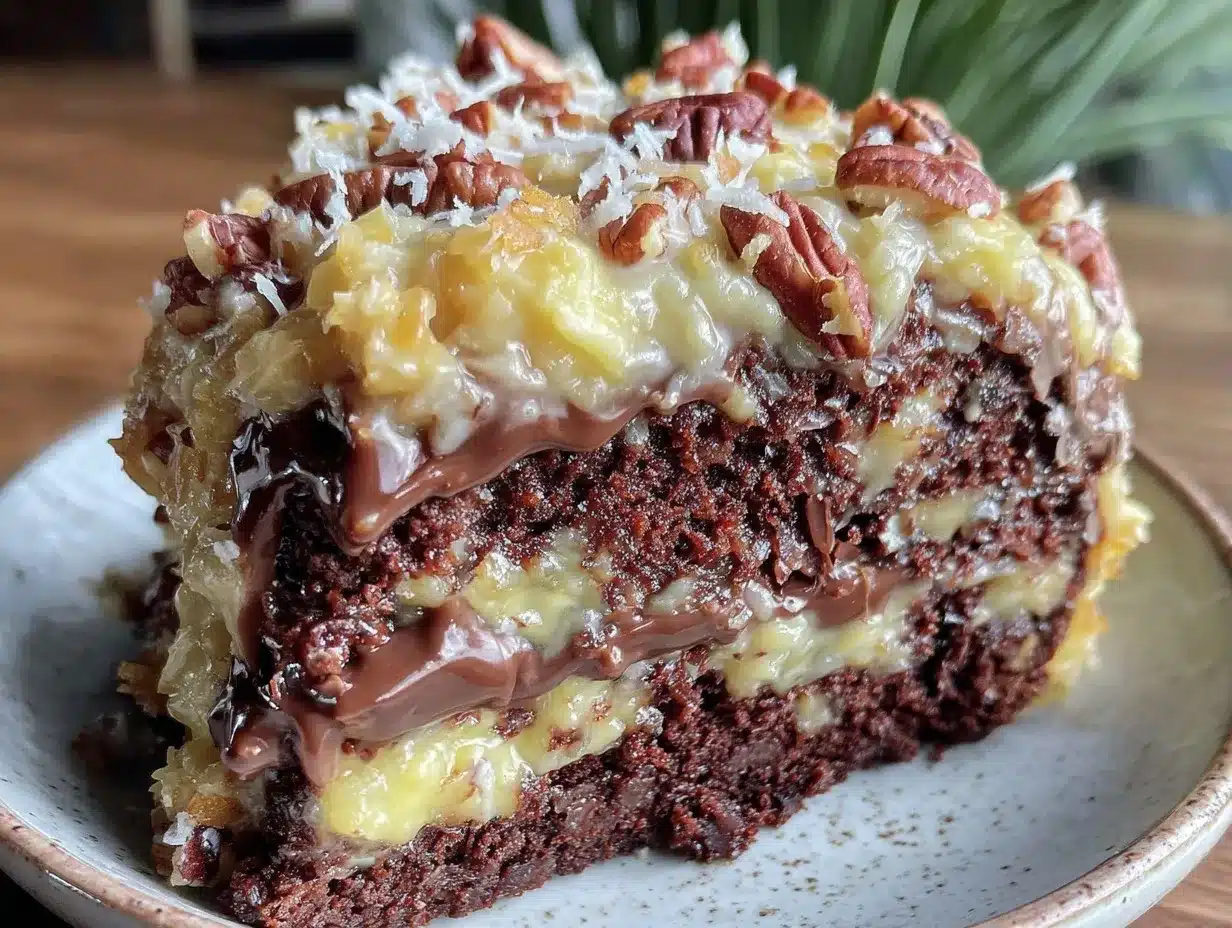
- Preheat oven and prepare pans: Set your oven to 350°F (175°C). Grease two 9-inch cake pans well, then lightly flour or line with parchment paper. This prevents sticking and helps the cakes release cleanly. (Time: 10 minutes)
- Mix dry ingredients: In a large bowl, sift together the flour, sugar, cocoa powder, baking soda, baking powder, and salt. This ensures even distribution and no lumps. (Time: 5 minutes)
- Combine wet ingredients: In another bowl, whisk buttermilk, oil, eggs, and vanilla extract until smooth. The buttermilk adds a subtle tang and keeps the cake moist.
- Blend wet into dry: Slowly add the wet ingredients to the dry mixture, mixing on low speed until just combined. Avoid overmixing to keep the crumb tender.
- Add hot water: Carefully pour in the hot water (or hot coffee for a deeper flavor) while mixing at low speed. The batter will be thin—that’s exactly right for a moist cake.
- Bake: Divide batter evenly between prepared pans. Bake for 30-35 minutes or until a toothpick inserted in the center comes out clean. The cakes should spring back when lightly pressed. (Tip: Rotate pans halfway through baking for even cooking.)
- Cool cakes: Let the cakes rest in pans for 10 minutes before transferring to a wire rack to cool completely. Frosting goes on best when cakes are fully cooled.
- Toast coconut and pecans: Spread shredded coconut and chopped pecans on a baking sheet. Toast at 350°F (175°C) for 5-7 minutes, stirring once, until golden and fragrant. Watch closely so they don’t burn.
- Make frosting base: In a medium saucepan, combine evaporated milk, sugar, egg yolks, and butter. Cook over medium heat, stirring constantly, until thickened and golden (about 12 minutes). It should coat the back of a spoon.
- Finish frosting: Remove from heat, stir in vanilla, toasted coconut, and pecans. Let cool to room temperature—it will thicken more as it cools.
- Assemble cake: Place one cake layer on your serving plate. Spread a generous layer of frosting on top. Add the second cake layer and cover the top and sides with remaining frosting. You want that toasted coconut pecan frosting to shine everywhere.
Trust me, the gooey texture of that frosting with the moist cake layers is worth every minute of attention. If your frosting feels too loose, a quick chill in the fridge helps it firm up.
Cooking Tips & Techniques
Making German chocolate cake can feel intimidating, but a few tricks learned the hard way make it easier:
- Don’t skip toasting: Toasting the coconut and pecans separately transforms their flavor and texture. I once tried mixing them raw in the frosting—it was just… meh. Toasting gives that signature crunch and nuttiness.
- Watch the frosting closely: Stirring constantly while cooking the frosting prevents scrambling the eggs. If you walk away, the texture can turn grainy or curdled.
- Use room temperature eggs and buttermilk: This helps ingredients blend smoothly and encourages even baking.
- Thin batter is normal: The hot water thins the batter intentionally, so don’t panic. It results in a tender crumb.
- Cooling is key: Frosting a warm cake will make it melt and slide off. Always cool layers completely.
- Multitasking tip: Toast your coconut and pecans while the cake is baking. It’s a great way to keep things moving and avoid downtime.
Honestly, the first time I made this cake, I almost gave up on the frosting, thinking I ruined it. But patience paid off, and that sticky, nutty topping was worth every bit of effort.
Variations & Adaptations
This German chocolate cake recipe is versatile and easy to tweak:
- Gluten-Free: Swap all-purpose flour for a 1-to-1 gluten-free baking blend. It keeps the cake moist and tender.
- Vegan Adaptation: Use flax eggs (1 tablespoon ground flaxseed + 3 tablespoons water per egg) and replace evaporated milk with canned coconut milk. Use coconut oil instead of butter in frosting.
- Nut-Free Version: Simply omit pecans in the frosting and add extra shredded coconut or chopped dried fruits for texture.
- Flavor Boost: Add a teaspoon of espresso powder to the cake batter for a richer chocolate flavor that pairs beautifully with the frosting.
- Seasonal Twist: In warmer months, add fresh sliced strawberries between layers for a fruity contrast.
Once, I experimented by mixing in a bit of orange zest into the frosting—it added a surprising brightness that worked wonderfully with the coconut and pecans. Feel free to try your own spins!
Serving & Storage Suggestions
Serve this cake slightly chilled or at room temperature for the best texture. The frosting firms up in the fridge, making slices neat and easy to handle.
Pair it with a cup of strong black coffee or a creamy latte to balance the sweetness. I’ve also found that a scoop of vanilla bean ice cream on the side is a decadent touch for special occasions.
Store any leftovers tightly wrapped in the refrigerator for up to 4 days. The flavors actually deepen after a day or two, so it’s perfect for making ahead.
To reheat, simply bring slices to room temperature or warm gently in the microwave for 15 seconds—just enough to soften the frosting without melting it completely.
Nutritional Information & Benefits
A typical slice of this German chocolate cake (about 1/12th of the cake) contains roughly:
| Calories | 450-500 kcal |
|---|---|
| Fat | 25 g (mostly from pecans and butter) |
| Carbohydrates | 55 g |
| Protein | 5 g |
While this cake is an indulgence, pecans add healthy fats and fiber, and coconut provides minerals like manganese. Using buttermilk and eggs contributes protein and richness without heaviness. For those mindful of dietary needs, this recipe can be adapted gluten-free or vegan as mentioned earlier. Just keep in mind the classic version contains nuts, dairy, and eggs.
Conclusion
This Perfect Homemade German Chocolate Cake with Toasted Coconut Pecan Frosting is one of those recipes that feels like a warm hug from your kitchen. It’s reliably delicious, approachable, and packed with textures and flavors that keep people coming back for more. Whether you’re baking for a special occasion or just because, this cake brings a little extra joy to the table.
Feel free to make it your own—swap nuts, add zest, or try different frostings based on your mood. I love how this cake turns simple ingredients into something extraordinary, and I hope it becomes a favorite in your home too.
If you want to try another recipe that’s both comforting and impressive, you might enjoy the fluffy cinnamon rolls with brown butter filling or the cozy pressure cooker beef stew for your next cooking adventure.
Don’t hesitate to share your own twists or ask questions in the comments—I’d love to hear how your cake turns out!
FAQs
Can I make this German chocolate cake ahead of time?
Absolutely! The cake layers and frosting can be made a day in advance. Store the cake covered in the refrigerator and bring to room temperature before serving for the best flavor and texture.
How do I prevent the frosting from becoming grainy?
Constant stirring while cooking the frosting mixture is key. Avoid high heat and never leave it unattended. Using fresh eggs and good-quality evaporated milk also helps.
Can I use fresh coconut instead of shredded coconut?
Fresh coconut has higher moisture content and won’t toast the same way. Shredded sweetened coconut gives the signature texture and flavor for the frosting.
Is there a substitute for buttermilk in the cake?
You can make a buttermilk substitute by adding 1 tablespoon of white vinegar or lemon juice to 1 cup of milk. Let it sit for 5 minutes before using.
What’s the best way to toast the pecans and coconut?
Spread them in a single layer on a baking sheet and bake at 350°F (175°C) for 5-7 minutes, stirring once halfway through. Keep a close eye to avoid burning.
Pin This Recipe!
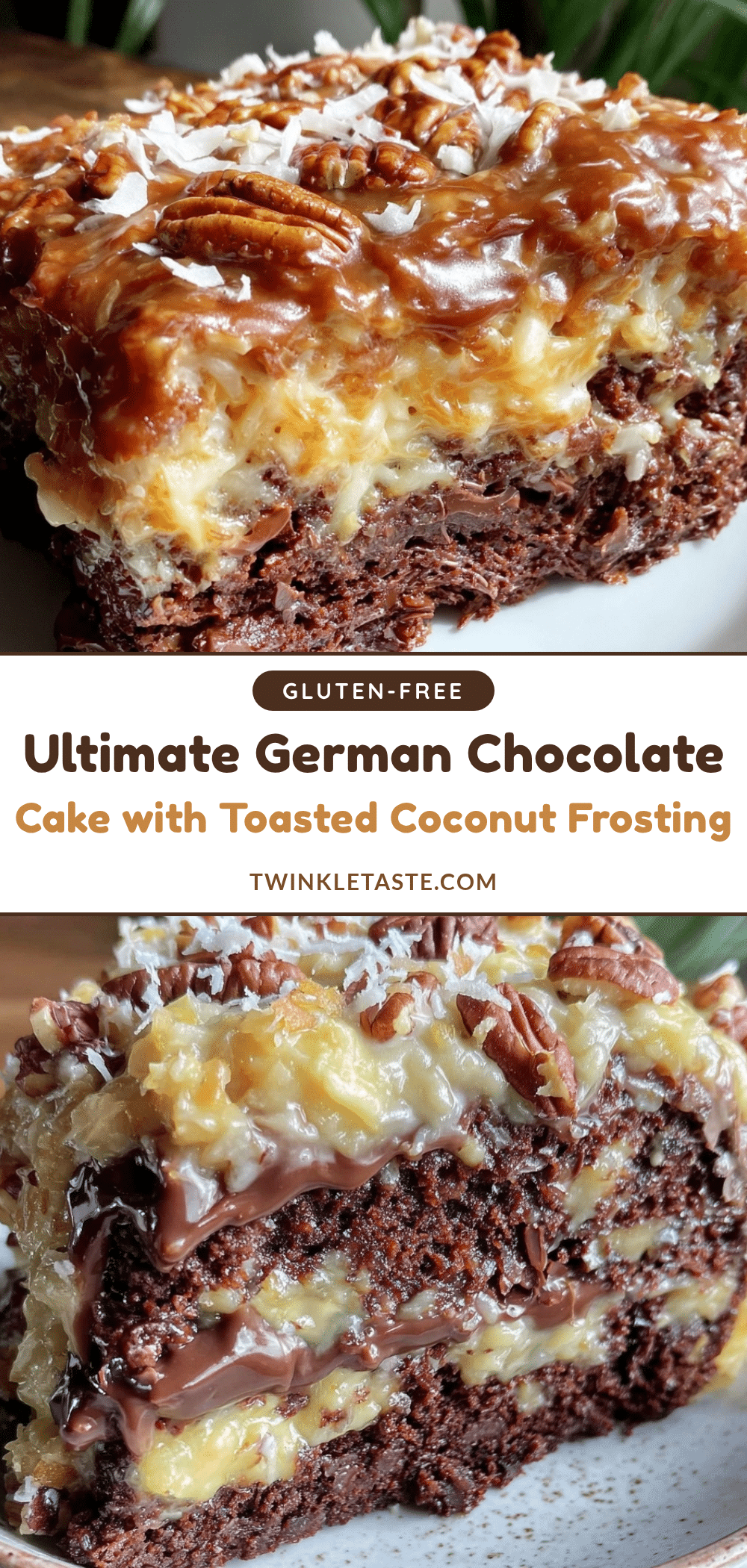
Perfect Homemade German Chocolate Cake Recipe with Toasted Coconut Pecan Frosting
A rich and moist German chocolate cake layered with a signature toasted coconut pecan frosting that is sweet, nutty, and slightly chewy. This approachable recipe is perfect for any occasion and delivers a crowd-pleasing dessert.
- Prep Time: 20 minutes
- Cook Time: 35 minutes
- Total Time: 90 minutes
- Yield: 12 servings 1x
- Category: Dessert
- Cuisine: American
Ingredients
- 2 1/4 cups all-purpose flour (280 g)
- 1 3/4 cups granulated sugar (350 g)
- 1/4 cup unsweetened cocoa powder (25 g), preferably Dutch-processed
- 1 1/2 teaspoons baking soda
- 1 teaspoon baking powder
- 1/2 teaspoon salt
- 1 cup buttermilk (240 ml), room temperature
- 1/2 cup vegetable oil (120 ml), neutral flavor
- 2 large eggs, room temperature
- 2 teaspoons vanilla extract
- 1 cup hot water (240 ml)
- 1 cup evaporated milk (240 ml)
- 1 1/2 cups granulated sugar (300 g)
- 4 egg yolks, beaten
- 1/2 cup unsalted butter (115 g), cut into small pieces
- 1 teaspoon vanilla extract
- 1 1/2 cups sweetened shredded coconut (135 g), toasted
- 1 cup chopped pecans (120 g), toasted
Instructions
- Preheat oven to 350°F (175°C). Grease two 9-inch cake pans and lightly flour or line with parchment paper.
- In a large bowl, sift together flour, sugar, cocoa powder, baking soda, baking powder, and salt.
- In another bowl, whisk together buttermilk, vegetable oil, eggs, and vanilla extract until smooth.
- Slowly add wet ingredients to dry ingredients, mixing on low speed until just combined.
- Carefully pour in hot water while mixing at low speed; batter will be thin.
- Divide batter evenly between prepared pans and bake for 30-35 minutes or until a toothpick inserted in the center comes out clean. Rotate pans halfway through baking.
- Let cakes rest in pans for 10 minutes, then transfer to a wire rack to cool completely.
- Spread shredded coconut and chopped pecans on a baking sheet and toast at 350°F (175°C) for 5-7 minutes, stirring once, until golden and fragrant.
- In a medium saucepan, combine evaporated milk, sugar, egg yolks, and butter. Cook over medium heat, stirring constantly, until thickened and golden (about 12 minutes).
- Remove from heat and stir in vanilla extract, toasted coconut, and pecans. Let cool to room temperature.
- Place one cake layer on a serving plate. Spread a generous layer of frosting on top. Add the second cake layer and cover the top and sides with remaining frosting.
Notes
Toast coconut and pecans separately for best flavor and texture. Stir frosting constantly while cooking to prevent scrambling eggs. Use room temperature eggs and buttermilk for smooth blending. Thin batter is normal due to hot water addition. Cool cakes completely before frosting to prevent melting. Chill frosting if too loose.
Nutrition
- Serving Size: 1 slice (1/12th of c
- Calories: 475
- Sugar: 40
- Sodium: 300
- Fat: 25
- Saturated Fat: 8
- Carbohydrates: 55
- Fiber: 3
- Protein: 5
Keywords: German chocolate cake, toasted coconut pecan frosting, homemade cake, chocolate cake recipe, easy chocolate cake, moist chocolate cake, classic dessert