“You have to try this,” my coworker said, sliding a container across the table during our lunch break. I glanced skeptically at the modest takeout box labeled “Bibimbap” — beef, rice, veggies, and a fiery sauce. Honestly, I wasn’t expecting much from street food on a budget, especially something that cost just five bucks. But the moment I took a bite of that crispy beef mixed with the sweet-heat of the gochujang sauce, it hit me — this was unlike any bowl I’d tried before. That surprising crunch, the warm rice underneath, and the zing of Korean chili paste all came together so effortlessly.
Back home, I couldn’t stop thinking about that bowl. So, I started tweaking and testing my own version until I nailed this Crispy 5-Dollar Beef Bibimbap Bowl with Gochujang Sauce. The crispy edges on the beef, the medley of fresh veggies, and that addictive sauce make it an easy go-to meal that feels way more special than the price tag suggests. Plus, it’s got that balance of textures and flavors that make you pause and savor each bite, you know?
This recipe sticks with me because it’s practical for busy days but delivers on flavor like a treat you’d order out. No fuss, no fancy ingredients — just smart layering and the magic of crispness combined with bold sauce. It’s perfect for those moments when you want a hearty meal that’s not only filling but comforting in a way that makes you feel quietly satisfied long after the plate is empty.
So, if you’ve ever doubted that cheap and quick can be tasty and crave-worthy, this bowl might just change your mind. It’s the kind of dish where the crispy beef bits and spicy gochujang sauce make you want to come back for more — and maybe even make it a weekly ritual.
Why You’ll Love This Crispy 5-Dollar Beef Bibimbap Bowl with Gochujang Sauce
After testing this recipe multiple times (and honestly, eating it way too often in one week), I’ve seen why it’s become a favorite in my kitchen:
- Quick & Easy: You can have this bowl ready in about 30 minutes, which is a lifesaver on hectic weeknights or when you’re craving something satisfying but don’t want to slave away.
- Simple Ingredients: No scavenging for weird components — most of these are pantry staples or easy finds. That beef and gochujang sauce combo? Classic and straightforward.
- Perfect for Any Occasion: Whether you’re whipping up a cozy solo dinner or feeding a small group, it’s a crowd-pleaser that feels special without the stress.
- Crowd-Pleaser: Kids and adults alike tend to ask for seconds, partly because the crispy texture contrasts so well with the fresh veggies and rice.
- Unbelievably Delicious: That crispy sear on the beef, combined with the sweet-spicy kick of the gochujang sauce, makes this bowl truly comforting and flavorful.
What sets this recipe apart is the way the beef crisps up perfectly without extra breading or complicated steps — just a quick pan-fry that locks in flavor and texture. The homemade gochujang sauce balances heat, sweetness, and umami in a way that’s approachable but authentic. Honestly, it’s not your run-of-the-mill bibimbap; it’s a crispy, budget-friendly twist that’s become my go-to for a satisfying meal.
This bowl isn’t just about filling up — it’s about hitting that sweet spot where comfort food meets practicality. It’s the kind of meal that makes you close your eyes after the first bite and smile quietly. If you want to try something that’s easy, affordable, and memorable, this recipe’s got your back.
What Ingredients You Will Need
This recipe uses straightforward, wholesome ingredients to create a bowl bursting with texture and flavor without too much fuss. Most of these components are pantry staples or easy to find at your local grocery store, and you can swap a few items depending on what you have.
- For the Beef:
– 1/2 pound (225 g) ground beef (80/20 lean-to-fat ratio recommended for juiciness)
– 1 tablespoon soy sauce (I like Kikkoman for a balanced saltiness)
– 1 teaspoon sesame oil (adds nuttiness and depth)
– 1 clove garlic, minced (fresh is best)
– 1/2 teaspoon freshly ground black pepper - For the Gochujang Sauce:
– 2 tablespoons gochujang (Korean chili paste; try Chung Jung One brand for authentic flavor)
– 1 tablespoon rice vinegar (balances the heat)
– 1 tablespoon honey or brown sugar (for subtle sweetness)
– 1 teaspoon toasted sesame oil (finishing touch)
– 1 teaspoon soy sauce - For the Veggies & Rice:
– 1 cup cooked white rice (short grain or sushi rice works well)
– 1/2 cup julienned carrots
– 1/2 cup fresh spinach leaves, lightly sautéed or steamed
– 1/4 cup thinly sliced cucumber (optional, adds freshness)
– 1 egg (fried sunny-side up or soft-boiled for topping)
– 1 tablespoon toasted sesame seeds (for garnish) - Optional Extras:
– Kimchi (for a tangy, spicy side)
– Scallions, thinly sliced (adds brightness)
– Crushed seaweed flakes (for umami crunch)
If you want a gluten-free meal, just swap the soy sauce for tamari or coconut aminos. And if you’re dairy-free, this recipe works perfectly as-is since it’s naturally free of dairy. For a vegetarian twist, you could swap beef with tofu or tempeh, but the crispy beef is hard to beat.
Equipment Needed
- Non-stick or cast iron skillet – essential for getting that perfect crisp on the beef. I personally prefer cast iron for even heat distribution and better sear.
- Mixing bowls – one for marinating the beef and another for prepping the sauce.
- Sharp knife and cutting board – to julienne the carrots and slice cucumbers neatly.
- Small whisk or spoon – to mix the gochujang sauce ingredients smoothly.
- Rice cooker or pot – for perfectly cooked rice. If you don’t have a rice cooker, a heavy-bottomed pot with a tight-fitting lid works fine.
- Spatula or wooden spoon – to stir and flip the beef without breaking it apart.
If you don’t have a cast iron skillet, a heavy stainless-steel pan will do just fine, but keep an eye on the heat to avoid sticking. Also, investing in a good non-stick pan for quick meals like this can save you lots of cleanup time. For the gochujang sauce, no fancy tools needed — just a small bowl and spoon will do.
Preparation Method
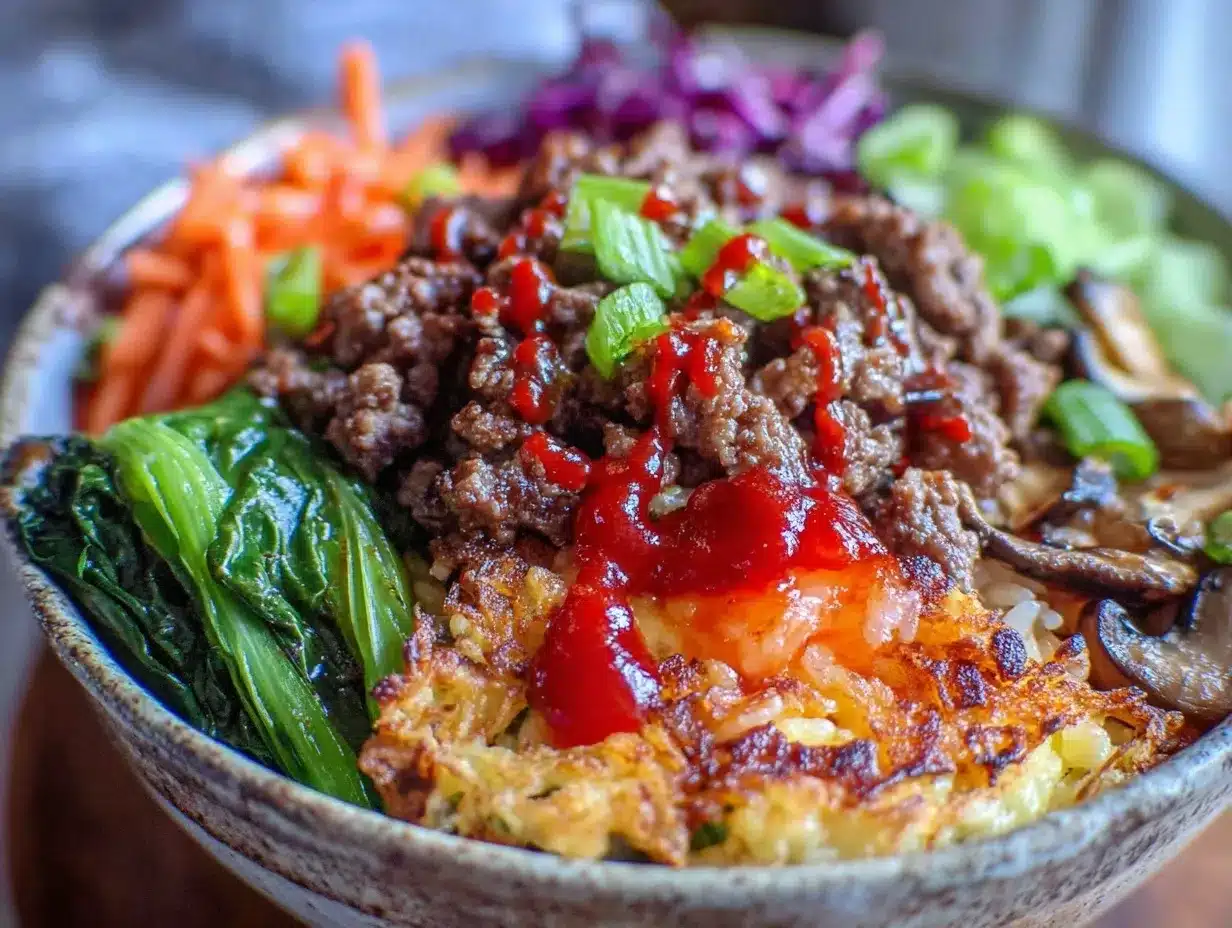
- Prepare the rice: Start by cooking 1 cup (190 g) of white rice according to package instructions, which usually takes about 15-20 minutes. Fluff it with a fork once done and keep warm.
- Marinate the beef: In a mixing bowl, combine 1/2 pound (225 g) ground beef with 1 tablespoon soy sauce, 1 teaspoon sesame oil, minced garlic, and black pepper. Mix gently but thoroughly, avoiding overworking the meat. Let it sit for 10 minutes to absorb flavors.
- Make the gochujang sauce: Whisk together 2 tablespoons gochujang, rice vinegar, honey (or brown sugar), toasted sesame oil, and soy sauce in a small bowl. Adjust sweetness or acidity to your taste. Set aside.
- Prepare the veggies: Julienne carrots and thinly slice cucumber. Lightly sauté spinach in a teaspoon of oil for about 1-2 minutes or steam until just wilted. Keep veggies separate for plating.
- Cook the beef: Heat a skillet over medium-high heat. Once hot, add the beef, breaking it into small chunks but not too fine. Press down slightly and let it cook undisturbed for 3-4 minutes until the bottom is crispy and browned. Flip and cook another 2-3 minutes until fully cooked and crispy on edges. If your pan is dry, add a splash of oil before cooking.
- Fry the egg: In a small pan, fry one egg sunny-side up, letting the edges crisp up slightly while keeping the yolk runny. This adds richness and texture to the bowl.
- Assemble the bowl: Place a generous scoop of warm rice at the bottom. Arrange the crispy beef, carrots, spinach, and cucumber around the rice in separate sections. Top with the fried egg and sprinkle toasted sesame seeds over everything.
- Serve: Drizzle the gochujang sauce over the bowl or serve it on the side. Mix everything together right before eating for that classic bibimbap experience.
Pro tip: When cooking the beef, don’t rush flipping — letting the meat develop a good crust is key for that signature crispy texture. And when assembling, keeping the ingredients separated visually makes it easier to customize bites, but mixing them together is half the fun.
Cooking Tips & Techniques
Getting the perfect crispy beef for this bibimbap bowl took me a few tries, and here’s what I learned along the way:
- Don’t overcrowd the pan: When frying the beef, give it space. Crowding traps steam and prevents crispiness. Cook in batches if needed.
- Use medium-high heat: This helps develop a nice brown crust without burning. Keep an eye on the pan and adjust heat as necessary.
- Handle the meat gently: Over-mixing ground beef can make it tough. Just mix enough to combine the marinade and seasonings.
- Freshness matters in the sauce: Gochujang varies in heat and saltiness by brand, so taste and tweak your sauce accordingly. Adding honey balances the chili heat beautifully.
- Multitask smartly: Start cooking the rice first, then prep and marinate beef while it cooks. That way, everything comes together around the same time.
- Vegetables add balance: Lightly sautéed spinach and crisp carrots add freshness and texture, so don’t skip them even if you’re in a rush.
- Egg is optional but recommended: The runny yolk gently coats the rice and beef, adding a silky, rich mouthfeel that’s hard to beat.
One fail I had early on was adding too much sauce before tasting — it overwhelmed the bowl. Now I start with less and add more to suit my mood. Also, swapping ground beef for thinly sliced brisket works if you want a fancier version, but ground beef keeps it affordable and quick.
Variations & Adaptations
This Crispy 5-Dollar Beef Bibimbap Bowl is flexible and easy to tweak for different tastes and diets:
- Vegetarian version: Swap beef for crispy tofu cubes marinated in soy sauce and sesame oil. Press tofu well before frying to get that golden crunch.
- Spicy level adjustment: If you’re spice-averse, cut the gochujang in half and add a little extra honey or soy sauce to mellow it out.
- Low-carb adaptation: Use cauliflower rice instead of white rice for a lighter bowl that still satisfies.
- Seasonal veggie swap: I’ve tried adding sautéed mushrooms or roasted sweet potatoes for extra earthiness and sweetness in fall. It works great!
- Alternate proteins: Ground chicken or turkey can stand in for beef, but you might need to add a touch more oil for crispiness.
One variation I tried recently was topping the bowl with a quick pickled radish to add a tangy crunch. It was unexpectedly fantastic and brightened up the whole dish.
Serving & Storage Suggestions
Serve this bibimbap bowl warm, right after assembly, to enjoy the contrast of crispy beef and fresh veggies. Presentation matters — try arranging the ingredients in colorful sections for visual appeal before mixing it all up.
This dish pairs well with a simple cucumber salad or an assortment of light appetizers if you want to make a full meal out of it. A cold glass of barley tea or lightly sweetened iced green tea complements the spicy gochujang beautifully.
For leftovers, store components separately in airtight containers in the refrigerator for up to 2 days. Reheat the beef and rice gently in a skillet or microwave, then add fresh or reheated veggies and a freshly fried egg for best results. The flavors tend to deepen after sitting, so it actually tastes even better the next day if you don’t mind reheating.
Nutritional Information & Benefits
Per serving (approximate): 450 calories, 25g protein, 50g carbohydrates, 12g fat.
The lean ground beef provides a solid protein boost, while the sesame oil and gochujang add healthy fats and antioxidants. Spinach contributes iron and vitamins, making this bowl not just tasty but nourishing. Rice is a quick energy source, and the fresh veggies add fiber and crunch for digestion.
This recipe can easily fit into balanced eating plans and is naturally gluten-free if you choose tamari. Just watch the gochujang brand for added gluten if that’s a concern.
From a wellness perspective, I appreciate how this bowl balances indulgence (crispy beef!) with fresh, whole ingredients — it’s a satisfying meal that doesn’t leave me feeling weighed down.
Conclusion
This Crispy 5-Dollar Beef Bibimbap Bowl with Gochujang Sauce is the kind of recipe that keeps you coming back because it’s simple, flavorful, and budget-friendly. Whether you’re new to Korean flavors or already a fan, this bowl delivers texture, spice, and comfort in every bite.
Feel free to customize it based on what you have or what you love — the crispy beef and tangy sauce are the stars, but the veggies and egg can be your canvas. Personally, I love how this recipe fits into my busy weeks and makes me feel like I’m treating myself without fuss.
If you give it a try, I’d love to hear what variations you come up with or how it turned out for you. Sharing food stories and swaps is half the fun!
Remember, sometimes the best meals come from unexpected places — a humble $5 bowl turned into a go-to favorite right in my own kitchen.
FAQs about Crispy 5-Dollar Beef Bibimbap Bowl
What is the best way to get the beef crispy without burning it?
Use medium-high heat and don’t overcrowd the pan. Let the beef cook undisturbed for a few minutes to form a crust before flipping. Adding a little oil helps prevent sticking and burning.
Can I make the gochujang sauce ahead of time?
Yes! The sauce keeps well in the fridge for up to a week. Just give it a quick stir before using, and adjust the sweetness or acidity if needed.
Is this recipe gluten-free?
It can be if you swap regular soy sauce for tamari or coconut aminos and double-check your gochujang brand as some contain wheat.
What’s a good substitute for ground beef?
Ground chicken, turkey, or crumbled firm tofu all work. Just remember tofu needs pressing and a bit more oil to get crispy.
Can I make this recipe vegan?
Absolutely! Replace beef with tofu or tempeh, skip the egg or use a vegan alternative, and make sure your gochujang is vegan-friendly.
Pin This Recipe!
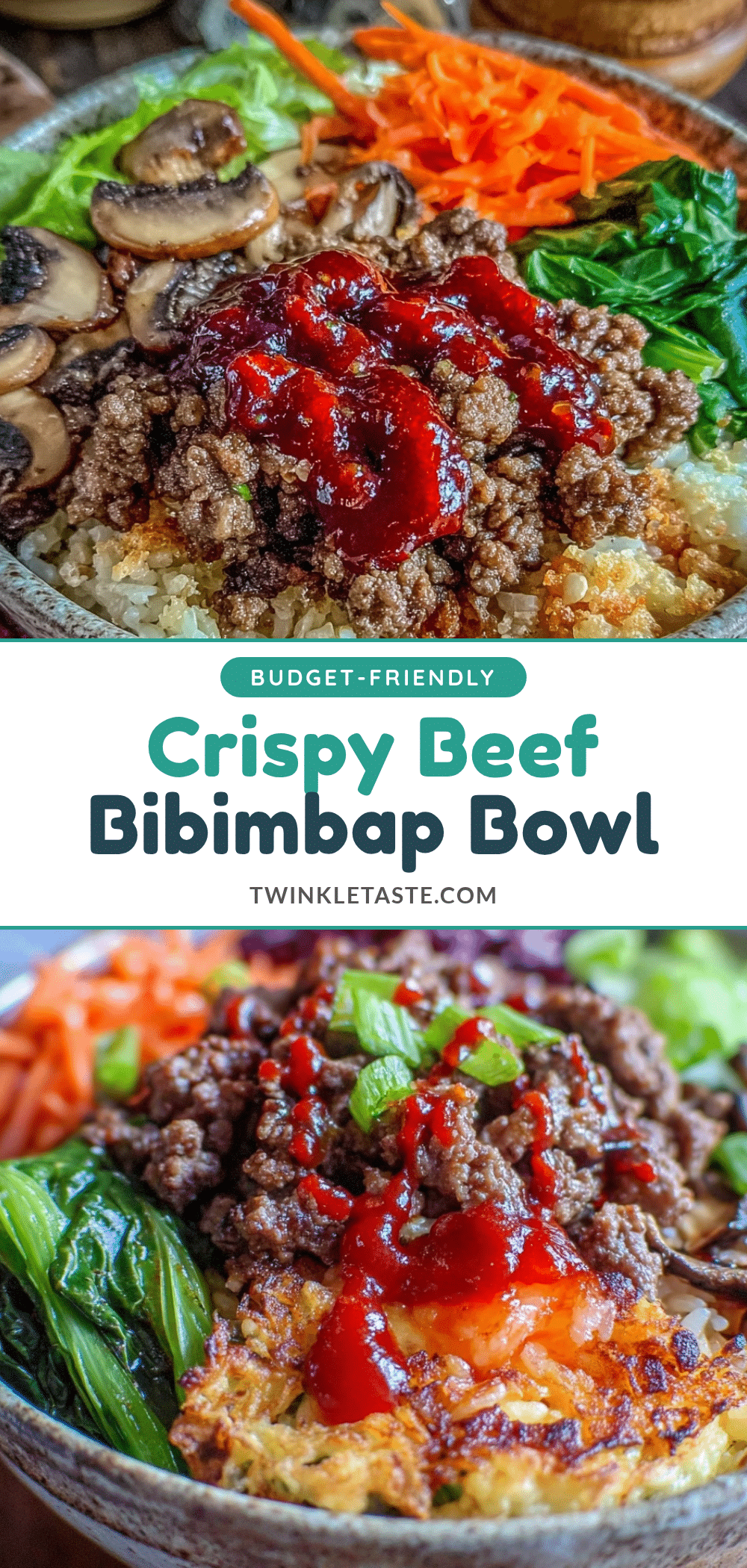
Crispy 5-Dollar Beef Bibimbap Bowl Recipe with Easy Gochujang Sauce
A quick and budget-friendly Korean-inspired bibimbap bowl featuring crispy ground beef, fresh veggies, and a sweet-spicy gochujang sauce. Perfect for busy weeknights and satisfying meals.
- Prep Time: 10 minutes
- Cook Time: 20 minutes
- Total Time: 30 minutes
- Yield: 1 serving 1x
- Category: Main Course
- Cuisine: Korean
Ingredients
- 1/2 pound (225 g) ground beef (80/20 lean-to-fat ratio recommended)
- 1 tablespoon soy sauce
- 1 teaspoon sesame oil
- 1 clove garlic, minced
- 1/2 teaspoon freshly ground black pepper
- 2 tablespoons gochujang (Korean chili paste)
- 1 tablespoon rice vinegar
- 1 tablespoon honey or brown sugar
- 1 teaspoon toasted sesame oil
- 1 teaspoon soy sauce
- 1 cup cooked white rice (short grain or sushi rice)
- 1/2 cup julienned carrots
- 1/2 cup fresh spinach leaves, lightly sautéed or steamed
- 1/4 cup thinly sliced cucumber (optional)
- 1 egg (fried sunny-side up or soft-boiled)
- 1 tablespoon toasted sesame seeds
- Optional extras: kimchi, scallions (thinly sliced), crushed seaweed flakes
Instructions
- Cook 1 cup (190 g) white rice according to package instructions, about 15-20 minutes. Fluff and keep warm.
- In a mixing bowl, combine ground beef, soy sauce, sesame oil, minced garlic, and black pepper. Mix gently and let marinate for 10 minutes.
- Whisk together gochujang, rice vinegar, honey or brown sugar, toasted sesame oil, and soy sauce in a small bowl. Adjust to taste and set aside.
- Julienne carrots and thinly slice cucumber. Lightly sauté spinach in a teaspoon of oil for 1-2 minutes or steam until wilted. Keep veggies separate.
- Heat a skillet over medium-high heat. Add beef in small chunks, press down slightly, and cook undisturbed for 3-4 minutes until crispy and browned on the bottom. Flip and cook another 2-3 minutes until fully cooked and crispy on edges. Add a splash of oil if pan is dry.
- Fry one egg sunny-side up, letting edges crisp while keeping yolk runny.
- Assemble bowl by placing warm rice at the bottom. Arrange crispy beef, carrots, spinach, and cucumber in sections around rice. Top with fried egg and sprinkle toasted sesame seeds.
- Drizzle gochujang sauce over the bowl or serve on the side. Mix everything together before eating.
Notes
Do not overcrowd the pan when cooking beef to ensure crispiness. Use medium-high heat and let beef develop a crust before flipping. Adjust gochujang sauce sweetness and heat to taste. Egg is optional but recommended for richness. For gluten-free, substitute soy sauce with tamari or coconut aminos. For vegetarian, swap beef with tofu or tempeh.
Nutrition
- Serving Size: 1 bowl
- Calories: 450
- Fat: 12
- Carbohydrates: 50
- Protein: 25
Keywords: bibimbap, crispy beef, gochujang sauce, Korean recipe, quick dinner, budget meal, easy recipe